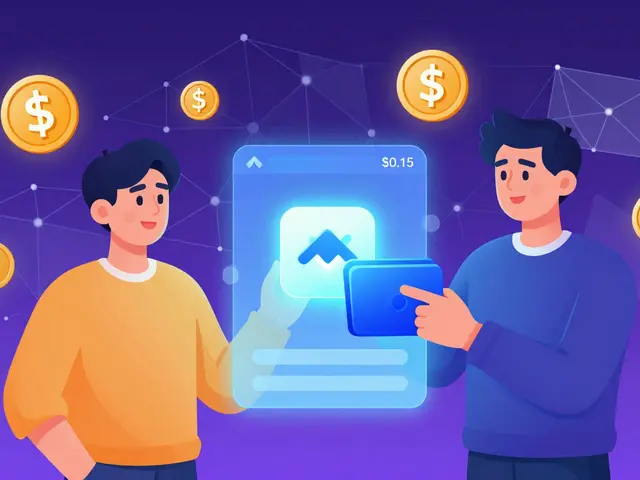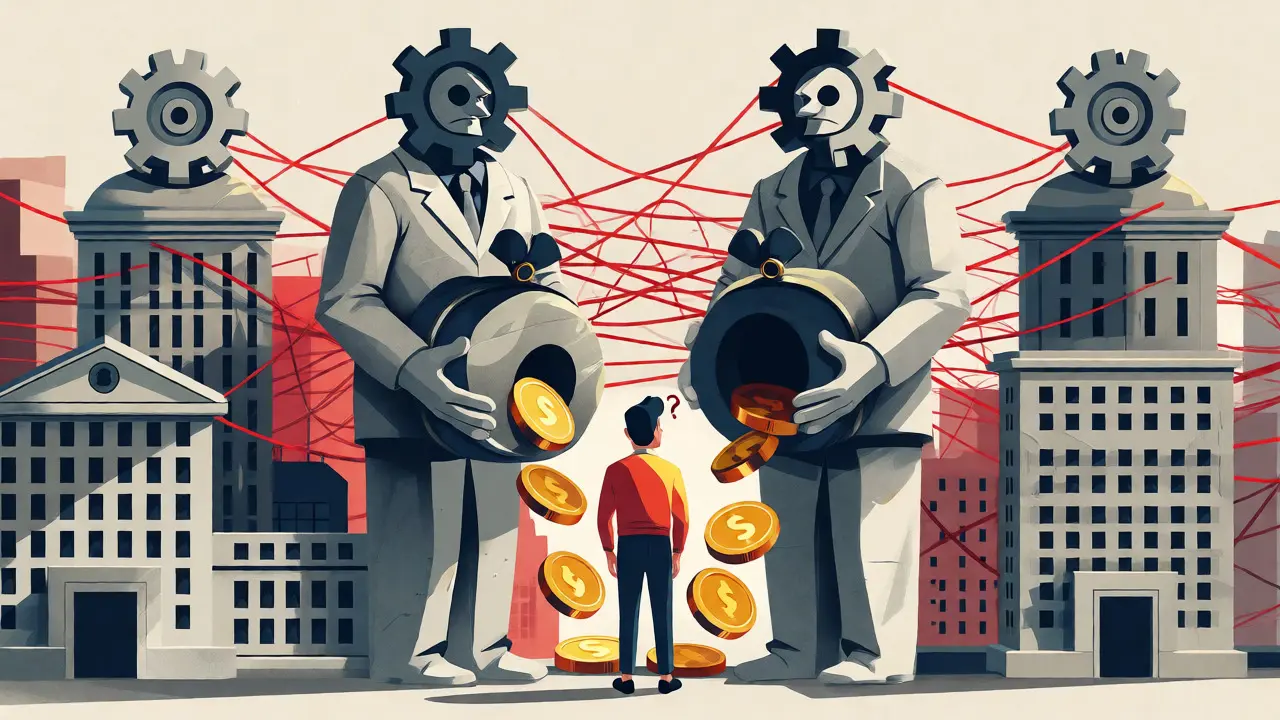

You send money to a friend in another country. It takes three days. The bank charges you $45. A correspondent bank takes another cut. Who actually moved your money? Nobody. Just a chain of computers checking boxes. Now imagine sending that same amount instantly, for less than a dollar, with no one holding your cash hostage. That is the promise of removing middlemen with blockchain. This isn't just tech hype; it's a fundamental shift in how we handle trust.
For centuries, intermediaries-banks, brokers, notaries, ad agencies-have been the gatekeepers of economic exchange. They charge rent for their position. But what if the code itself could verify truth? What if you didn't need to trust a person or a company, but only mathematics? That is the core value proposition here. Let’s break down how this works, where it fails, and why your local bank might be sweating right now.
The Trust Problem: Why We Pay Rent
Think about buying a house. You hire an agent, a lawyer, an escrow service, and a title company. Each adds cost and time. Why? Because you don’t trust the seller to hand over the deed before you pay, and the seller doesn’t trust you to pay before getting the deed. The intermediary solves this by holding both sides accountable. They are the "trust anchor."
Blockchain technology offers a different solution. Instead of trusting a third party, you trust a distributed ledger. When Bitcoin launched in 2009, Satoshi Nakamoto created a system where peers could transact directly without a central authority. The first transaction between Satoshi and Hal Finney proved it was possible. No bank. No clearinghouse. Just math.
This concept is called disintermediation. It removes the layers of trusted third parties that traditionally facilitate, verify, or record transactions. In financial services, this can eliminate 3-5 banking intermediaries in cross-border payments alone. The World Bank noted in 2022 that these fees often hit 6.5% of the transaction value. Blockchain cuts that to under 1%. That is real money staying in your pocket.
Smart Contracts: The Code That Replaces Lawyers
If blockchain is the ledger, smart contracts are the engine. Launched by Ethereum in 2015, these are self-executing agreements with terms written directly into code. Think of them as digital vending machines. You put in the coin (payment), press the button (condition met), and the product comes out (asset transfer). No clerk needed.
Here is the magic: atomic swaps. Two parties can trade assets simultaneously. If one side fails, the whole deal reverses automatically. There is no risk of paying without receiving goods. This eliminates the need for escrow services. In music royalties, traditional systems involve up to 11 intermediaries and take 18-24 months to pay artists. Platforms like Tune.fm use smart contracts to distribute royalties instantly, cutting platform fees from 25-40% down to less than 5%.
But it’s not perfect. Smart contracts are rigid. If there is a bug in the code, the money might vanish. Remember the DAO hack in 2016? A vulnerability led to $60 million being drained. Traditional lawyers could argue intent; code cannot. This is the trade-off: efficiency versus flexibility.

Where Disintermediation Actually Works
Not every industry needs blockchain. If you are buying coffee, a credit card is fine. Blockchain shines in high-friction, multi-party environments where trust costs exceed 15% of the transaction value. McKinsey estimates $1.5 trillion in annual savings potential across finance, supply chain, and intellectual property management by 2027.
Let’s look at specific sectors:
- Cross-Border Payments: Banks rely on SWIFT, which is slow and expensive. Blockchain networks like Ripple or Stellar settle transactions in seconds. Hedera Hashgraph achieves finality in 3-5 seconds, processing 10,000+ transactions per second.
- Digital Advertising: Google and Facebook take 20-35% of ad spend. Blockchain-based ad exchanges allow advertisers to buy directly from publishers, potentially boosting ROI by 30-45%.
- Supply Chain: Walmart uses blockchain to track food provenance. If lettuce gets contaminated, they can trace it back to the farm in seconds, not weeks. This removes the need for auditors to manually check paperwork.
| Sector | Traditional Cost/Fee | Blockchain Cost/Fee | Time Saved |
|---|---|---|---|
| Cross-Border Payment | 6.5% | <1% | Days to Minutes |
| Music Royalties | 25-40% | <5% | Months to Hours |
| Digital Ads | 20-35% | Direct Buy | N/A (ROI Increase) |
| Real Estate Escrow | $500-$2,000 | Gas Fees (~$10) | Weeks to Instant |
The Middleman Paradox: New Gatekeepers Emerge
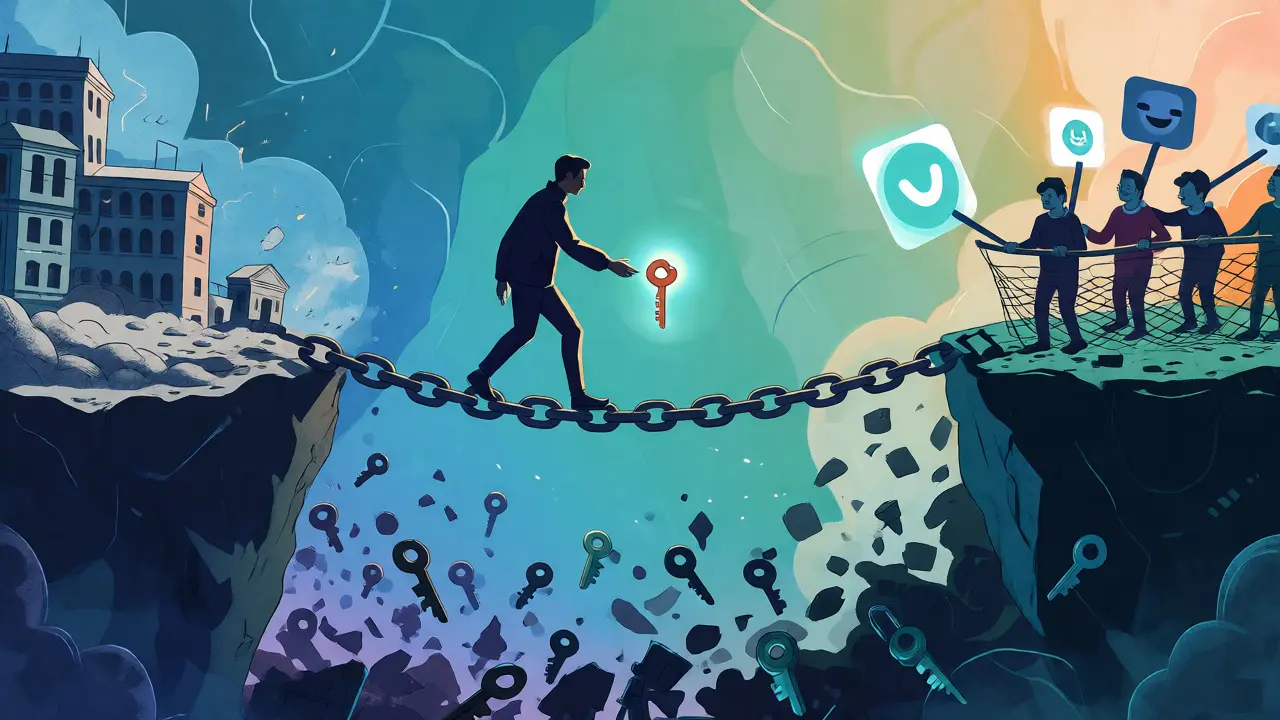
Here is the uncomfortable truth: humans hate complexity. Blockchain removes old middlemen but creates new ones. DATARELLA’s analysis pointed out that while you kill the trust agent, you inherit their responsibility. If you lose your private key, your money is gone. There is no customer support line to call. 3.7 million ETH has been lost forever due to forgotten passwords.
This creates a "responsibility burden." Users must manage security themselves. To solve this, new intermediaries appear: wallet providers, insurance firms, and user-friendly interfaces. JPMorgan’s JPM Coin processes $1 billion daily in institutional payments. They aren’t removing banks; they are becoming the new, faster, blockchain-native middlemen. This is reintermediation.
Gartner predicts that through 2026, 80% of supply chain blockchain initiatives will fail to scale because companies underestimate coordination costs. They think removing the middleman saves money. They forget that coordinating 50 suppliers without a central coordinator is a nightmare. Sometimes, a middleman is worth the fee because they reduce cognitive load.
How to Start Removing Your Own Middlemen
Are you ready to try this? Don’t jump in blindly. Follow this checklist:
- Identify High-Friction Processes: Look for steps involving multiple parties, long delays, or high fees. Cross-border payments and royalty distributions are prime targets.
- Evaluate Trust Requirements: Do you need legal interpretation? If yes, keep the lawyer. If you just need verification of ownership or payment, consider blockchain.
- Choose the Right Network: Public blockchains like Ethereum offer security but have higher gas fees ($0.42 average in Q2 2023). Private chains like Hyperledger Fabric offer control but require dedicated infrastructure (4GB RAM minimum).
- Pilot Small: Test with a small volume. Measure the time saved versus the learning curve. ConsenSys Academy suggests 80-120 hours of training for business professionals to become proficient.
- Plan for Key Management: Decide who holds the keys. If it’s a business, use multi-signature wallets. If it’s personal, write your seed phrase on paper. Never store it digitally.
Remember, the goal isn’t to use blockchain for everything. It’s to use it where it makes sense. If your current process works and is cheap, stick with it. If it’s slow and expensive, blockchain might be your escape hatch.
Frequently Asked Questions
Does blockchain completely eliminate all intermediaries?
No, it shifts them. While traditional agents like banks or brokers may disappear, new intermediaries emerge, such as wallet providers, oracle services (like Chainlink), and protocol developers. The nature of the intermediary changes from a human institution to a software layer, but some form of mediation often remains necessary for usability and dispute resolution.
What happens if I make a mistake in a blockchain transaction?
Transactions are generally irreversible. If you send funds to the wrong address, you usually cannot get them back unless the recipient returns them voluntarily. This is a significant risk compared to credit cards or PayPal, which offer chargebacks and buyer protection. Always double-check addresses before confirming.
Is blockchain cheaper than traditional banking for everyone?
It depends on the network and congestion. During peak times, Ethereum gas fees can spike to $50+, making small transactions uneconomical. However, for large transfers or cross-border payments, the savings are substantial. Layer-2 solutions like Polygon or Arbitrum offer much lower fees, often under a cent, making micro-transactions viable.
Why do some companies still use middlemen despite blockchain?
Regulatory compliance and liability. Many industries, like healthcare and law, require human accountability. If a smart contract executes incorrectly due to ambiguous data, who is liable? Companies often keep intermediaries to handle regulatory reporting, customer service, and legal disputes, using blockchain only for the settlement layer.
Can smart contracts replace lawyers entirely?
Not yet. Smart contracts execute code, not judgment. They work well for clear-cut conditions (e.g., "if date > X, release Y"). They struggle with subjective clauses (e.g., "reasonable effort" or "good faith"). Lawyers are still needed to draft the initial logic and interpret outcomes when things go wrong outside the code's scope.
Categories
Popular Articles