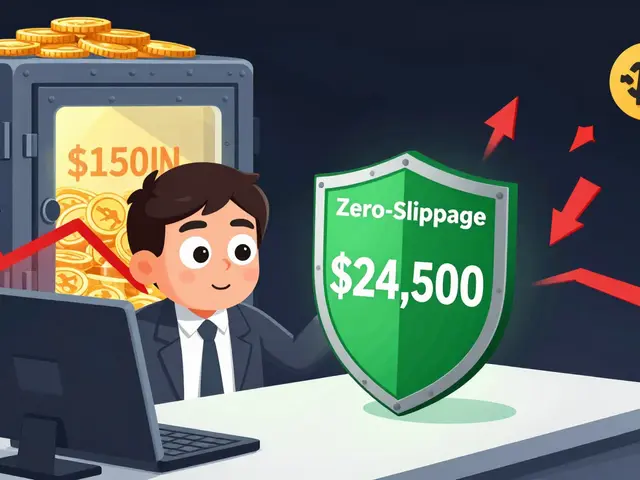

Imagine borrowing $10 million without a credit check, no collateral, and zero interest-provided you pay it back in the exact same second. This isn't a bank error; it's flash loan arbitrage, a unique financial mechanism native to decentralized finance (DeFi) ecosystems. For years, this concept sounded like science fiction. Today, it is a standard tool for sophisticated traders and developers looking to exploit price differences across decentralized exchanges.
If you have ever wondered how prices stay relatively consistent between different crypto markets, flash loans are part of the answer. They act as the invisible hands that smooth out inefficiencies. But for the person executing the trade, they represent a high-stakes game of speed, code, and market timing. In this guide, we will break down exactly how these opportunities work, what it takes to execute them, and why the barrier to entry is higher than just having an idea.
What Is Flash Loan Arbitrage?
To understand the opportunity, you first need to grasp the vehicle. A flash loan is an uncollateralized loan provided by a DeFi protocol. The catch? You must borrow the funds and repay them within the same blockchain transaction. If the repayment fails for any reason, the entire transaction reverts as if it never happened. You lose nothing but the gas fee.
Aave is a leading lending protocol that popularized flash loans with a typical fee of 0.09%. Other platforms like Balancer also offer similar services through their vault systems. These protocols allow you to access massive liquidity instantly. Why does this matter for arbitrage? Because arbitrage requires capital to be profitable. If you only have $100, a 1% price difference earns you $1. After gas fees, you might lose money. With $1,000,000 borrowed via a flash loan, that same 1% difference earns you $10,000. Even after paying the 0.09% fee ($900) and network costs, the profit remains significant.
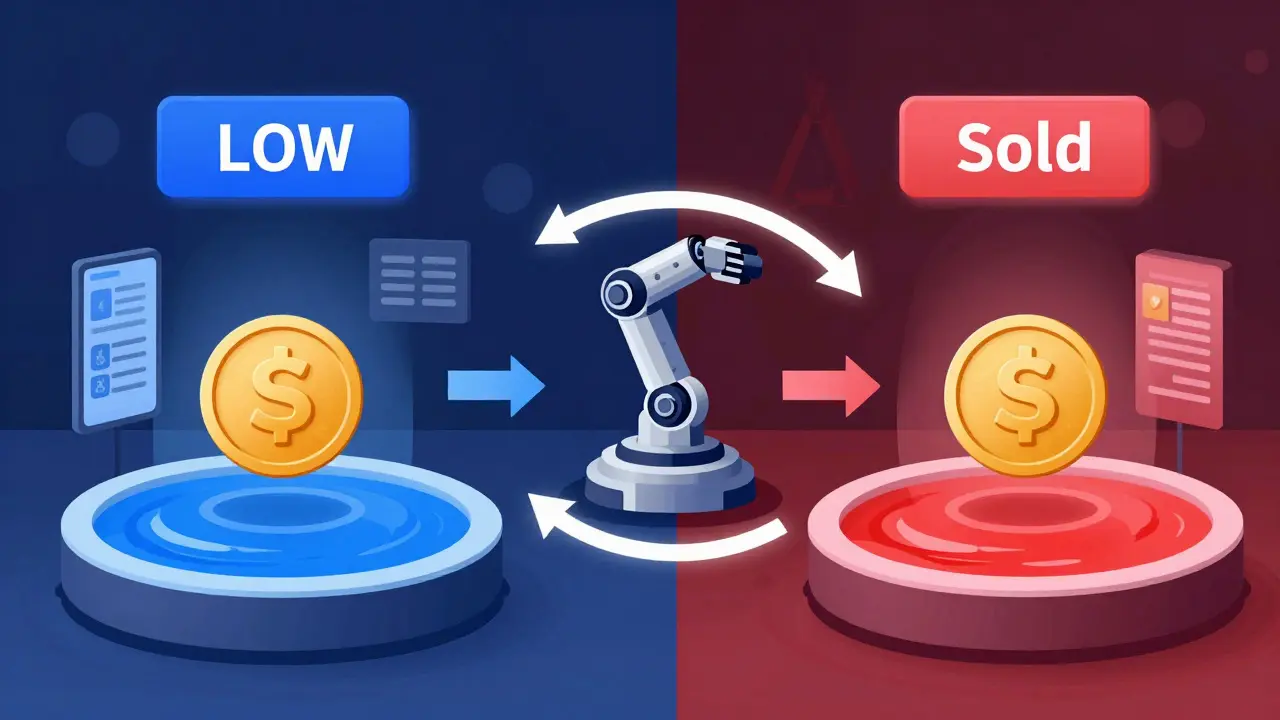
The core logic is simple:
- Borrow a large amount of Token A from a lending pool.
- Buy Token B on Exchange X where it is undervalued.
- Sell Token B on Exchange Y where it is overvalued.
- Convert the proceeds back to Token A.
- Repay the loan plus the small fee.
- Keep the remaining profit.
All of this happens atomically. There is no waiting period. There is no counterparty risk because the smart contract enforces the rules. If the math doesn't work out during the execution, the chain rejects the whole package.
How the Execution Process Works
You cannot do this manually through a web interface. You need code. Specifically, you need a smart contract deployed on the blockchain (usually Ethereum or its Layer 2 networks). This contract acts as your agent. It requests the loan, performs the trades, and handles the repayment.
Here is the step-by-step flow of a typical transaction:
- Detection: Your monitoring system scans multiple decentralized exchanges (DEXs) like Uniswap, SushiSwap, and Curve. It looks for price discrepancies for specific token pairs.
- Calculation: Before triggering anything, the system calculates potential profit. It subtracts estimated gas costs, exchange fees, slippage, and the flash loan fee. If the result is negative or too low, it ignores the opportunity.
- Execution Request: If profitable, your contract calls the flash loan provider (e.g., Aave). The provider sends the tokens to your contract.
- Arbitrage Logic: Inside your contract’s `receiveFlashLoan` function, the code executes the swaps. It buys the asset on the cheaper exchange and sells it on the more expensive one.
- Repayment: The contract converts the final assets back to the original borrowed token and sends it back to the lender, including the fee.
- Profit Extraction: Any leftover tokens remain in your contract wallet. You can then withdraw them to your personal address.
The technical complexity lies in step 4. You must write efficient Solidity code. Every line of code costs gas. If your contract is bloated, your gas bill might eat all your profits. Professional arbitrageurs spend weeks optimizing their contracts to minimize external calls and storage writes.
Calculating Profitability and Costs
Many beginners focus solely on the price difference. This is a mistake. You must account for every cost center. Let’s look at a concrete example using hypothetical numbers to illustrate the margins.
| Component | Value / Cost | Note |
|---|---|---|
| Loan Amount | $1,000,000 USDC | Borrowed from Aave |
| Price Discrepancy | 1.5% | Raw spread between DEXs |
| Gross Profit | $15,000 | Before fees |
| Flash Loan Fee (0.09%) | -$900 | Paid to Aave |
| Exchange Fees (0.3% x 2) | -$6,000 | Uniswap/SushiSwap trading fees |
| Slippage Impact | -$1,000 | Market impact of large trade |
| Gas Costs | -$200 | Ethereum network fees |
| Net Profit | $6,900 | Take-home earnings |
In this scenario, the net profit is healthy. However, if the price discrepancy drops to 1%, the gross profit becomes $10,000. Subtracting the same fees leaves you with only $1,900. If gas prices spike due to network congestion, that $200 could become $500 or more, further squeezing margins. This sensitivity means you need real-time data feeds to make accurate predictions before spending gas on a transaction.
Risks Beyond Smart Contract Bugs
People often say flash loans are "risk-free" because the loan itself is guaranteed by the atomic nature of the transaction. That is technically true for the principal amount. However, the business operation carries significant risks.
Smart Contract Vulnerabilities: If your arbitrage contract has a bug, you could send funds to the wrong address or fail to repay the loan correctly. While the loan reverts, you still pay the gas fee. Worse, if you interact with a malicious router or pool, you could lose the profits you generated. Always audit your code thoroughly.
MEV Competition: Maximal Extractable Value (MEV) bots monitor the mempool (the waiting area for transactions). If they see your profitable arbitrage attempt, they can front-run you by submitting a transaction with a higher gas fee. They execute the same trade before you do, eliminating the price discrepancy. By the time your transaction processes, there is no profit left. To combat this, many pros use private RPC endpoints like Flashbots to bypass the public mempool.
Network Congestion: During high traffic periods, gas prices skyrocket. A strategy that was profitable ten minutes ago might now result in a loss because the cost to process the transaction exceeds the arbitrage spread. Your monitoring system must dynamically adjust profitability thresholds based on current gas estimates.
Tools and Infrastructure Required
You cannot succeed with just a laptop and a browser. Building a competitive flash loan arbitrage setup requires a robust tech stack.
- Monitoring Scripts: You need Python or Node.js scripts connected to WebSocket feeds from major DEXs. These scripts calculate spreads in milliseconds. Libraries like Web3.py or Ethers.js are essential here.
- Smart Contract Development: Proficiency in Solidity is non-negotiable. Frameworks like Hardhat or Foundry help you test and deploy contracts efficiently. You need to simulate transactions locally to verify profitability before sending them to the mainnet.
- Private Nodes: Public nodes are slow and expose your transactions to MEV bots. Using private node providers ensures faster block inclusion and better privacy.
- Capital for Gas: While you don’t need capital for the loan, you need ETH (or the native token of the chain) to pay for gas. Having a dedicated wallet with sufficient balance prevents failed transactions due to insufficient funds.
Additionally, consider using aggregators like 1inch or Matcha within your contracts. They automatically find the best routing for swaps, which can improve your execution price and reduce slippage compared to hardcoding specific exchange addresses.

The Competitive Landscape in 2026
The era of easy money in flash loan arbitrage is largely over. In the early days of DeFi, price discrepancies were common and large. Today, the market is highly efficient. Thousands of professional bots scan the blockchain 24/7. When a new opportunity arises, it is often arbitraged away within seconds.
This doesn't mean opportunities don't exist. New tokens launch daily. New liquidity pools open up. Cross-chain bridges sometimes create temporary inefficiencies. However, capturing these opportunities requires superior infrastructure. Speed matters. Code efficiency matters. Access to private transaction relays matters.
For individual developers, the niche may lie in smaller chains or newer protocols where competition is lower. Ethereum Mainnet is saturated. Layer 2 solutions like Arbitrum, Optimism, and Base offer lower gas fees, making smaller arbitrage spreads viable. Exploring these ecosystems can provide a better risk-reward ratio for those starting out.
Regulatory Considerations
As of mid-2026, flash loan arbitrage operates in a regulatory gray area. It is generally considered a legitimate market-making activity that enhances liquidity and price discovery. Unlike insider trading or market manipulation, arbitrage relies on public information and transparent execution.
However, regulators are increasingly scrutinizing DeFi activities. Future laws could impose reporting requirements on large-volume traders or restrict certain types of automated trading. Staying informed about legal developments in your jurisdiction is crucial. Keep records of your transactions and ensure your operations comply with local tax laws regarding cryptocurrency gains.
Getting Started: A Realistic Path
If you want to try flash loan arbitrage, start small. Do not jump into Ethereum Mainnet immediately. Begin by building your monitoring script and testing it on a testnet like Goerli or Sepolia. Simulate trades and analyze historical data to understand typical spreads and failure rates.
Once your code works reliably, move to a Layer 2 network with low gas fees. Deploy your contract and execute live trades with minimal amounts. This allows you to learn the nuances of slippage, gas estimation, and MEV protection without risking significant capital.
Remember, this is a technical endeavor, not a get-rich-quick scheme. It requires continuous learning, adaptation, and maintenance. The code that worked last month might fail today due to changes in protocol fees or network conditions. Success comes from persistence and precision.
Do I need collateral to take out a flash loan?
No, flash loans are uncollateralized. The guarantee comes from the fact that the loan must be repaid within the same transaction block. If you cannot repay it, the transaction fails and reverts, so the lender never loses funds.
How much does it cost to use a flash loan?
The cost varies by protocol. Aave charges a flat fee of 0.09% on the borrowed amount. Balancer typically charges around 0.05%. Additionally, you must pay gas fees for the transaction, which can range from a few dollars to hundreds depending on network congestion.
Can anyone perform flash loan arbitrage?
Technically, yes, but practically, it requires significant technical expertise. You need to know how to write smart contracts in Solidity, set up monitoring infrastructure, and understand blockchain mechanics. It is not accessible through standard user interfaces.
Is flash loan arbitrage legal?
Yes, it is currently legal in most jurisdictions. It is viewed as a form of market making that improves price efficiency. However, regulations are evolving, so traders should stay updated on local laws regarding DeFi and automated trading.
What is the biggest risk in flash loan arbitrage?
The biggest risks are technical failures and MEV competition. Bugs in your smart contract can lead to lost profits or failed transactions. MEV bots can front-run your trades, stealing the profit margin. Network congestion can also make previously profitable trades unviable due to high gas costs.


Comments (9)

- Tracy Marshall
- July 13, 2026 AT 01:27 AM
they want you to think this is just code but its actually a mechanism for the elite to strip value from the masses while hiding behind 'decentralization' :/
i have been saying for years that these protocols are designed to fail us and profit them
you borrow nothing because you never truly own the money
it is all an illusion of freedom
the banks are watching every transaction through the blockchain
do not trust the smart contracts
trust your gut feeling about this whole system
it feels wrong to me
why would they give you millions for free if there was no catch
there is always a catch
keep your eyes open people

- Guy Davis
- July 13, 2026 AT 16:15 PM
this is gambling disguised as finance. it should be illegal. people lose everything chasing these bots. stop encouraging reckless behavior.

- KEITH WONG
- July 15, 2026 AT 12:32 PM
lol you guys are so naive 🤡
look at the table in the post. the math is clear. $15k gross minus fees is still $6.9k net. that is real money.
you dont need a degree to see that. you just need to write better solidity code than the other bots.
most of you cant even deploy a contract without breaking it.
stop complaining and start learning python or nodejs.
the market does not care about your feelings. it cares about efficiency.
if you can't handle the gas wars then stay out of it.
easy money is gone but hard money is still there for those who grind. 💸🚀

- Natalie Lucas
- July 17, 2026 AT 01:30 AM
omg this is actually super cool! i love how tech is evolving 😍
i tried looking into this last year but my brain hurts when i look at code lol.
but seeing the breakdown helps.
maybe i will try on a testnet like sepolia.
no pressure just fun right?
let's gooo crypto fam! ✨

- Curtis Johnson
- July 17, 2026 AT 08:46 AM
it is important to remember that technology itself is neutral. however, the way we use it reflects our collective values.
i feel like we are rushing too fast into automation without considering the human cost.
yet, i also see the beauty in the efficiency.
perhaps there is a middle ground where we can learn from this without losing our humanity.
we must breathe through the chaos.
what do you all think about the ethical implications of front-running?
is it stealing or just being faster?
i am trying to find peace in this digital storm. 🌪️

- Steven Briggs
- July 18, 2026 AT 20:34 PM
i read the part about mev bots. sounds stressful. i prefer quiet trading.

- Winston Lacewing
- July 19, 2026 AT 22:09 PM
oh wow you really think you can beat the system? 😂
let me tell you something buddy.
i know someone who lost his house trying this.
and another guy who got hacked.
you are playing with fire.
the big players have private relays.
you are just food for them.
don't say i didn't warn you.
also why are you using public nodes?
are you stupid?
get a private rpc or get wrecked.
💀💀💀

- Kristine Lawson
- July 20, 2026 AT 08:53 AM
The assertion that flash loans are merely "market making" is profoundly misleading; indeed, it obscures the predatory nature of high-frequency algorithmic extraction. Furthermore, the author fails to adequately address the systemic risks posed by such concentrated liquidity events. One must question the moral integrity of profiting from transient inefficiencies that ordinary citizens cannot access. Is this not a form of structural inequality? Absolutely. The regulatory gray area mentioned is not a bug; it is a feature of a broken financial paradigm. We demand transparency. We demand accountability. Do not let this technical jargon distract you from the core issue: exploitation. Period.

- Tawny Holmes
- July 21, 2026 AT 15:42 PM
You don't need a guide. You need a PhD in cryptography and a server farm in Iceland. Everyone here thinks they can code a bot in a weekend. They can't. The spread is zero most of the time. Stop dreaming.