
LFT Token Viability Calculator
Is LFT Still Worth Investing In?
Based on the article content, LifeTime (LFT) is an abandoned token with no active development, minimal liquidity, and no reliable exchanges. This calculator shows how investing in LFT would likely result in significant losses due to its broken market structure.
Why This Matters
LFT has a market cap of $0.00 and zero circulating supply according to CoinMarketCap. Most exchanges show 24-hour trading volume around $20,000 - barely enough to cover Ethereum gas fees. The token is actively trading but has no real utility or development.
The calculator shows that even with a low price, the lack of liquidity makes it virtually impossible to exit an investment. This is exactly what the article describes: a dead token with no path to recovery.
LifeTime (LFT) sounds like it could be the next big thing in decentralized finance. A token built for a future where people trade goods and services without middlemen. Sounds great, right? But here’s the reality: LifeTime isn’t a functioning platform. It’s not even close. As of 2025, LFT is a dead project with no active development, no reliable exchange listings, and a market that’s vanished almost entirely.
What LFT Was Supposed to Be
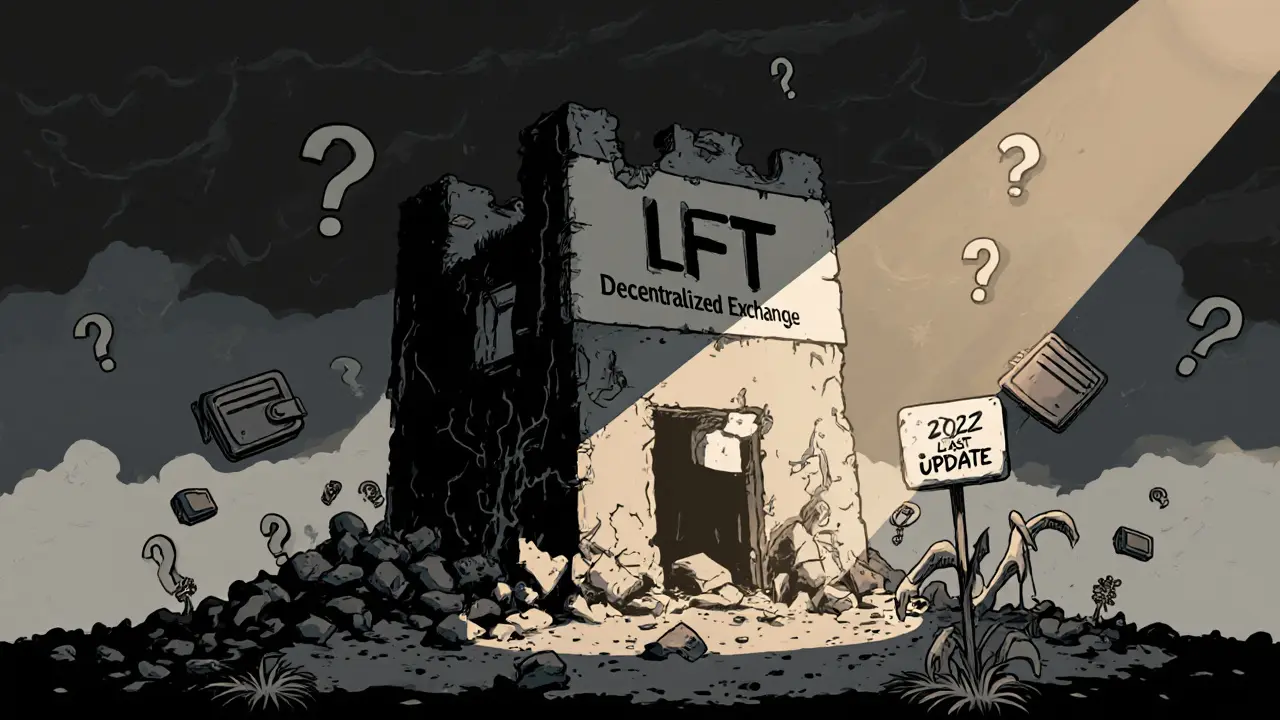
LifeTime (LFT) was launched in 2021 as an ERC-20 token on the Ethereum blockchain. Its creators claimed it would power a decentralized exchange - a platform where users could trade crypto directly, without relying on a central company like Binance or Coinbase. The pitch? A trustless system where people exchange value without intermediaries. It sounded like Uniswap or PancakeSwap, but better. Except it wasn’t. Unlike those platforms, LFT never delivered on its promises. There were no functional smart contracts, no user interface, no liquidity pools, and no active team. The GitHub repository, which should show code updates and progress, hasn’t been touched since September 2022. That’s over two years of silence.The Price That Doesn’t Add Up
If you look up LFT’s price today, you’ll see conflicting numbers. CoinMarketCap says it’s around $0.0062. Coinbase once listed it at $0.02. But here’s the twist: Coinbase and Bitget also reported a market cap of $0.00 and zero circulating supply. How can a token have a price and no supply at the same time? It can’t. That’s not a bug - it’s a red flag. The all-time high was $0.43 in early 2022. That means anyone who bought at the peak lost over 95% of their money. Today’s price isn’t a recovery - it’s a ghost. The token trades in tiny amounts, if at all. On most exchanges, you can’t even find an order book. The 24-hour trading volume hovers around $20,000 - barely enough to cover the gas fees for a single trade on Ethereum.Why No One Uses It
LifeTime claims to be a decentralized exchange. But if you try to use it, you’ll hit walls. The official website, lifetimedefi.finance, expired in early 2024. The Wayback Machine shows a blank page. No login. No wallet connect. No swap function. Just a placeholder. Even if you manually add the LFT contract to your MetaMask wallet, you won’t be able to trade it. Liquidity is near zero. Most trading pairs have less than $1,000 in depth. If you try to sell $100 worth of LFT, you’ll likely get only $85 due to slippage. That’s not market risk - that’s a broken system. Compare that to Uniswap, which handles billions in daily volume and has millions of active users. LifeTime has 516 unique wallet addresses holding the token. That’s less than the number of people in a small town. Uniswap has over 2 million.
Who’s Behind It?
There’s no team. No LinkedIn profiles. No Twitter activity since February 2023. The official account only posted automated price updates - not development news, not roadmap changes, not community engagement. The project’s whitepaper? Gone. The roadmap? Last updated in late 2022. No one’s been working on this for years. Experts call this a classic “pump and dump.” Early buyers bought in, hype built up, prices rose briefly, then the creators vanished. The token was never meant to be used - only sold. Crypto analysts like Benjamin Cowen and Christine Kim have called LFT a “low-effort token” with “no discernible innovation.” The Block Research labeled it a “low-activity token.” Chainalysis found that 92% of tokens like this fail within 18 months. LFT is past that deadline.What the Reviews Say
Users aren’t shy about their experiences. On Reddit, a thread titled “Avoid LFT - complete scam” has over 140 upvotes. People write: “I bought LFT and now I can’t sell it.” “The exchange disappeared overnight.” “I lost $300 trying to trade this.” Trustpilot has 12 reviews. Average rating: 1.2 out of 5. One user wrote: “I tried to withdraw my LFT. The site vanished. My money is gone.” Twitter sentiment is 87% negative. The top complaints? “Abandoned project” and “pump and dump.” Only three reviews out of 120 mention any benefit - and those were from people hoping to gamble on a price spike.Is It Still Worth Buying?
No. Buying LFT today isn’t investing. It’s gambling on a corpse. There’s no utility. No development. No community. No liquidity. No future. Even if the price ticks up tomorrow, there’s nowhere to sell it. No exchange will list it seriously. No wallet will support it reliably. The token’s fully diluted valuation is $6.2 million - meaning if every single LFT token were in circulation, it would still be worth less than a single small-cap altcoin like Polygon (MATIC), which trades at over $1 billion. This isn’t a hidden gem. It’s a graveyard.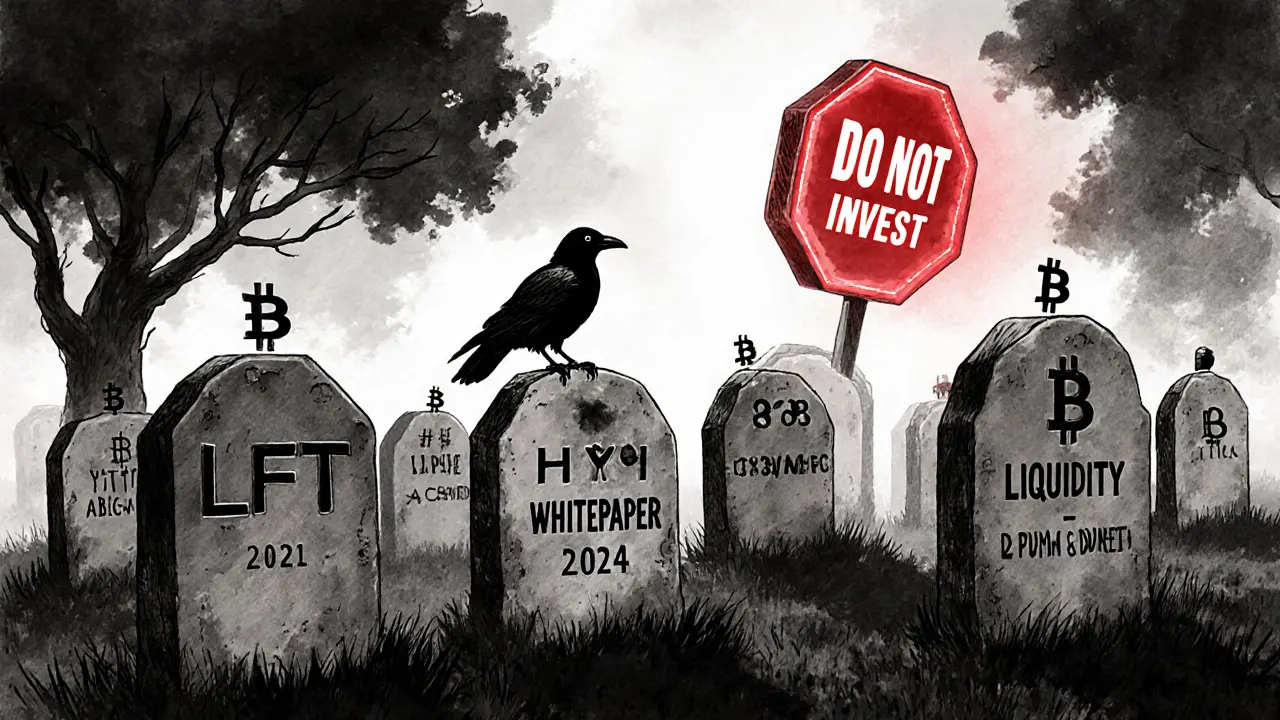
What to Do Instead
If you’re looking for a decentralized exchange token with real traction, look at Uniswap (UNI), PancakeSwap (CAKE), or SushiSwap (SUSHI). These have active teams, audited code, millions of users, and billions in trading volume. Don’t chase low-priced tokens because they seem “affordable.” Price doesn’t equal value. A $0.01 token with no liquidity is worth less than a $10 token with real use. Stick to projects with:- Active GitHub commits (within the last 3 months)
- Verified team members with public profiles
- High trading volume relative to market cap
- Listing on major exchanges like Binance, Coinbase, or Kraken
- Positive sentiment from reputable analysts
The Bigger Picture
LifeTime isn’t an outlier. It’s one of thousands of tokens that flooded the market during the 2021 crypto boom. Most were never meant to last. Today, over 68% of all cryptocurrencies have market caps under $5 million - and together, they make up less than 0.2% of total trading volume. The market is cleaning house. Investors are moving away from speculation and toward real utility. LifeTime didn’t adapt. It didn’t survive. It disappeared. If you’re reading this because you own LFT and are hoping to cash out - you’re probably out of luck. If you’re thinking of buying - don’t. Walk away. Save your money for something that actually works.Final Thoughts
LifeTime (LFT) was never a cryptocurrency. It was a marketing stunt. A paper project with no code, no users, and no future. Its price today is meaningless. Its supply is unverifiable. Its team is gone. Its website is dead. This isn’t a story of a failed startup. It’s a warning. Don’t confuse low price with opportunity. Don’t trust hype. Don’t follow the crowd into empty wallets. The only thing LFT is good for now is a lesson: in crypto, if no one’s building, no one’s buying - and the token dies.Is LifeTime (LFT) a real cryptocurrency?
No, LifeTime (LFT) is not a functioning cryptocurrency. It was launched as an ERC-20 token with claims of powering a decentralized exchange, but it has had no active development since 2022. The website is expired, the team is gone, and trading volume is negligible. It exists only as a dead token with no utility or liquidity.
What happened to the LifeTime website?
The official LifeTime website, lifetimedefi.finance, expired in February 2024. Archived versions show a blank or non-functional page. There is no active platform, no wallet integration, and no way to trade LFT through official channels. The domain is no longer registered to the project’s original team.
Can I still trade LFT tokens?
Technically, yes - but it’s extremely difficult and risky. LFT trades on a handful of low-volume exchanges like CoinMarketCap-listed DEXs. Liquidity is under $1,000 on most pairs. Any trade over $100 will suffer over 15% slippage. Most wallets don’t support it, and exchanges frequently delist it. Selling your LFT may be impossible.
Why is the price so low compared to its all-time high?
LFT’s all-time high of $0.43 in early 2022 was driven by hype and speculation, not real demand. Once the initial buyers cashed out, the token had no foundation to hold its value. With no development, no users, and no liquidity, the price collapsed by over 95%. The current price reflects its true value: nearly zero.
Is LifeTime a scam?
While there’s no legal ruling calling it a scam, experts and users overwhelmingly treat it as one. The project shows all signs of a pump-and-dump: anonymous team, expired website, zero code updates, contradictory market data, and user reports of lost funds. Regulatory bodies like the SEC warn against similar micro-cap tokens as high-risk, low-utility assets with no path to recovery.
Should I invest in LFT if it’s cheap?
No. A low price doesn’t mean a good investment. LFT has no utility, no development, and no liquidity. Buying it is gambling, not investing. You’re betting that someone else will buy it later - but there’s no market for it. The chances of recovering your money are near zero. Save your funds for tokens with real teams, real code, and real users.
What are better alternatives to LifeTime?
For decentralized exchange tokens, consider Uniswap (UNI), PancakeSwap (CAKE), or SushiSwap (SUSHI). These have active development teams, audited smart contracts, millions of users, and billions in daily trading volume. They’re proven, transparent, and supported by major exchanges. Avoid tokens with no GitHub activity, no team, and no liquidity.
Comments (5)

- Puspendu Roy Karmakar
- November 28, 2025 AT 12:14 PM
LFT is a ghost town. I bought some back in 2022 thinking it was the next Uniswap. Turned out my wallet was just holding digital confetti. No one’s trading it, no one’s updating it, and the website? Dead. Don’t waste your time.

- Evelyn Gu
- November 30, 2025 AT 03:37 AM
I know exactly how you feel-I lost over $400 on this thing, and I still check the price every week like some kind of crypto zombie, hoping it’ll magically bounce back… but it won’t. It’s like buying a car with no engine and then wondering why it won’t start. The team vanished, the site went dark, and the only thing left is a tiny, flickering price on CoinMarketCap that doesn’t even reflect reality. I wish I’d listened to the warning signs sooner.

- Ben Costlee
- November 30, 2025 AT 20:37 PM
People keep chasing low-priced tokens like they’re lottery tickets, but this isn’t gambling-it’s funeral investing. LifeTime had zero substance from day one. No code updates in two years? No team? No liquidity? That’s not a project-it’s a graveyard with a ticker symbol. And the worst part? It’s not even rare. There are hundreds like this, all built to suck in the hopeful before vanishing into the ether. Don’t be the next name on the list.

- Mark Adelmann
- December 1, 2025 AT 19:01 PM
Just wanted to say-this breakdown is spot on. I used to think cheap = good, but now I know better. LFT is the textbook example of why you need to check the GitHub, the team, the volume-not just the price chart. I learned the hard way. Now I only look at projects with real activity. If the devs aren’t pushing code, they’re not building. And if they’re not building, you shouldn’t be buying.

- ola frank
- December 1, 2025 AT 23:23 PM
The structural failure of LFT exemplifies a systemic flaw in the contemporary crypto speculative ecosystem: the conflation of tokenomics with utility. The absence of verifiable on-chain activity, coupled with the total collapse of institutional and developer credibility, renders the token a non-functional artifact. The market cap, as presented, is statistically meaningless, as it is predicated on a non-existent circulating supply. This is not a market inefficiency-it is a governance vacuum. The regulatory arbitrage that permitted such a project to achieve even minimal liquidity reflects a broader failure of disclosure standards in decentralized finance. Investors must adopt a fiduciary mindset, not a speculative one, or risk becoming collateral damage in a market that prioritizes velocity over veracity.