
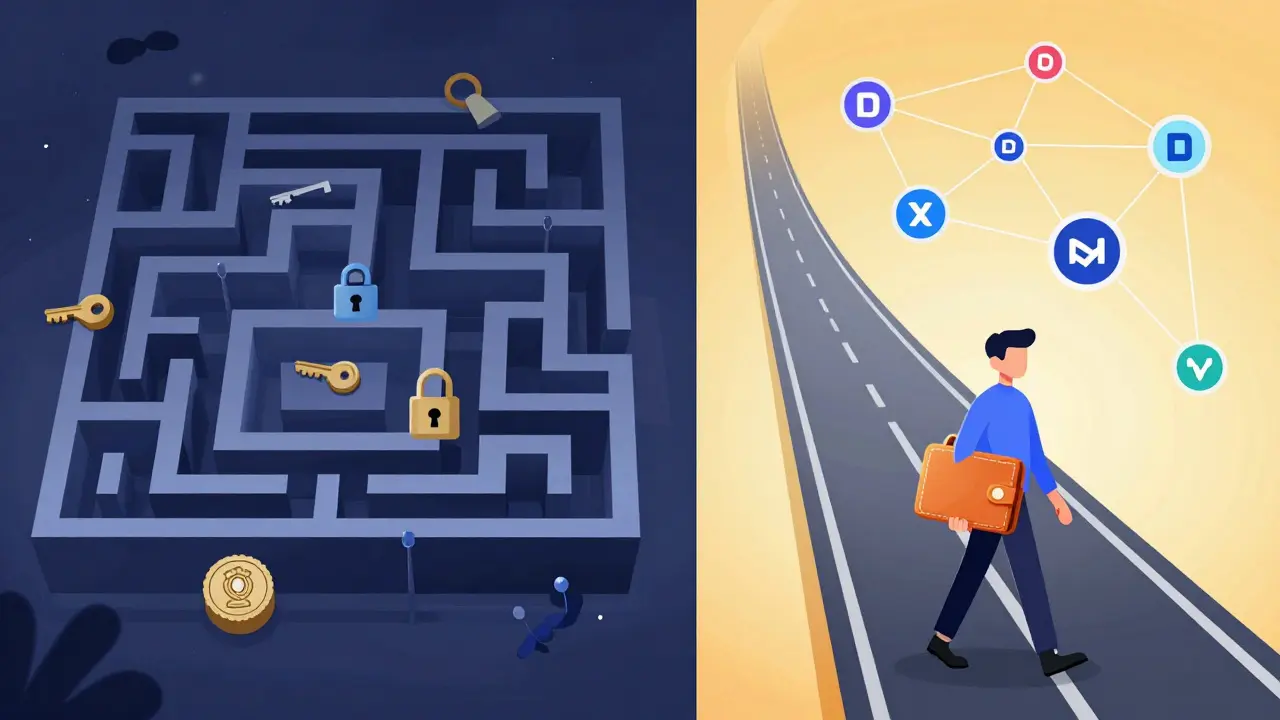
For years, Iranian citizens have navigated a complex maze of financial restrictions. Traditional banking is often blocked by international sanctions, and centralized cryptocurrency exchanges are increasingly risky due to government surveillance and security breaches. But what if you could trade without a middleman? This is where decentralized exchanges (DEXs) come into play. They offer a way to maintain control over your assets, even when the system tries to take it away.
In 2025 and early 2026, the landscape shifted dramatically. The Central Bank of Iran tightened its grip, demanding licenses and data access for all crypto activities. Simultaneously, global entities like Tether froze funds linked to Iranian addresses. These events didn't stop crypto usage; they forced an evolution. Users moved from trusted but vulnerable centralized platforms to decentralized protocols that don't ask for permission. Here is how you can navigate this new reality safely and effectively.
Why Centralized Exchanges Are Becoming Risky
To understand why you might want to switch to a decentralized exchange, you first need to look at the dangers of staying on centralized platforms. For a long time, Nobitex was the go-to platform for millions of Iranians. It handled over 87% of the country's crypto transactions. But reliance on a single point of failure proved costly.
In June 2025, Nobitex suffered a massive hack, losing over $90 million. This wasn't just bad luck; it highlighted the vulnerability of holding funds on platforms that interact with high-risk networks. Furthermore, analysis linked Nobitex to wallets associated with the IRGC (Islamic Revolutionary Guard Corps). When the U.S. Treasury and other agencies target these networks, everyone connected gets swept up in the dragnet.
Then came the July 2025 Tether freeze. Tether, the issuer of USDT, froze 42 addresses linked to Iran. Many of these were users who had simply withdrawn their stablecoins to personal wallets. If you hold your money on a centralized exchange or use a token that can be frozen, you don't truly own it. You're renting it, subject to the whims of foreign regulators and local authorities alike.
| Feature | Centralized (e.g., Nobitex) | Decentralized (DEX) |
|---|---|---|
| KYC Requirement | Mandatory (National ID) | None |
| Asset Control | Exchange holds keys | You hold keys |
| Sanction Risk | High (Account freezes) | Low (Protocol neutral) |
| Security Model | Honeypot (Targeted by hackers) | Distributed (Smart contract risk) |
| Tax Reporting | Automated to CBI | Manual/Self-reported |
The Regulatory Squeeze: What Changed in 2025?
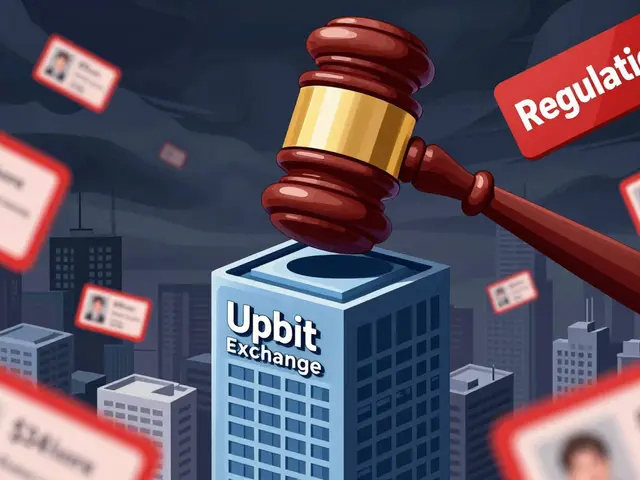
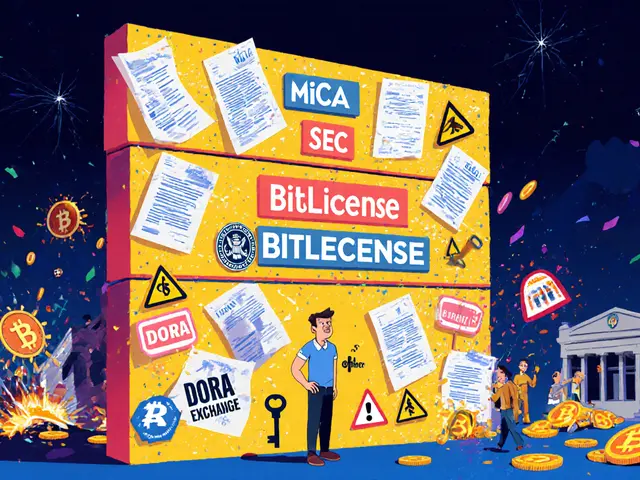
The Iranian government has been moving fast to bring crypto under its wing. In January 2025, President Masoud Pezeshkian issued directives making the Central Bank of Iran (CBI) the sole regulator of the crypto market. This means every participant, including individuals, theoretically needs a license. More importantly, the CBI now demands unrestricted access to all transaction data.
If you use a licensed domestic exchange, your data is already in the hands of the state. The August 2025 Law on Taxation of Speculation and Profiteering added another layer: capital gains tax on crypto trading. While enforcement is phased, the intent is clear-Tehran wants to tax and track digital wealth.
This creates a paradox. The government bans foreign-mined crypto for domestic transactions but encourages mining for revenue. Meanwhile, users are caught between international sanctions that block them from global finance and domestic laws that demand total transparency. Decentralized exchanges offer a technical loophole: because there is no central entity to regulate or tax, compliance becomes a matter of individual choice rather than systemic enforcement.
How to Access DEXs Safely from Iran
Accessing a DEX isn't as simple as downloading an app. You face two main hurdles: internet censorship and the need for on-ramps to get crypto onto the blockchain. Here is the practical workflow used by savvy traders in 2026.
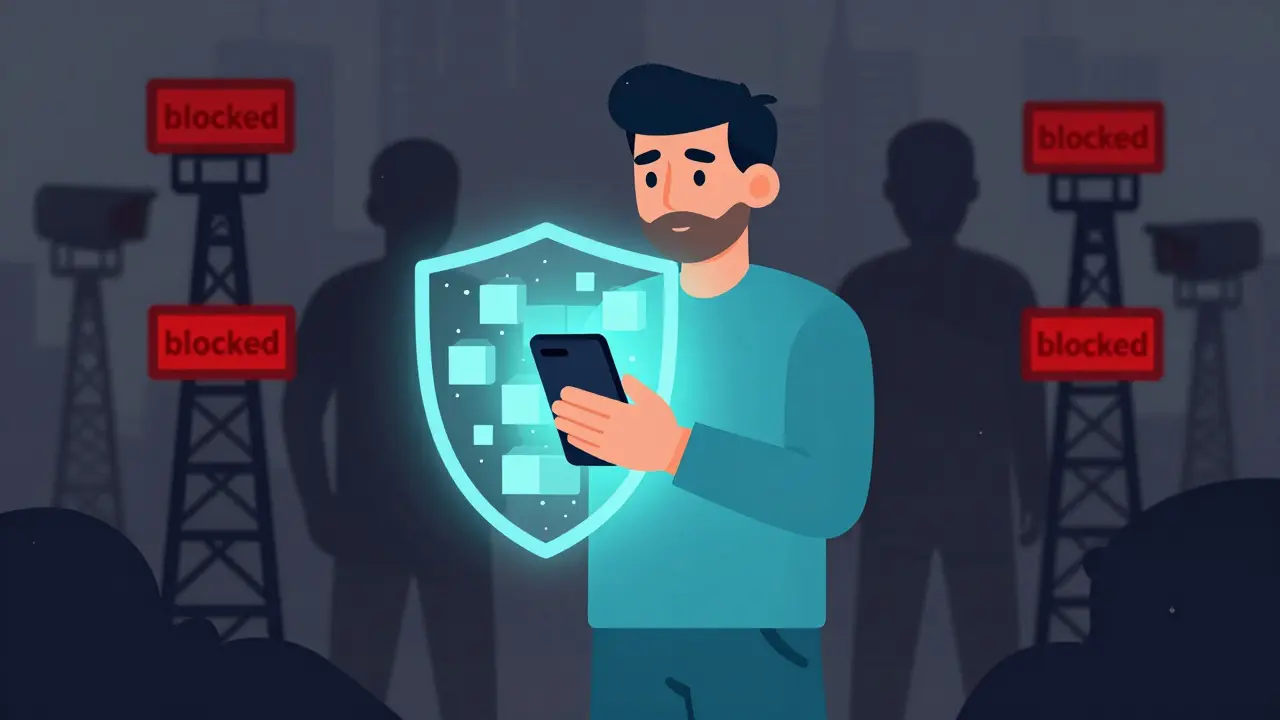
- Secure Your Connection: Iranian ISPs monitor traffic closely. Using a reliable VPN is non-negotiable. However, standard free VPNs are often blocked or slow. Look for services that support obfuscation techniques to hide VPN traffic as regular HTTPS browsing. Without this, accessing foreign DEX interfaces may be impossible.
- Choose the Right Wallet: You cannot use a custodial wallet. Install a self-custody wallet like MetaMask, Trust Wallet, or Rabby Wallet on your mobile device or desktop. Ensure you write down your seed phrase on paper and store it offline. Never share this phrase with anyone.
- Select Low-Cost Networks: Ethereum mainnet fees are too high for small trades. Focus on Layer 2 solutions or alternative chains. As of mid-2026, Polygon remains the preferred network for Iranian users due to its speed, low cost, and compatibility with major DEXs. Arbitrum and Base are also viable options.
- Use Aggregators: Instead of going directly to a single DEX, use aggregators like 1inch or Uniswap. These tools scan multiple liquidity pools to find you the best price. Uniswap, in particular, does not require KYC and operates purely on smart contracts.
The Shift to DAI on Polygon: A Case Study
When Tether froze Iranian-linked addresses in July 2025, panic ensued. But within weeks, a pattern emerged. Influencers and institutional players urged users to move away from USDT (issued by Tether) and swap into DAI, a decentralized stablecoin pegged to the US dollar.
Why DAI? Unlike USDT, DAI is not controlled by a single company that can freeze accounts. It is governed by a decentralized autonomous organization (MakerDAO). Why Polygon? Because sending DAI on Ethereum costs dollars in gas fees, while on Polygon, it costs fractions of a cent. This migration demonstrated that Iranian users are technically adept and willing to adapt to preserve financial sovereignty.
This shift also reduced exposure to sanctioned entities. By using decentralized stablecoins on permissionless networks, users minimized the risk of having their assets frozen by foreign governments. It’s a strategic move that balances accessibility with security.
Navigating On-Ramps: Getting Crypto Into the System
A DEX is useless if you can't put money into it. Since banks won't help, and centralized exchanges are risky, how do you buy your first crypto? There are three common methods in Iran:
- P2P Trading on Local Platforms: Some domestic platforms still operate P2P markets. You pay via bank transfer or card-to-card to a seller, who releases crypto to your wallet. Be cautious: choose sellers with high completion rates and avoid large single transactions to reduce scrutiny.
- Crypto ATMs: While rare and heavily monitored, some unregulated ATMs exist in major cities. These allow cash purchases but often charge exorbitant fees (10-20%). Use only for emergency top-ups.
- Peer-to-Peer International Services: Platforms like Binance P2P (if accessible via VPN) or HodlHodl allow you to sell goods or services for crypto. Alternatively, freelancers earning in USD can convert directly to crypto on-chain, bypassing traditional banking entirely.
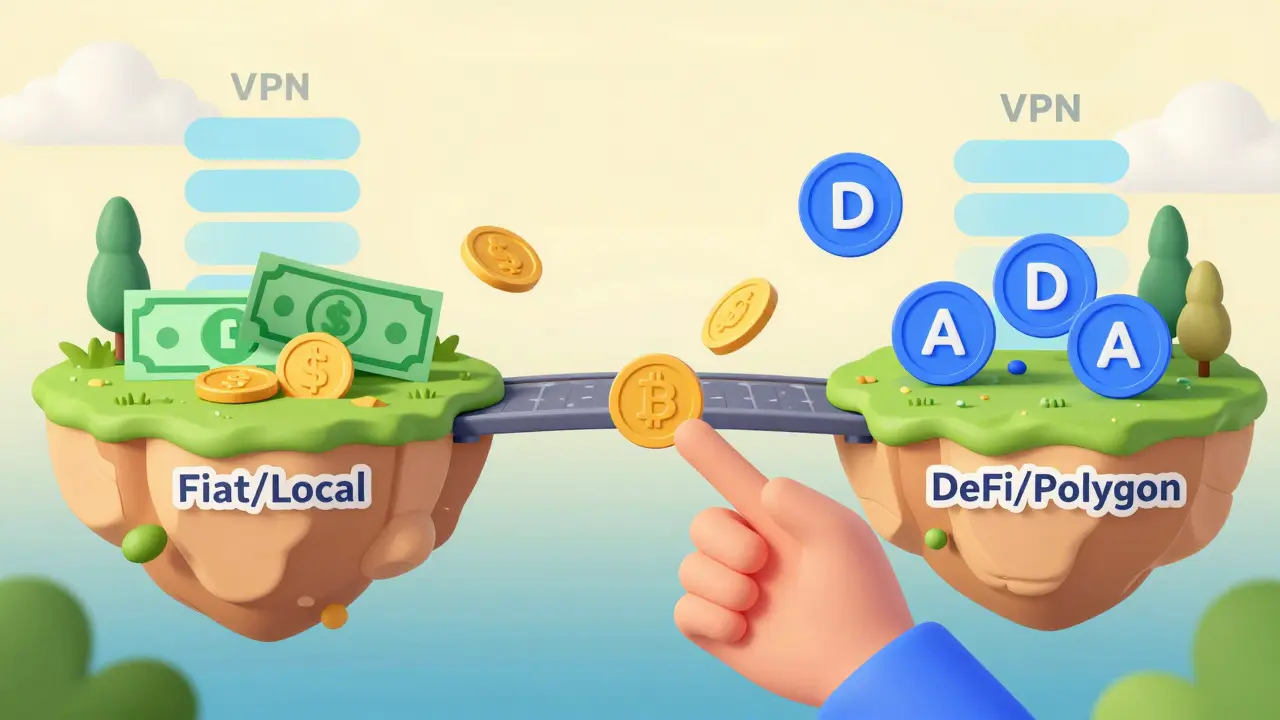
Once you have crypto in your wallet, you can bridge it to Polygon or other EVM-compatible chains using bridges like Hop Protocol or native chain swaps. Always verify bridge contracts before use, as hacks here are common.
Risks and Pitfalls to Avoid
Decentralization doesn't mean risk-free. In fact, it shifts the burden of security from the exchange to you. Here are the biggest threats:
- Phishing Sites: Scammers create fake copies of Uniswap or MetaMask websites. Always bookmark the official URLs. Never click links from Telegram or WhatsApp messages claiming to be "support."
- Malicious Smart Contracts: When swapping tokens, ensure you are interacting with verified contracts. If a token asks for unlimited approval immediately after a swap, revoke permissions using tools like Revoke.cash.
- Network Congestion: During high volatility, networks like Polygon can congest. Set appropriate gas limits to avoid failed transactions that still cost you fees.
- Local Enforcement: While the CBI struggles to monitor DEX activity, large, frequent transactions may still attract attention. Keep trades modest and spread out over time to avoid triggering alerts.
Future Outlook: Will DEXs Remain Viable?
The tension between state control and user innovation will continue. Iran may introduce stricter rules targeting wallet addresses or requiring DEX providers to block Iranian IPs. However, blocking IP addresses is technically difficult and easily circumvented with Tor or advanced VPNs. Moreover, the global trend toward decentralized finance makes it hard for any single nation to shut down the entire ecosystem.
As long as inflation erodes the value of the Rial and sanctions restrict access to global finance, Iranians will seek alternatives. DEXs provide that alternative. They are not perfect, but they are resilient. By mastering these tools, you take back control of your financial future.
Is it legal to use DEXs in Iran?
The legal status is gray. While the Central Bank requires licenses for all crypto participants, enforcing this on decentralized protocols is technically challenging. Most users operate in a de facto tolerated space, provided they do not engage in large-scale money laundering or threaten national security. However, always stay informed about local regulations.
Which DEX is best for Iranian users?
Uniswap and SushiSwap are popular choices due to their wide liquidity and lack of KYC requirements. For aggregation, 1inch is highly recommended as it finds the best rates across multiple DEXs. Ensure you connect via a secure VPN to access these interfaces.
Can my DEX transactions be traced by the Iranian government?
All blockchain transactions are public. While DEXs don't collect personal data, sophisticated analysts can cluster addresses. To enhance privacy, consider using privacy-focused wallets or mixing services (where legal), and avoid linking your wallet address to any identifiable online profiles.
Why did users switch from USDT to DAI in 2025?
After Tether froze Iranian-linked addresses, users lost trust in centralized stablecoins. DAI, being decentralized and algorithmically pegged, offers protection against unilateral freezing. Combined with Polygon's low fees, it became the preferred stable asset for Iranian traders.
Do I need a VPN to use DEXs in Iran?
Yes. Many DEX websites and APIs are blocked by Iranian ISPs. A robust VPN with obfuscation features is essential to access these platforms and protect your identity from local surveillance.
Comments (10)

- Tawny Holmes
- July 9, 2026 AT 07:55 AM
Stop romanticizing the hack. Nobitex failed because their security ops were trash, not because they were centralized.

- Andrew Schneider
- July 11, 2026 AT 02:02 AM
Oh wow, look at you playing financial revolutionary with your little DAI tokens 🙄 It’s cute how you think swapping stablecoins makes you invisible to state surveillance. The IRGC doesn’t care if you’re on Polygon or Ethereum mainnet; they just want your wallet address. You’re not escaping the dragnet, you’re just making it harder for yourself to recover funds when you inevitably sign a malicious contract. This whole 'decentralized savior' narrative is pure theater for people who don’t understand that code is law only until someone finds a bug in your bridge 😂

- Eric Braddock
- July 12, 2026 AT 06:17 AM
The real issue isn't the exchange model, it's the metadata leakage from your ISP routing tables. When you connect via a standard VPN, the TLS handshake still reveals the destination IP range of known DEX frontends like Uniswap.org. The CBI has been collaborating with global threat intelligence firms since 2024 to map these exit nodes. Using Hop Protocol doesn't help if your entry node is flagged by Deep Packet Inspection algorithms that analyze packet timing jitter. You need to route through Tor bridges with obfs4 protocols and then jump into a privacy coin mixer before even touching an EVM chain. Otherwise, you're just painting a target on your back with digital spray paint.

- Ray Arney
- July 13, 2026 AT 02:55 AM
I guess this is pretty solid advice for anyone trying to navigate the current mess. I’ve seen friends struggle with the P2P side of things, so highlighting the risks there is important.

- Alicia Hull
- July 13, 2026 AT 21:22 PM
While the technical guidance is sound, one must critically examine the long-term viability of relying on Layer 2 solutions for primary asset storage. Is it truly prudent to trust the sequencer operators of Polygon or Arbitrum with such high-stakes transactions given the recent regulatory pressures on infrastructure providers? Furthermore, the suggestion to use aggregators like 1inch introduces additional smart contract attack surfaces that are often overlooked by retail users. Have we considered the implications of MEV bots extracting value from these specific trade routes during periods of high volatility?

- Jackie D
- July 14, 2026 AT 01:35 AM
honestly i feel for everyone dealing with this. its wild how hard it is to just keep your own money safe without getting frozen out. the part about writing down the seed phrase offline is so crucial tho. ive seen too many ppl store it in notes apps and then wonder why they got drained. also switching to dai was smart but scary af. hope more ppl can access these tools safely without needing a degree in cybersecurity.

- Johan Otto
- July 15, 2026 AT 05:07 AM
Boring read. Everyone knows DEXs are risky. Stop acting like you discovered fire.

- Anuj Kashyap
- July 16, 2026 AT 03:33 AM
It is fascinating how the concept of 'ownership' shifts when the state decides to become the ultimate creditor 🤔 We see here a classic example of technological determinism clashing with political realism. The user assumes that by moving to a decentralized protocol, they escape the gaze of authority, yet the blockchain itself is a permanent ledger of intent. One might argue that true privacy is an illusion in a world where every transaction is immortalized in stone, accessible to anyone with the computational power to parse it. The irony is palpable: we seek freedom in code, only to find ourselves trapped in a transparent cage of our own making 🎭

- Nick G
- July 17, 2026 AT 15:06 PM
It is imperative that we consider the broader socio-economic implications of these financial maneuvers within the context of international relations and local cultural norms. The transition from centralized to decentralized finance is not merely a technical upgrade but a profound shift in the social contract between the individual and the state, requiring a nuanced understanding of both cryptographic principles and geopolitical realities. By engaging with these platforms, users are participating in a global dialogue about sovereignty and resistance, which necessitates a deep respect for the diverse perspectives and experiences of those navigating these complex systems under duress. We must foster an environment of mutual support and knowledge sharing to ensure that no one is left behind in this rapidly evolving landscape.

- Nick Wengel
- July 19, 2026 AT 01:07 AM
This helps explain why my cousin in Tehran stopped using his bank app for crypto. He said the fees were killing him anyway.