
Supply Chain Traceability Calculator
How DLT Improves Your Supply Chain
Based on real-world examples from the article: Walmart reduced traceability time from 7 days to 2.2 seconds. Deloitte found 83% of adopters saw positive ROI within 2 years.
Your Traceability Impact
ROI: 22%+Time Savings: 0 seconds
Fraud Reduction: 0% reduction in counterfeits
Cost Savings: $0
How This Compares to Traditional Systems
Traditional: 7 days traceability time | 40% document processing delay
With DLT: 0 seconds traceability | 90% less manual verification
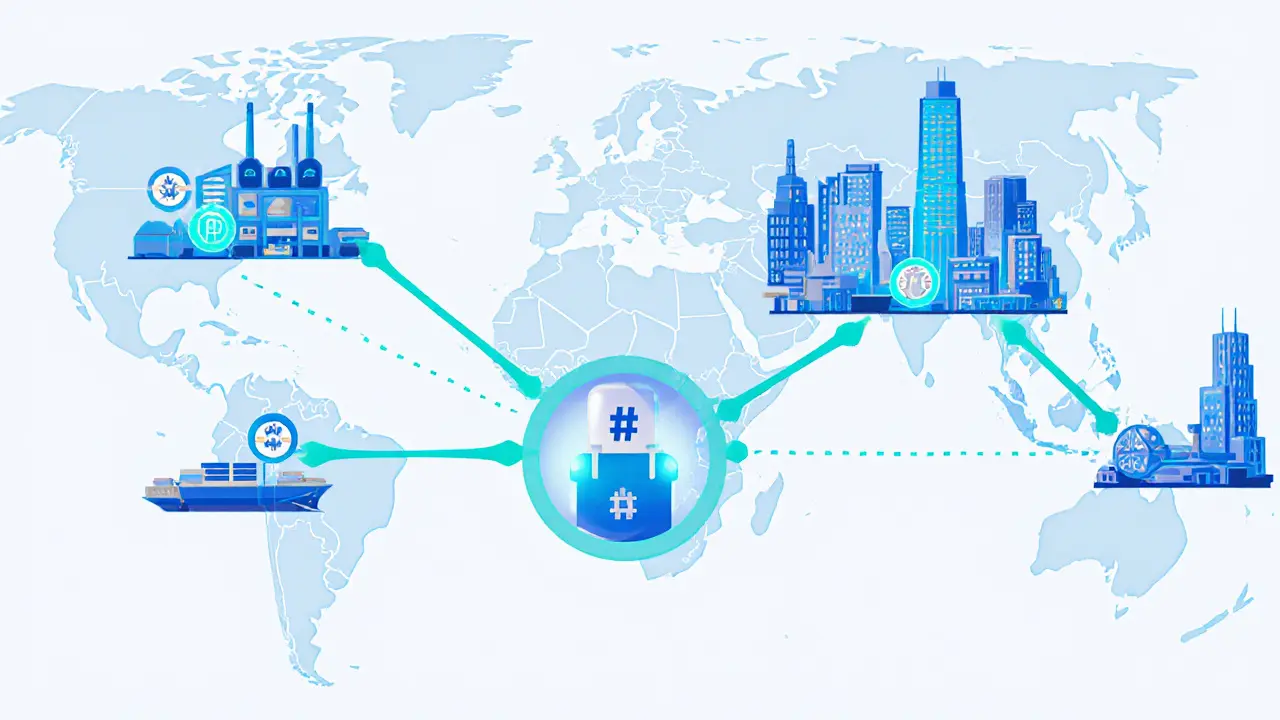
Imagine tracking a shipment of medicine from a factory in India to a pharmacy in Chicago - not with piles of paper, emails, or guesswork - but with a single, unchangeable record that every partner in the chain can see in real time. That’s not science fiction. It’s happening today, thanks to Distributed Ledger Technology (DLT).
What DLT Actually Does in Supply Chains
DLT isn’t just another buzzword. It’s a digital system where multiple parties share and verify data without needing a central authority. Think of it like a digital notebook that’s copied across dozens of computers. Every time someone adds a new entry - like when a truck leaves a warehouse or a temperature sensor detects a spike - everyone gets the update at the same time. And once it’s written, it can’t be erased or altered without everyone knowing. In supply chains, this solves problems that have existed for decades. Before DLT, tracking a product meant juggling spreadsheets, fax machines, and manual data entry. A single error could delay an entire shipment. Counterfeit drugs, spoiled food, and stolen electronics slipped through the cracks because no one could prove where something came from. Now, with DLT, every step is recorded. A bottle of insulin isn’t just labeled with a barcode. It’s tied to a digital identity that tracks its manufacturing date, storage conditions, shipping route, customs clearance, and final delivery. If the temperature rose above 8°C during transit? The system flags it. If a batch was recalled? You know exactly which units are affected - down to the serial number.Why Traditional Systems Fall Short
Old-school supply chain tools like EDI (Electronic Data Interchange) and ERP systems were built for one-way communication. One company sends a purchase order. Another sends an invoice. But they don’t talk to each other in real time. If a supplier changes the delivery date, the buyer might not find out until the shipment is late. DLT changes that. It creates a shared truth. Everyone - manufacturers, logistics providers, customs agents, retailers - sees the same data. No more arguing over who sent what, when. No more lost documents. No more manual reconciliation. IBM’s research shows that companies using DLT cut documentation processing time by 40% in food supply chains. Deloitte found traceability investigations that used to take weeks now take seconds. In one case, Walmart reduced the time to trace the origin of a mango from seven days to 2.2 seconds. That’s not efficiency. That’s a revolution.Real-World Impact: Cases That Work
You don’t have to guess if this works. Look at the results. Maersk and IBM built TradeLens, a platform that handled over 300 million shipping events before it was retired in 2022. Customs authorities using it reported 40% faster clearance times. Why? Because documents were verified instantly, not held up in piles of paperwork. In the pharmaceutical industry, the FDA’s Drug Supply Chain Security Act (DSCSA) requires full traceability by 2023. Companies using DLT met that deadline. They didn’t just comply - they reduced fraud. Counterfeit drugs cost the global economy $42 billion a year. DLT makes it nearly impossible to sneak fake products into the pipeline. Even luxury goods are using it. A Swiss watchmaker now embeds a digital certificate on every timepiece, verified on a blockchain. Buyers can scan a QR code and see the full history: who made it, when, and where it’s been.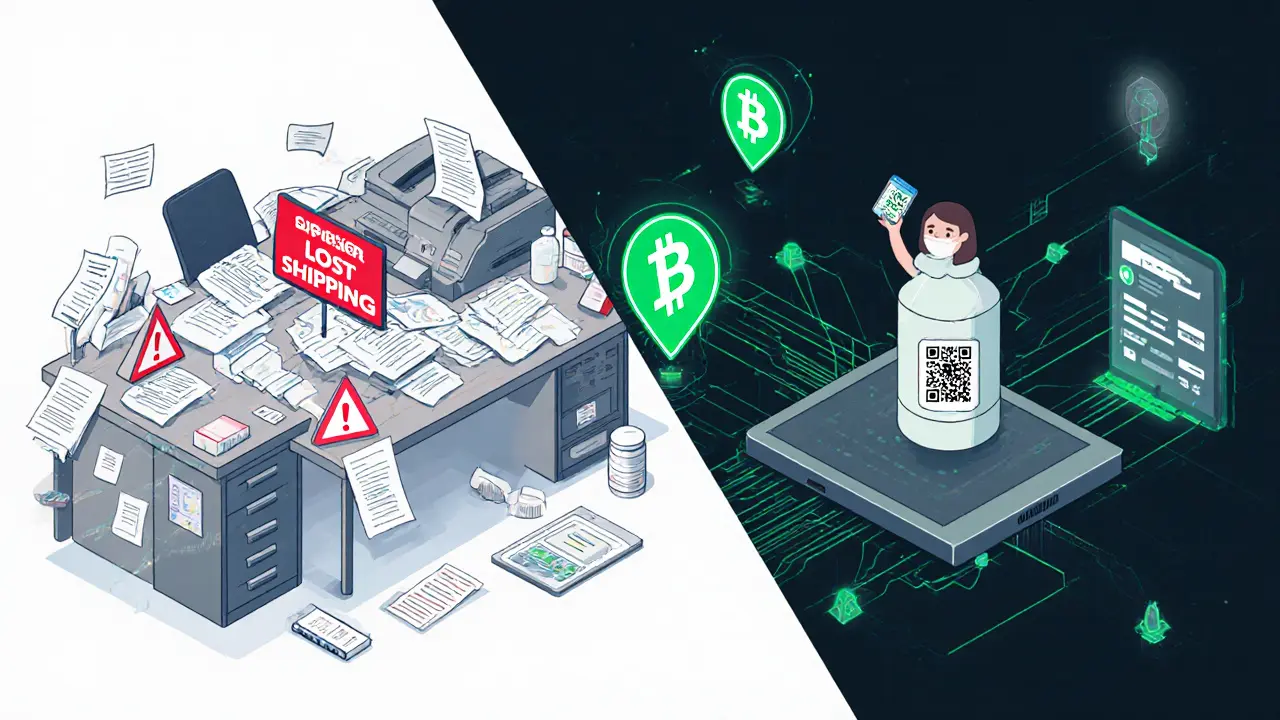
How It Works Behind the Scenes
DLT doesn’t magic up data. It ties together existing systems. Sensors on pallets record temperature and humidity. GPS trackers log location. ERP systems handle inventory. DLT doesn’t replace them - it connects them. Each piece of data gets a unique digital fingerprint, called a hash. If anyone tries to change the data, the hash changes. The system immediately knows something’s wrong. That’s why tampering is practically impossible - you’d need to alter every copy of the ledger at the same time. Enterprise DLT platforms like Hyperledger Fabric and R3 Corda use permissioned networks. Only verified participants - suppliers, carriers, regulators - can add data. They’re authenticated with digital certificates, not public wallets like Bitcoin. This keeps the system secure and compliant with privacy laws like GDPR. Consensus mechanisms like Practical Byzantine Fault Tolerance (PBFT) keep things running smoothly. Unlike Bitcoin’s energy-heavy Proof of Work, PBFT uses less power and confirms transactions in seconds. Most supply chain DLT systems process between 1,000 and 5,000 transactions per second - enough to handle global trade flows.Where It Doesn’t Work Yet
DLT isn’t a magic fix for everything. It’s overkill for simple, internal tracking. If you’re just moving widgets between two warehouses you own, a database with good access controls is cheaper and faster. Some companies tried and failed. One major European automaker abandoned its blockchain pilot after 18 months. Why? Too many suppliers (200+) couldn’t agree on rules. The governance was too complex. The cost didn’t justify the gain. Small suppliers with limited tech resources often struggle to join. A farmer in Kenya might not have the bandwidth or know-how to upload data to a blockchain platform. That’s why successful implementations usually start with high-value, regulated goods - pharmaceuticals, aerospace parts, luxury items - where the stakes are high and the ROI is clear.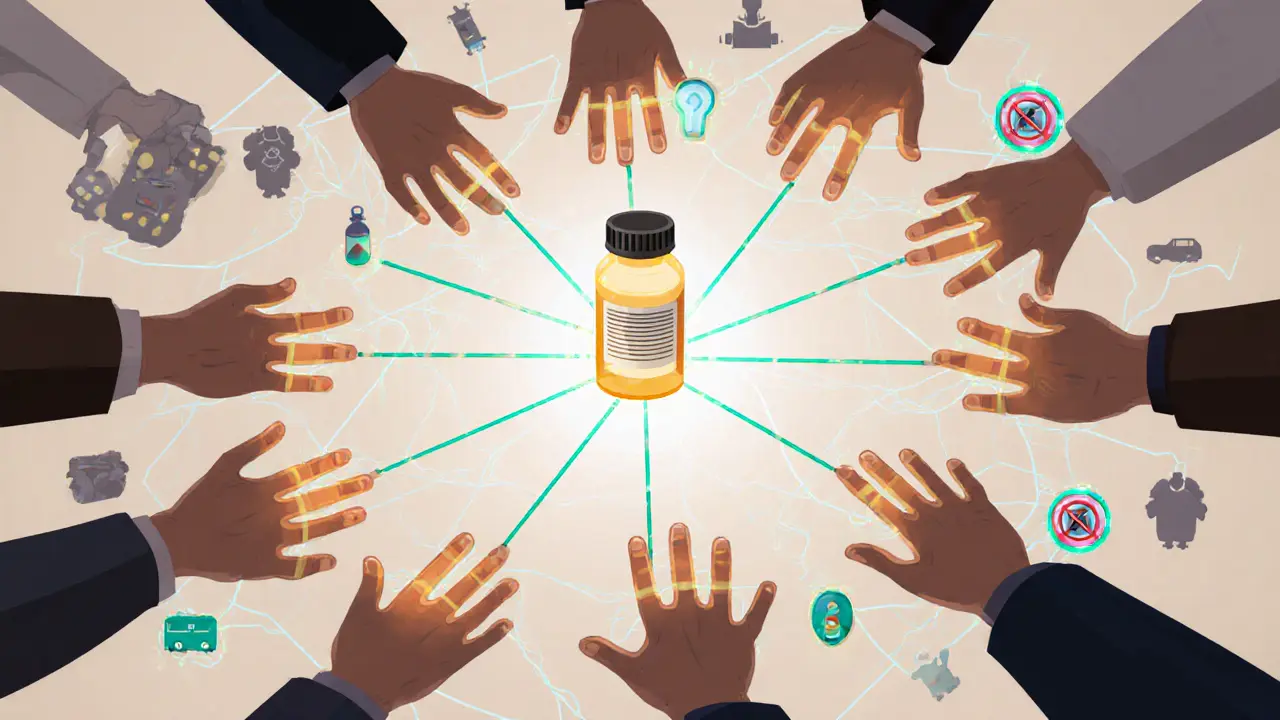
The Cost and Timeline
Implementing DLT isn’t cheap. A full rollout can cost between $500,000 and $2 million. It takes 9 to 18 months to go from pilot to enterprise-wide use. That’s longer than upgrading an ERP system. But here’s the catch: the cost of *not* doing it is rising. Regulatory fines for non-compliance are climbing. The EU’s Digital Product Passport rule, effective in 2027, will require full traceability for electronics, batteries, and textiles. The FDA’s DSCSA mandate is already in force. Companies that wait will be scrambling. And the ROI? Deloitte found 83% of early adopters saw positive returns within two years. Savings come from fewer delays, lower fraud, less paperwork, and faster recalls.What You Need to Get Started
If you’re considering DLT, start small. Pick one high-risk, high-value product line. Test it with your top five suppliers. Don’t try to digitize your entire supply chain overnight. You’ll need:- A clear use case - traceability, compliance, or fraud prevention
- Partners willing to share data - no single company can do this alone
- Integration tools - middleware like Chainlink or SAP’s blockchain extensions
- Training - procurement teams need 80-120 hours of specialized training
- A governance model - who can add data? Who can see it? How are disputes resolved?
The Future Is Already Here
By 2027, 65% of global supply chain transactions for regulated products will use DLT, according to the World Economic Forum. That’s not speculation - it’s a prediction based on current adoption curves. The next wave? AI and IoT. DLT records what happened. AI predicts what will happen. Sensors tell you the temperature spiked. AI figures out why - was it a faulty refrigeration unit? A delayed truck? A customs hold? Gartner predicts that by 2026, 70% of DLT supply chain systems will use AI for anomaly detection. Interoperability standards are already being developed. Soon, a shipment tracked on one blockchain will be readable on another - no more silos. DLT isn’t replacing supply chains. It’s making them smarter, faster, and more trustworthy. The companies that adopt it won’t just survive the next decade - they’ll lead it.Is DLT the same as blockchain?
Blockchain is one type of DLT, but not all DLT is blockchain. Blockchain organizes data into linked blocks with timestamps. Other DLT forms, like directed acyclic graphs (DAGs), use different structures. In supply chains, blockchain is the most common because its chronological, tamper-proof format works well for tracking product history.
Can small businesses use DLT in their supply chains?
Yes, but indirectly. Most small businesses join DLT networks through larger partners or industry consortia. For example, a small food supplier might connect to Walmart’s Food Trust network to meet its requirements. Cloud-based platforms like Azure Blockchain Service also offer pay-as-you-go options that lower the entry barrier.
Does DLT increase energy use?
Not in enterprise supply chains. Public blockchains like Bitcoin use energy-heavy Proof of Work. But supply chain DLT uses efficient consensus methods like PBFT or Raft, which require minimal energy - comparable to running a small server farm. Most platforms today are designed for low environmental impact.
How does DLT prevent fraud?
DLT prevents fraud by making it impossible to alter records without detection. Every transaction gets a unique digital signature. If someone tries to change a shipment record, the system compares the new hash with the original. If they don’t match, the change is rejected. This stops fake certificates, altered batch numbers, and counterfeit goods from entering the chain.
What industries benefit most from DLT?
High-value, regulated industries see the biggest gains: pharmaceuticals, aerospace, luxury goods, and food. These sectors face strict compliance rules, high fraud risk, and costly recalls. DLT reduces all three. Commodity industries like bulk agriculture or low-margin retail are slower to adopt because the ROI isn’t as clear yet.
Do I need to replace my ERP system to use DLT?
No. DLT is designed to work alongside existing systems like SAP S/4HANA or Oracle Cloud. It acts as a layer on top, syncing data through APIs. You don’t need to rebuild your entire IT infrastructure - just connect your current tools to the blockchain network.
What’s the biggest challenge in adopting DLT?
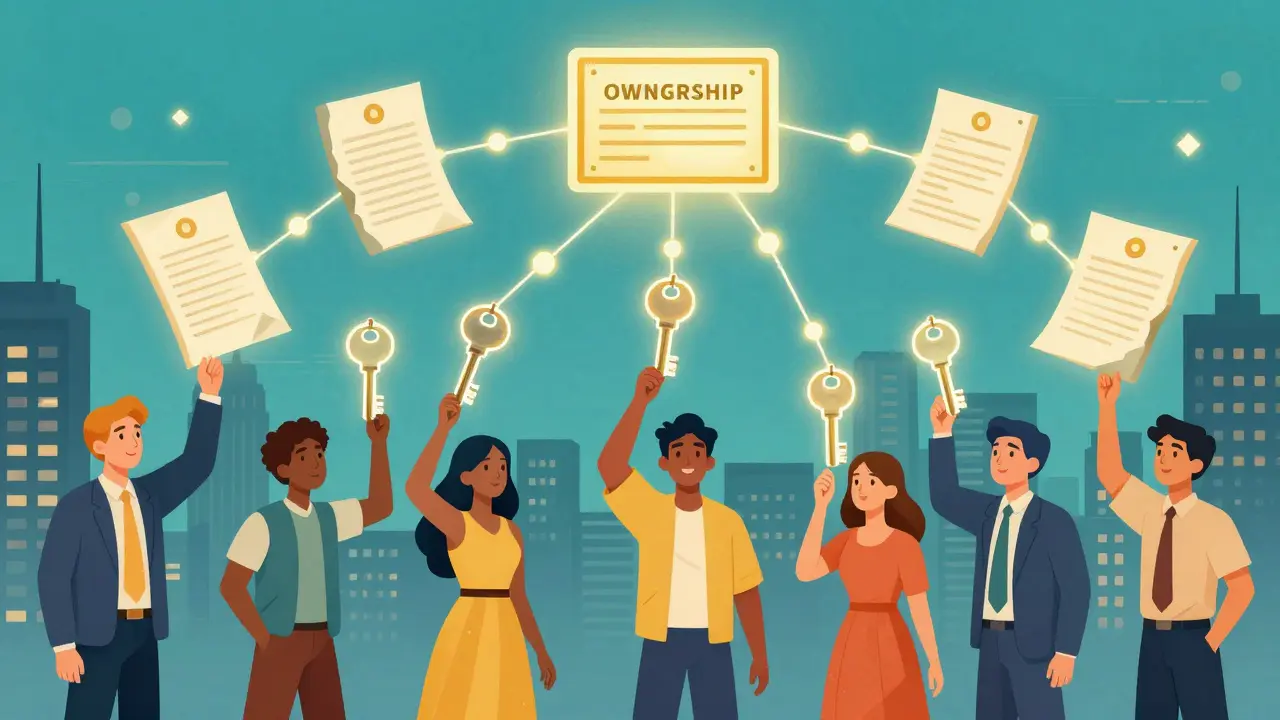
The biggest challenge isn’t technology - it’s collaboration. Supply chains involve dozens of independent companies. Getting them to agree on data standards, access rules, and governance is harder than writing code. Successful projects start with a small group of trusted partners and build from there.

Comments (5)

- Puspendu Roy Karmakar
- November 27, 2025 AT 21:39 PM
Just saw this article and had to chime in - I work in pharma logistics in India, and DLT cut our traceback time from 5 days to under 2 hours. No more guessing which batch went where. The sensors on the cold chain units? They’re game changers. We stopped two counterfeit shipments last quarter alone. This isn’t future tech - it’s what we’re using right now.

- Evelyn Gu
- November 28, 2025 AT 06:12 AM
I’ve been watching this space for years, and honestly, I used to think blockchain was just hype-until I saw how a small distributor in Ohio used it to track organic honey from a single hive to a farmer’s market stall; the transparency didn’t just build trust with customers, it actually let them see the beekeeper’s name, the exact field where the flowers bloomed, and the temperature during every leg of transport-and people started paying 30% more because they knew it wasn’t just ‘organic’-it was verifiably, authentically, traceably real, and that emotional connection? That’s what turns a supply chain into a story people care about.

- Ben Costlee
- November 28, 2025 AT 22:31 PM
Let’s be real-DLT isn’t about the tech. It’s about trust. I’ve sat in too many meetings where suppliers and retailers spent weeks arguing over who sent what, when, and why. The paperwork was a nightmare. DLT doesn’t fix bad relationships-but it removes the excuse for them. When everyone sees the same data, in real time, you stop pointing fingers and start solving problems. And that’s worth every dollar of implementation cost. The real ROI isn’t in time saved-it’s in relationships rebuilt.

- Mark Adelmann
- November 29, 2025 AT 23:42 PM
Small biz owners-don’t wait for a big company to ‘let’ you in. Join a consortium. Use Azure Blockchain or IBM’s platform with pay-as-you-go. I helped a local coffee roaster plug into a global DLT network through a trade group, and now their customers scan a QR code to see the farm in Colombia where the beans were picked. Sales jumped 40%. You don’t need to be Amazon to use this tech-you just need to care enough to try.

- ola frank
- November 30, 2025 AT 23:18 PM
While the empirical benefits of DLT in supply chain traceability are demonstrable, one must interrogate the ontological assumptions underlying its deployment: the presumption of immutable truth, the epistemic authority granted to cryptographic hashes, and the institutional hegemony of permissioned ledgers that, despite claims of decentralization, often reinforce centralized governance models under the guise of compliance. The real challenge lies not in technical interoperability, but in whether the socio-technical architecture of DLT can ever be truly equitable-or if it merely digitizes existing power asymmetries with greater efficiency.
Post-Comment
Categories
Popular Articles