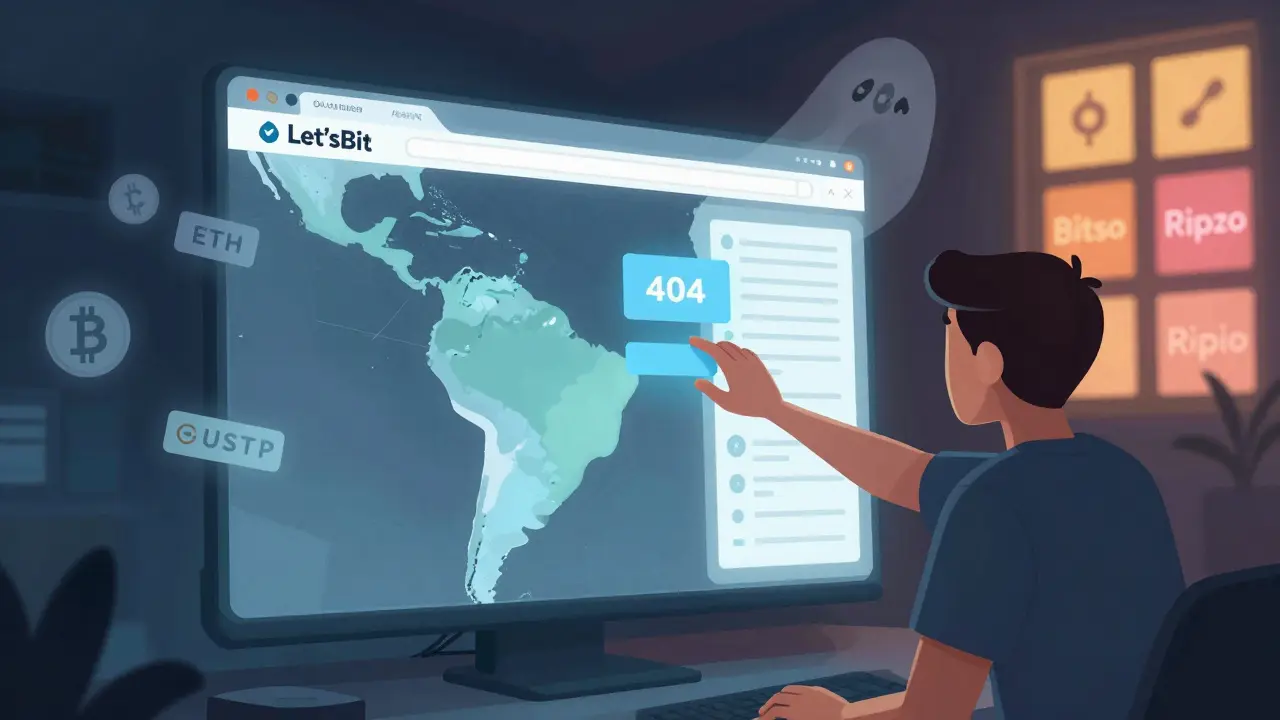

Let’sBit was never meant to be another global crypto exchange. It was built for one purpose: to make cryptocurrency easy for everyday people in Latin America. Founded in 2020 by a team in Argentina, it promised simple onboarding, local payment methods like bank transfers in pesos and reais, and a no-nonsense interface. But today, in February 2026, Let'sBit doesn’t function like a real exchange at all. There’s no trading. No liquidity. No user support. And no way to withdraw your funds if you still have any there.
What Let'sBit Claimed to Be
When Let'sBit launched, it had a clear story. Latin America has some of the highest crypto adoption rates in the world. Argentina ranked third globally in crypto usage in 2023, according to Chainalysis. Brazil wasn’t far behind. But most exchanges at the time were built for English-speaking users in the U.S. or Europe. They didn’t support local bank transfers. They didn’t offer Spanish or Portuguese interfaces. And they didn’t understand the region’s unique financial barriers. Let'sBit said it fixed that. It claimed to offer:- Spot trading with major coins like BTC, ETH, and USDT
- Perpetual futures and margin trading
- Local payment methods: P2P, bank transfers, and even cash deposits via partner kiosks
- Simple KYC using Argentine DNI or Brazilian CPF
- Mobile apps for iOS and Android
The Reality: No Trading, No Activity
Here’s the hard truth: Let'sBit hasn’t had any real trading activity since late 2022. Check CoinMarketCap. Search for Let'sBit. The exchange page shows zero trading pairs. Zero volume. Zero liquidity. It’s not just low activity - it’s completely blank. CoinGecko doesn’t list it at all. That’s not a mistake. That’s a death sentence for any crypto exchange. Compare that to Bitso in Mexico or Mercado Bitcoin in Brazil. Both process billions in monthly volume. They have hundreds of thousands of active users. They update their apps, fix bugs, add new coins, and respond to support tickets. Let'sBit? Nothing. No updates. No blog posts. No social media activity since 2022. The website still loads, but it’s a ghost. Buttons don’t work. Login fails. The help center returns 404 errors. Traders Union, a well-known crypto review platform, gave Let'sBit a legitimacy score of 2.1 out of 5. Their report says: “A shell rather than a functioning service.”User Reports: A Tale of Two Experiences
You’d think a dead exchange would have no users. But that’s not the case. Trustpilot has 19 reviews for Let'sBit. That’s not a lot - but the pattern is strange. Over half (10) gave it 5 stars. The other 7 gave it 1 star. There are no 2, 3, or 4-star reviews. That’s not normal. It suggests two very different user experiences:- Positive reports: “Easy to sign up in Argentina. Customer service helped me deposit pesos.” - User from Buenos Aires, 2021
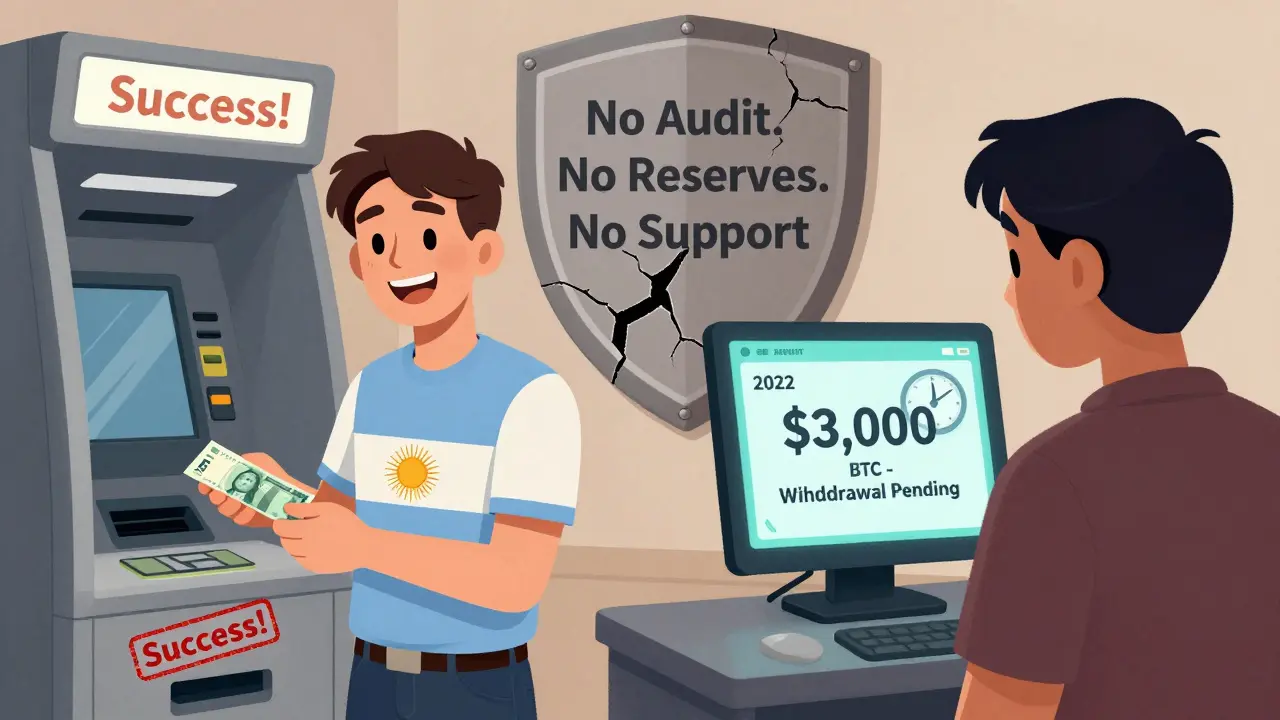
- Negative reports: “I withdrew $3,000 in BTC in March 2022. It’s still stuck. No reply for over two years.” - User from São Paulo, 2024
Why Let'sBit Failed
Let'sBit didn’t fail because it was a bad idea. It failed because it never scaled beyond a prototype. It never secured regulatory approval. Argentina’s CNV (National Securities Commission) requires exchanges to prove they hold user funds securely, undergo regular audits, and report suspicious activity. Let'sBit never published proof of reserves. It never showed an audit report. That’s not a minor oversight - it’s a dealbreaker. Meanwhile, competitors like Ripio and Buenbit partnered with local banks and licensed financial institutions. They built compliance into their model from day one. Let'sBit tried to be a “fast mover,” but in crypto, moving fast without legal backing is a recipe for disaster. Also, it never built a real team. No engineering updates. No marketing. No customer support. By 2023, even their email addresses stopped responding. Traders Union tried contacting them for 72 hours. No reply.Is Let'sBit Safe to Use?
Short answer: No. If you’re thinking of signing up today, don’t. Even if the site looks active, it’s not. There’s no way to verify if your funds are safe. No proof of reserves. No insurance. No legal recourse. Even if you somehow manage to deposit money, you won’t be able to withdraw. Multiple users reported frozen accounts after 2022. Some waited over 18 months. Others never got their money back. And here’s the worst part: Let'sBit’s domain is still registered. Its website is still up. That means someone - maybe the original team, maybe a new owner - is keeping it alive for one reason: to keep users hopeful. To keep them checking back. To keep them from realizing they’ve been abandoned.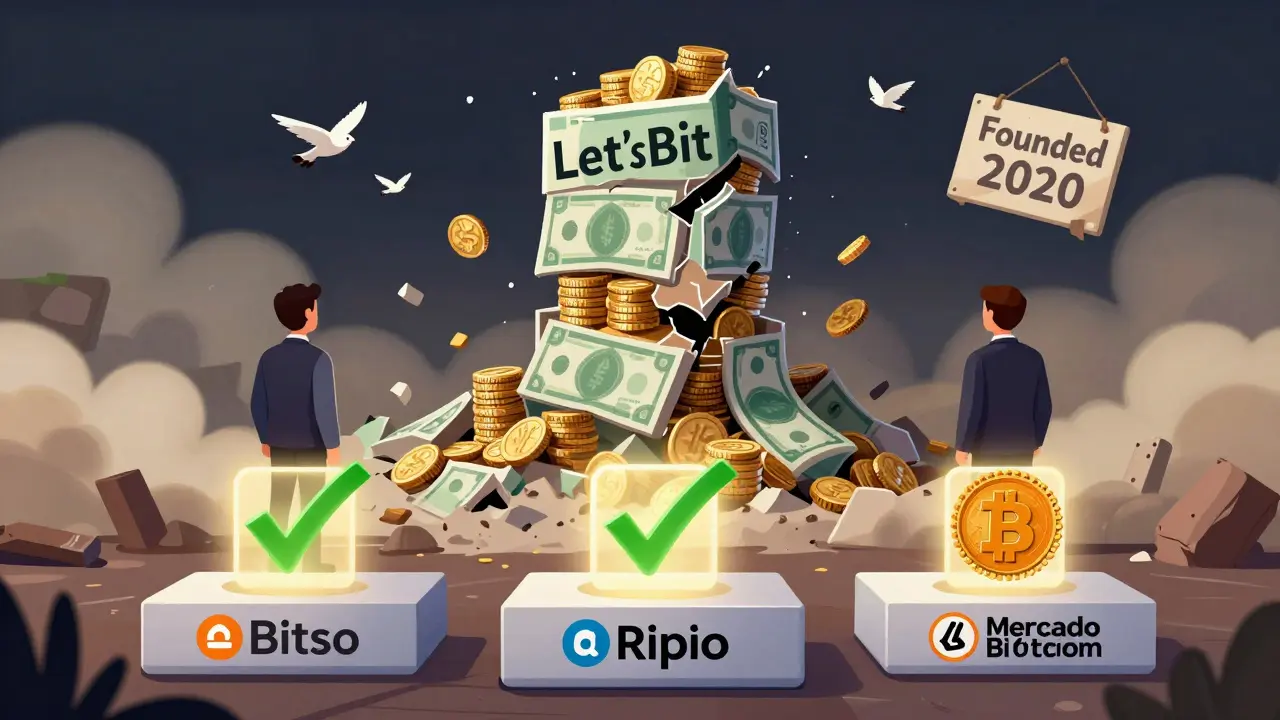
What Should You Use Instead?
If you’re in Latin America and want to trade crypto, here are three real alternatives:- Bitso (Mexico & Colombia): Best for beginners. Supports peso and dollar deposits. Fully regulated. Over $1.2B monthly volume.
- Ripio (Argentina): Largest exchange in Argentina. Easy bank transfers. Good mobile app. Trusted by millions.
- Mercado Bitcoin (Brazil): Brazil’s oldest and most secure exchange. Offers staking, lending, and fiat on-ramps.
The Bigger Lesson
Let'sBit’s story isn’t just about one failed exchange. It’s about a pattern you’ll see again and again in crypto. Too many projects launch with a great pitch - “We’re building for Latin America!” - but never deliver the basics: security, compliance, and consistent operations. They chase hype, not users. They build websites, not systems. Crypto isn’t about promises. It’s about proof. Proof of reserves. Proof of uptime. Proof of support. Proof that someone is still in charge. Let'sBit had none of that. If you see an exchange that looks too simple, too local, or too good to be true - check CoinMarketCap. Check Trustpilot. Check Reddit. If there’s no volume, no reviews, no updates - walk away.Frequently Asked Questions
Is Let'sBit still operating in 2026?
No. Let'sBit has no active trading, no user deposits, and no functional support channels as of 2026. Its platform shows zero volume on CoinMarketCap and CoinGecko, and its website is largely non-responsive. The exchange is considered defunct by industry trackers.
Can I withdraw my funds from Let'sBit?
If you deposited funds before 2022, it’s highly unlikely you can withdraw them. Multiple users reported frozen accounts with no response from support. The platform’s lack of operational infrastructure means there’s no mechanism to process withdrawals. Treat any remaining balance as lost.
Was Let'sBit ever regulated?
There is no public evidence that Let'sBit obtained regulatory approval from Argentina’s CNV, Brazil’s CVM, or any other Latin American financial authority. Regulatory compliance is mandatory for legal crypto exchanges in the region, and Let'sBit never demonstrated it.
Why did Let'sBit shut down?
Let'sBit failed to scale beyond a pilot phase. It lacked consistent engineering support, regulatory compliance, and customer service infrastructure. While it had a strong initial concept, it never built the systems needed to sustain operations. Competitors with better funding and legal backing quickly overshadowed it.
Are there any signs Let'sBit might come back?
There are no credible signs of a relaunch. No official announcements, no GitHub updates, no social media activity, and no changes in trading data. The most recent Trustpilot review was from July 2025, but it doesn’t indicate operational recovery. Industry experts consider its return extremely unlikely.
Comments (5)

- George Suggs
- February 24, 2026 AT 17:34 PM
Been using crypto in LatAm for years. Let'sBit was a nice idea but never delivered. The site still loads but it's like visiting a ghost town. No trading, no support, just a digital tombstone. Skip it. Go with Bitso or Ripio instead.

- Brian Lemke
- February 26, 2026 AT 12:29 PM
This is such a sobering breakdown. Let'sBit didn't fail because it was poorly conceived - it failed because it confused charm with sustainability. Building for Latin America isn't just about language or local payment methods. It's about trust infrastructure: audits, compliance, and consistent engineering. The fact that they kept the site live while leaving users hanging? That's not negligence - that's psychological manipulation. If you're building anything in crypto, remember: users don't want a pretty homepage. They want a working bank.

- Mae Young
- February 27, 2026 AT 03:49 AM
Ohhh, so Let'sBit was 'built for Latin America'? How cute. Like a startup that says 'we're like Uber... but for pigeons.' The real tragedy isn't that it died - it's that people still believe in these 'local hero' narratives. You think a 2020 Argentinian startup with zero regulatory paperwork could outlast Binance? Please. The only thing 'local' about Let'sBit was its ability to drain pesos from people who trusted a website with a nice logo. I'm surprised no one sued them for emotional damages.

- Trenton White
- February 27, 2026 AT 20:22 PM
I used to have an account there. Deposited a small amount in 2021. Never touched it again. Didn't think much of it until now. The site still loads. The login button still works. But the moment you try to do anything - poof. Nothing. No error message. No email. Just silence. I'm not mad. Just... sad. That's how it ends. Not with a bang. Not with a tweet. Just a blank screen.

- Cheryl Fenner Brown
- March 1, 2026 AT 12:24 PM
so like... let'sbit was a ghost site the whole time?? 😭 i thought i was just bad at crypto. turns out i just trusted a website that looked like it was made in 2018. rip. also, why is the domain still registered?? someone's out there keeping it alive just to watch us check back... 🤯