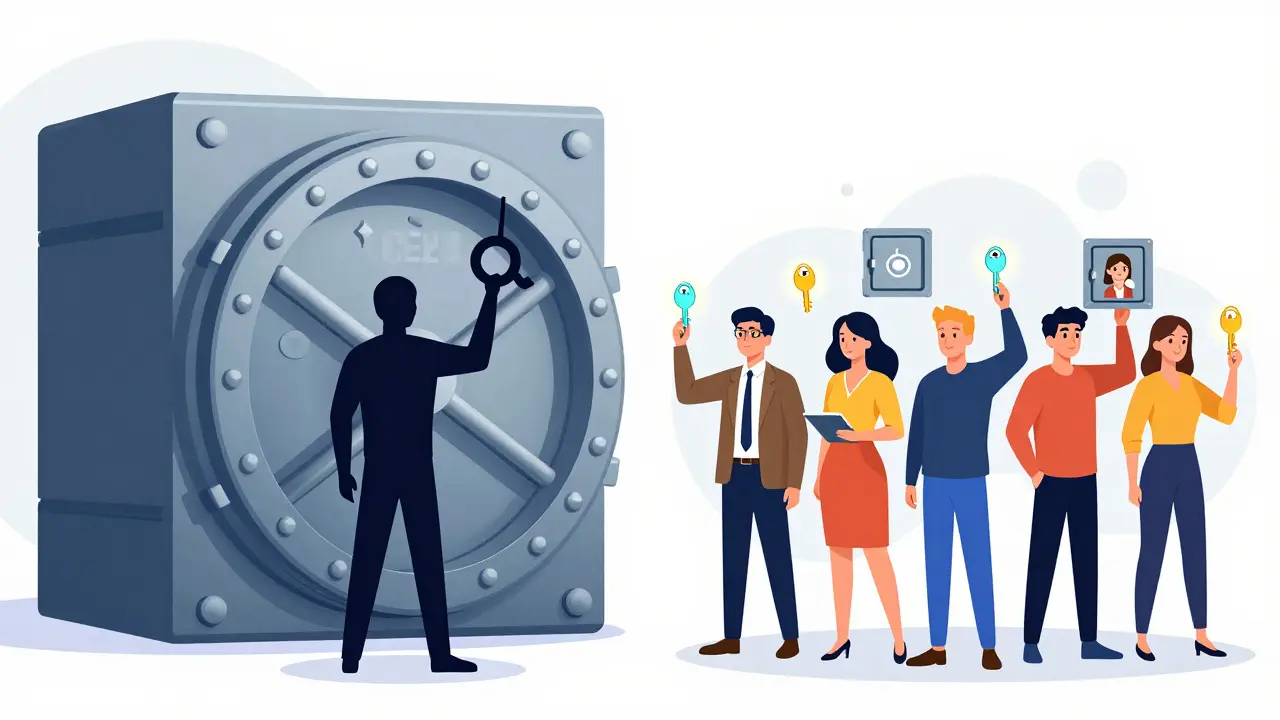

Imagine handing your entire life savings to a stranger and hoping they don't disappear with the keys to the vault. That is essentially how using a centralized exchange feels once you peek under the hood. You don't actually own your coins; you own a promise from a company that they will give them back when you ask. This is why a growing number of traders are moving toward Decentralized Exchanges is a peer-to-peer marketplace where users trade cryptocurrencies directly from their own wallets without an intermediary. Also known as DEXs, these platforms shift the power back to the individual, removing the middleman entirely.
Full Control Over Your Private Keys
The most jarring difference between a traditional exchange and a DEX is who holds the keys. In a centralized setup, the exchange manages your private keys. If the company goes bankrupt or gets hacked, your assets are often gone. With a DEX, you use self-custody. This means your funds stay in your personal wallet-like MetaMask or Trust Wallet-until the very second a trade is executed.
This model eliminates the "single point of failure." When a giant centralized platform crashes, millions of people lose access to their funds. In a decentralized environment, there is no central server to crash and no CEO who can freeze your account on a whim. You are your own bank, which is the fundamental promise of the blockchain movement.
Privacy and the End of KYC Hassles
If you've ever had to upload a photo of your passport and a selfie holding a piece of paper to open a trading account, you've experienced KYC (Know Your Customer). While intended to stop crime, these databases are goldmines for hackers. One leak, and your sensitive personal data is available for everyone on the dark web.
Decentralized exchanges don't ask for your name, email, or ID. They only care about your wallet address. This provides a level of anonymity that is nearly impossible to find in traditional finance. You can swap assets without revealing your identity to a corporate entity, making the process fast, private, and permissionless.
How AMMs Make Trading Possible Without a Middleman
You might wonder: if there's no company matching buyers and sellers, how does a trade actually happen? This is where the Automated Market Maker is a protocol that uses mathematical formulas to price assets automatically instead of relying on a traditional order book. Commonly referred to as an AMM, this technology is the engine behind most modern DEXs.
Instead of waiting for another human to want exactly what you're selling, you trade against a Liquidity Pool. This is a smart contract containing a reserve of two different tokens. Users-called liquidity providers-deposit their own assets into these pools to facilitate trades and earn a share of the trading fees in return. This creates a continuous, 24/7 market that doesn't rely on a centralized matching engine.
| Feature | Decentralized Exchange (DEX) | Centralized Exchange (CEX) |
|---|---|---|
| Custody | Self-custody (User holds keys) | Custodial (Exchange holds keys) |
| Identity | Anonymous / No KYC | Required KYC / Identity Verification |
| Control | Full user control | Exchange can freeze accounts |
| Listing | Permissionless (Anyone can list) | Curated (Exchange decides) |
| Support | Community-based / None | Corporate Customer Support |

Access to the Long Tail of Altcoins
Centralized platforms are picky. They only list coins that have a certain amount of hype or a relationship with the exchange's owners. If a project is too new or too niche, you'll never find it on a major CEX. This creates a bottleneck for innovation.
DEXs are permissionless. Because they run on Smart Contracts, any developer can create a token and add it to a liquidity pool. This gives you early access to emerging projects and niche tokens long before they hit the mainstream. While this means you have to be more careful about "rug pulls" and scams, it provides an unparalleled opportunity to discover assets early.
Integrating with the DeFi Ecosystem
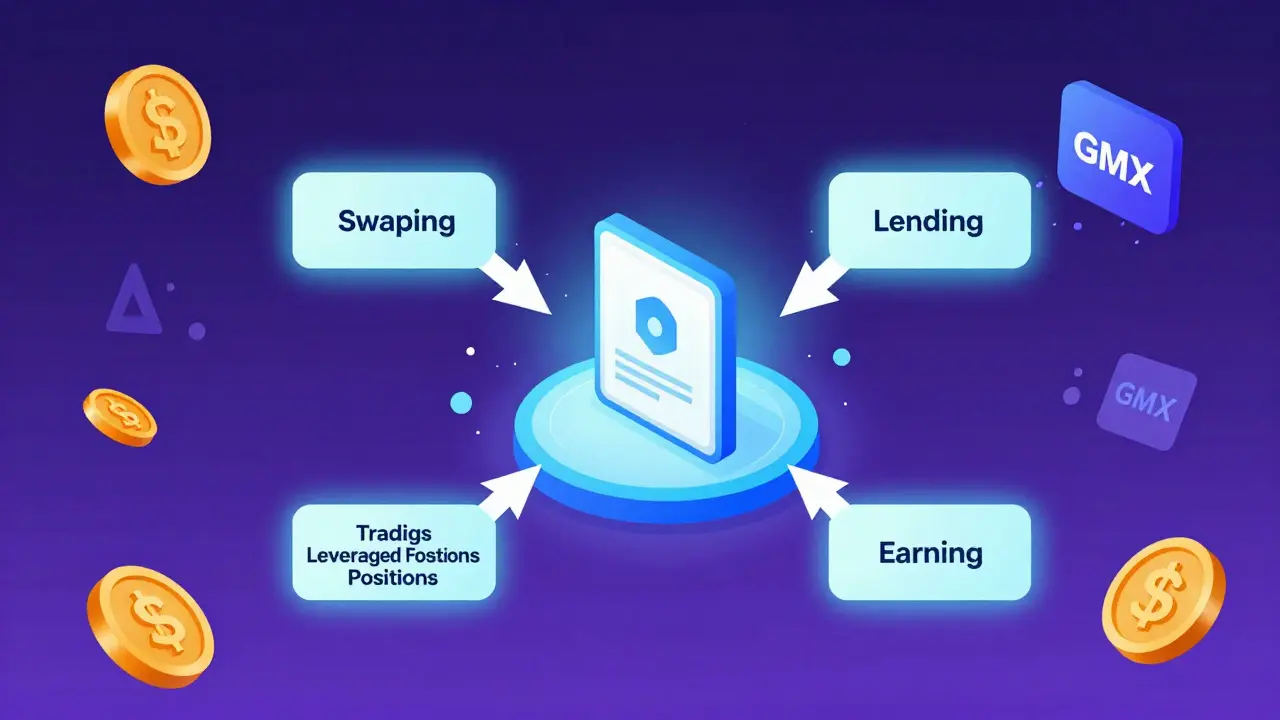
A DEX isn't just a place to swap tokens; it's a gateway to Decentralized Finance is an umbrella term for financial services like lending, borrowing, and earning interest built on blockchain networks. Also known as DeFi, this ecosystem allows your assets to work for you.
Since your funds are already in a compatible wallet, you can move them from a DEX to a lending protocol to earn interest, or use them as collateral for a loan, all without ever sending your money to a centralized company. Everything happens via code, which is transparent and auditable by anyone who knows how to read the blockchain.
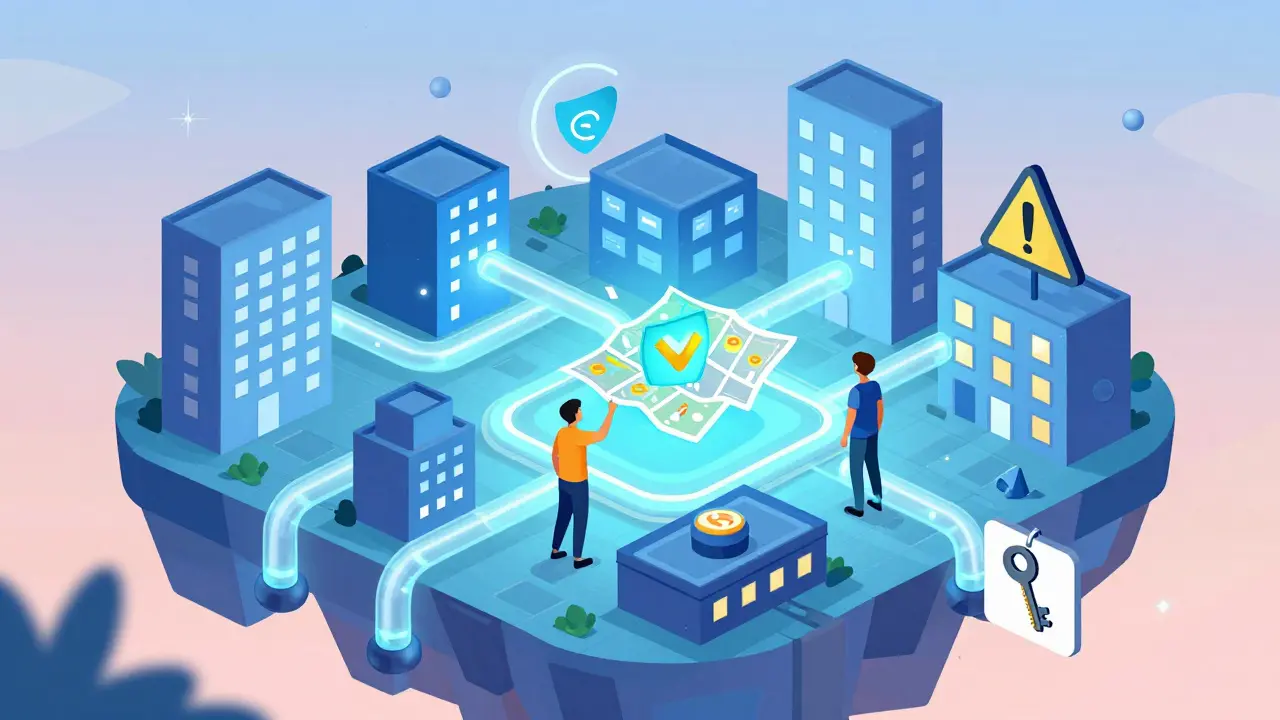
The Trade-offs: What You Need to Know
It's not all sunshine and rainbows. The freedom of a DEX comes with a significant amount of responsibility. In a centralized exchange, if you lose your password, you click "Forgot Password" and get it back via email. In the world of Decentralized Exchanges, there is no "Forgot Password" button. If you lose your seed phrase, your money is gone forever. There is no help desk to call.
You also have to deal with "slippage." Because DEXs rely on liquidity pools, if you try to make a massive trade in a pool with low liquidity, the price can shift significantly during the transaction. While AMM algorithms are getting better, high-volume institutional traders still often prefer CEXs for their deeper liquidity and faster execution speeds.
Are DEXs safer than centralized exchanges?
From a custody perspective, yes. You aren't risking your funds on a company's solvency or a centralized hack. However, you are exposed to "smart contract risk"-the possibility that the code governing the exchange has a bug or vulnerability that a hacker could exploit.
Can I buy crypto with credit cards on a DEX?
Generally, no. DEXs deal exclusively in crypto-to-crypto trades. To get started, you usually need to buy your first bit of crypto from a centralized on-ramp or a P2P service and then send it to your own wallet.
What is a liquidity provider?
A liquidity provider is anyone who deposits a pair of tokens into an AMM pool. By providing this liquidity, they enable others to trade. In exchange for taking on the risk of price volatility, they earn a percentage of the trading fees generated by that pool.
What is slippage in a DEX?
Slippage is the difference between the expected price of a trade and the actual price at which the trade is executed. This happens frequently in pools with low liquidity where a single large order can significantly move the price of the asset.
Do I need a special wallet for DEX trading?
Yes, you need a non-custodial wallet (like MetaMask, Phantom, or Coinbase Wallet) that allows you to interact with smart contracts. You cannot trade on a DEX using the account balance provided by a centralized exchange like Binance or Kraken.
Next Steps for New Users
If you're ready to move away from centralized platforms, start small. Don't move your entire portfolio at once. First, set up a reputable non-custodial wallet and write down your recovery seed phrase on physical paper-never store it in a digital note or email.
Next, experiment with a well-known DEX to get a feel for how swapping works and how to set your slippage tolerance. Once you're comfortable, you can explore the wider DeFi world, such as providing liquidity or using decentralized lending platforms. Just remember: in this world, you are the only person responsible for your security.

Comments (7)

- Lauren Gilbert
- April 5, 2026 AT 03:44 AM
It really is a fascinating shift in how we perceive value and trust, moving away from the institutional anchors we've relied on for centuries toward a mathematical certainty that exists only in the ether, though it makes me wonder if we are truly prepared for the psychological weight of being our own sole protectors in a digital wilderness where one mistake is final.

- sekhar reddy
- April 6, 2026 AT 09:32 AM
BRO THE CEXs ARE ABSOLUTELY ROBBING US!!! 😱 Just wait until the next big crash and everyone will be scrambeling for their wallets like crazy people!!

- Sonya Bowen
- April 6, 2026 AT 12:07 PM
Self-custody is the only way to truly align with the ethos of blockchain. It requires discipline, but the autonomy is worth the learning curve.

- Alexandra Lance
- April 8, 2026 AT 04:33 AM
Oh look, another "guide" telling us to trust smart contracts 🙄 as if the code isn't just another way for the elites to trap our money in a digital cage while they laugh from their yachts 💅🤡✨

- Susan Payne
- April 9, 2026 AT 02:16 AM
The lack of KYC is an invitation for absolute chaos, and it is frankly appalling that some people view the erosion of financial oversight as a victory. One must possess a certain level of intellectual maturity to realize that total anonymity often facilitates total corruption.

- Krystal Moore
- April 9, 2026 AT 07:03 AM
Honestly, if you're still using a CEX in 2024, you're basically just asking to be scammed. Like, do you even care about the principle of decentralization or are you just lazy? It's literally a moral failure to hand your keys to a corporation that doesn't care if you starve.

- Carol Prates
- April 9, 2026 AT 16:12 PM
LMAO the drama in these comments is better than the actual trading! 😭 But for real, imagine losing your seed phrase and just... disappearing from the economy. I would actually scream!