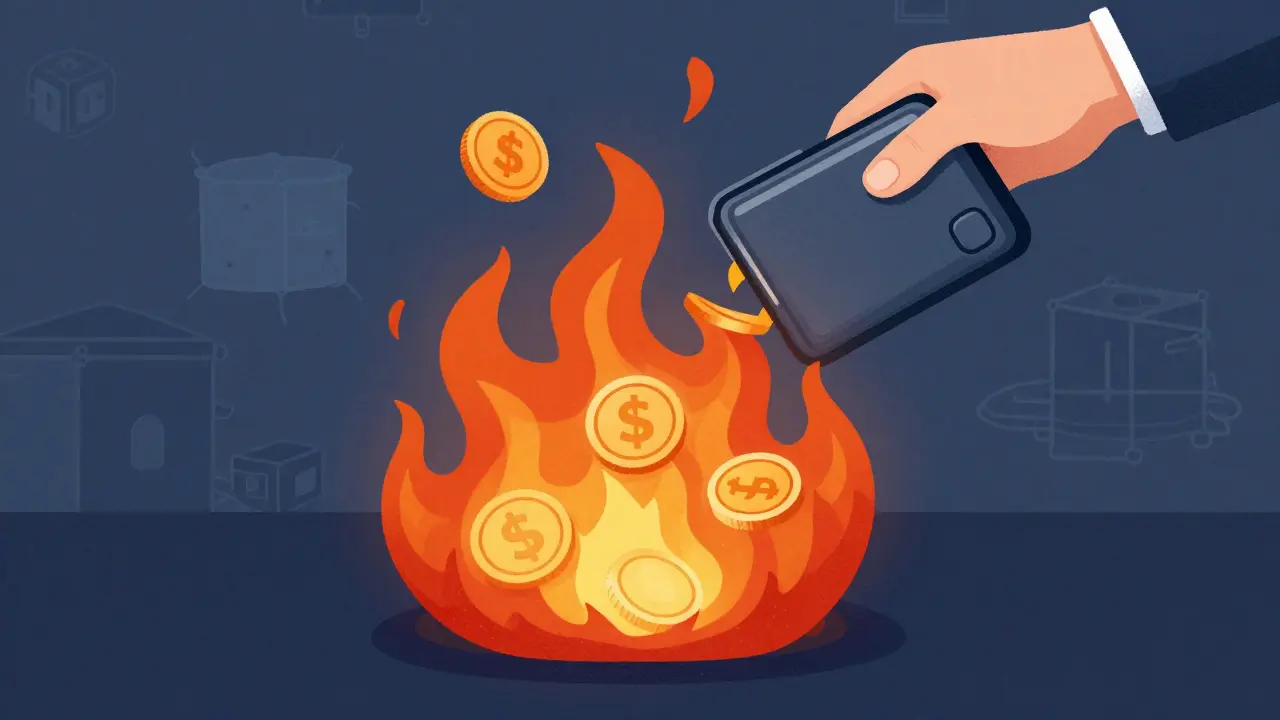

Over $52.7 billion worth of cryptocurrency has been permanently destroyed through token burning as of late 2023. But what does that even mean? Why would anyone want to destroy valuable digital assets? Let’s break it down.
What is Token Burning?
Token Burning is the process of permanently removing digital tokens from circulation. It’s done by sending tokens to a special wallet address called a Burn Address - a wallet with no private key, so no one can access those tokens again. Think of it like tossing cash into a fire: once gone, it’s gone forever. This practice isn’t random; it’s a deliberate strategy used by blockchain projects to control supply and potentially boost token value.
How Token Burning Works
Here’s what happens step by step:
- Decision: Project teams or smart contracts decide how many tokens to burn.
- Identification: Specific tokens are selected (either a fixed number or a percentage of supply).
- Transfer: Tokens are sent to a burn address (like
0x000...000), which has no private key. - Announcement: The burn is publicly recorded on the blockchain for transparency.
There are two main ways this happens:
- Manual burning: Teams manually send tokens to the burn address at scheduled times. Binance does this quarterly with BNB tokens.
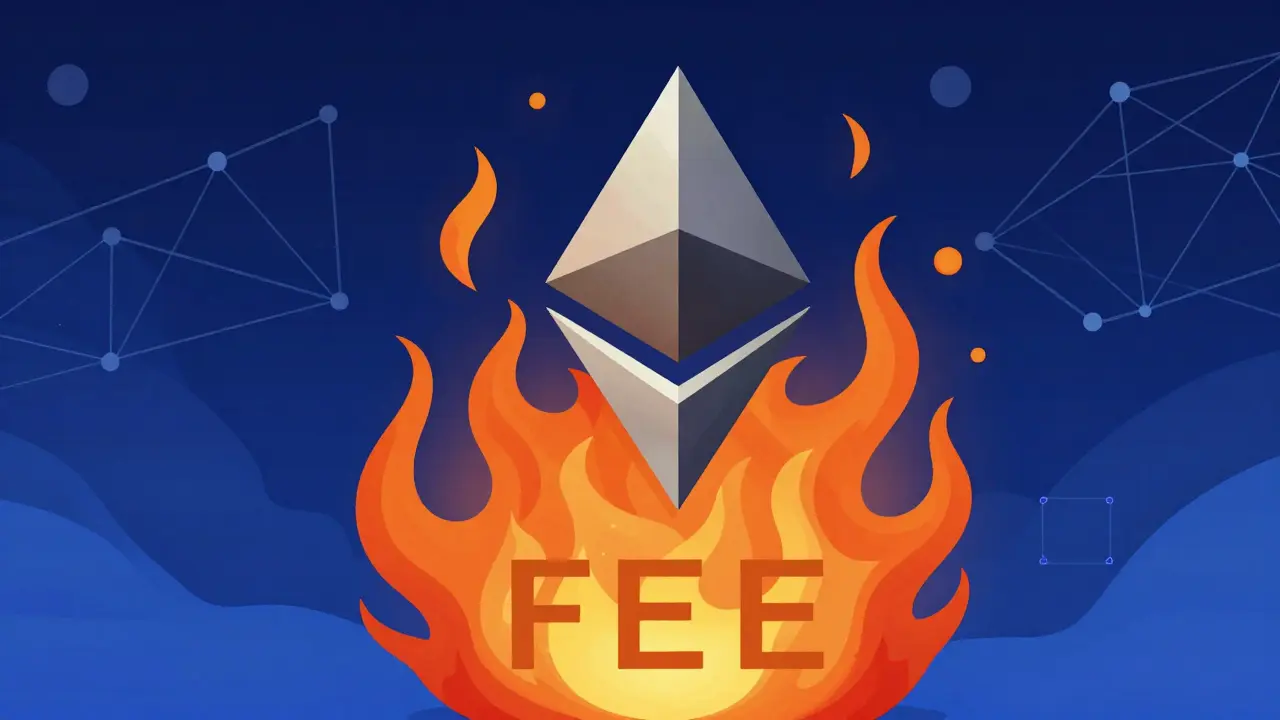
- Automatic burning: Smart contracts automatically trigger burns based on rules. Ethereum’s EIP-1559 burns transaction fees in real time.
Why Projects Use Token Burning
Imagine a popular toy that’s everywhere. If the company suddenly stops making new ones, the existing toys become more valuable. Token burning works the same way: reducing supply creates artificial scarcity. When demand stays steady or grows, prices often rise. For example, Binance has burned over 48.5 million BNB tokens worth $34.2 billion since 2017. This deflationary pressure aims to reward long-term holders.
But it’s not magic. A 2022 MIT study analyzed 214 token burns and found that burns smaller than 0.5% of total supply had no measurable price impact. Only burns exceeding 2% of total supply led to an average 8.7% price increase over 30 days. So size matters.
Real-World Examples
Let’s look at some actual cases:
- Binance BNB Burns: Binance burns 1% of its quarterly profits in BNB tokens. This has removed over 48.5 million tokens from circulation, with each burn event documented publicly.
- Ethereum’s EIP-1559: Since August 2021, Ethereum has permanently burned over 4.2 million ETH ($12.3 billion) by destroying transaction fees. This makes ETH scarcer over time.
- Shiba Inu’s 2021 Burn: In May 2021, the community burned 410 trillion SHIB tokens (about 4% of total supply). The price surged 230% in the following month, according to CoinGecko data.
- TerraUSD’s Collapse: When TerraUSD’s stablecoin failed in 2022, users pointed to its burning mechanism as a flaw. The burn rules couldn’t maintain the peg without proper reserves, proving supply adjustments alone aren’t enough.
What the Data Says
Token burning isn’t always successful. Crypto.com’s 2023 analysis of 127 burn events found that tokens with automatic burns had 17.3% less price volatility than manually burned tokens. Why? Automatic burns are transparent and predictable - they’re recorded immutably on the blockchain. Manual burns, however, rely on trust in the project team. For instance, KuCoin faced criticism in 2020 when community members questioned the transparency of its token burn.
Also, 78% of the top 100 cryptocurrencies now include token burning mechanisms, up from 42% in 2020. But here’s the catch: as burning becomes common, its impact may diminish. Dr. Aaron Wright, a blockchain expert at Cardozo Law School, warns: “As token burning becomes ubiquitous, its marginal impact on value will diminish unless paired with genuine utility growth.”
Common Misconceptions
Many people think token burning automatically makes prices go up. Not true. Burning only helps if demand grows alongside reduced supply. If no one wants the token, burning won’t save it. For example, some low-activity tokens have been burned with zero price effect.
Another myth is that burning tokens is the same as “deflationary” economics. In reality, it’s just one tool. True deflation requires broader economic factors like utility and adoption. A token burned to 10% of supply might still crash if users abandon the project.
Frequently Asked Questions
What is a burn address?
A burn address is a wallet with no private key, making tokens sent there permanently inaccessible. It’s usually a string like 0x000...000. Once tokens go there, they’re gone forever. This is how projects like Binance and Ethereum permanently remove tokens from circulation.
Does token burning always increase token prices?
No. Burning only boosts prices if demand stays strong or grows. MIT research shows burns smaller than 0.5% of total supply have no impact, while burns over 2% typically raise prices by 8.7% over 30 days. If a token has no real use case, burning won’t help.
What’s the difference between manual and automatic burns?
Manual burns are executed by project teams at scheduled times (like Binance’s quarterly BNB burns), while automatic burns happen through smart contracts (like Ethereum’s EIP-1559). Manual burns offer flexibility but rely on trust; automatic burns are transparent and immutable but less adaptable to sudden market changes.
How do I verify a token burn?
Check the blockchain explorer for transactions sent to a burn address. Projects like Binance publish burn transaction hashes on their official blogs. For Ethereum, you can view burned fees directly in the EIP-1559 dashboard. Transparency is key - always look for public proof.
Can token burning be hacked or reversed?
No. Once tokens are sent to a burn address, they’re permanently destroyed. The address has no private key, so no one can access or move those tokens. However, mistakes happen: in 2020, Waves accidentally burned the wrong amount of tokens and had to reverse it through a community vote. But this is rare and only possible if the burn wasn’t fully finalized.

Comments (9)

- Alex Garnett
- February 5, 2026 AT 08:54 AM
Token burning is a completely overrated concept pushed by crypto promoters to create false hope.
Real value in blockchain comes from functional applications, not arbitrary token destruction.
Binance's quarterly burns are nothing more than marketing tactics to manipulate prices.
The MIT study clearly shows that only burns exceeding 2% of total supply have any measurable impact, which is rare.
Most projects engage in token burning purely for PR.
The US has the most advanced blockchain infrastructure, yet this article fails to acknowledge that.
European projects are often just copying American models without innovation.
Token burning alone cannot sustain a cryptocurrency's value without genuine utility.
The TerraUSD collapse is a perfect example of how burning mechanisms can fail without proper reserves.
This article oversimplifies a complex issue.
Crypto investors need to focus on real-world use cases, not artificial scarcity.
The notion that burning tokens automatically increases price is a myth perpetuated by market manipulators.
Without demand, burning is meaningless.
It's time to stop the charade and focus on building actual products.
The US leads in true innovation; other countries' projects are just chasing trends.

- Brittany Coleman
- February 6, 2026 AT 19:01 PM
Token burning is about balance, not destruction.

- Ajay Singh
- February 8, 2026 AT 12:44 PM
Token burning is a smart move
Reduces supply creates scarcity
When done right it boosts value
Binance's burns show this
Not all burns are equal but the concept is solid
More projects should adopt transparent burning
Focus on real utility too
But burning helps in the long run

- Nathaniel Okubule
- February 10, 2026 AT 10:43 AM
Token burning is a useful tool when applied correctly
It's important to understand the context
Projects that combine burning with strong fundamentals see better results
Transparency in burning processes is key
As seen in Ethereum's EIP-1559
Overall it's a positive step for the ecosystem
Thank you for the informative post

- Olivette Petersen
- February 11, 2026 AT 13:08 PM
Token burning is a powerful strategy when done right
It's exciting to see projects like Ethereum using it automatically
Real-world examples show its potential
Let's keep exploring how this can benefit the crypto space
Great article that explains it simply

- Kyle Pearce-O'Brien
- February 13, 2026 AT 06:18 AM
Token burning is the ultimate deflationary mechanism in the crypto ecosystem
It's not just about scarcity-it's about creating a virtuous cycle of value accrual
When executed properly, it's like a financial alchemy that transforms mere tokens into digital gold
However, as the MIT study highlights, it's nuanced-only substantial burns drive meaningful price action
Without proper utility, it's just vaporware
But when combined with innovation? Phenomenal
🚀✨

- Robin Ødis
- February 13, 2026 AT 18:42 PM
Token burning is often misunderstood by the masses
It's not just about destroying tokens it's about creating sustainable economic models
Many projects fail because they burn tokens without addressing underlying issues
Like TerraUSD which had no reserves to back its burning mechanism
True success requires integration with real-world utility
Otherwise it's just a hollow gesture
People need to stop thinking burning alone solves everything
It's a tool not a magic bullet
And the US projects like Binance do it right but even they need more transparency
Otherwise it's just another scammy move
Just look at the data
Most burns under 2% do nothing
But the author of this post got it mostly right
Though they should have emphasized the need for utility more
Token burning without utility is like building a house on sand

- Joshua Herder
- February 13, 2026 AT 21:48 PM
Token burning is a complete farce
It's nothing more than a shell game to manipulate prices
Real value comes from adoption and utility not artificial scarcity
Projects that rely on burning are just creating bubbles
Look at Shiba Inu's burn-price surged briefly then crashed
It's all smoke and mirrors
The only reason people think it works is because of hype
True innovation happens when you build something useful
Not when you burn tokens to create false scarcity
This whole concept is a distraction from real progress
Crypto needs less gimmicks and more substance

- Ryan Chandler
- February 15, 2026 AT 05:27 AM
Token burning is a revolutionary concept that's reshaping the crypto landscape!
From Binance's massive burns to Ethereum's automated system, it's changing the game!
But it's not just about the numbers-it's about trust and transparency!
When done right, it creates a powerful synergy between supply and demand!
Let's celebrate these innovations while keeping a critical eye!
The future of crypto is bright with these tools!
What an incredible time to be part of this journey!