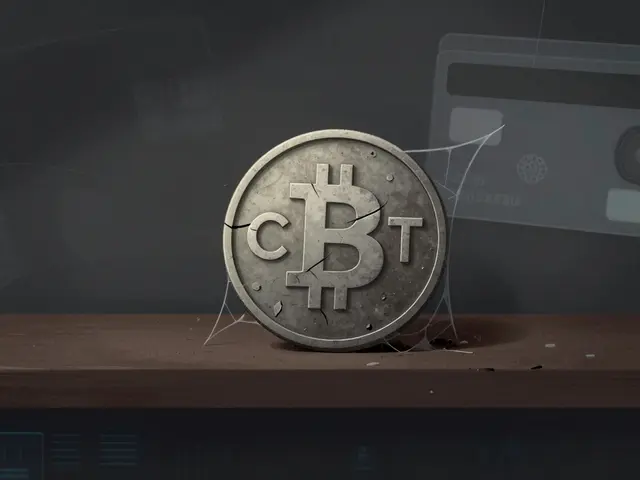

You might have heard the phrase "Do you know da wae" echoing through your social media feeds back in 2017. It was everywhere-on Twitter, in Discord servers, and even in Minecraft chats. Fast forward to today, and that viral Ugandan Knuckles meme has spawned a cryptocurrency called DaWae (DAWAE). But what exactly is this token? Is it a serious investment or just digital noise?
Here is the short answer: DaWae is a collection of small, speculative meme coins inspired by the Ugandan Knuckles craze. Unlike Bitcoin or Ethereum, these tokens don’t solve complex financial problems. They exist for fun, community engagement, and speculation. If you are looking for technical innovation, you won’t find it here. You are buying into a joke that turned into a market.
The Origin Story: From Meme to Market
To understand DaWae, you have to go back to late 2017. The internet was obsessed with "Ugandan Knuckles," a distorted version of Sonic the Hedgehog’s character Knuckles. Users would spam phrases like "do you know da wae" and "are u da qween." It was chaotic, funny, and fleeting. When the meme died down, crypto developers saw an opportunity. They created tokens named after the meme to capture that nostalgic energy.
Today, DaWae isn’t just one single asset. It is actually a family of tokens spread across different blockchains. You can find an ERC-20 version on Ethereum, a BEP-20 token on Binance Smart Chain (BSC), an SPL token on Solana, and even a variant claiming its own blockchain.
This fragmentation is important. When you search for "DAWAE price," you might see wildly different numbers depending on which chain the data provider is tracking. One source might show a market cap of $11,000, while another shows nearly $2 million. Why? Because they are measuring different tokens with the same name. Always check the contract address before you buy.
How Does DaWae Work?
If you expect DaWae to revolutionize finance, you will be disappointed. These tokens rely entirely on the infrastructure of the chains they live on. The Ethereum version uses standard smart contracts. The Solana version leverages Solana’s high-speed transactions. There is no unique consensus mechanism or proprietary technology invented for DaWae.
Most variants function as simple transferable assets. You buy them, hold them, and sell them. Some listings mention "player-oriented features" or a "digital economy for social interactions," but there is no evidence of a fully functional game or DeFi protocol running on top of the token. In practice, holding DaWae is like holding a collectible trading card. Its value comes from what other people think it’s worth, not from any utility it provides.
Security-wise, the risks are standard for micro-cap tokens. Since there is no large development team or audited codebase widely publicized, users must trust the specific contract addresses they interact with. Rug pulls-where developers abandon the project and take the liquidity-are common in this tier of the market. Always verify the contract address on a trusted explorer like Etherscan or Solscan.
Tokenomics: Supply, Price, and Volatility
Let’s look at the numbers. This is where things get messy because "DaWae" means different things on different networks. Here is a breakdown of the most prominent versions as of late 2025 and early 2026:
| Feature | Ethereum (ERC-20) | Binance Smart Chain (BEP-20) | Solana (SPL) | Standalone Claim |
|---|---|---|---|---|
| Total Supply | 1 Billion (commonly cited) | ~100 Billion (estimated) | Variable / Not always listed | 991.9 Million |
| Market Cap Range | $11k - $30k | ~$5,800 | Negligible / Micro-cap | ~$2.07 Million |
| Primary Exchange | Uniswap v3 | PancakeSwap | Raydium, Meteora | DEXs (varies) |
| Liquidity | Very Low | Extremely Low | Low | Moderate (for a meme) |
| Tax/Fees | Standard Gas | Often 2% Buy/Sell Tax | Standard Fees | Unknown |
Notice the huge disparity in supply. The BSC version often has a massive supply count, driving the per-token price down to fractions of a cent. The standalone claim has a much tighter supply, which explains why its market cap looks higher despite similar hype levels. Trading volume is the real killer here. Many DAWAE pairs trade less than $100 a day. That means if you try to sell a large amount, you might crash the price yourself.

Where to Buy and Store DaWae
You won’t find DaWae on Coinbase or Binance. This is strictly a decentralized exchange (DEX) playground. Your wallet choice depends on which chain you want to bet on.
- For Ethereum DAWAE: Use MetaMask. Connect to Uniswap v3. Search for the correct contract address (e.g., 0x2eA1...cc92). Swap ETH for DAWAE.
- For BSC DAWAE: Use MetaMask or Trust Wallet configured for Binance Smart Chain. Go to PancakeSwap. Ensure you have BNB for gas fees.
- For Solana DAWAE: Use Phantom or Solflare. Trade on Raydium or Meteora. You will need SOL for transaction fees.
A pro tip: Always double-check the contract address. Scammers love to create fake tokens with the same name and ticker. If the address doesn’t match what you found on CoinGecko or CoinMarketCap, do not swap.
Is DaWae a Good Investment?
Be honest with yourself about your risk tolerance. DaWae is not an investment in the traditional sense. It is a gamble. Data providers like CoinMarketCap explicitly state that DaWae has "no intrinsic value" and "no expectation of financial return." That is not a typo; it is a disclaimer.
Compare it to Dogecoin. DOGE has billions in market cap and widespread recognition. DaWae sits at the very bottom of the rankings, often around #7,000 or lower. Its future depends entirely on whether the "Ugandan Knuckles" meme resurges in popularity. Without a roadmap, a dev team pushing updates, or a utility like staking rewards, the price is driven purely by sentiment.
If you buy DaWae, treat it like lottery money. Do not put in rent money. The liquidity is so thin that exiting a position can be difficult without taking a significant loss due to slippage. Furthermore, the lack of centralized exchange listings means you cannot easily cash out during a panic sell-off.

Risks and Red Flags
Before you click "swap," consider these pitfalls:
- Fragmentation: Which DAWAE are you buying? Confusing the Ethereum version with the BSC version could mean losing access to your funds if you send them to the wrong network.
- Illiquidity: With daily volumes sometimes under $50, you are the whale in a pond. Selling 10% of the daily volume could drop the price by 50%.
- No Development: There is no official whitepaper detailing long-term goals. Most projects die within six months. DaWae variants have survived longer due to nostalgia, but activity remains low.
- Smart Contract Risk: While ERC-20 and BEP-20 standards are safe, some meme coins include hidden mint functions or taxes that drain wallets. Verify the contract on a scanner like Token Sniffer.
Final Verdict
DaWae is a relic of internet culture preserved in blockchain form. It serves as a reminder that crypto markets are driven as much by humor and community as they are by technology. If you enjoy the meme and want to participate in a niche community experiment, DaWae offers a low-cost entry point. Just remember: you are buying air. Keep your expectations grounded, use the right wallet, and never invest more than you can afford to lose completely.
Is DaWae the same on all blockchains?
No. DaWae exists as separate tokens on Ethereum, Binance Smart Chain, Solana, and potentially other networks. Each has a different contract address, supply, and price. They are not interchangeable without bridging, which may not even be supported for all variants.
Does DaWae have a use case?
Primarily, no. Most sources describe it as having no intrinsic utility. It is used for speculation and community engagement. Some listings mention gaming elements, but there is no major, verified play-to-earn ecosystem currently dominating the market for this token.
Where can I buy DAWAE tokens?
You can buy them on decentralized exchanges. For Ethereum, use Uniswap. For Binance Smart Chain, use PancakeSwap. For Solana, use Raydium or Meteora. Centralized exchanges generally do not list DAWAE due to its low market cap.
Which wallet should I use for DaWae?
Use MetaMask for Ethereum and Binance Smart Chain tokens. Use Phantom or Solflare for Solana-based DAWAE tokens. Always ensure your wallet supports the specific blockchain you are purchasing on.
Why are there different prices for DAWAE?
Different prices reflect different tokens with the same ticker on different chains. Additionally, low liquidity causes price discrepancies between exchanges. Always check the contract address to confirm which specific asset you are viewing.