
Quick Summary: The Bottom Line on EurekaX
- Best For: Intermediate traders and arbitrageurs who need aggregated liquidity across different platforms.
- Key Strength: The Global Order Book system reduces price gaps and slippage.
- Biggest Weakness: Limited brand recognition and a lack of robust fiat on-ramp options.
- Native Utility: Powered by the ERK token.
How the Global Order Book Actually Works
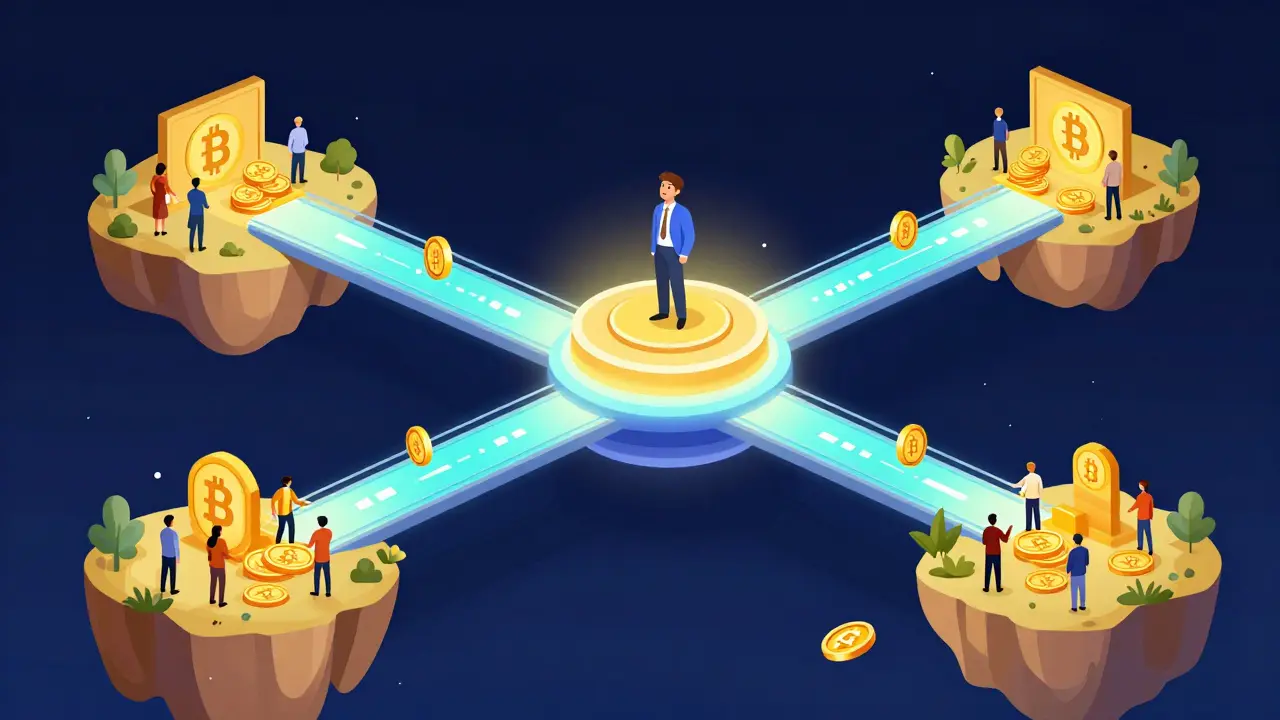
Most people think of an exchange as a closed loop. If you buy Bitcoin on a standard platform, you're trading with other users of that specific site. Global Order Books are a technology that connects liquidity pools from various major exchanges, allowing a trader to execute orders against a unified interface that represents multiple markets.
In plain English: EurekaX acts like a bridge. Instead of you having to check if a token is cheaper on Exchange A or Exchange B, EurekaX pulls that data together. This solves the "fragmentation problem." When liquidity is fragmented, a large buy order can spike the price on one exchange while the price stays flat on another. By aggregating these pools, you get a more stable price and deeper liquidity.
To keep things moving fast, the platform uses sidechains are independent blockchains that run parallel to a main chain to handle transactions more efficiently . These allow for cheaper and faster settlements than you'd find on a congested main layer, which is critical when you're trying to hit a price window before it closes.
Token Wrapping and the ERK Ecosystem
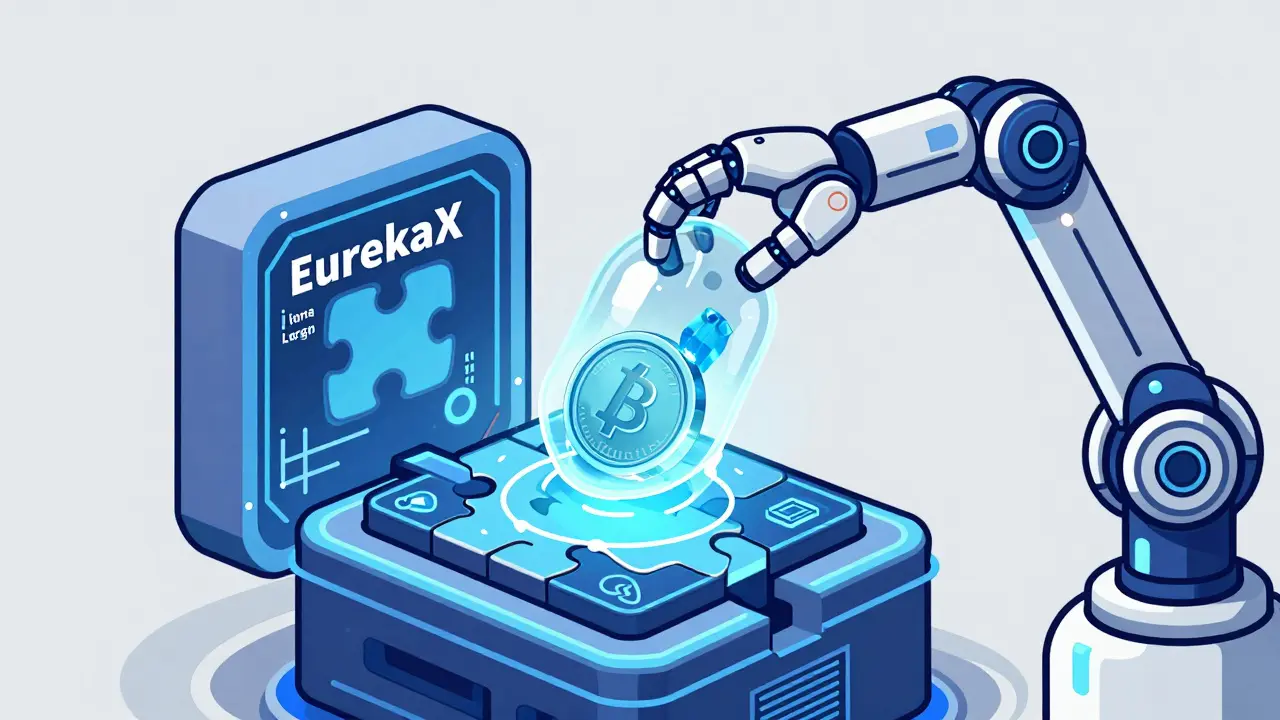
One of the most interesting features is the token wrapping functionality. Since EurekaX wants to be a hub for various assets, they provide a wrapping site. This allows you to take a token from another blockchain and "wrap" it into a version compatible with the EurekaX ecosystem. This effectively lets you bring almost any asset into their environment to take advantage of the aggregated liquidity.
The entire ecosystem is fueled by ERK (Eureka Coin), the native utility token of the Eureka Project used for platform operations and user incentives. Historically, the platform has used ERK to attract new users, including giveaways of 300 ERK tokens to get people through the door. If you hold ERK, you are essentially invested in the growth of this specific aggregation model.
Performance: EurekaX vs. The Giants
It is a bit unfair to compare a specialized tool like EurekaX to a behemoth like Binance or Coinbase in terms of pure volume. Binance can process over a million orders per second, while EurekaX is a much smaller player. However, the goal isn't to be the biggest; it's to be the most efficient bridge.
| Feature | EurekaX | Mainstream (Binance/Coinbase) |
|---|---|---|
| Liquidity Source | Aggregated (Global Order Books) | Internal Order Book |
| Target Audience | Intermediate/Arbitrage Traders | Beginners to Institutions |
| Fiat On-Ramps | Limited | Extensive (Bank transfers, Cards) |
| Key Advantage | Lower Slippage on fragmented assets | Massive User Base & Brand Trust |
Where EurekaX wins is in the "gap." If you're trading a mid-cap altcoin that is spread across five different exchanges, EurekaX lets you trade it as if it were all in one place. Where they lose is in the basics. If you want to buy crypto with a credit card or a simple bank wire, you'll find the experience much clunkier here than on a top-tier platform.
The User Experience: The Good and the Bad
If you've never used a multi-exchange interface, expect a slight learning curve. Experienced traders usually get the hang of it in an hour or two, but if you're new to the game, it might take a whole afternoon to feel comfortable. The interface is generally praised for being "clean," but it's designed for utility, not for hand-holding.
The reality of the user experience is a bit of a mixed bag. On one hand, transactions are speedy, and the liquidity is often optimal. On the other hand, the support system is lacking. Many users have reported 24 to 48-hour wait times for email responses, and there is no prominent live chat. In the world of crypto, where a market crash happens in minutes, a two-day wait for support is a significant risk.
Another point of friction is the token wrapping. While it's a powerful feature, users have reported occasional bugs during the wrapping process. If you're moving large sums of money, always test the process with a tiny amount first.
Risks and Red Flags to Consider
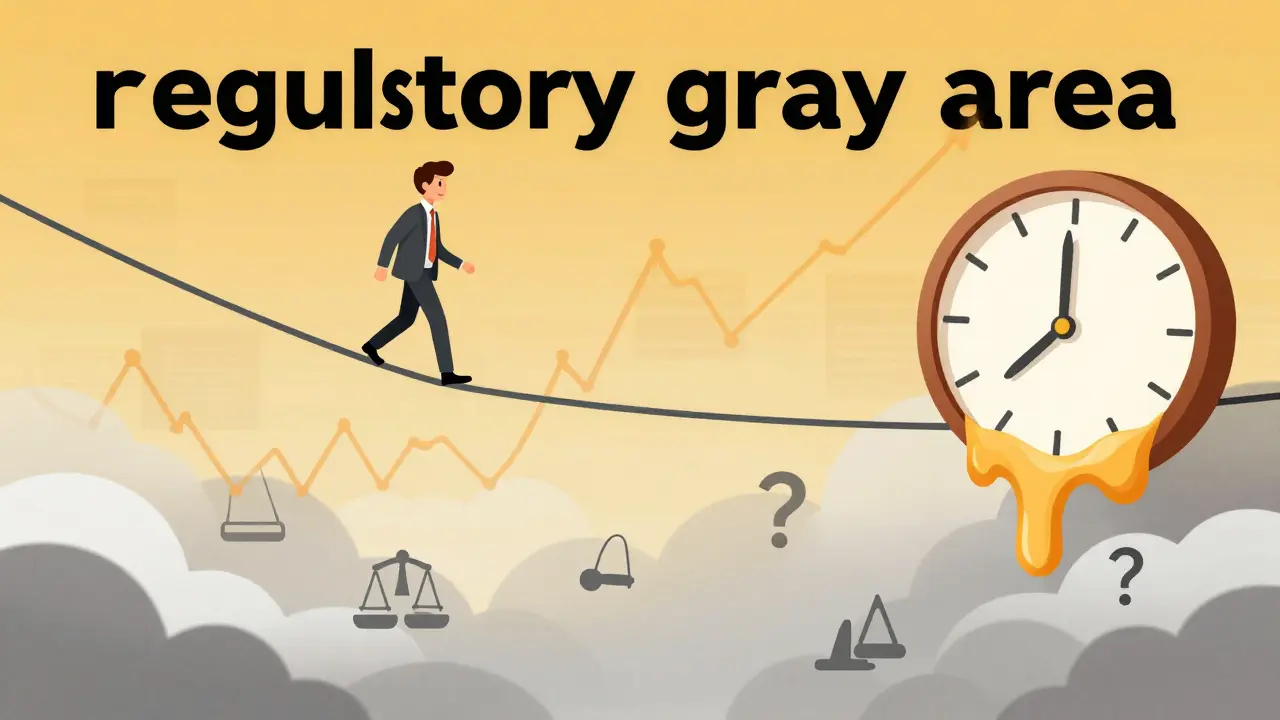
No exchange is without risk, but EurekaX has some specific hurdles. First, there's the regulatory gray area. Bridging multiple exchanges across different countries is a legal nightmare. While the platform claims to be structured for compliance, there isn't a lot of public documentation regarding their specific licensing or audits.
Then there's the issue of "stagnation." Much of the hype around EurekaX peaked around 2021. In a market that moves as fast as crypto, a lack of recent roadmap updates is a red flag. If a platform isn't innovating, it's usually dying. The core problem they solve-liquidity fragmentation-is still very real, but if the big exchanges start building their own aggregation tools, EurekaX's main reason for existing disappears.
Lastly, consider the withdrawal times. While they advertise a 15-minute average, users have reported delays of up to 6 hours during periods of extreme volatility. When the market is swinging wildly, those extra few hours can be the difference between a profit and a total loss.
What is the main benefit of using EurekaX over a regular exchange?
The primary benefit is liquidity aggregation. Instead of trading only with users on one platform, EurekaX uses Global Order Books to combine liquidity from multiple exchanges. This typically results in better pricing, lower slippage, and more opportunities for arbitrage.
What is the ERK token and why does it matter?
ERK (Eureka Coin) is the native utility token of the platform. It is used within the ecosystem for various functions and has been used in promotional giveaways to attract new users. Its value is tied to the adoption and success of the EurekaX exchange model.
Can I deposit fiat currency (USD, EUR) directly into EurekaX?
Fiat on-ramp options are severely limited compared to giants like Coinbase. Most users find it easier to buy their crypto on a major exchange first and then transfer it to EurekaX as a digital asset.
How does token wrapping work on this platform?
Token wrapping allows you to bring assets from different blockchains into the EurekaX ecosystem. By using their dedicated wrapping site, you create a compatible version of your token that can be traded using the platform's aggregated liquidity pools.
Is EurekaX safe for large institutional trades?
It may not be ideal for massive institutional orders. While the aggregation helps with liquidity, users have noted that it can underperform for extremely large trades due to undisclosed maximum trade size limits and a lack of detailed public security audits.
Next Steps for Different Traders
For the Beginner: Stick to a major exchange like Coinbase or Binance first. The learning curve and lack of support at EurekaX make it a risky place to start your crypto journey. Once you understand how limit orders and altcoin volatility work, then consider exploring specialized tools.
For the Active Trader: If you're already comfortable with the basics, try EurekaX with a small amount of capital. Focus on mid-cap tokens where you notice a price difference between exchanges. Use the token wrapping feature to bring in a variety of assets and see if the slippage is actually lower than what you're experiencing on your main platform.
For the Arbitrageur: This is where the platform shines. Use the global order book to identify pricing inefficiencies across the market. However, keep a close eye on the withdrawal times and synchronization during high volatility, as these can eat into your profit margins.
Comments (6)

- Charlie Queen
- April 22, 2026 AT 21:56 PM
Actually sounds like a pretty cool way to bridge the gap between different platforms! 🚀 Always love seeing tech that tries to make the ecosystem more connected and accessible for everyone. 🌐✨

- Keith Garcia
- April 24, 2026 AT 15:31 PM
One must possess a certain level of intellectual fortitude to ignore the glaring lack of security audits mentioned here. 🧐 It is utterly pedestrian to entrust one's capital to a platform that treats regulatory compliance as a mere suggestion. The sheer audacity of promoting a project with a stagnant roadmap is, quite frankly, an insult to the discerning trader. 🙄

- Liz Ariza
- April 24, 2026 AT 17:09 PM
The token wrapping part sounds like a wild ride! 🌈 Just be super careful and do those tiny tests first so you don't have a heart-stopping moment with your funds! 💖✨ Stay safe out there, everyone! 🌸

- Kathleen Bergin
- April 25, 2026 AT 19:32 PM
It is just a basic aggregator. Nothing new here.

- jill huyo-a
- April 26, 2026 AT 01:26 AM
I agree that the slippage reduction is a huge plus, especially for those of us who don't want to spend all day jumping between five different tabs. It would be wonderful if more platforms focused on this kind of collaboration to help the community grow together.
Maybe we can find some other tools that do similar things and compare them to see which one is the most user-friendly for everyone.

- Guy Bianco
- April 27, 2026 AT 10:59 AM
It is imperative to exercise caution regarding the withdrawal delays mentioned. (o_o) Such volatility in settlement times can be detrimental to one's financial strategy. I would advise all newcomers to prioritize the safety of their primary assets over the allure of aggregated liquidity. :-)