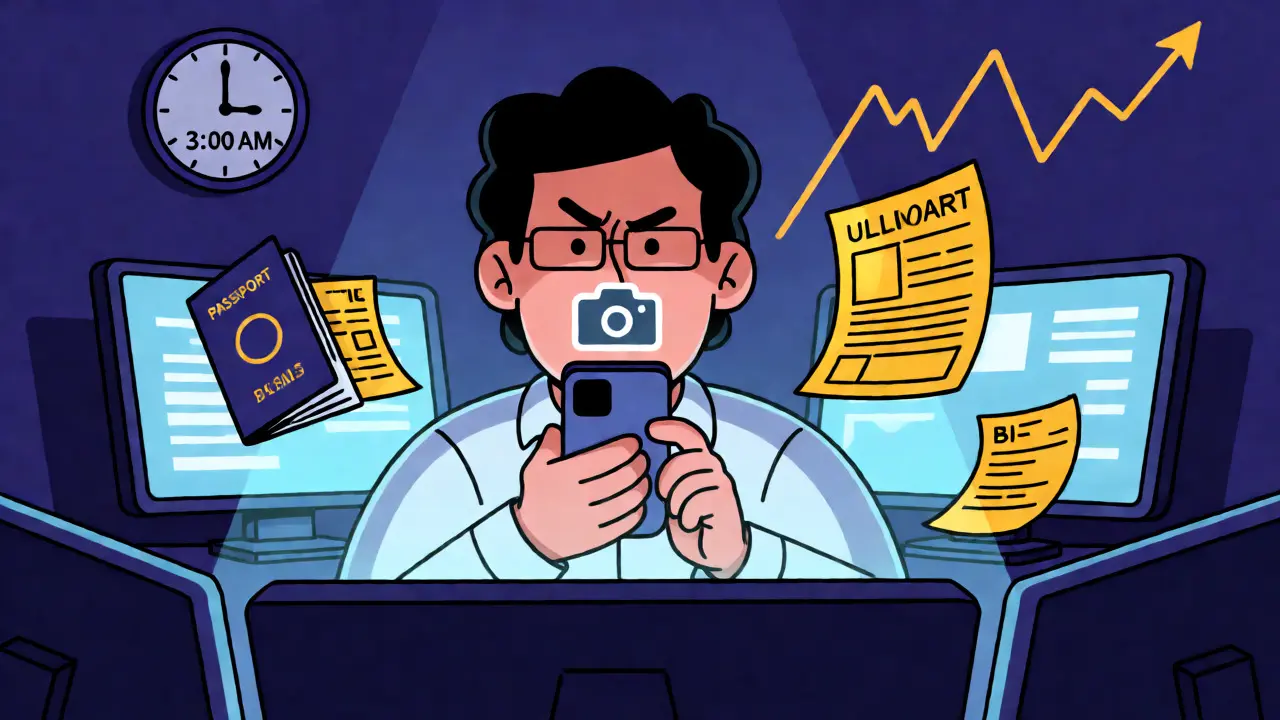

Imagine finding a hot new altcoin at 3 AM. You have your wallet ready, but the exchange demands a selfie, a passport scan, and proof of address before you can buy a single token. By the time you upload those documents, the price has doubled, or worse, the coin is gone. This friction is exactly why Non-KYC Crypto Exchanges exist. These platforms allow you to trade digital assets without handing over your personal identity data, offering speed and privacy that traditional centralized exchanges (CEXs) often sacrifice for regulatory compliance.
But here is the catch: the landscape in 2026 is not what it was five years ago. Regulatory pressure from bodies like the Financial Action Task Force (FATF) has tightened the screws. Many former non-KYC giants like KuCoin and OKX now mandate verification for most users. So, where do you go? And more importantly, is it safe? Let’s break down how these exchanges work, which ones are still viable, and the hidden traps you need to avoid.
What Exactly Is a Non-KYC Exchange?
A Non-KYC Exchange is a trading platform that does not require users to complete "Know Your Customer" (KYC) procedures. Unlike standard exchanges that act as banks, requiring government-issued ID, facial recognition, and utility bills, these platforms let you connect a wallet and start trading immediately.
There are two main types of non-KYC options:
- Decentralized Exchanges (DEXs): Platforms like Uniswap or SushiSwap operate on smart contracts. There is no central company holding your funds. You trade peer-to-peer directly from your wallet.
- Hybrid Centralized Exchanges: Some centralized platforms still offer limited non-KYC accounts. For example, MEXC or BingX might allow withdrawals up to a certain threshold (e.g., 1 BTC per day) without full verification, though this varies by jurisdiction.
The core appeal is simple: privacy and speed. You don’t wait days for approval. You don’t risk your data being leaked in a database hack. But remember, with great power comes great responsibility. If you lose your private key on a DEX, there is no customer support agent to reset your password.
Why Traders Still Love No-Verification Platforms
It isn’t just about hiding your money. It’s about efficiency. When you use a KYC exchange, you are trusting a third party with both your funds and your identity. In 2026, data breaches are common. Using a non-KYC exchange reduces your attack surface. If the exchange gets hacked, they can’t leak your home address because they never had it.
Furthermore, global access is easier. If you live in a country with strict capital controls or unstable banking systems, moving funds through a KYC-heavy US-based exchange can be a nightmare. Non-KYC platforms, especially DEXs, are borderless. As long as you have an internet connection and gas fees, you can trade Ethereum for Solana regardless of where you physically stand.
| Feature | Centralized Exchange (KYC) | Decentralized Exchange (DEX) | Hybrid Non-KYC CEX |
|---|---|---|---|
| Identity Verification | Mandatory | None | Limited/Optional |
| Custody of Funds | Exchange holds keys | User holds keys | Exchange holds keys |
| Fiat On-Ramp | Easy (Bank/Card) | Hard (Requires P2P/Gateway) | Moderate (Card limits apply) |
| Privacy Level | Low | High | Medium |
| Regulatory Risk | High Compliance | Gray Area | Increasing Pressure |
The Top Contenders in 2026
The list of truly anonymous exchanges is shrinking. Here is who is currently standing out among the noise.
Uniswap remains the king of Decentralized Exchanges. Built on Ethereum, it uses automated market makers (AMMs) rather than order books. You swap tokens directly from your MetaMask or Rabby wallet. No account creation, no email, no phone number. The downside? Gas fees can eat into small trades, and slippage on illiquid pairs can be painful if you aren’t careful.
MEXC has maintained its reputation as a go-to for low-cap altcoins without mandatory KYC for basic usage. While they have tightened rules for fiat deposits, crypto-to-crypto trading often remains open. They offer high leverage, which is great for traders but dangerous for beginners.
Best Wallet is gaining traction as a multi-chain wallet with integrated swapping features. It acts less like a traditional exchange and more like a gateway, allowing you to hold and swap across different blockchains without leaving the app. It’s user-friendly for those who find raw DEX interfaces intimidating.
For US users, the situation is trickier. Due to IRS reporting requirements and SEC scrutiny, many offshore non-KYC exchanges geoblock American IPs. However, some DEX aggregators like 1inch still serve US clients effectively, routing trades through various liquidity pools while keeping custody with the user.
The Hidden Costs and Risks
Don’t let the word "free" or "instant" fool you. Non-KYC trading has costs, they are just different.
Slippage and Liquidity: On smaller DEXs, large orders move the price against you. If you try to buy $50,000 worth of a niche token on a low-volume pool, you might pay 5% more than the displayed price. Always check the liquidity depth.
Smart Contract Bugs: Every DEX is code. Code has bugs. In 2024 and 2025, several DeFi protocols suffered exploits where hackers drained millions. Unlike a bank, insurance rarely covers these losses. Stick to audited, well-known protocols unless you are willing to take high risks for high rewards.
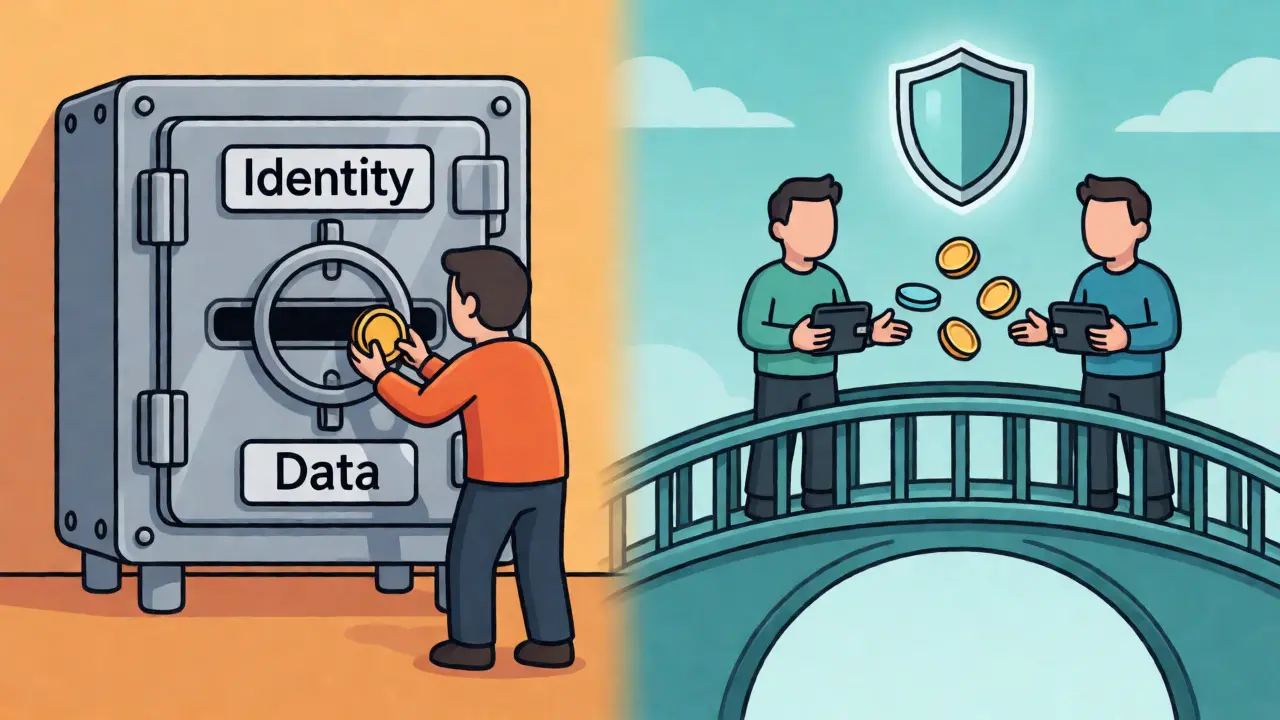
The Fiat Exit Problem: This is the biggest hurdle. You can trade anonymously all day, but when you want to buy groceries, you need dollars. Converting crypto to fiat usually requires a KYC step somewhere-whether it’s a bank transfer, a credit card withdrawal, or a Bitcoin ATM. The KYC doesn’t disappear; it just moves further down the pipeline.
How to Start Trading Without Verification
If you are ready to jump in, follow these steps to minimize headaches:
- Set Up a Self-Custody Wallet: Download MetaMask, Trust Wallet, or Phantom (for Solana). Write down your seed phrase on paper. Never store it digitally.
- Fund Your Wallet: Buy crypto on a KYC exchange first, then withdraw it to your self-custody wallet. This separates your identity from your active trading wallet.
- Choose Your Platform: For ETH, go to Uniswap. For SOL, use Jupiter or Raydium. For cross-chain swaps, use a bridge like Stargate or a aggregator like 1inch.
- Execute the Swap: Connect your wallet, select the pair, and confirm. Watch out for "fake" tokens with similar names. Verify the contract address on CoinGecko or CoinMarketCap.
- Manage Gas Fees: Trade during off-peak hours if possible. On Ethereum, weekends are often cheaper than Monday mornings.

Regulatory Reality Check
In 2026, regulators are smarter. The EU’s MiCA regulations have forced many service providers to adopt stricter AML (Anti-Money Laundering) policies. Even OTC desks are now treated as Crypto-Asset Service Providers (CASPs). This means the era of completely unregulated anonymous trading is fading.
Tax authorities are also watching. Just because an exchange doesn’t ask for your SSN doesn’t mean you don’t owe taxes. In the US, every swap is a taxable event. Keep records of your transactions using tools like Koinly or CoinTracker. If you make significant profits, expect the IRS to eventually link your wallet activity to your identity through chain analysis.
Final Thoughts: Who Should Use Non-KYC Exchanges?
Non-KYC exchanges are best for intermediate to advanced users who value privacy and understand self-custody. If you are terrified of losing your seed phrase, stick to a reputable KYC exchange. If you are trading small amounts of meme coins or testing new DeFi strategies, DEXs offer unmatched freedom.
The future likely holds a hybrid model: easy fiat on-ramps with KYC, followed by anonymous on-chain trading. Until then, stay skeptical, verify contract addresses, and never invest more than you can afford to lose to a smart contract bug.
Are non-KYC exchanges legal in the USA?
Yes, using them is generally legal. However, US regulations require you to report income and capital gains. Some specific centralized exchanges may restrict US users due to securities laws, but decentralized exchanges remain accessible.
Can I withdraw cash directly from a non-KYC exchange?
Usually, no. Most non-KYC platforms only support crypto-to-crypto trades. To get cash, you typically need to send crypto to a KYC-compliant broker, a P2P marketplace, or a Bitcoin ATM that allows lower-tier withdrawals.
What happens if I lose my private key?
You lose access to your funds permanently. Because non-KYC exchanges (especially DEXs) do not hold your keys, there is no password recovery process. Always back up your seed phrase offline.
Is Uniswap safer than a centralized non-KYC exchange?
It depends on the risk. Uniswap eliminates counterparty risk (the exchange won't run away with your money), but introduces smart contract risk (bugs in the code). Centralized exchanges introduce custodial risk (hackers stealing their hot wallets).
Do I still pay taxes if I use a non-KYC exchange?
Absolutely. Tax obligations are based on your residency and income, not the exchange's policy. Blockchain transactions are public, so tax agencies can trace your activity even if the exchange didn't collect your name.
Comments (7)

- Courtney Parker
- September 6, 2026 AT 10:37 AM
Overrated. :/

- Saket Kulkarni
- September 7, 2026 AT 09:40 AM
I respectfully agree with the premise that privacy is a fundamental human right, yet I must ponder whether true anonymity exists in a world where every transaction leaves a digital footprint on an immutable ledger. It seems to me that we are trading one form of surveillance for another, perhaps more insidious because it is voluntary and self-imposed. The philosophical implications of holding your own keys are profound; you become both the bank and the auditor, which requires a level of discipline few possess. If we lose our seed phrases, do we truly own anything, or are we merely custodians of temporary access? I believe the article captures this tension well, though I feel it underestimates the psychological burden of total self-custody. We often romanticize freedom without acknowledging the weight of responsibility that comes with it. In my experience, those who choose DEXs are not just traders but philosophers of value, deciding what matters enough to secure at all costs. It is a beautiful, terrifying way to live. :)

- Dominic Jones
- September 8, 2026 AT 10:20 AM
The distinction between 'privacy' and 'anonymity' is crucial here... as many conflate the two! You can have privacy (data isn't collected) without being anonymous (your wallet address is linked to your identity via chain analysis). This nuance... is vital for US users especially... given the IRS's growing sophistication with tools like Chainalysis. Furthermore, the regulatory pressure from MiCA in Europe... creates a bifurcation in the market... where compliant entities struggle to compete with agile offshore platforms. It is a fascinating ecosystem... albeit a risky one... for the uninitiated.

- Kathy Siew
- September 9, 2026 AT 03:34 AM
omg yes!! i literally lost 3 hours last week trying to verify my account on some random exchange just to buy $50 worth of doge lol. the selfie check failed bc i was wearing sunglasses?? ridiculous. anyway, heads up tho, if u use mexc remember they freeze accounts sometimes if u move too much volume fast. its annoying but better than waiting 2 days for kyc imo. also watch out for fake tokens on uniswap, always copy paste the contract address. dont be lazy like me and trust the first result. saved myself 2k once by checking coingecko first. good luck yall!! xoxo

- Alexander James
- September 9, 2026 AT 11:00 AM
This entire concept makes me sick to my stomach. We are building a financial system on sand! Every single person who uses a non-KYC exchange is essentially gambling with their moral integrity. You think you are free? No! You are hiding from the very structures that keep society civil. When you bypass KYC, you are saying 'I am above the law.' And guess what? The law catches up. Always. I see so many young people today thinking they are rebels, but they are just confused children playing with fire. They don't understand that regulation isn't oppression; it's protection. Without it, we are back to the Wild West, and in the Wild West, only the strong survive, and usually, they die violently. This article is nice and pretty, but it misses the soul-crushing reality of living outside the social contract. It’s tragic, really.

- Duncan Fisher
- September 10, 2026 AT 21:46 PM
Thanks for sharing this! It’s a really balanced take. I’ve been using Jupiter for Solana swaps lately and it’s surprisingly smooth compared to the old days. Just wanted to add that for UK folks, the tax situation is slightly different from the US, but the principle of keeping records remains the same. HMRC is getting quite good at tracking these things too. Anyway, great read, cheers!

- Rachel Aldaco
- September 12, 2026 AT 12:24 PM
You speak of 'freedom' as if it is a gift handed down by gods, but it is a beast we must tame. To hold your own key is to hold your own fate, and fate is cruel. Why do you cling to this illusion of safety? The bank steals your time; the blockchain steals your peace. Both are prisons, just with different bars. I look at your list of exchanges and I see mirrors reflecting our deepest fears: fear of loss, fear of control, fear of being seen. We trade privacy for convenience, then convenience for security, then security for nothing. It is a cycle of suffering. You ask if it is safe? Safety is a lie we tell ourselves before we sleep. The only truth is the volatility of the chart and the silence of the void when your server goes down. Wake up. The matrix is not red or blue; it is green or red candles. Choose wisely, or do not choose at all. Existence precedes essence, but liquidity precedes profit. QED.