
JBX Investment Calculator
Calculate JBX Value Loss
This calculator shows how much value you would have lost holding JBX cryptocurrency since its peak in December 2021. The JBX token dropped from $0.02558 to approximately $0.0005 as of late 2023.
Why JBX Lost Value
- No community engagement: Only 348 token holders as of late 2023
- No projects using it: Zero documented projects raised funds on Juicebox
- Near-zero trading volume: Less than $40 per day on major exchanges
- No development activity: No updates since 2022
Juicebox (JBX) was never meant to be just another crypto coin. It was pitched as the programmable funding platform for crypto and web3 - a decentralized way for projects to raise money directly from their communities, with full transparency and community control. But today, five years after its launch, Juicebox exists mostly as a cautionary tale in the crypto world.
What Juicebox actually does (or tried to do)
Juicebox is a smart contract system built on Ethereum. Its core idea was simple: let any project - a game, an open-source tool, a music album, even a DAO - set up a funding page where people could send ETH and receive JBX tokens in return. Unlike traditional crowdfunding, where you get a T-shirt or early access, here you got ownership. The more you funded, the more JBX you earned. And those JBX tokens gave you voting rights in the project’s future decisions.
This wasn’t just a fundraiser. It was meant to be a new kind of organization - a DAO where the people who funded the project also ran it. No venture capitalists. No middlemen. Just code, community, and control.
The platform launched in late 2021 with big promises. Its creators claimed it could replace platforms like Kickstarter and Patreon, but for Web3. And for a brief moment, it looked like it might work. The JBX token hit an all-time high of $0.02558 in December 2021.
What went wrong?
By November 2023, JBX was trading at around $0.0005. That’s a 98% drop from its peak. The market cap? Around $1 million. Compare that to MakerDAO (MKR), which manages over $700 million in assets, or even Gitcoin, which has funded over 1,500 projects and raised $50 million. Juicebox didn’t just fall behind - it vanished from the conversation.
Here’s why:
- Too few users: Only 348 people held JBX tokens as of late 2023. That’s not a community. That’s a group chat.
- Nearly no trading volume: On Coinbase, the 24-hour volume was under $40. On CoinMarketCap, it fluctuated between $0 and $3,700 - inconsistent, unreliable, and suspicious.
- No real projects using it: You won’t find any major Web3 projects raising funds on Juicebox. No games. No tools. No DAOs. Just speculation.
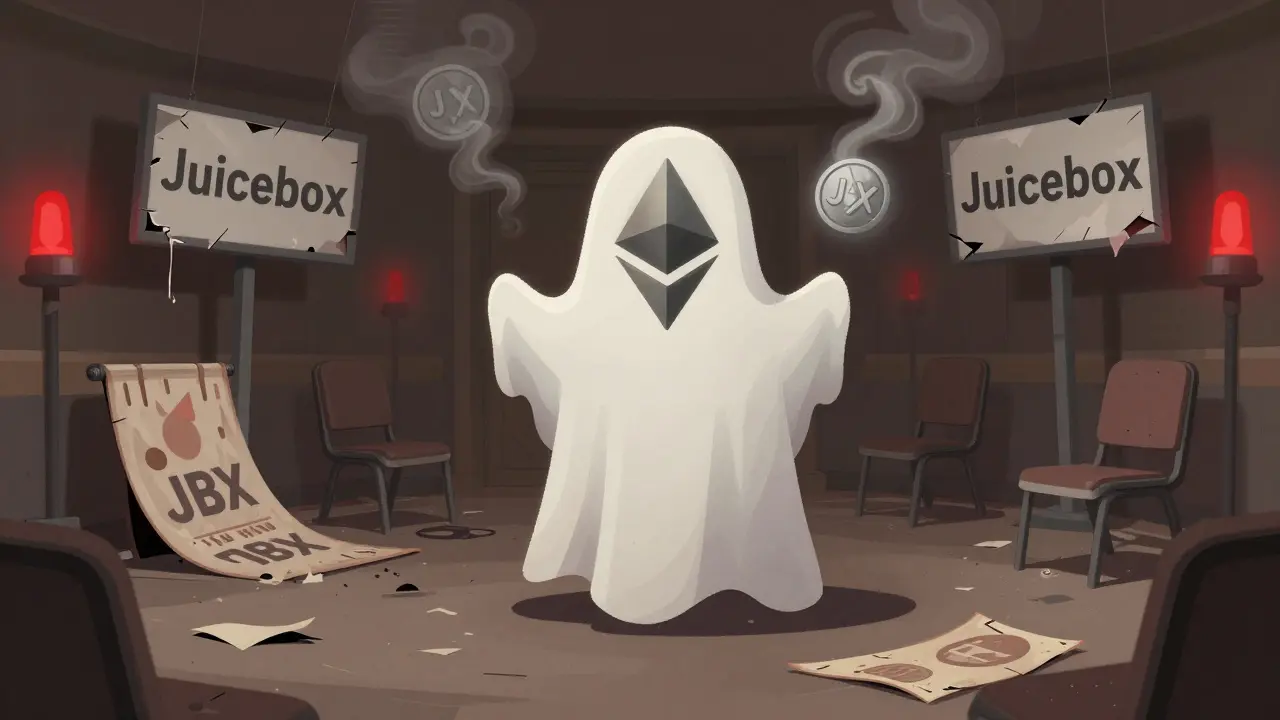
- No community: There are no active Reddit threads. No Discord servers with more than a dozen members. No GitHub commits. No developer updates. The website (juicebox.money) still loads, but it’s like a museum exhibit - preserved, but empty.
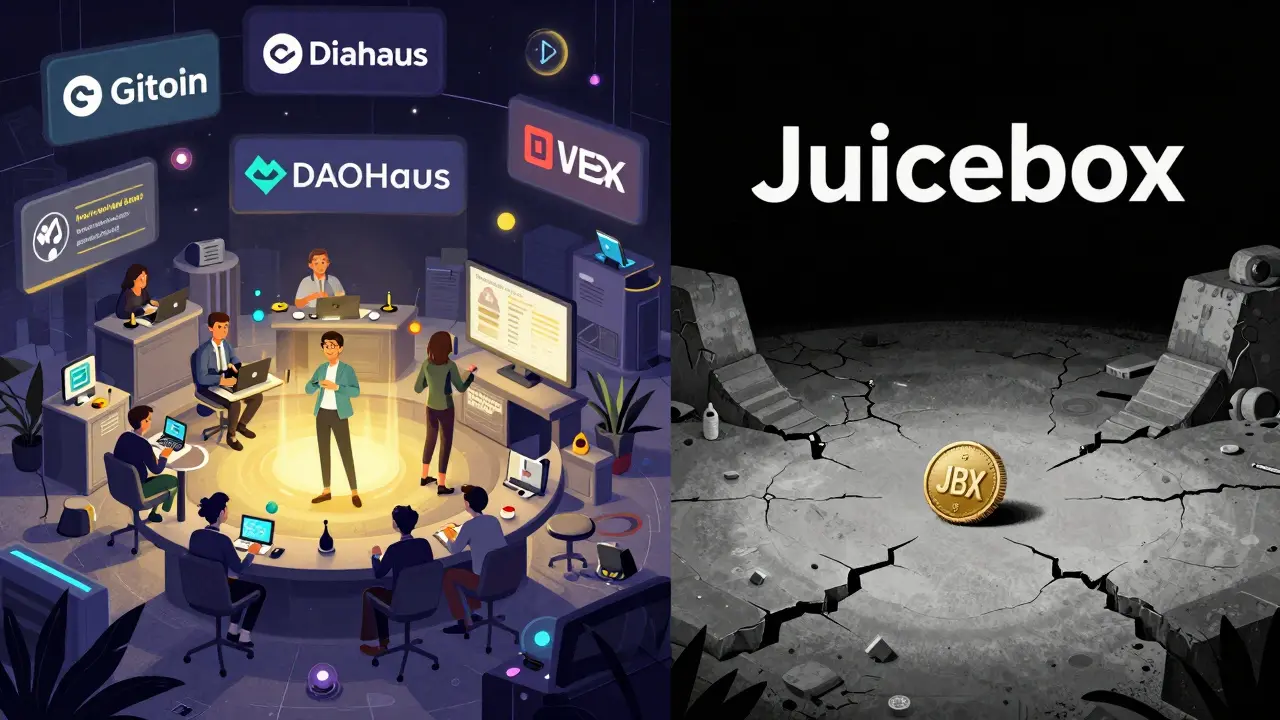
The data doesn’t lie. Juicebox failed to achieve product-market fit. It solved a real problem - decentralized funding - but offered no reason for people to switch from existing tools. Gitcoin already had grants. Aragon and DAOHaus already had governance. Uniswap already had liquidity. Why would anyone use Juicebox when the alternatives were already working?
The token’s numbers don’t add up
The JBX token has a total supply of 2.05 billion. But the circulating supply? Different sources disagree. CoinMarketCap says 0 are in circulation - yet lists a market cap of $1.06 million and claims $3,693 was traded in 24 hours. Coinbase says 1.86 billion are circulating, with a $1.41 million market cap. These contradictions aren’t just confusing - they’re red flags.
Even the price predictions are absurd. One exchange, MEXC, predicts JBX will hit $0.0002044 by the end of 2023 - a 5% annual growth rate. That’s like saying a dying plant will grow 5% taller next year. It ignores the trend: JBX has been falling steadily since 2021. There’s no catalyst. No development. No reason to believe it will recover.
How does Juicebox compare to real competitors?
| Feature | Juicebox (JBX) | Gitcoin | DAOHaus | MakerDAO (MKR) |
|---|---|---|---|---|
| Market Cap (2023) | $1.06M | $100M+ | $50M+ | $700M+ |
| 24H Trading Volume | $39-$3,700 | $15M+ | $10M+ | $50M+ |
| Active Holders | 348 | 10,000+ | 5,000+ | 500,000+ |
| Projects Funded | None documented | 1,500+ | 100+ DAOs | 100s of protocols |
| Active Community | No | Yes | Yes | Yes |
| Development Activity | None | Ongoing | Ongoing | Ongoing |
Juicebox doesn’t just lose to these platforms - it doesn’t even show up on the same scoreboard. Gitcoin has funded open-source developers, artists, and researchers for years. DAOHaus helps teams launch and manage their own DAOs. MakerDAO powers the entire DeFi ecosystem. Juicebox? It’s a ghost town.
Is Juicebox still usable?
Technically, yes. The smart contract (0x4554...687Fb2) still exists on Ethereum. You could still send ETH to a Juicebox funding page - if one existed. But there are no live projects using it. No instructions for new users. No tutorials. No support.
If you bought JBX as an investment, you’re holding a token with no utility, no demand, and no path to recovery. If you were hoping to use it to fund a project, you’d be better off using Gitcoin, Aragon, or even a simple Ethereum multisig wallet.
The platform’s creators never released a clear roadmap after 2022. No updates. No team announcements. No new features. It’s as if they walked away - and the community didn’t follow.
Why does this matter?
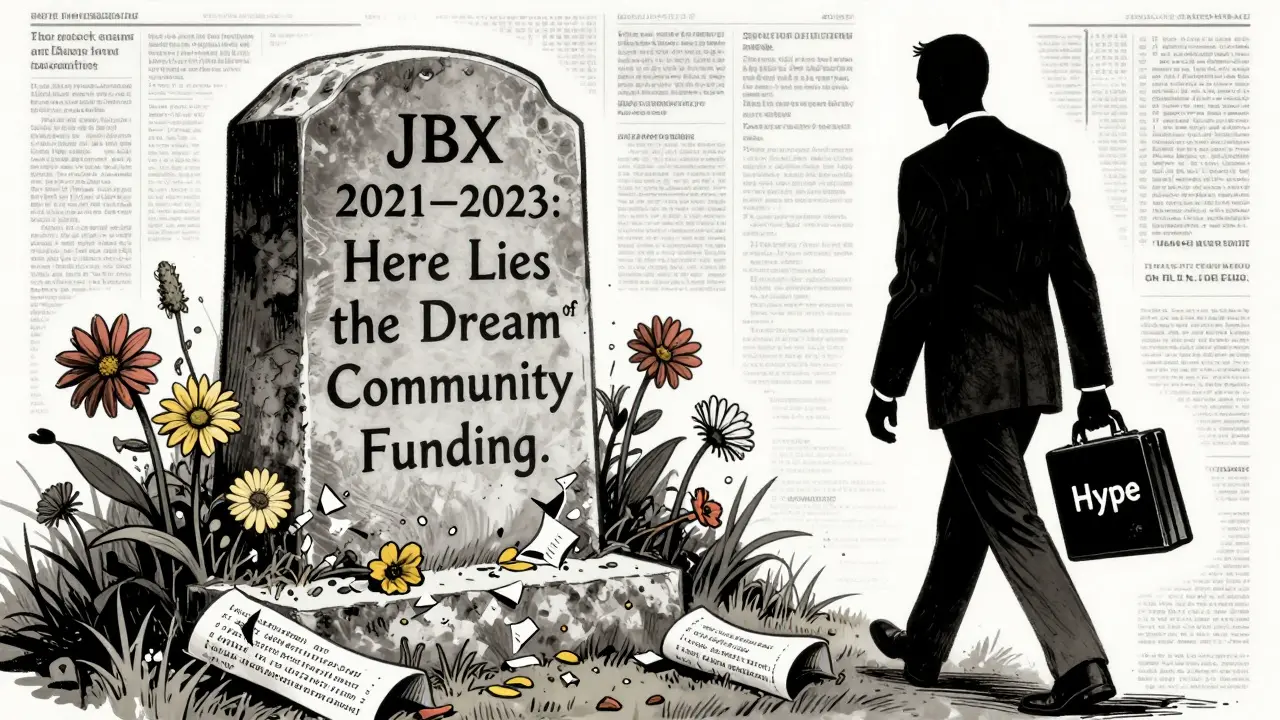
Juicebox isn’t just a failed coin. It’s a lesson in what happens when crypto projects focus on hype instead of utility.
It had a great idea: decentralized, community-owned funding. But it never solved the real problems:
- How do you attract the first users?
- How do you make it easier than what already exists?
- How do you build a community that actually shows up?
Most Web3 projects fail because they assume the technology alone will draw people in. Juicebox proved that’s not enough. You need adoption. You need momentum. You need people who care enough to use it - not just buy the token.
Today, Juicebox is a relic. A footnote. A warning sign.
Should you buy JBX?
No.
Not because it’s illegal. Not because it’s a scam. But because it has no future.
There’s no team pushing it forward. No project building on it. No exchange listing it as a priority. No community cheering it on. The price won’t go up because there’s no reason for anyone to want it.
If you’re looking to invest in Web3 funding platforms, look at Gitcoin, MakerDAO, or even Uniswap. They’re alive. They’re growing. They’re used.
Juicebox? It’s dead. And the market already buried it.
What is Juicebox (JBX)?
Juicebox (JBX) is a cryptocurrency token and Ethereum-based platform designed to enable decentralized, community-funded projects. It was launched in late 2021 with the goal of replacing traditional crowdfunding by letting funders earn voting rights through token ownership. However, it has seen minimal adoption, with only 348 holders and nearly no active projects using the platform as of 2023.
Is Juicebox still active?
Technically, yes - the smart contract is still live on Ethereum. But practically, no. There’s been no development activity since 2022, no new projects launched on the platform, and no community engagement. The official website remains up, but it’s essentially a static page with no updates or support.
Why did Juicebox fail?
Juicebox failed because it offered no clear advantage over existing tools like Gitcoin, DAOHaus, or Aragon. It never attracted enough users, developers, or projects to create momentum. With only 348 token holders and near-zero trading volume, it couldn’t sustain itself. The team disappeared after 2022, and the community never formed.
What’s the current price of JBX?
As of late 2023, JBX trades between $0.0005 and $0.0008, down over 97% from its all-time high of $0.02558 in December 2021. Trading volume is extremely low, ranging from under $40 to $3,700 per day across exchanges, indicating severe illiquidity and lack of interest.
Can you still use Juicebox to fund a project?
You can’t. There are no live funding pages on Juicebox. Even if you set one up manually using the smart contract, no one would know about it, and no one would fund it. The platform has no visibility, no user base, and no support - making it unusable in practice.
Is JBX a good investment?
No. JBX has no utility, no development, no community, and no reason to recover. Its price has fallen consistently since 2021, and there’s no evidence of future growth. Buying JBX now is speculation with near-zero chance of return - not investment.
How does Juicebox compare to Gitcoin?
Gitcoin has funded over 1,500 open-source projects, raised $50+ million, and maintains a large, active community. Juicebox has funded zero documented projects and has only 348 token holders. Gitcoin is growing. Juicebox is gone.
Where can I buy JBX?
JBX is listed on a handful of small exchanges like MEXC and Bitrue, but liquidity is extremely low. Most major exchanges like Coinbase and Binance do not list it. Trading it is risky due to the lack of volume and potential for price manipulation.
Comments (5)

- Cristal Consulting
- December 5, 2025 AT 02:53 AM
Juicebox was a cute idea but no one showed up. That’s the whole story. No community = no crypto project. Simple as that.
It’s like building a fancy coffee shop in the middle of a desert and wondering why no one buys lattes.

- Sandra Lee Beagan
- December 6, 2025 AT 18:37 PM
It’s heartbreaking to see a protocol with such elegant architecture just... fade. The tokenomics were sound, the governance model was ahead of its time - but without onboarding frictionless UX and real-world use cases, even the most beautiful smart contracts become digital tombstones.
Gitcoin’s grant cycles, DAOHaus’s modular templates - they solved the ‘how do I start?’ problem. Juicebox assumed people would just *know*.
And now we’re left with a 0.0005 token and a ghost contract. RIP Web3 idealism.

- michael cuevas
- December 8, 2025 AT 15:17 PM
so they built a decentralized funding platform that required you to be a crypto wizard just to donate to a game dev
and somehow thought that’d be easier than patreon
lol
also the fact that the website still loads but the devs are MIA is peak crypto
like a haunted house with a for sale sign on the door

- nicholas forbes
- December 9, 2025 AT 00:33 AM
I’m not here to dunk on Juicebox - I actually gave it a shot back in 2022. I sent ETH to a project page. Nothing happened. No updates. No replies. No refund mechanism. Just silence.
That’s the real crime here. It wasn’t just a failure - it was an abandonment.
People trusted code to be immutable, but the people behind it? They vanished. And now we’re stuck with a token that’s more of a digital ghost than an asset.
It’s not a market failure. It’s a moral one.

- Stanley Wong
- December 9, 2025 AT 17:37 PM
Look I get it people are mad Juicebox died but honestly it’s kind of poetic
it was supposed to be this beautiful decentralized utopia where communities fund their own dreams but the problem was it never gave people a reason to care enough to stick around
like yeah the idea was cool but you had to be a dev to even understand how to use it and then you had to convince your friends to buy a token that didn’t do anything except give you voting rights on a project that didn’t exist
and then the team just stopped answering DMs
and now we’re left with a token that’s worth less than a meme coin from a Discord server that got shut down
and honestly that’s the real lesson here
crypto doesn’t fail because the tech is bad
it fails because the humans behind it stop showing up
and no amount of smart contracts can fix that
Gitcoin works because people actually talk to each other
DAOHaus works because someone answers your question on Discord
but Juicebox
juicebox was just a beautiful empty room with a sign that said welcome to the future
and then the lights went out
and no one came back to turn them on again