
You’ve probably seen the ticker STAKE flash across a screen or heard someone mention it in passing. It sounds logical, right? A coin named after the most popular way to earn passive income in crypto. But here’s the hard truth: there is no major, reputable cryptocurrency called "STAKE" that operates as a standalone blockchain network like Bitcoin or Ethereum.
If you are looking for a coin simply labeled "STAKE," you might be falling into one of three traps. You could be confusing the general concept of staking with a specific asset, looking at a tiny micro-cap token with almost zero liquidity, or worse, staring at a potential scam project designed to trick beginners. Let’s clear up the confusion so you don’t lose money chasing a ghost.
The Big Misunderstanding: Process vs. Product
The word "stake" in crypto doesn’t usually refer to a specific coin. Instead, it describes an action. Think of it like the word "bake." You don’t buy a loaf of bread called "Bake." You bake bread. Similarly, in the crypto world, you don’t buy a "Stake" coin to participate in the network; you take existing coins-like Ethereum or Solana-and you "stake" them.
This process is part of the Proof-of-Stake (PoS) consensus mechanism. In a PoS network, validators lock up their own cryptocurrency as collateral to verify transactions and secure the network. In return, they earn rewards. This is how networks like Ethereum, Cardano, and Solana operate. When you read about "staking yields" or "staking APR," analysts are talking about the returns on these established assets, not a separate currency named STAKE.
Confusing the mechanic with the asset is the most common mistake new investors make. If a website tells you to buy "STAKE" to start earning interest, pause. Ask yourself: Which underlying blockchain is this running on? Is it a wrapper? Or is it just a vague promise?
Does a "STAKE" Token Actually Exist?
Technically, anyone can create a token. So yes, there might be obscure tokens with the symbol STAKE floating around on decentralized exchanges or small platforms. However, as of mid-2026, none of these hold any significant market presence, security, or utility.
When we look at comprehensive industry data from sources like Koinly, Bankrate, and CoinLedger, the list of top stakable cryptocurrencies remains consistent. It includes giants like Ethereum, Cardano, Tezos, Polkadot, Avalanche, and Cosmos. You will never find a generic "STAKE" coin on these lists. Why? Because it lacks the fundamental requirements of a viable crypto asset:
- No Independent Blockchain: It doesn’t run its own network.
- No Developer Community: There are no open-source projects building on it.
- No Market Depth: It isn’t listed on major tier-1 exchanges like Coinbase or Binance.
If you do find a token trading under the name STAKE, it is likely a low-cap speculative asset with high volatility and low liquidity. Buying such tokens is akin to betting on a lottery ticket rather than investing in a technology. The risk of losing your entire principal is extremely high because there is no underlying utility driving demand.
Red Flags: How to Spot a Scam
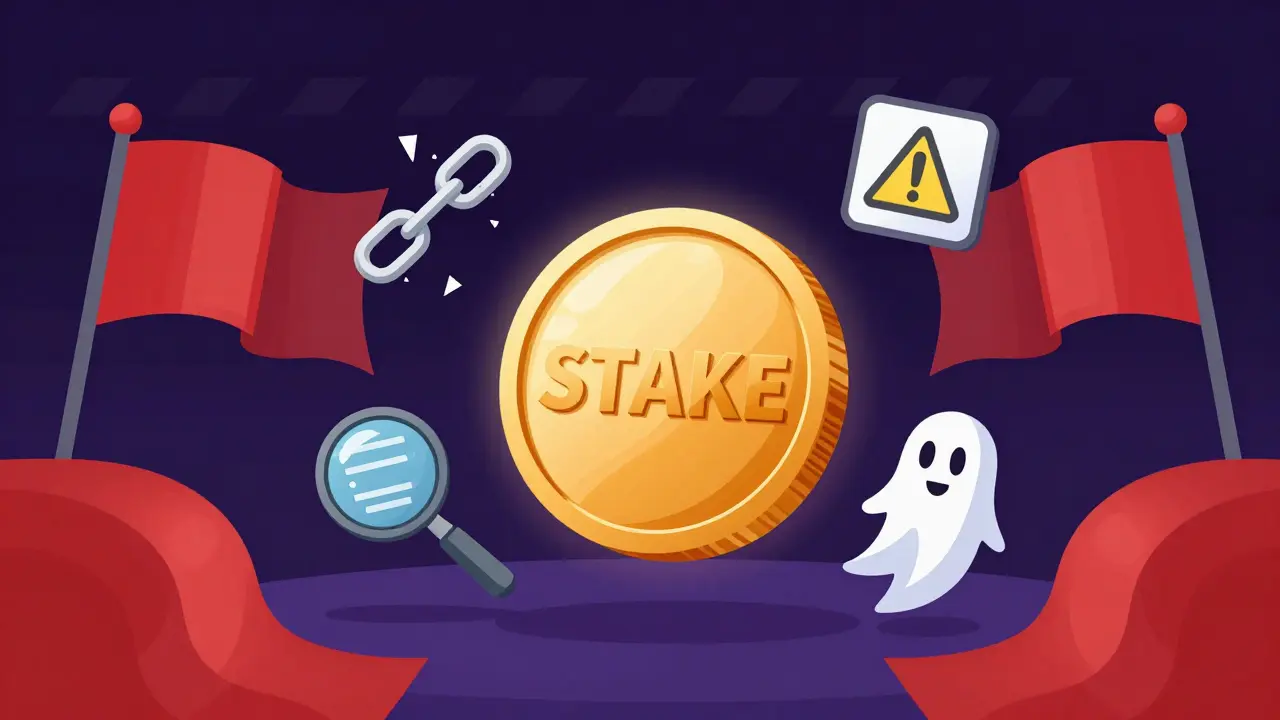
In the crypto space, simplicity can sometimes be a disguise for deception. Scammers often name their fake tokens after common terms like "Bitcoin Cash," "Ethereum Gold," or "Stake Coin" to confuse users who aren’t paying close attention. Here is how to tell if the "STAKE" coin you found is legitimate or a trap.
1. Check the Contract Address Every real token has a unique contract address on its blockchain. If the project cannot provide a verified contract address on Etherscan (for Ethereum-based tokens) or Solscan (for Solana), walk away. Legitimate projects have transparent code that anyone can audit.
2. Look for Real Utility
3. Verify Exchange Listings
Where Should You Actually Stake?
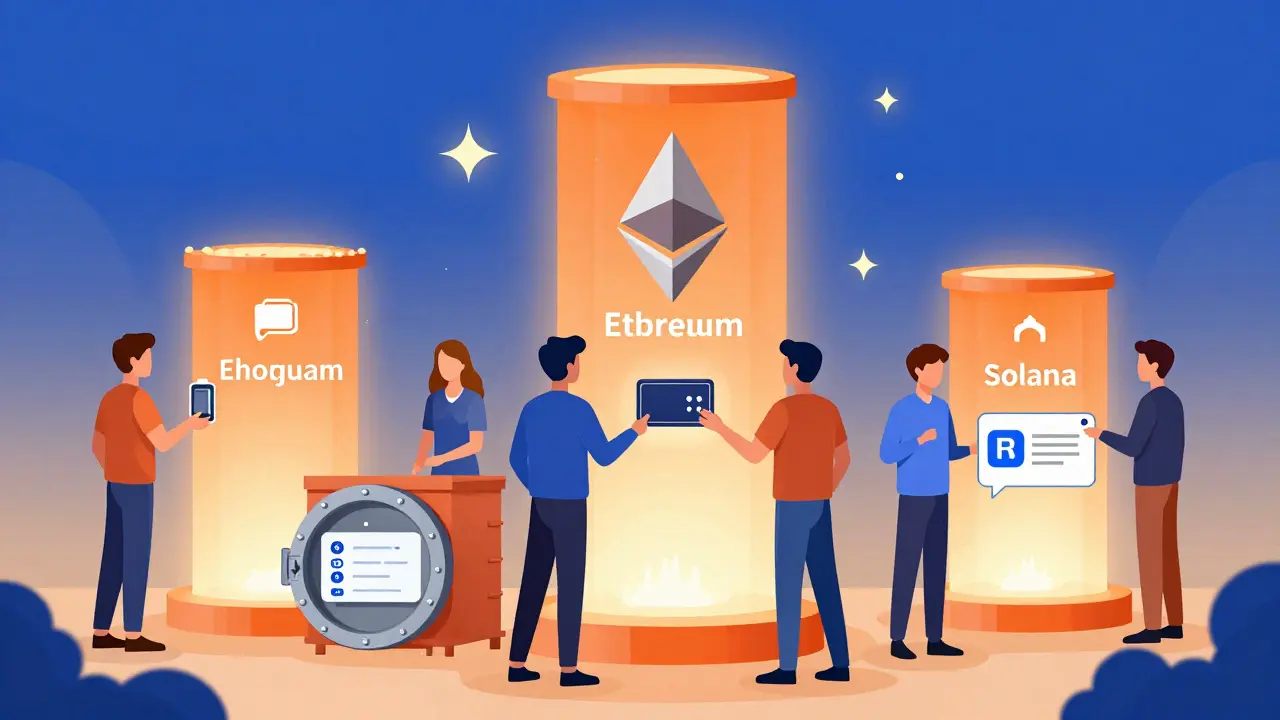
If your goal is to earn passive income through staking, you should focus on established Proof-of-Stake networks. These projects have proven track records, active development teams, and millions of users securing the network. Here is what the landscape looks like in 2026:
| Cryptocurrency | Network Type | Avg. APR (2026) | Minimum Stake | Risk Level |
|---|---|---|---|---|
| Ethereum (ETH) | Smart Contracts | ~3.5% | 32 ETH (Solo) / None (Liquid) | Low |
| Solana (SOL) | High Performance | ~6.8% | 0.01 SOL | Medium |
| Cardano (ADA) | Academic PoS | ~4.2% | None (Delegated) | Low |
| Cosmos (ATOM) | Interoperability | ~14.5% | Varies by Validator | Medium-High |
| Polygon (MATIC/POL) | Scaling Solution | ~5.0% | None (Delegated) | Low-Medium |
Ethereum remains the king of staking. With over $17 billion worth of ETH locked in staking contracts, it offers the highest security. While the Annual Percentage Rate (APR) is modest compared to newer chains, the stability of the asset makes it a favorite for long-term holders. You can stake directly via a validator node (requiring 32 ETH) or use liquid staking derivatives (LSDs) like Lido or Rocket Pool to stake smaller amounts.
Solana appeals to those who want higher yields and faster transactions. The barrier to entry is incredibly low-you can stake just 0.01 SOL. However, Solana has faced occasional network outages in the past, which adds a layer of technical risk that Ethereum does not have.
Cardano uses a delegated Proof-of-Stake model. This means you don’t need to run a validator. You simply delegate your ADA to a pool operator. It’s one of the easiest ways to start staking with zero technical knowledge and no minimum amount.
How to Start Staking Safely
Once you’ve decided to skip the mysterious "STAKE" token and go with a proven asset, how do you actually do it? You have two main paths: centralized exchanges and self-custody.
Option 1: Centralized Exchanges (CEX) This is the easiest route. Platforms like Coinbase, Kraken, and Binance offer "staking-as-a-service." You buy the crypto on their platform, click a button to stake it, and they handle the technical validation. They take a cut of the rewards, but you get convenience. For example, staking ETH on Coinbase might yield slightly less than solo staking, but you don’t need to worry about keeping a server online 24/7.
Option 2: Self-Custody Wallets For more control, you can use a hardware wallet like Ledger or Trezor, or a software wallet like MetaMask. You would then interact directly with the staking contract on the blockchain. This method gives you full ownership of your assets and avoids counterparty risk (the risk that an exchange goes bankrupt). However, it requires a bit more learning. If you lose your seed phrase, your funds are gone forever. There is no customer support to call.
Pro Tip: Always check the "unbonding period." Most PoS networks require you to wait a certain number of days before you can withdraw your staked coins. Ethereum, for instance, has a variable unbonding time that can take weeks. Make sure you won’t need that cash immediately.
Why "STAKE" Will Likely Never Be a Top Coin
It’s important to understand why a generic "STAKE" coin struggles to gain traction. Crypto markets reward specificity and utility. Investors want tokens that give them access to a specific ecosystem. ETH gives you access to DeFi and NFTs. SOL gives you access to high-speed apps. ATOM gives you access to cross-chain communication.
A token named "STAKE" has no inherent utility. What does it do? Who uses it? Without a clear answer, it cannot build a sustainable community. In 2026, the crypto market is maturing. Users are moving away from meme coins and vague concepts toward projects with real-world adoption and transparent governance. A coin named after a generic verb doesn’t fit this narrative.
Furthermore, regulatory scrutiny is increasing. Governments are looking closely at securities laws. Tokens that promise returns based solely on the efforts of others (like a vague "staking" service wrapped in a new token) are highly susceptible to being classified as unregistered securities. Established networks like Ethereum have argued successfully that they are commodities due to their decentralization. A new, centralized "STAKE" project would face immediate legal hurdles.
Final Thoughts on Your Staking Strategy
Don’t let the name fool you. The power of staking lies in the underlying technology of the blockchain, not in a token with a catchy name. By focusing on established networks like Ethereum, Solana, and Cardano, you align yourself with robust ecosystems that have survived multiple market cycles.
Before you invest a single dollar, ask three questions: Is this coin listed on a major exchange? Does it have a whitepaper explaining its utility? Is there an active developer community on GitHub? If the answer to any of these is "no," keep scrolling. The best staking opportunities are boring, reliable, and well-documented-not mysterious tokens hiding in the shadows.
Is STAKE (STAKE) a legitimate cryptocurrency?
There is no major, reputable cryptocurrency known simply as "STAKE" that functions as a leading blockchain network. While minor tokens with this ticker may exist, they lack market presence, security, and utility. Most references to "STAKE" are confused with the general process of staking other cryptocurrencies like Ethereum or Solana.
What is the difference between staking and a staking token?
Staking is the act of locking up cryptocurrency to support a network's operations and earn rewards. A "staking token" is not a standard term for a specific coin; rather, you stake existing tokens (like ETH or ADA). Some platforms issue derivative tokens (like stETH) representing your staked position, but these are tied to the underlying asset, not a separate "STAKE" currency.
Which crypto is best for staking in 2026?
The best choice depends on your risk tolerance. For safety and stability, Ethereum (ETH) is the top choice due to its massive market cap and security. For higher yields and lower entry barriers, Solana (SOL) and Cardano (ADA) are popular options. Cosmos (ATOM) offers high APRs but comes with higher complexity and risk.
Can I lose money when staking cryptocurrency?
Yes. You can lose money through "slashing," where validators are penalized for malicious behavior or downtime, reducing your stake. Additionally, if the price of the underlying cryptocurrency drops significantly, the value of your staked assets and rewards may decrease, even if the number of tokens increases.
Is staking taxable?
In many jurisdictions, including the US and parts of Europe, staking rewards are considered taxable income at the time they are received. You must report the fair market value of the rewards on the day you receive them. Always consult with a tax professional familiar with cryptocurrency regulations in your country.