
The Basics of UTXO Age
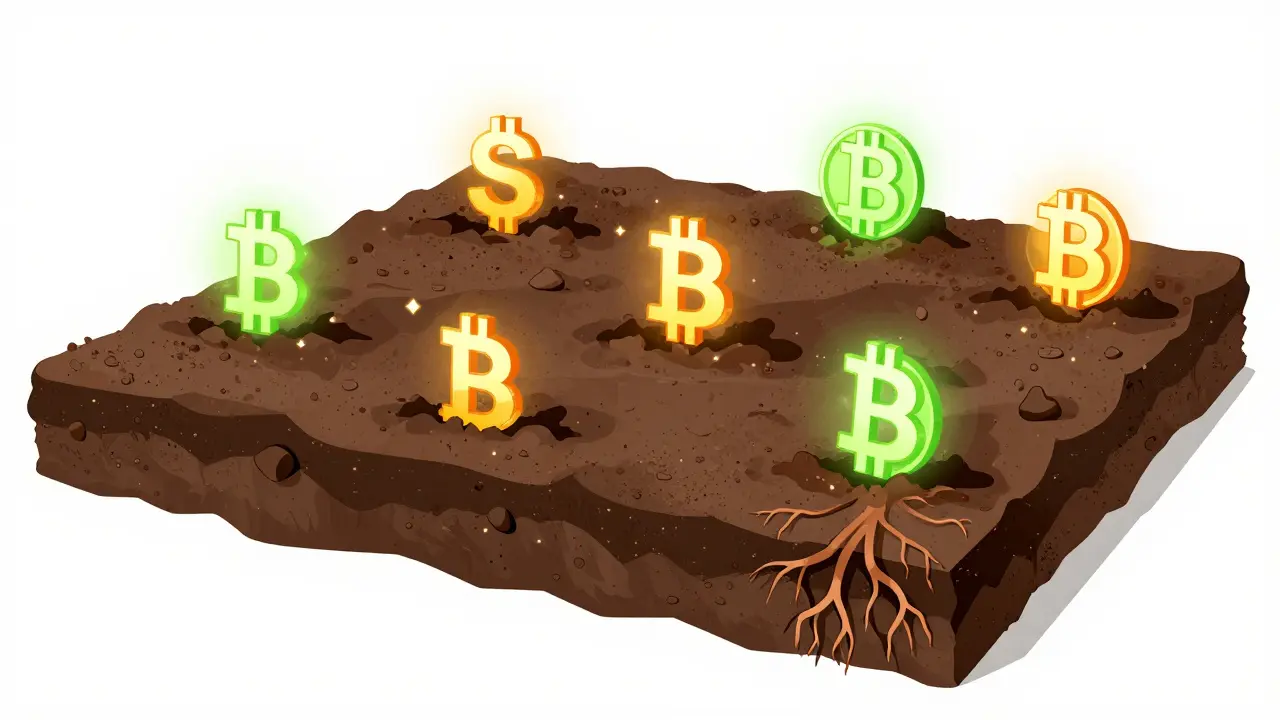
To understand the analysis, you first need to understand the entity it tracks. In a Bitcoin network, there are no "accounts" like you have at a bank. Instead, there are UTXOs. Think of a UTXO as a digital gold coin in a vault. When you send Bitcoin, you aren't deducting a balance; you are spending that specific "coin" and creating new, smaller coins (UTXOs) for the recipient and yourself as change. Age is measured by the number of blocks or days since that specific output was created. If a UTXO hasn't moved in 5 years, it's a "stale" output. If it moved today, it's "fresh." When thousands of old UTXOs suddenly start moving after years of silence, it's usually a signal that a major market shift is coming. Why? Because long-term holders usually only sell when they believe the price has reached a peak they can't ignore.Decoding the HODL Waves
One of the most famous ways to visualize this data is through HODL Waves. These are colorful charts that look like a rainbow, where each color represents a different age bracket (e.g., 1 week, 1 month, 1 year). When the "long-term" colors (like dark blue or purple) dominate the chart, it means the majority of the supply is being held by people who aren't bothered by daily price swings. This often happens during bear markets. Conversely, when the "short-term" colors (like yellow or orange) expand, it shows that new buyers are entering the market and coins are changing hands rapidly. This is a classic sign of a bull run.| Age Bracket | Typical User Persona | Market Signal |
|---|---|---|
| 0-3 Months | Speculators / Day Traders | High Volatility / Euphoria |
| 3 Months - 1 Year | Swing Traders / New Investors | Market Accumulation |
| 1 Year - 3 Years | Long-term Believers | Stability / Conviction |
| 3+ Years | "Old Money" / Institutions | Potential Market Top if moving |
Why Age Distribution Matters for Price Action
Price doesn't happen in a vacuum. It happens because of the interaction between supply and demand. UTXO analysis lets us see the "supply" side of the equation in high definition. Consider the concept of the "Realized Cap." Unlike the market cap, which just multiplies current price by total coins, the realized cap weights coins by the price they were last moved at. If a coin hasn't moved in 7 years, the market cap values it at today's price (say, $60,000), but the realized cap values it at the price it was last spent (maybe $300). When we see a massive spike in UTXO Age Distribution shifts-specifically a move from the 3+ year bracket to the 0-3 month bracket-it means people who bought at very low prices are finally taking profits. This creates "sell pressure." If the number of new buyers (short-term UTXOs) can't absorb this pressure, the price drops.
The Role of Blockchain Forensics
This isn't just for traders. Blockchain Forensics uses age distribution to track illicit activity. For example, if a wallet associated with a known hack from 2017 suddenly wakes up and moves funds, analysts can track those UTXOs as they move through Mixers or exchanges. By analyzing the "age" of the funds being laundered, investigators can determine if the attacker is trying to wait out the heat (holding for years) or if they are panic-selling. The temporal pattern of how these coins move often reveals the identity or the strategy of the actor involved.Practical Steps for Analyzing UTXOs
If you want to start using this data, you don't need to write your own parser. There are tools that do the heavy lifting. Here is how to approach it:- Identify the Accumulation Phase: Look for a steady increase in UTXOs aged 6 months to 2 years. This suggests a "smart money" phase where investors are buying and not selling.
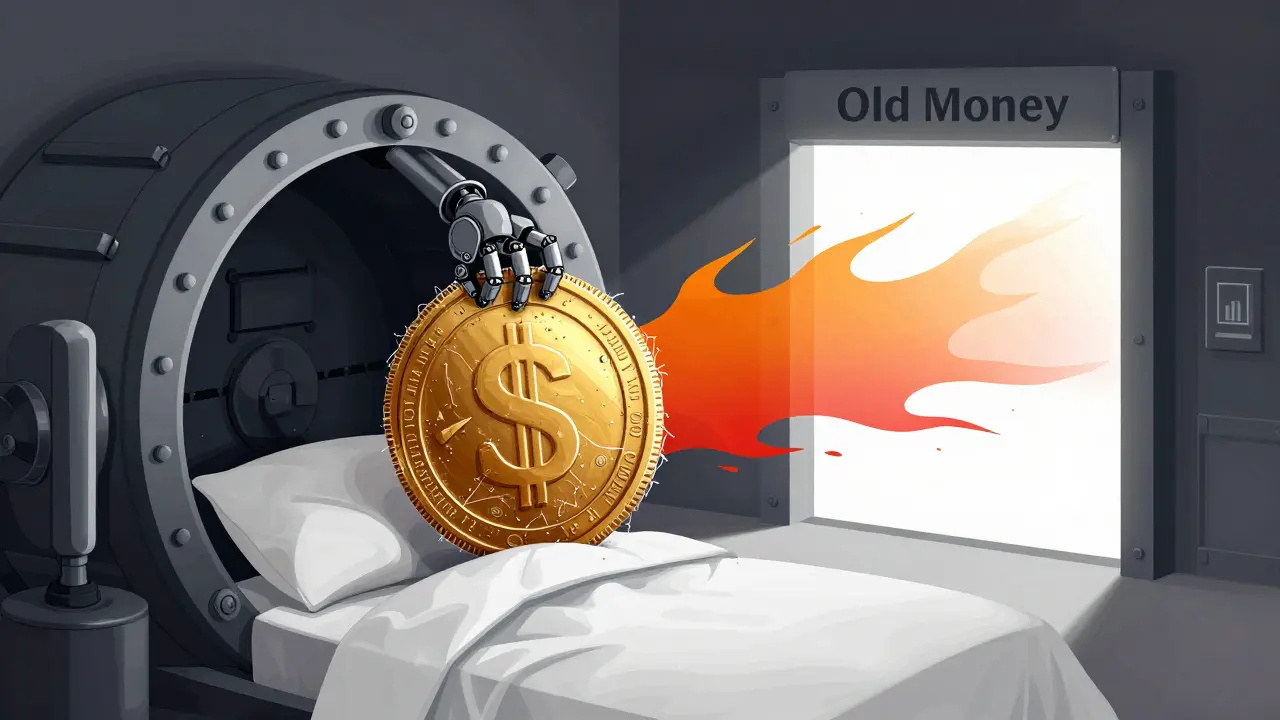
- Watch for the "Wake Up' Call": Monitor the volume of UTXOs older than 5 years. If these start moving in large quantities, be cautious. It often precedes a local top.
- Compare with Volume: If price is going up but the number of long-term UTXOs is also increasing, the rally is healthy. If price goes up while long-term holders are dumping into the rally, the move is likely unsustainable.
- Check the Realized Price: Look for clusters where the most coins were last moved. These act as powerful psychological support and resistance levels.
Common Pitfalls to Avoid
It is easy to misread the data. One big mistake is assuming that all "old" UTXOs are held by humans. Many old coins are actually lost forever because the owner lost their private keys. This is why some analysts subtract an estimated percentage of "lost coins" from their distribution models to get a more accurate picture of active supply. Another trap is the "Exchange Effect." When you deposit Bitcoin into an exchange, you are sending your UTXO to the exchange's wallet. The exchange then bundles your coins with thousands of others. This can make a coin look "younger" or "older" depending on how the exchange manages its internal Cold Storage and hot wallets. Always remember that on-chain data shows wallet movement, not necessarily individual human intent.Does UTXO age analysis work for Ethereum?
No, not in the same way. Ethereum uses an account-based model, not a UTXO model. To get similar insights on Ethereum, analysts look at "token age" or the time since a specific address last interacted with a contract, but it is fundamentally different from the Bitcoin UTXO structure.
What is a 'SOP' in the context of UTXOs?
While not a standard term in every tool, some refer to the 'Sovereign Ownership Period' as the time a UTXO stays in one wallet. This helps analysts determine the 'conviction level' of a specific whale or institutional entity.
Can UTXO age predict the exact bottom of a crash?
It can't give you a precise date, but it shows you when the 'capitulation' is happening. When short-term holders stop selling and the percentage of long-term UTXOs starts to climb again from a low point, you are likely near a cyclical bottom.
Why do whales move old coins in small batches?
Large movements of old coins attract immediate attention from the entire world. By breaking a massive UTXO into smaller pieces (called 'peeling chains'), whales try to hide their tracks and avoid causing a market panic.
Is a high percentage of old UTXOs always bullish?
Not necessarily. While it shows strong conviction, if the market stays stagnant for too long, those old holders may eventually reach a 'breaking point' and sell, leading to a sudden crash if there is no new buying interest.
Next Steps for Your Analysis
If you are a beginner, start by looking at free on-chain dashboards. Find a chart showing "HODL Waves" and compare it to a price chart from the 2021 peak. You will notice that the "young" coins peaked just before the price crashed. For those who want to go deeper, look into "Realized Cap's" relationship with the "MVRV Ratio" (Market Value to Realized Value). When the market price is significantly higher than the realized price (the price at which most UTXOs were last moved), the market is typically overvalued. Conversely, when the price drops close to the realized price, it's often a great time to buy because you are buying at the same average cost as the long-term holders.Comments (7)

- Sara Ellis
- April 23, 2026 AT 03:08 AM
it is like a mirror of our greed and fear just numbers showing who is brave and who is scared

- Robert Mosolygo
- April 23, 2026 AT 13:46 PM
The naive assumption that this data is "objective" is laughable. You fail to mention how institutional market makers manipulate these UTXO movements to fake accumulation patterns, thereby trapping retail investors into a false sense of security. It is blatantly obvious that the so-called "smart money" consists of algorithmic bots designed to mislead the very analysts who rely on these colorful charts. The entire ecosystem is a choreographed play orchestrated by centralized entities to maintain a facade of decentralization while they slowly liquidate their positions.

- Yvette P
- April 23, 2026 AT 14:08 PM
Oh, honey, imagine thinking that a basic HODL wave is a magic crystal ball for price action without accounting for the systemic skew caused by exchange omni-wallets and internal liquidity shuffling. While the post provides a quaint introduction to on-chain heuristics, it completely ignores the nuances of the MVRV-Z score and the stochastic volatility associated with realized cap regressions, which are actually useful if you have more than two brain cells rubbing together. I love how we pretend that a simple age bracket can predict a market top when we are dealing with complex game theory and asymmetric information flow in a high-frequency environment. Seriously, just because you can read a rainbow chart doesn't mean you are an on-chain wizard, but hey, keep dreaming about those "predictable" bottoms while the actual whales are using obfuscation techniques that make this guide look like a children's book on counting. It's almost adorable how the retail crowd thinks the ledger is an open book when the real movements are happening in side-channels and OTC desks that never hit the public UTXO distribution in a timely manner. Maybe next time we can discuss how the Liveliness metric actually contradicts the simplistic "lost coin" theory mentioned here, but I guess that would require a level of technical depth that is far too demanding for this particular crowd. Just stay bullish and ignore the math, right?

- jill huyo-a
- April 24, 2026 AT 16:32 PM
That's such an interesting way to look at the market dynamics. It really helps to see the human psychology behind the numbers. I think focusing on the 6 month to 2 year bracket is a great tip for anyone trying to get a feel for where the market is heading.

- Jennifer Taylor
- April 26, 2026 AT 15:55 PM
They are lying to us about the lost coins. The government is probably the one holding all those old UTXOs and they will dump them all at once to crash the system and bring in their own digital currency. Watch the whales, they know something we dont

- Gary Lingrel
- April 28, 2026 AT 03:32 AM
imagine trusting a chart over your own gut feeling lol 🙄 the whole idea of a realized cap is just a fancy way to dress up a guess. it is all a scam anyway 🤷♂️

- Tara Aman
- April 29, 2026 AT 02:09 AM
Let's all try to use these tools to make better decisions together! It is so empowering to actually have data instead of just guessing based on social media hype. We can totally nail the next cycle if we stay disciplined and keep learning!