
Imagine trying to use a dollar bill in a vending machine that only accepts quarters. That is essentially what happens when you try to use native TRX, the native coin of the TRON blockchain network, in many decentralized finance (DeFi) applications. The machine-smart contracts on Ethereum or even lending protocols on TRON itself-often requires a specific format called a "token" rather than raw currency. This is where Wrapped TRON, known by its ticker symbol WTRX, comes into play.
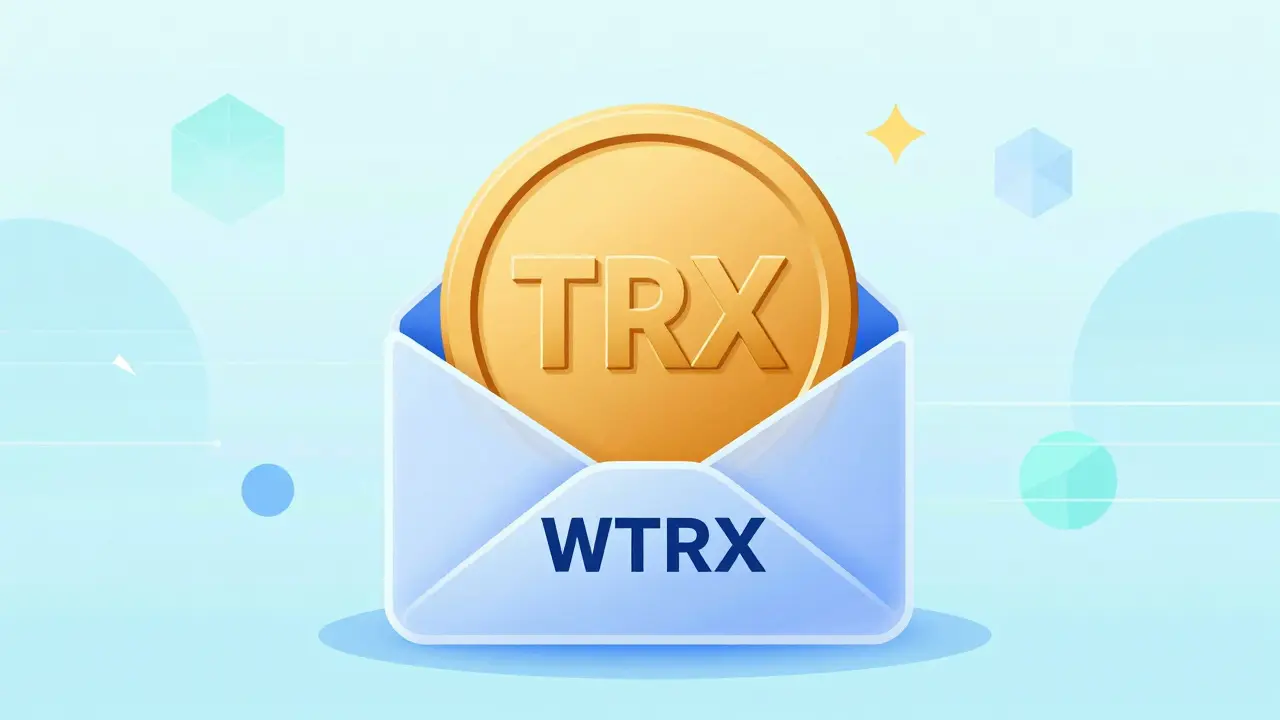
WTRX is not a new cryptocurrency with its own independent value or roadmap. Instead, it is a digital wrapper around your existing TRX holdings. Think of it as putting your cash into a secure envelope labeled "Token." This allows your TRX to function seamlessly within automated market makers, lending platforms, and cross-chain bridges without losing its original value. One WTRX is always meant to equal one TRX, creating a stable bridge between traditional holding and active DeFi participation.
Why Does Wrapped TRON Exist?
To understand WTRX, you first need to understand the difference between a "coin" and a "token" in the world of blockchain. On most networks like Ethereum, the native asset (ETH) is used to pay for transaction fees, often called gas. However, smart contracts-the code that powers DeFi apps-are usually written to interact with standardized tokens, such as those following the ERC-20 standard.
Native TRX behaves similarly on the TRON network. It pays for bandwidth and energy but doesn't always fit neatly into the mathematical structures of complex DeFi protocols. These protocols expect assets that follow the TRC-20 standard, which defines how tokens can be transferred, tracked, and interacted with programmatically.
By wrapping TRX into WTRX, developers created a version of TRX that speaks the language of these smart contracts. This enables functionalities like:
- Lending and Borrowing: Using your TRX as collateral to borrow other assets like USDT.
- Liquidity Provision: Adding TRX to trading pools on decentralized exchanges to earn fees.
- Cross-Chain Swaps: Moving the value of TRX to other blockchains like Ethereum or BNB Chain.
Without WTRX, you would have to sell your TRX for a different token every time you wanted to participate in these activities, incurring taxes, slippage, and extra steps. WTRX keeps your exposure to TRX’s price while unlocking its utility.
How the Wrapping Mechanism Works
The process of creating WTRX is straightforward and relies on a concept called minting and burning. Here is the step-by-step flow:
- Deposit: You send your native TRX to a designated smart contract or custodian address on the TRON network.
- Mint: The smart contract locks your TRX and creates an equivalent amount of WTRX tokens. If you deposit 100 TRX, you receive 100 WTRX.
- Use: You now hold WTRX, which you can use in DeFi apps like JustLend, a leading lending protocol on TRON or SunSwap, a decentralized exchange on TRON.
- Unwrap: When you are done, you send the WTRX back to the smart contract. The contract burns (destroys) the WTRX and releases your original locked TRX back to your wallet.
This 1:1 peg is maintained by arbitrage. If WTRX were to trade for less than TRX on the open market, traders would buy cheap WTRX, unwrap it for free TRX, and sell the TRX for a profit. This action pushes the prices back into alignment. Conversely, if WTRX trades higher, people will wrap their TRX to sell the premium WTRX. This economic pressure ensures that WTRX stays closely tied to the price of TRX.
WTRX on TRON vs. WTRX on Ethereum
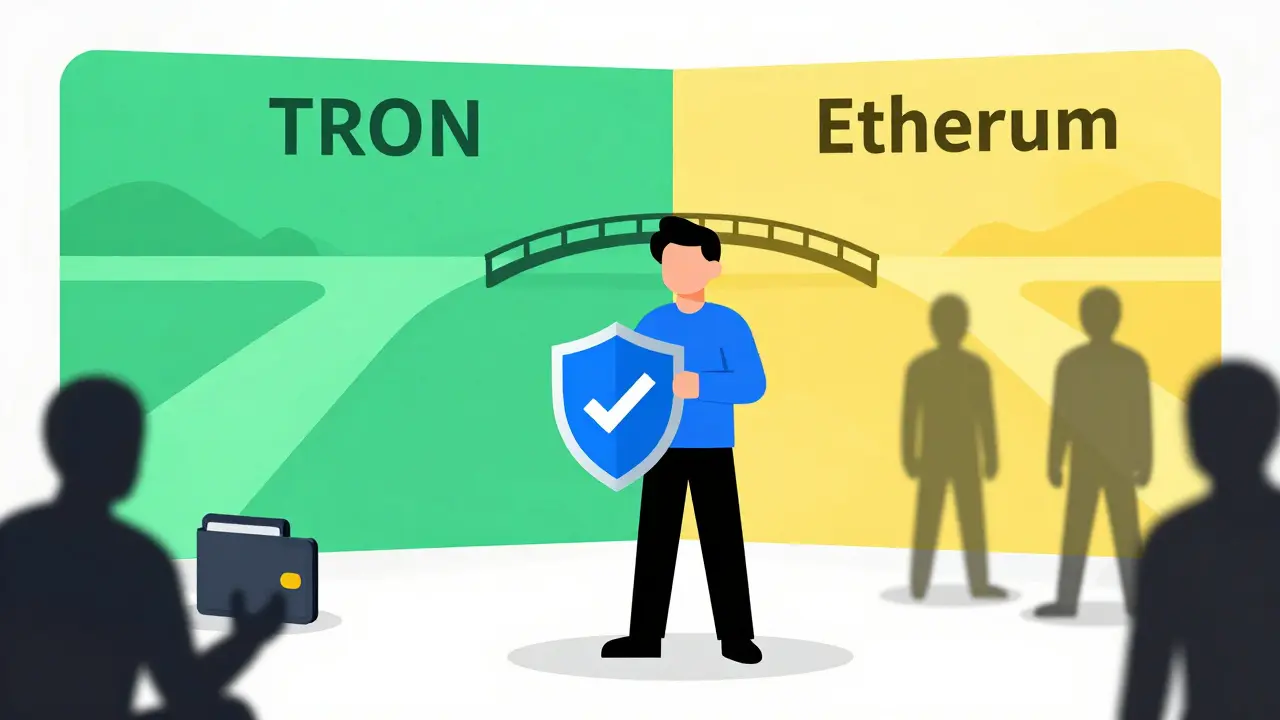
One common point of confusion is that WTRX exists on multiple blockchains. While the primary use case is on the TRON network itself, there is also an ERC-20 version of WTRX on Ethereum. Understanding the difference is crucial for avoiding lost funds.
| Feature | TRC-20 WTRX (On TRON) | ERC-20 WTRX (On Ethereum) |
|---|---|---|
| Primary Use | Core DeFi activity on TRON (JustLend, SunSwap) | Cross-chain interoperability, Ethereum DeFi access |
| Transaction Speed | ~3 seconds per block | ~12 seconds per block |
| Cost | Very low (fractions of a cent) | Variable (can be high during congestion) |
| Standard | TRC-20 | ERC-20 |
| Wallet Support | TronLink, Trust Wallet | MetaMask, Trust Wallet |
If you are using TRON-based dApps, you want the TRC-20 version. If you are trying to use TRX value inside an Ethereum application like Uniswap or Aave, you need the ERC-20 version. Never send TRC-20 WTRX to an Ethereum address; the funds will likely be lost forever because the networks cannot communicate directly without a bridge.

Key DeFi Applications for WTRX
The real power of WTRX lies in its integration with the TRON DeFi ecosystem. Two major platforms dominate this space:
JustLend: This is a non-custodial lending protocol. By supplying WTRX to JustLend, you earn interest from borrowers. Alternatively, you can supply WTRX as collateral to borrow stablecoins like USDT. This allows you to leverage your position without selling your underlying TRX assets. In peak periods, yields on TRON DeFi have been competitive due to the high volume of transactions on the network.
SunSwap: As the leading Automated Market Maker (AMM) on TRON, SunSwap uses WTRX extensively. Liquidity providers pair WTRX with other tokens (like USDT or SUN) to facilitate trades. In return, they earn a portion of the trading fees. Because TRON has low fees, users can perform frequent swaps and yield farming strategies that would be prohibitively expensive on Ethereum.
Risks and Considerations
While WTRX is a useful tool, it is not risk-free. You should be aware of three main areas of concern:
Smart Contract Risk: WTRX relies on code to lock and unlock your funds. While the core contracts have been audited and used for years, bugs can exist in any software. Always ensure you are interacting with official contract addresses listed on trusted explorers like Tronscan, the official block explorer for TRON.
Custodial Trust: Unlike native TRX, which is fully decentralized, wrapped assets depend on the integrity of the entity managing the reserves. For WTRX on TRON, the mechanism is largely trustless via smart contracts, but cross-chain versions may involve centralized bridges or custodians. If a bridge is hacked, the wrapped tokens could become worthless. Keep an eye on security audits and news regarding cross-chain infrastructure.
Regulatory Uncertainty: The broader TRON ecosystem has faced scrutiny from regulators, including actions by the U.S. Securities and Exchange Commission (SEC) against founder Justin Sun. While WTRX is technically just a utility token for DeFi, regulatory pressures on TRX can indirectly affect liquidity, exchange listings, and user confidence in related assets like WTRX.
How to Get Started with WTRX
If you already hold TRX, getting WTRX is simple. Most modern wallets make this automatic or nearly instant.
Using TronLink: Download the TronLink browser extension or mobile app. Import your wallet. Go to the "Swap" or "Defi" section. Many dApps integrated into TronLink will automatically wrap your TRX into WTRX when you deposit into a pool. You don’t necessarily need to manually convert it beforehand unless the specific app requires it.
Manual Wrapping: If you need explicit WTRX tokens, visit a reputable DEX like SunSwap. Connect your wallet. Select TRX as the input and WTRX as the output. Execute the swap. The rate will be 1:1, minus a tiny fee for the transaction. Now you hold WTRX ready for lending or staking.
For Ethereum Users: If you need ERC-20 WTRX, you must use a cross-chain bridge or a DEX on Ethereum that lists WTRX pairs. Be extremely careful to verify the contract address on Etherscan before adding any custom token to MetaMask. Scammers often create fake tokens with similar names to trick users.
Is WTRX Worth Your Attention?
WTRX is not an investment vehicle in itself; it is a utility tool. Its value mirrors TRX exactly. If you believe in the growth of the TRON network and want to participate in its DeFi economy, WTRX is essential. It removes friction, allowing you to lend, borrow, and provide liquidity efficiently.
However, if you are purely a long-term holder of TRX and have no interest in DeFi, you do not need WTRX. Keep your TRX native to save on unnecessary interactions. But for active traders and yield farmers, WTRX is the key that unlocks the full potential of the TRON ecosystem. Just remember to always double-check network details, verify contract addresses, and never invest more than you can afford to lose in smart contract environments.
What is the difference between TRX and WTRX?
TRX is the native cryptocurrency of the TRON blockchain, used primarily for paying transaction fees and governance. WTRX is a wrapped version of TRX that conforms to the TRC-20 token standard. This allows it to be used in smart contracts and DeFi applications that require tokenized assets, whereas native TRX cannot always be directly integrated into these protocols.
Is WTRX safe to use?
WTRX is generally considered safe within the TRON ecosystem, as it is widely used in major protocols like JustLend and SunSwap. However, it carries smart contract risk and custodial risk, especially when moving across chains. Always verify contract addresses and be aware that cross-chain bridges can be targets for hackers.
Can I convert WTRX back to TRX?
Yes, you can unwrap WTRX back to native TRX at any time. This is typically done through the same DeFi platform or wallet interface where you wrapped it. The process involves sending WTRX to a smart contract, which burns the tokens and releases the equivalent amount of TRX to your wallet.
Does WTRX have its own value separate from TRX?
No, WTRX does not have an independent value. It is pegged 1:1 to TRX. The price of WTRX should always match the price of TRX. Any significant deviation is usually corrected quickly by arbitrage traders who buy the cheaper asset and sell the more expensive one.
Which wallet supports WTRX?
Popular wallets that support WTRX include TronLink, Trust Wallet, and MetaMask (for the Ethereum version). TronLink is the most commonly used wallet for interacting with TRON-based DeFi applications and offers seamless integration for wrapping and unwrapping TRX.

Comments (5)

- Larry Port
- May 24, 2026 AT 15:21 PM
it is interesting how wrapping solves the technical mismatch between native coins and token standards. many people overlook that TRX is for gas while WTRX is for contract interaction. this distinction is crucial for anyone trying to use DeFi protocols effectively. without this wrapper, you would be forced to sell your assets constantly which creates unnecessary tax events and slippage. the minting and burning mechanism ensures a stable peg through arbitrage incentives. it is a clever solution to a common blockchain interoperability problem.

- Bridget Coogle
- May 24, 2026 AT 16:45 PM
i really appreciate how clear this explanation is about the risks involved. it feels good to know there are safeguards like smart contract audits even though no system is perfect. everyone should definitely double check those contract addresses before they connect their wallets. staying safe is so important in this space and taking that extra second to verify can save you from a lot of stress later on. i am always encouraging others to look into these utility tools because they make participating in finance much more accessible and less intimidating for newcomers who might feel overwhelmed by the jargon otherwise.

- Zara Zaman
- May 25, 2026 AT 22:52 PM
stop pretending this is safe just because some audit firm signed off on it. we all know the SEC is already circling Justin Sun and his entire ecosystem is built on shaky regulatory ground. using wrapped tokens just adds another layer of centralized risk where a single bridge hack could wipe out millions of dollars overnight. you think arbitrage keeps the peg stable but when panic sets in liquidity dries up fast and you are left holding worthless digital paper. american investors should stay away from these offshore gambling schemes that rely on trustless narratives while being fully dependent on custodial bridges that have failed repeatedly in other chains.

- Jocelyn Garcia
- May 27, 2026 AT 20:55 PM
the delta between TRC-20 and ERC-20 implementations is significant for yield farmers optimizing APY across chains. on TRON the block time allows for high frequency rebalancing strategies that simply bleed capital on ETH L1 due to gas volatility. however the cross-chain bridge risk profile for ERC-20 WTRX introduces non-trivial counterparty exposure that must be factored into expected returns. most retail users fail to account for the impermanent loss compounded by bridge slippage when moving assets back and forth. sophisticated actors utilize oracle feeds to monitor peg deviations and execute arb trades within milliseconds exploiting any temporary dislocations caused by network congestion or liquidity fragmentation in smaller pools.

- Amit Varpe
- May 27, 2026 AT 22:26 PM
TRON is superior to ethereum for everyday transactions hands down. low fees mean actual usability for normal people not just whales. wrap your trx and start earning real yields instead of paying $50 in gas fees to move nothing. sunswap and justlend are solid platforms that prove the model works. dont listen to the fear mongers who want to keep crypto exclusive and expensive for the elite few.