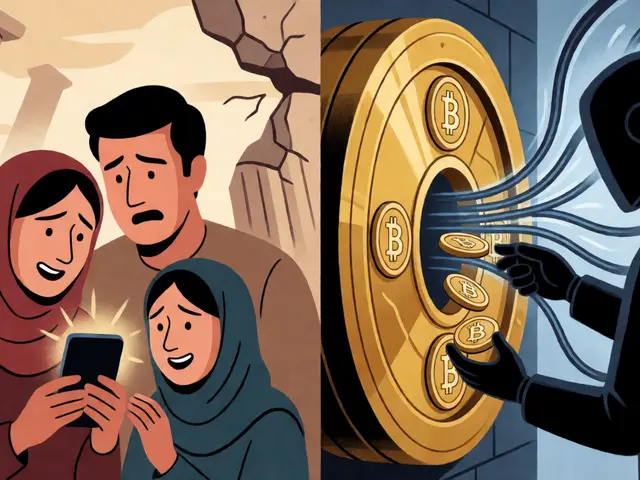

Imagine your country’s entire annual electricity bill suddenly jumping because a few thousand servers started solving math problems. That’s essentially what happened in Sweden between 2021 and 2022. When China banned cryptocurrency mining, operations didn’t just vanish; they migrated to places with cheap, cold air and stable grids. Sweden became a prime target. But instead of rolling out the red carpet, Swedish regulators slammed the door shut.
The core issue isn’t that Swedes hate technology. It’s that Bitcoin’s proof-of-work consensus mechanism consumes an amount of energy that clashes violently with the nation’s aggressive climate goals. This tension has led to some of the strictest crypto regulations in Europe, turning Sweden into a global case study on how environmental concerns can reshape digital finance.
The Energy Shock: Why Sweden Took Notice
To understand the backlash, you have to look at the numbers. In early 2021, China cracked down on mining farms. Overnight, miners needed new homes. They found them in Scandinavia, where hydroelectric power is abundant and the cold climate helps cool down overheating rigs. For Sweden, this seemed like a perfect match until the data started piling up.
Between April and August 2022, electricity consumption for Bitcoin mining in Sweden skyrocketed by several hundred percent. By late 2022, it was hitting approximately 1 TWh annually. To put that in perspective, 1 TWh is enough to power about 200,000 Swedish households. Suddenly, a niche digital activity was competing with families for resources.
Erik Thedéen, Director General of the Swedish Financial Supervisory Authority (FI), didn’t mince words. He argued that the environmental footprint of proof-of-work cryptocurrencies fundamentally contradicts Sweden’s climate targets. The FI, along with the Financial Stability Council (FSC), began pushing for an EU-wide ban on Bitcoin mining. Their argument wasn’t just about local grid strain; it was about global emissions. They cited estimates suggesting that crypto-assets release up to 120 million tonnes of CO2 annually-equivalent to 100 million round-trip flights between Sweden and Thailand.
Proof-of-Work vs. The Green Grid
Critics often point out that Sweden’s grid is incredibly green. About 54% of Sweden’s electricity comes from hydroelectric power, 30% from nuclear, and 15% from wind. So, why worry about carbon if the power source is clean? The Swedish regulators’ stance is nuanced: it’s not just about the source, but the total consumption.
Even if the electricity is renewable, the infrastructure required to support massive mining loads has an environmental cost. Building new substations, upgrading transmission lines, and managing peak demand all require materials and construction efforts that generate emissions. Moreover, the opportunity cost matters. If that 1 TWh of electricity goes to mining servers, it isn’t going to other industrial processes or future electrification projects like electric vehicles or heat pumps.
| Metric | Bitcoin Network (Global Estimate) | Visa Network (Annual Average) |
|---|---|---|
| Electricity per Transaction | ~707 kWh | ~0.0023 kWh |
| Total Annual Consumption | ~143 TWh | ~1.8 TWh |
| Comparable Nation Usage | Higher than Sweden (139 TWh) | Negligible relative to national grids |
This disparity highlights why regulators view proof-of-work as inefficient. While Visa handles thousands of transactions per second using minimal energy, Bitcoin requires massive computational brute force to secure its network. For a country aiming to be fossil-free by 2045, allocating significant grid capacity to a system that processes fewer transactions per kilowatt-hour than traditional banking feels counterintuitive.
Regulatory Response: From Ban Calls to Disclosure Rules
Sweden initially wanted a hard ban. They lobbied Brussels to prohibit proof-of-work mining across the European Union. However, the EU took a softer approach. The Markets in Crypto-Assets (MiCA) regulation, adopted across the bloc, didn’t ban mining. Instead, it mandated transparency. Crypto companies must now disclose the environmental impact of their consensus mechanisms in white papers and sustainability reports.
While Sweden pushed for more, they got a compromise. In January 2025, Sweden implemented its own Crypto-Asset Environmental Transparency Act. This law requires any mining operation above 0.5 MW to publicly disclose real-time energy consumption and source data. It’s a shift from prohibition to surveillance and accountability.
The practical effect on businesses has been immediate. Registering a crypto service provider with the FI now takes 120-180 days, compared to 30-60 days in friendlier jurisdictions like Portugal. Companies must submit detailed energy projections and quarterly sustainability reports. For smaller operators, this bureaucratic hurdle is expensive and time-consuming.

The Industry Pushback and Adaptation
Not everyone agrees with the strict approach. The Swedish Blockchain Association argues that banning specific technologies stifles innovation. Christin Lindholm, CEO of the association, stated in 2024 that regulating at the financial product level allows for environmental considerations without eliminating blockchain benefits. She pointed out that blockchain technology itself isn’t the problem-it’s how we choose to validate transactions.
Some operators are adapting rather than leaving. A notable example is EcoChain, a Stockholm-based startup that pivoted to proof-of-stake validation. Proof-of-stake replaces energy-intensive mining with validators who stake coins to secure the network. This switch reduced EcoChain’s energy consumption by 99.95%. They remained profitable through transaction fees while aligning perfectly with Sweden’s green image.
However, many traditional miners aren’t so lucky. Surveys show that 68% of operational mining companies in Sweden planned to relocate outside the country by 2026. Norway, Germany, and the United States are top destinations. These countries offer either cheaper energy or less regulatory friction. For instance, Norway hosts about 1.5% of global Bitcoin mining with minimal regulatory pushback, largely because its excess hydropower doesn’t face the same political scrutiny as Sweden’s.
Local Impacts: Banking and Community Relations
The ripple effects extend beyond big corporations. Local municipalities have started imposing their own rules. Boden Municipality capped new mining facilities at 5 MW connection capacity, while Kiruna requires verification that 90% of energy usage is renewable. These local ordinances add another layer of complexity for operators trying to expand.
Banks have also become cautious. Following guidance from the FI, several banks severed relationships with mining clients without clear explanations. One operator in Norrbotten County reported losing banking services despite using 100% hydroelectric power. This uncertainty makes it hard for legitimate businesses to plan long-term investments. Trustpilot reviews for Swedish crypto exchanges dropped from an average of 4.2 in 2022 to 2.8 in early 2025, citing difficult KYC processes and sudden withdrawal limits.

The Future: Nuance Over Prohibition
As of October 2026, the initial fervor for an outright ban has cooled. Sweden realized that fighting the tide globally is harder than managing it locally. The focus has shifted toward market-based mechanisms. The government allocated 200 million SEK ($18.4 million USD) in the 2025 budget to research waste heat recovery. Pilot projects in Luleå showed that mining facilities could capture 65% of their waste heat and feed it into district heating systems, effectively turning a liability into a community asset.
Industry analysts predict Sweden will move toward a “Swiss model” of technology-neutral regulation by 2027. This means focusing on outcomes-like net-zero emissions-rather than banning specific technologies like proof-of-work. If a miner can prove their operation is carbon-neutral and supports grid stability, they might stay. If not, they’ll leave.
For now, Sweden remains one of the least crypto-friendly countries in Europe, ranking 47th out of 50 in recent regulatory indices. But it’s also becoming a leader in sustainable blockchain development. Stockholm hosts 37% of Nordic blockchain startups focused on enterprise solutions, proving that you can innovate without burning coal-or even too much hydro-power.
Frequently Asked Questions
Is Bitcoin mining illegal in Sweden?
No, Bitcoin mining is not illegal in Sweden. However, it is heavily regulated. Miners must register with the Swedish Financial Supervisory Authority (FI) and comply with strict environmental disclosure requirements under the Crypto-Asset Environmental Transparency Act. While an outright ban was proposed, it was not enacted.
Why does Sweden oppose proof-of-work mining?
Sweden opposes proof-of-work primarily due to its high energy consumption, which conflicts with the country's ambitious climate goals. Regulators argue that the electricity used for mining could be better allocated to other sectors, and the infrastructure demands place strain on the grid, regardless of whether the energy source is renewable.
How has the MiCA regulation affected Swedish crypto miners?
The Markets in Crypto-Assets (MiCA) regulation requires crypto providers to disclose environmental impacts. In Sweden, this has translated into stricter enforcement and additional local laws requiring real-time energy reporting for larger operations. It hasn't banned mining but has increased compliance costs and administrative burdens.
Are Swedish crypto exchanges shutting down?
Not necessarily shutting down, but struggling. Many exchanges report declining user satisfaction due to stringent KYC (Know Your Customer) checks and withdrawal limits imposed by banks wary of crypto exposure. Some smaller platforms have exited the market, while others are pivoting to non-custodial models or proof-of-stake assets.
What is the alternative to proof-of-work being promoted in Sweden?
Proof-of-stake (PoS) is the primary alternative. PoS consumes significantly less energy-up to 99.95% less than proof-of-work. Swedish startups and regulators encourage adoption of PoS and other low-energy consensus mechanisms to align blockchain technology with sustainability targets.