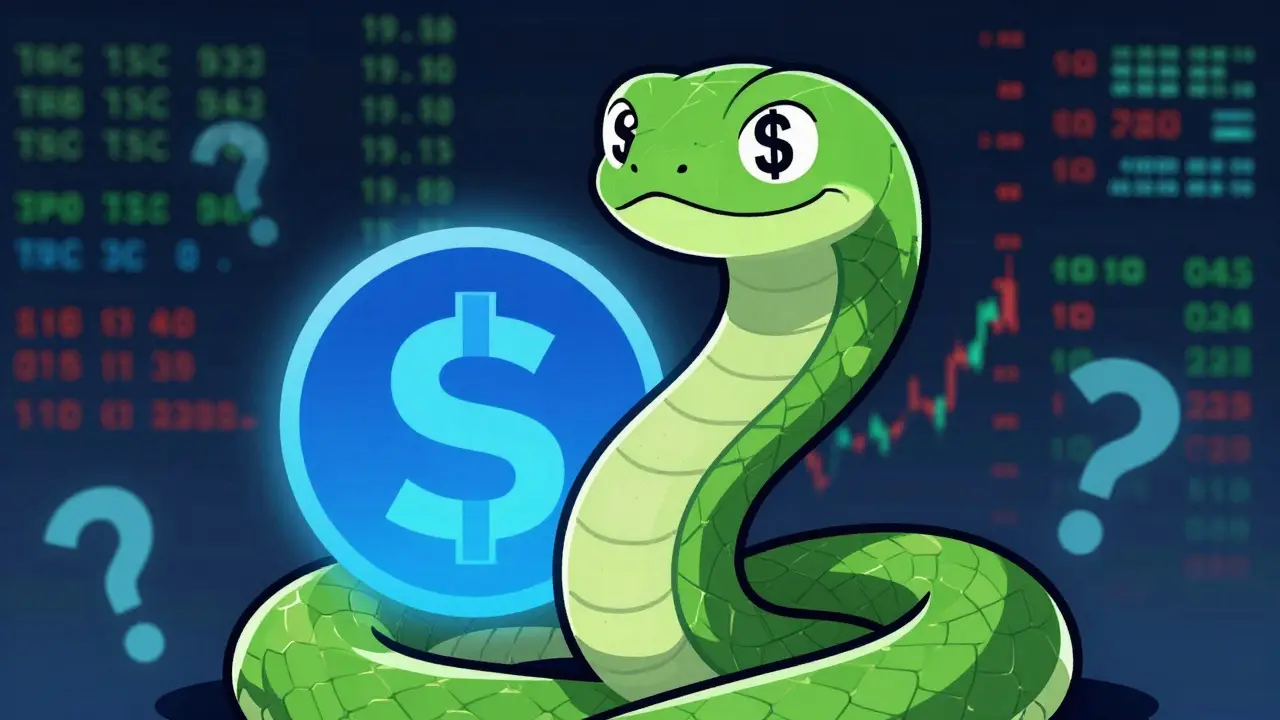

You’ve probably seen the ticker HISS pop up on your screen. It’s listed as "Snake of Solana," and like many new projects on the blockchain, it promises excitement. But here is the hard truth: there is almost no reliable information about this specific token. If you are looking for a detailed whitepaper, a famous founding team, or proven track record, you won’t find it. Instead, you are likely looking at a micro-cap or meme-style project that relies entirely on community hype rather than technical innovation.
Understanding what HISS actually is requires looking past the marketing fluff and examining the reality of the Solana ecosystem in 2026. Most tokens with names like "Snake of Solana" fall into the category of speculative assets. They don't solve complex problems; they exist to trade volume and capture attention. Before you put any money into this, you need to understand the risks, the mechanics of how these tokens work, and how to verify if this specific coin is legitimate or a potential scam.
The Reality of Snake of Solana (HISS)
Let’s be direct. As of May 2026, comprehensive data on Snake of Solana (HISS) is scarce. Major cryptocurrency research platforms do not feature extensive profiles for this token. You might find it listed on smaller exchanges or decentralized trading platforms, but that doesn’t mean it is safe or valuable. The lack of coverage isn't an accident; it usually means the project hasn't achieved significant market capitalization or user adoption.
This token is built on the Solana blockchain. Solana is known for its speed and low transaction costs, which makes it a favorite for creating thousands of new tokens every day. While big projects use Solana for real-world applications, many smaller projects use it simply because it is cheap to launch a token. HISS appears to be one of these smaller projects. Without a clear utility-meaning without a specific function like lending, borrowing, or powering a game-it behaves like a pure speculation asset.
If you search for official documentation, you may hit dead ends. This is a red flag. Legitimate projects provide transparent information about their team, roadmap, and code audits. When that information is missing, you are betting on hope rather than facts.
Why Solana Attracts Tokens Like HISS
To understand HISS, you have to understand the playground it lives in. Solana has become the go-to network for high-frequency trading and meme coins. Why? Because transactions cost fractions of a cent. On Ethereum, sending a small amount of crypto can cost dollars in gas fees. On Solana, it costs less than a penny. This allows traders to buy and sell tiny amounts quickly, which creates volatile price swings.
| Feature | Solana | Ethereum | Binance Smart Chain |
|---|---|---|---|
| Average Transaction Cost | < $0.01 | $5 - $50+ | $0.10 - $1.00 |
| Speed (TPS) | ~65,000 | ~15-30 | ~100-200 |
| Token Creation Ease | Very Easy | Moderate | Easy |
| Security Audits Standard | Variable | High | Moderate |
This accessibility is a double-edged sword. It means anyone can create a token named "Snake of Solana" in minutes. It does not require permission from a central authority. This democratization leads to innovation, but it also leads to chaos. Thousands of tokens are created daily, and most fail within days. HISS is just one of thousands. The fact that it exists on Solana tells you about its infrastructure, not its value.

Red Flags to Watch For
When dealing with obscure tokens like HISS, you need to act like a detective. Here are the specific warning signs that indicate a project might be risky or fraudulent:
- No Audit Reports: Has the smart contract been audited by firms like CertiK, Halborn, or Trail of Bits? If you cannot find an audit report, the code could contain backdoors that allow developers to steal funds.
- Anonymous Team: Who is behind HISS? If the founders are anonymous and have no public history, they can disappear with the liquidity at any time. This is called a "rug pull."
- Liquidity Issues: Can you actually sell the token? Many small tokens have high buying volume but zero selling volume. Check the liquidity pool. If it is small, you might not be able to exit your position when you want to.
- Excessive Marketing: Does the project spend all its budget on influencers and social media ads instead of development? High hype with low substance is a common pattern in pump-and-dump schemes.
For HISS specifically, the lack of presence on major aggregators like CoinGecko or CoinMarketCap is a significant concern. These platforms vet projects before listing them. If HISS isn't there, it hasn't met basic standards for transparency and legitimacy.
How to Verify the Token Yourself
You shouldn't trust random websites or Telegram groups blindly. You need to verify the token using on-chain data. Here is how you do it:
- Find the Contract Address: Every token on Solana has a unique contract address. Do not copy addresses from social media posts, as scammers often post fake ones. Look for the official website (if it exists) or a trusted aggregator.
- Use a Blockchain Explorer: Go to Solscan.io or Explorer.solana.com. Paste the contract address. Look at the number of holders. If only a few wallets hold most of the supply, the project is centralized and risky.
- Check Liquidity Locks: In the explorer, check if the liquidity is locked. If the liquidity is unlocked, the creators can withdraw the funds and crash the price to zero instantly.
- Analyze Transactions: Look at recent transactions. Are they organic buys from different users, or large sweeps by a few bots? Bot activity often precedes a price dump.
This process takes ten minutes, but it can save you from losing your investment. Tools like RugDoc or similar security scanners can also help analyze the contract for malicious functions.

The Psychology of Meme Coins
Why do people buy tokens like HISS? It’s not about technology. It’s about psychology. Meme coins thrive on FOMO (Fear Of Missing Out). You see someone else make a quick profit, and you want in. The name "Snake of Solana" is designed to be catchy and memorable, not descriptive. It taps into internet culture.
In 2024 and 2025, we saw massive cycles where meme coins on Solana gained billions in value temporarily. Projects like BONK and WIF showed that narrative-driven tokens can succeed. However, for every winner, there are thousands of losers. The difference between a successful meme coin and a failed one is often timing and community momentum, not fundamentals. HISS currently lacks the massive community support that drove earlier successes.
Remember, when you buy a token like this, you are not investing in a company. You are gambling on whether other people will pay more for it later. That is a speculative bet, not an investment strategy.
Safety First: Protecting Your Assets
If you decide to interact with HISS despite the risks, follow strict safety protocols. Never connect your main wallet to unknown dApps. Use a "burner wallet"-a separate wallet with only the funds you are willing to lose completely.
Be wary of phishing links. Scammers create fake versions of popular trading platforms to steal your private keys. Always double-check URLs. Additionally, be cautious of "send-to-receive" scams where you are asked to send SOL to receive free HISS tokens. These are always scams. Legitimate airdrops never require you to send funds first.
The Solana ecosystem is robust, but it is also wild. Projects come and go in hours. Treat HISS with extreme caution. If you cannot find verifiable data, assume the worst-case scenario.
Is Snake of Solana (HISS) a legitimate cryptocurrency?
There is insufficient evidence to classify HISS as a legitimate, long-term investment. It lacks major exchange listings, comprehensive audit reports, and transparent team information. It appears to be a speculative or meme-style token with high risk.
Where can I buy HISS token?
If available, HISS would likely be traded on decentralized exchanges (DEXs) like Raydium or Jupiter on the Solana network. However, due to limited visibility, it may not be listed on major centralized exchanges. Exercise extreme caution when searching for trading pairs.
What is the total supply of HISS?
Specific tokenomics data for HISS is not publicly verified in major databases. To find the exact supply, you must inspect the token's contract address on a Solana blockchain explorer like Solscan. Be aware that supplies can be manipulated in unverified tokens.
Is it safe to invest in HISS?
No, it is not considered safe. The lack of audits, anonymity of the team, and absence from major tracking platforms present significant risks of fraud or rug pulls. Only interact with such tokens if you are prepared to lose 100% of your funds.
Who created Snake of Solana?
The identity of the creators is not publicly disclosed in reputable sources. Anonymous teams are common in meme coin projects but significantly increase the risk for investors as accountability is non-existent.
Does HISS have any utility?
Currently, there is no documented utility for HISS beyond speculative trading. Unlike DeFi tokens that offer staking rewards or governance rights, HISS appears to rely solely on market sentiment and community hype.