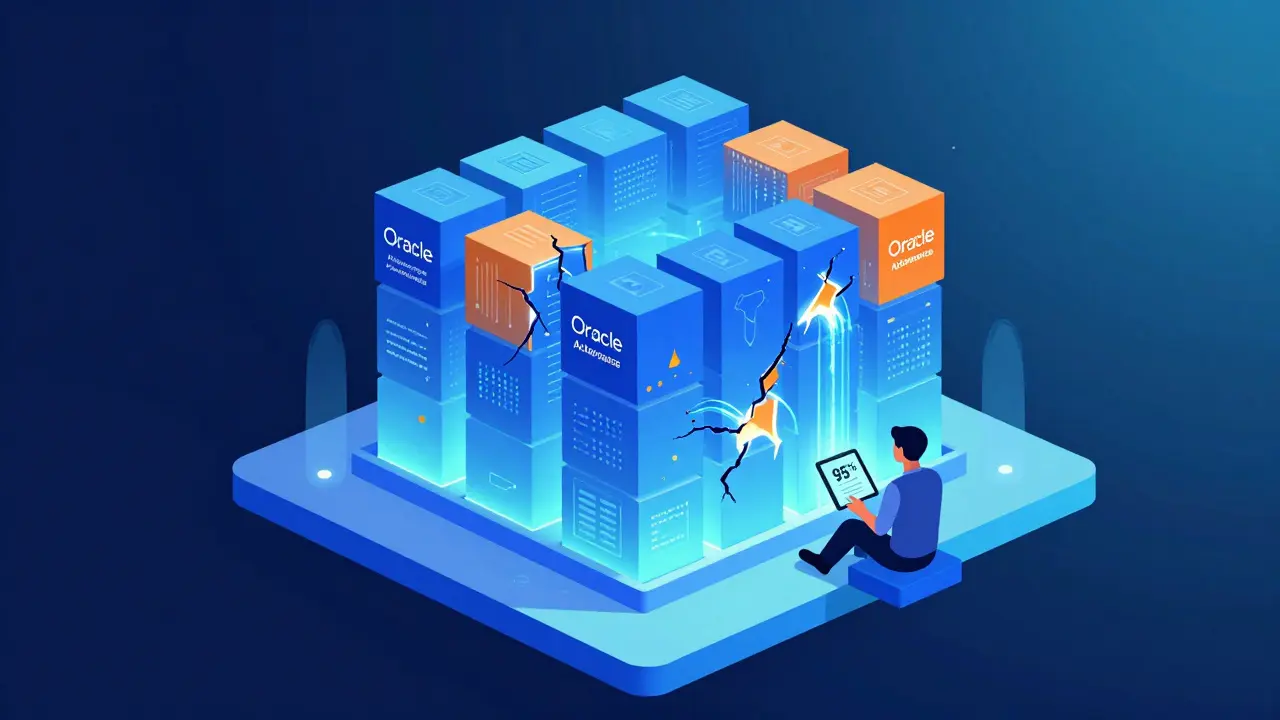

Oracle isn't just a database company anymore. It is racing to become the backbone of the world's artificial intelligence infrastructure. While giants like Amazon Web Services and Microsoft Azure dominate the headlines, Oracle has quietly built a fortress in the enterprise sector. By 2030, the company aims to generate $144 billion in cloud revenue alone. That is not a small step; it is a massive leap that requires rethinking how businesses handle data, security, and automation.
If you are an IT leader or a business strategist, you need to know where Oracle is heading. The shift from traditional software licensing to an AI-driven cloud ecosystem is changing the rules of engagement. Here is what you need to understand about Oracle's future technology stack, its competitive edge, and the risks involved in joining their ecosystem.
The Rise of the Autonomous Enterprise
The core of Oracle's strategy is the Autonomous Database, which uses machine learning to automatically patch, tune, and secure database operations without human intervention. This is not marketing fluff. According to industry reports from 2025, these autonomous features now cover 95% of routine database management tasks. For context, this reduces human intervention by roughly 70% compared to traditional methods.
Imagine your database healing itself when performance dips or detecting a security threat before it breaches your firewall. Oracle claims their AI-enhanced cybersecurity systems detect threats 83% faster than traditional solutions. This speed matters because modern attacks happen in milliseconds. The goal is simple: remove the manual grunt work so your team can focus on building applications rather than maintaining servers.
This autonomy extends beyond the database. Oracle is expanding self-healing capabilities into broader cloud services. The result is a system that optimizes itself for cost and performance. For enterprises with large, complex datasets, this means lower operational costs and fewer outages. However, it also means less direct control over low-level configurations, which some legacy IT teams find unsettling.
AI Integration and Project Vector
Artificial intelligence is no longer an add-on for Oracle; it is the engine. In late 2025, Oracle launched Project Vector, which integrates large language models directly into database engines to allow natural language querying of structured data. Instead of writing complex SQL queries, analysts can ask questions in plain English. Over 1,200 enterprise customers were already piloting this technology by mid-2025.
Oracle is betting big on native AI integration. Their roadmap includes deep partnerships with major AI model providers, including native support for OpenAI’s GPT-5 and Google’s Gemini models within their database layer. This approach allows businesses to keep their sensitive data inside the secure Oracle environment while still leveraging powerful external AI models.
The financial implications are significant. Oracle projects its database-related revenue will grow from $2.4 billion in 2025 to $20 billion by fiscal 2030. This growth relies heavily on enterprises adopting these AI-powered analytics tools. The promise is real-time decision-making with sub-second response times. For industries like finance and healthcare, where every millisecond counts, this capability is a game-changer.
Hybrid Cloud and Multi-Cloud Reality
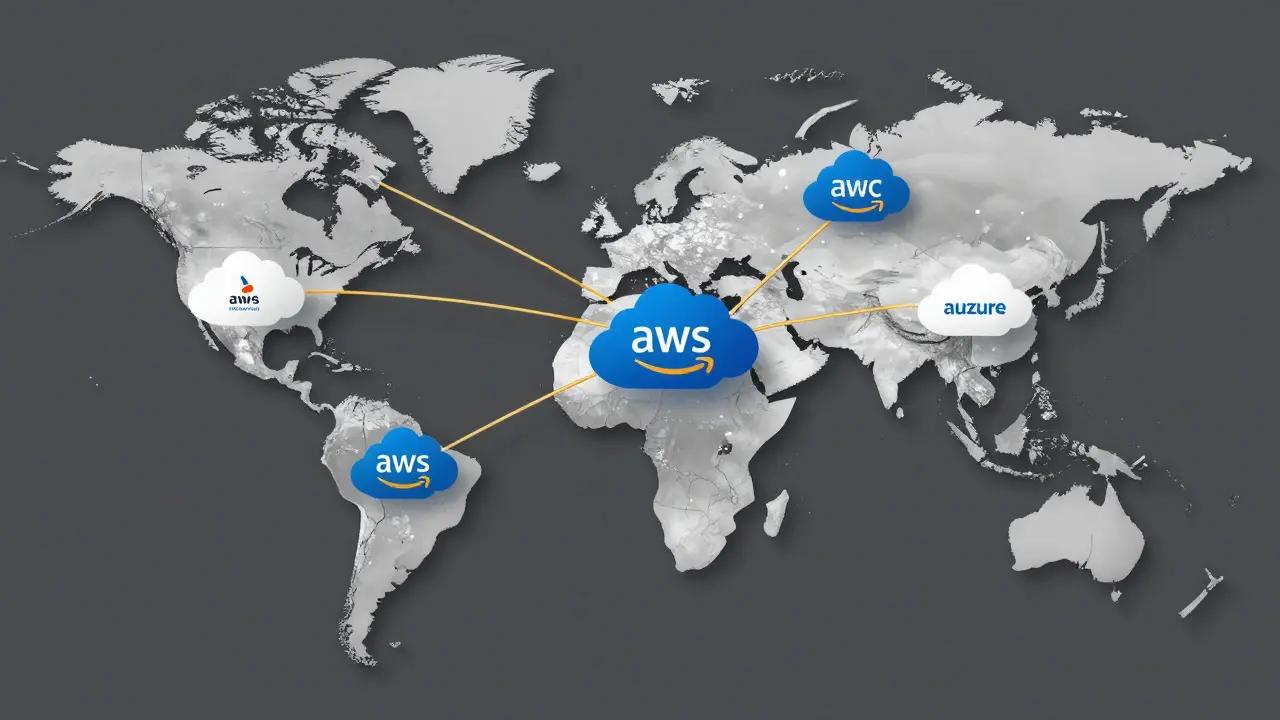
No major enterprise runs entirely on one cloud provider today. Oracle acknowledges this reality through its Distributed Cloud service. This platform allows companies to run Oracle services seamlessly across AWS, Azure, and Google Cloud environments. The key benefit here is flexibility. You can keep your core ERP system on Oracle Cloud Infrastructure (OCI) while running specific workloads on other platforms, all under a single management pane.
Chris Pasternak, Managing Director at Deloitte Consulting, noted that multi-cloud interoperability is becoming critical. Oracle’s strategy leverages this trend by offering deep integrations with competitors rather than trying to lock customers out completely. Their Oracle Cloud VMware solution supports 100% of VMware workloads, making migration easier for companies stuck in legacy virtualization setups.
However, there is a catch. Moving workloads between clouds often incurs hidden costs. Enterprise customers report migration costs that are 20-30% higher when moving from AWS or Azure to OCI compared to staying put. While the long-term benefits of Oracle’s integrated stack may outweigh these initial expenses, the upfront hurdle is real. You need to weigh the complexity of multi-cloud management against the efficiency gains of Oracle’s unified platform.
| Feature | Oracle Cloud Infrastructure (OCI) | AWS | Microsoft Azure |
|---|---|---|---|
| Market Share (Infrastructure) | Growing rapidly (68% YoY) | 32% (Leader) | ~24% |
| Key Differentiator | Autonomous Database & Low Latency | Broadest Service Catalog | Enterprise Integration & Hybrid |
| AI Maturity | Catching up (18-24 months behind) | Leading | Leading |
| Partner Ecosystem Size | 15,000+ Certified Partners | 120,000+ Partners | Large Global Network |
| Best For | Regulated Industries (Finance, Health) | Startups & General Purpose | Microsoft-Centric Enterprises |

Industry-Specific Solutions
Oracle does not try to be everything to everyone. Instead, they build specialized clouds for high-stakes industries. Their offerings include Oracle Financial Services Cloud, Oracle Health Cloud, and Oracle Manufacturing Cloud. Each of these solutions comes pre-loaded with over 200 industry-specific AI models. For example, the Health Cloud is designed with HIPAA compliance baked in from the ground up, reducing the burden on IT teams to manually configure security settings.
This vertical approach works well for regulated sectors. In finance and healthcare, compliance violations can cost millions. Oracle’s autonomous security features reportedly reduce compliance violations by 65% in these sectors. If you are a hospital administrator or a bank CIO, this peace of mind is worth the premium price tag. However, if you are in a creative industry that relies on extensive third-party integrations, Oracle’s ecosystem might feel restrictive compared to the open nature of AWS or Google Cloud.
The Java Licensing Controversy
You cannot talk about Oracle’s future without addressing the elephant in the room: Java. Oracle’s aggressive changes to Java licensing have alienated many developers. A September 2025 survey found that 68% of enterprises reduced their usage of Oracle JDK in favor of OpenJDK builds. The primary complaints center on unpredictable licensing costs and rigorous audit practices.
Forrester Research warned that these tactics could slow the adoption of Oracle’s cloud ecosystem among developers. Developers hate friction, and complex licensing adds exactly that. To counter this, Oracle plans to tie Java licensing more closely to cloud commitments through "consolidated or hybrid license" models by 2029. The idea is to create a virtuous cycle: use Oracle Cloud, get better Java terms. Whether this will win back developer trust remains to be seen, but it signals a strategic pivot toward bundling software with infrastructure.
Edge Computing Expansion
Data needs to be processed closer to where it is generated. Oracle is responding by expanding its footprint aggressively. By 2026, OCI regions will grow to 120 global locations, up from 49 in 2025. This expansion includes deploying 71 additional data centers specifically for edge computing. Edge computing allows for real-time data processing with sub-10ms latency, which is crucial for applications like autonomous vehicles, IoT sensors in manufacturing, and live video analytics.
This physical expansion supports Oracle’s claim of providing 99.99% uptime SLAs even for distributed workloads. For global enterprises, having a local presence reduces latency and improves user experience. It also helps meet data sovereignty laws, as data can be stored and processed within specific geographic boundaries. This is a significant advantage for companies operating in multiple countries with strict data privacy regulations like GDPR.
Risks and Challenges
Despite the bullish outlook, Oracle faces significant hurdles. First, the sheer scale of their ambition is daunting. Targeting $144 billion in OCI revenue by 2030 requires flawless execution. JPMorgan analysts have warned of "execution risk" around the massive infrastructure build-out needed to support this growth. Building data centers is expensive and time-consuming, and any delays could impact investor confidence.
Second, margins are under pressure. AI infrastructure carries gross margins of 30-40%, significantly lower than traditional cloud services which range from 65-80%. Morgan Stanley projects a temporary dip in overall gross margins to 65.2% by 2027 due to these heavy investments. While margins are expected to recover by 2030, the short-term pain is real. Customers may see price adjustments or service changes as Oracle balances its books.
Finally, talent acquisition is a challenge. Implementing Oracle’s new tech stack requires skills in PL/SQL, cloud architecture, and increasingly, AI/ML engineering. There is a shortage of certified professionals, though salaries for those with Oracle Cloud certifications have risen by 45% according to recent surveys. Companies must invest heavily in training their existing staff or compete fiercely for new hires.
Conclusion: Is Oracle Right for You?
Oracle’s future is bright but complex. If you operate in a highly regulated industry like finance or healthcare, their autonomous security and industry-specific clouds offer unmatched value. The ability to query data using natural language via Project Vector and the robustness of the Autonomous Database make them a top contender for mission-critical workloads.
However, if you are a startup needing rapid prototyping with a vast array of third-party tools, AWS or Azure might still be easier choices. Oracle’s ecosystem is smaller, and the learning curve for non-Oracle developers is steeper. Additionally, keep an eye on Java licensing changes if your stack depends heavily on it.
The decision ultimately comes down to your priorities. Do you value maximum control and lowest cost, or do you prioritize automated efficiency and regulatory compliance? Oracle is positioning itself for the latter. As we move toward 2030, expect Oracle to become even more entrenched in the core operations of the world’s largest enterprises, driven by AI and autonomy.
What is Oracle's main competitive advantage in 2025?
Oracle's primary advantage is its Autonomous Database technology, which uses AI to automate patching, tuning, and security. This reduces human intervention by 70% and offers tighter integration between database and cloud infrastructure, resulting in lower latency compared to competitors.
How does Oracle compare to AWS and Azure?
While AWS and Azure have larger market shares and partner ecosystems, Oracle is growing faster (68% YoY vs 21% for AWS). Oracle excels in regulated industries due to superior autonomous security and compliance features. However, it lags behind in general-purpose AI tooling and has a smaller partner network.
What is Project Vector?
Project Vector is an Oracle initiative that integrates large language models directly into database engines. This allows users to query structured data using natural language instead of complex SQL code, making data analysis accessible to non-technical staff.
Is Oracle Cloud suitable for small businesses?
Oracle Cloud is primarily designed for enterprise-level organizations, particularly those in regulated sectors like finance and healthcare. Small businesses may find the learning curve steep and the ecosystem less flexible than AWS or Azure for general-purpose development.
What are the risks of migrating to Oracle Cloud?
Migration costs can be 20-30% higher than staying within an existing ecosystem. There is also a steeper learning curve for developers unfamiliar with Oracle technologies. Additionally, concerns remain about Java licensing complexities and potential margin pressures leading to price adjustments.
When will Oracle reach its 2030 revenue targets?
Oracle aims to reach $144 billion in OCI revenue by fiscal 2030. This represents a compound annual growth rate of 31%. Success depends on executing its massive infrastructure build-out and gaining further enterprise adoption of its AI-driven autonomous services.
Categories
Popular Articles