
Most decentralized exchanges feel slow. You click trade, wait 10 seconds for confirmation, then watch your order get filled at a worse price than you expected. That’s the norm on Uniswap or PancakeSwap. But what if you could trade like you’re on Binance - fast, smooth, with tight spreads - but still keep full control of your crypto? That’s the promise of Henjin DEX.
Launched in early 2025, Henjin DEX isn’t just another AMM-based DEX. It’s built to bridge the gap between centralized speed and decentralized security. It uses a hybrid model: order book trading combined with concentrated liquidity pools. That’s rare. Most DEXes do one or the other. Henjin does both. And it works - if you know how to use it.
How Henjin DEX Actually Works
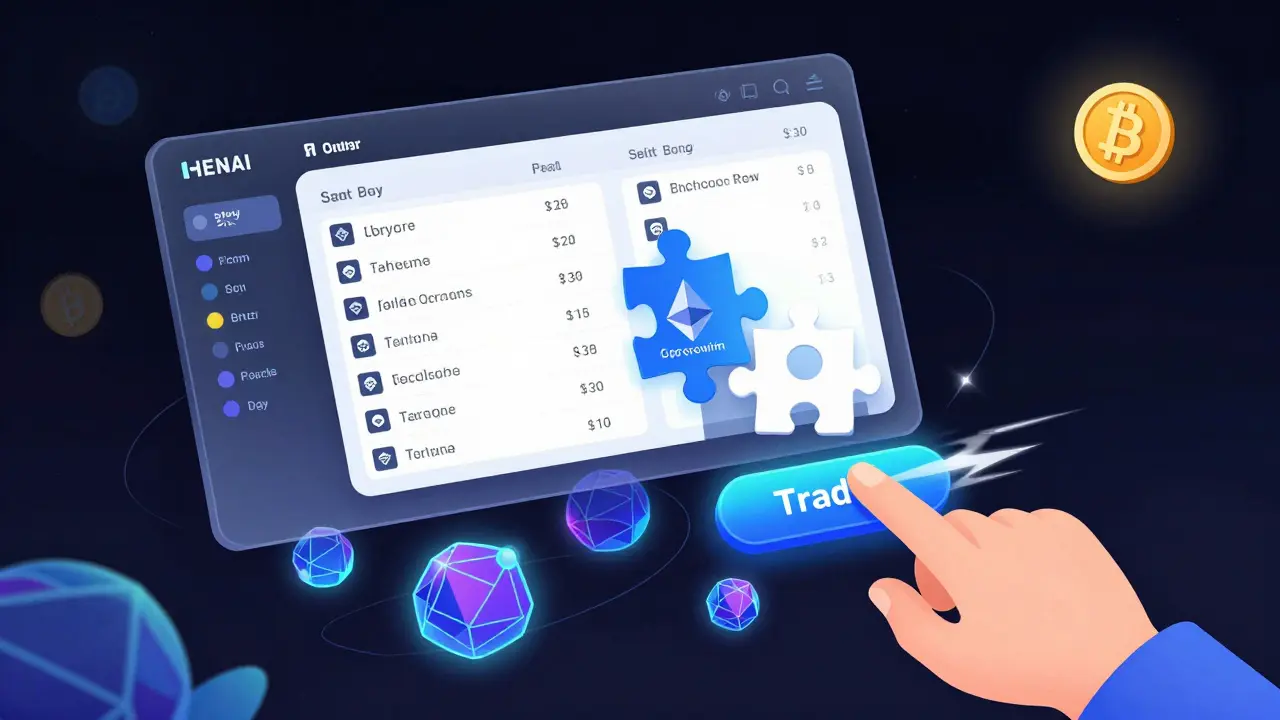
Traditional DEXes like Uniswap use Automated Market Makers (AMMs). They rely on liquidity pools where prices shift based on supply and demand. That’s simple, but it causes slippage on large trades. Henjin DEX replaces that with a real order book - the same system used by Coinbase or Binance. Buy orders and sell orders line up like a stock exchange. That means tighter spreads and less price impact.
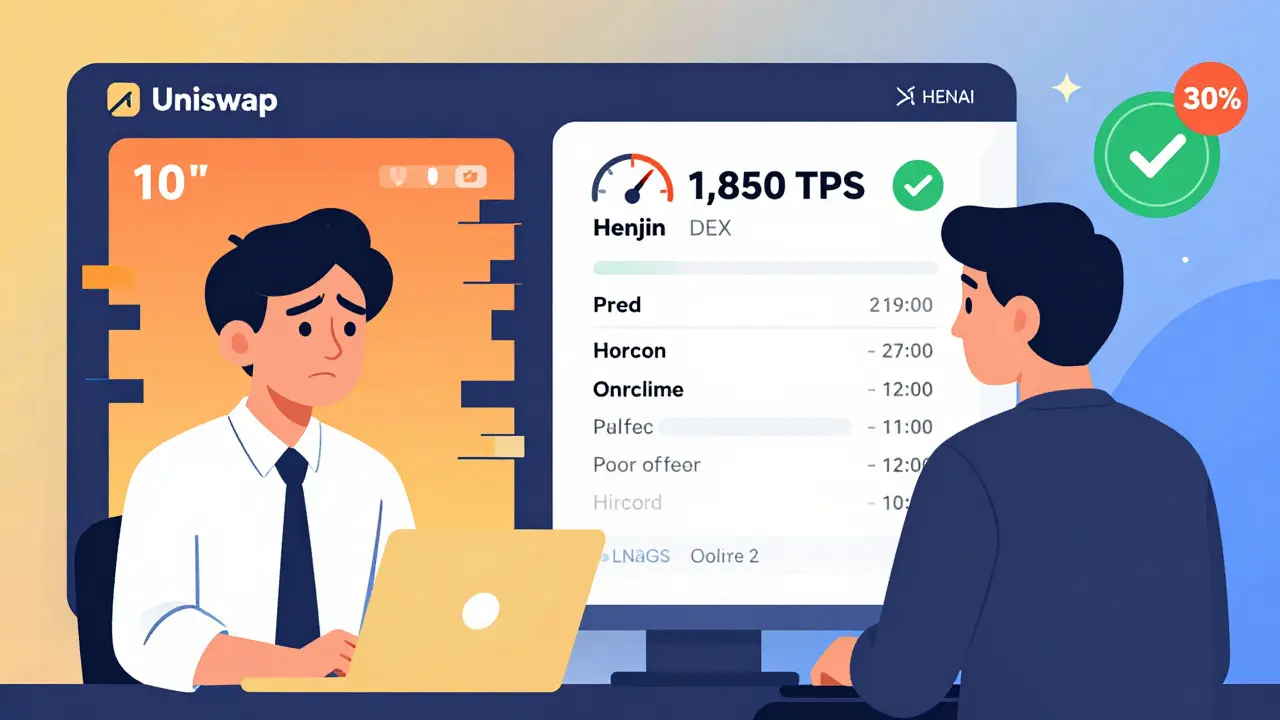
But here’s the twist: it still uses liquidity pools to back those orders. Think of it like a hybrid engine. The order book handles the matching, and the liquidity pools (mostly on Ethereum L2s and Polygon) provide the depth. This lets Henjin hit 1,850 transactions per second on Ethereum Layer 2 - way faster than Uniswap’s 45 TPS. Final trades settle in under 500 milliseconds. For crypto, that’s instant.
It supports Ethereum, BNB Chain, and Polygon. You can trade ETH, USDC, USDT, and a few other major tokens. But if you’re looking to trade Bitcoin-native assets like WBTC or sBTC, you’re out of luck. Henjin DEX doesn’t support them well - scoring just 2.8 out of 5 in Bitcoin integration, according to SourceForge’s January 2025 review. That’s a big gap compared to competitors like Camelot DEX.
Fee Structure and HENAI Token Discounts
Fees on Henjin DEX are low, but the real savings come from using the native token: HENAI.
- Taker fee: 0.15%
- Maker fee: 0.05%
- Discount with HENAI: up to 30% off
That means if you pay with HENAI, your taker fee drops to 0.105%. For someone trading $10,000 a day, that’s $15 saved daily - $450 a month. Reddit user @HodlQueen reported saving $142 in fees last month just by holding HENAI. That’s a real incentive to keep the token around.
But HENAI isn’t just a fee discount tool. It’s the backbone of governance. To become a Super Node and vote on platform changes, you need to stake 50,000 HENAI tokens. At the IDO price of $0.025, that’s $1,250. At current prices (~$0.065), it’s closer to $3,250. That’s a high barrier, but it’s designed to keep governance in the hands of serious participants, not whales flipping tokens.
Still, the tokenomics raise eyebrows. Only 15% of HENAI supply is allocated to ecosystem development, while 36% went to public sale. That’s a red flag for some analysts. CryptoSparrow on Twitter called it “excessive selling pressure.” And it shows - HENAI spiked to $0.097 in January 2025, then dropped 33% in two weeks. Volatility isn’t a bug here; it’s baked in.
Security and Audits
Security is where Henjin DEX shines. It’s been audited by CertiK, one of the most respected names in DeFi security. Their latest audit was in October 2024, and no critical vulnerabilities were found. That’s more than you can say for many newer DEXes.
It’s non-custodial. You connect your wallet - MetaMask, Trust Wallet, or Coinbase Wallet - and trade directly from it. No deposits. No KYC required for basic trading. That’s a big win for privacy-focused users.
But here’s the catch: if you want to buy crypto with fiat (USD, EUR), you need to complete KYC through their on-ramp partner. That’s standard for any platform offering fiat on-ramps, but it’s worth noting. You can still use the DEX fully without KYC - just not with bank transfers.
Performance: What Real Users Say
On Trustpilot, Henjin DEX has a 3.7/5 rating from 89 reviews. That’s below the DEX average of 4.1/5. Why? Two main complaints keep popping up.
1. Mobile app is broken. Users on Reddit and Trustpilot report constant crashes on iOS. “The app freezes when I switch from charts to the order book,” wrote @CryptoNinja99. Desktop works fine. Mobile doesn’t. For a platform targeting retail traders, that’s a huge flaw.
2. Customer support is slow. One user, @DeFiTrader88, tweeted that support took 72 hours to reply to a simple wallet issue. That’s unacceptable for crypto trading. Even if the platform is fast, slow support kills trust.
But the positives? Fast execution. Low slippage on ETH/USDC trades. One Reddit user said their 5x leveraged trade executed with “minimal slippage.” That’s rare on DEXes. The order book model really delivers on volatility.
Who Is This For? Who Should Avoid It
Best for:
- Active traders who want speed without giving up custody
- Users who already hold HENAI and want to cut trading fees
- Traders focused on ETH, USDC, USDT pairs
- Developers needing API access (1,200 requests per second per connection)
Avoid if:
- You trade Bitcoin or altcoins outside the top 10
- You rely on mobile trading
- You’re a beginner - there are almost no tutorials
- You need 24/7 customer support
It’s not a “set it and forget it” DEX like PancakeSwap. You need to understand slippage, gas fees, and order book mechanics. If you’re new, start with Uniswap. Once you’re comfortable, come back to Henjin for faster trades.

The Road Ahead: What’s Coming in 2025
Henjin DEX isn’t standing still. They’ve got a three-phase roadmap.
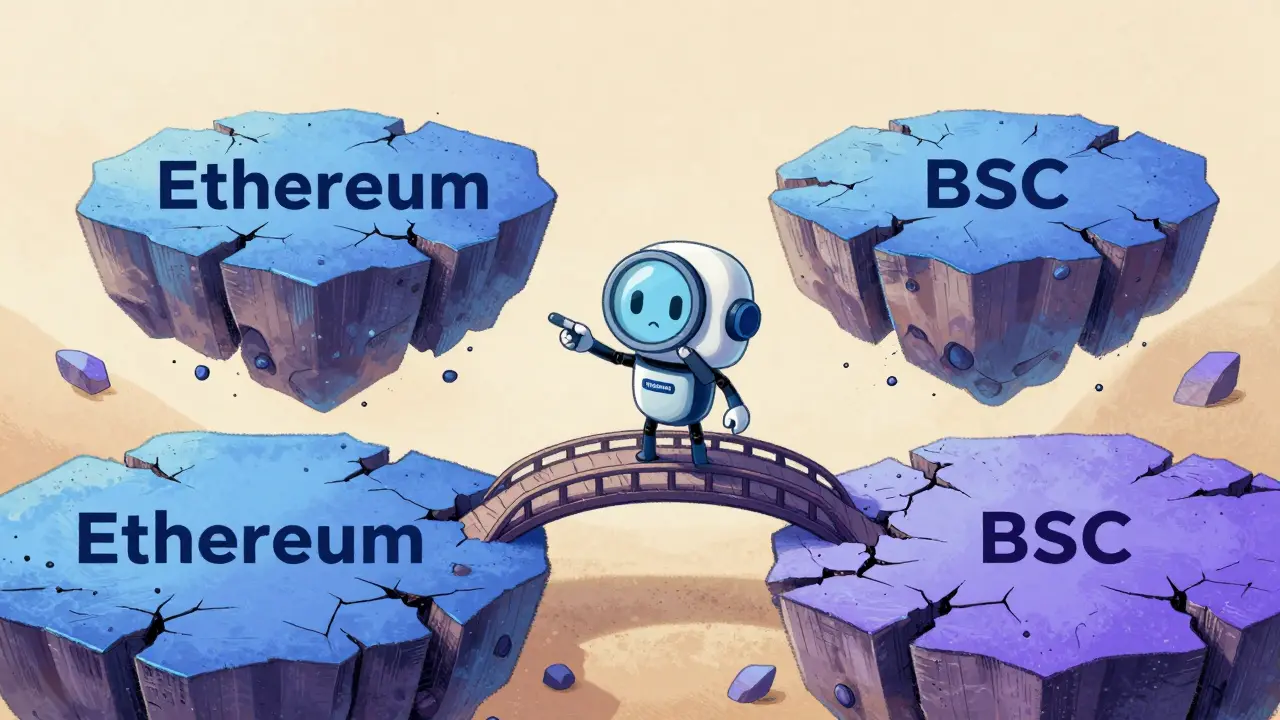
Phase 1 (Done): Cross-chain settlement between Ethereum L2s and BNB Chain now takes under 2 minutes. Before, bridging took 15-20 minutes. That’s a massive improvement.
Phase 2 (Q2 2025): A decentralized identity layer will let users opt into KYC-compliant trading. This is a smart move. With the SEC cracking down on DEXes, being able to comply without forcing everyone to do KYC is a smart middle ground.
Phase 3 (Q4 2025): The “Liquidity Mesh” protocol. This is the big one. It will pull liquidity from other DEXes like Uniswap and Curve into Henjin’s order book. That could solve their biggest weakness: shallow pools for niche tokens. If this works, Henjin could leapfrog competitors.
But the clock is ticking. Competitors like Hyperliquid V3 launched in January 2025 with deeper liquidity and similar speed. And Henjin’s TVL is only $127 million. To stay relevant, they need to hit $500 million by Q3 2025 - a 294% jump. That’s ambitious.
Final Verdict
Henjin DEX isn’t the best DEX. It’s not even in the top 5. But it’s one of the most interesting. It’s not trying to be Uniswap. It’s not trying to be dYdX. It’s trying to be the fastest, most efficient order book DEX - and it’s getting close.
If you’re an active trader who hates slippage, hates waiting for confirmations, and wants to keep control of your keys - this is worth testing. Just don’t trade on mobile. Don’t expect quick support. And don’t buy HENAI unless you’re ready to hold through the swings.
For now, it’s a tool for the experienced. Not the beginner. Not the casual holder. But if you’re serious about decentralized trading and want speed without compromise - Henjin DEX delivers.

Comments (5)

- Jake Mepham
- December 23, 2025 AT 17:22 PM
Henjin DEX is the real deal if you’re tired of Uniswap’s 10-second delays. I’ve done 50+ trades on it this month - ETH/USDC slippage is under 0.1% even on $5K orders. The order book is smooth like butter. Mobile app? Yeah, it’s garbage on iOS - crashed twice during a volatile market swing. But desktop? Pure speed. I use it with MetaMask and never had a security hiccup. CertiK audit checks out. HENAI token discounts are legit - saved me $217 last month alone. If you trade actively, this is your new home. Just don’t touch the mobile app unless you enjoy rage-quitting.

- Craig Fraser
- December 25, 2025 AT 05:20 AM
Let’s be honest - this reads like a sponsored post dressed up as a review. 36% of HENAI tokens went to public sale? That’s not a tokenomics model, it’s a pump-and-dump blueprint. And ‘Super Nodes’ requiring $3,250 to vote? That’s not decentralization - that’s oligarchy with a blockchain sticker. The ‘hybrid model’ is just a fancy way of saying ‘we copied Binance but call it DeFi.’ And don’t get me started on the mobile app being broken. If your product can’t handle phones, you’re not building for the people - you’re building for VCs who think ‘retail traders’ are a demographic to exploit.

- Jacob Lawrenson
- December 27, 2025 AT 04:46 AM
OMG YES 🚀 I traded $8K worth of ETH on Henjin yesterday and it was INSTANT. Like, I clicked buy and it was done before I finished my coffee ☕️. HENAI discount saved me $24 on fees - that’s a free pizza night! The only thing that sucks is the mobile app crashes when I try to check my positions… but honestly? I just use the web version on my laptop and it’s flawless. The devs are working on fixes - I saw their tweet. Keep going team!! 💪🔥

- Jordan Renaud
- December 27, 2025 AT 11:24 AM
What’s interesting about Henjin isn’t the speed - it’s the philosophy behind it. Most DEXes treat liquidity as a static pool. Henjin treats it as a dynamic network. That’s a shift from ‘market-making’ to ‘market-orchestrating.’ The order book + liquidity pool combo is essentially a bridge between old-school finance and crypto-native trustlessness. But here’s the quiet truth: if you’re trading small amounts, you don’t need this. You’re better off with Uniswap. Henjin is for the ones who trade like their life depends on it - the day traders, the arbitrageurs, the ones who see milliseconds as margins. It’s not for everyone. But for those who need it? It’s the first DEX that doesn’t make you feel like you’re fighting the system to get a fair trade.

- Luke Steven
- December 28, 2025 AT 17:12 PM
One sentence: if you’re not holding HENAI and you’re trading on Henjin, you’re leaving money on the table - and you’re also voting with your wallet against decentralization. The token isn’t just a fee discount - it’s your stake in the future of the platform. Don’t treat it like a meme coin. Stake it. Engage. Even if you’re not a Super Node, holding it means you’re part of the community that’s pushing for Liquidity Mesh. And if that launches? This could be the first DEX that actually unifies fragmented liquidity. But yeah… mobile app still sucks. 😅
Post-Comment
Categories
Popular Articles