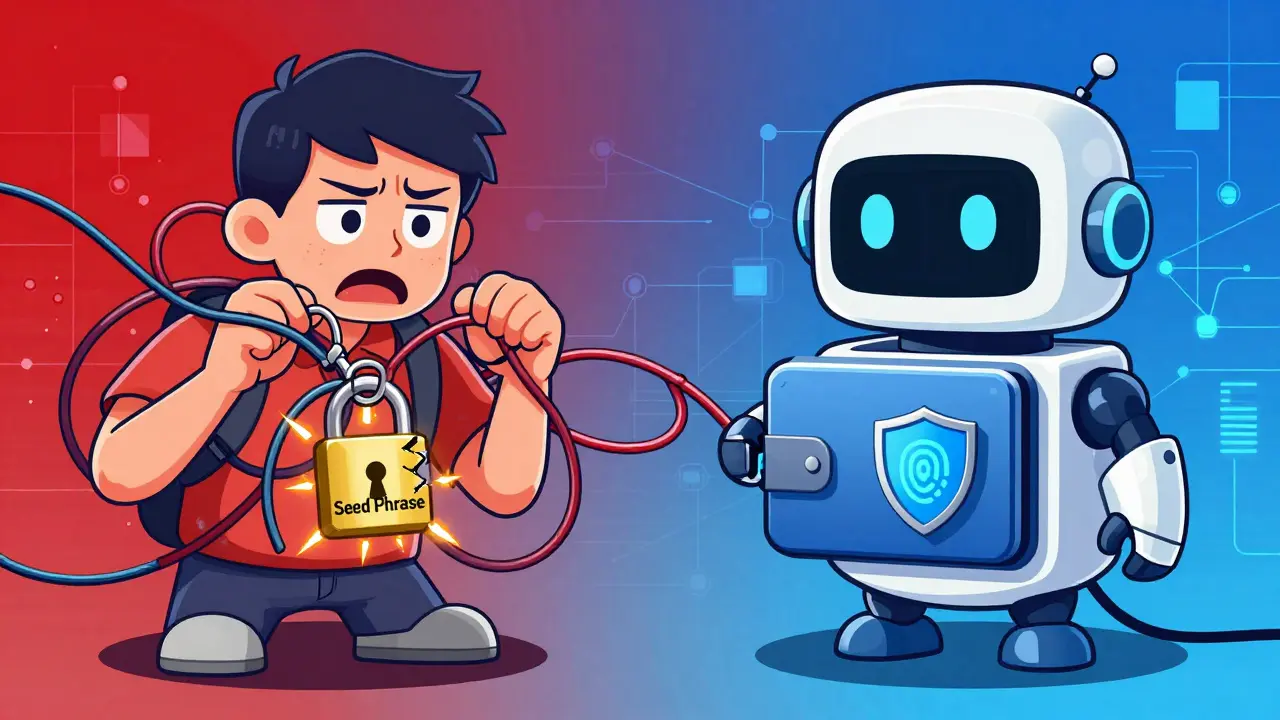

Remember the first time you lost access to your crypto? Maybe you forgot that one letter in your seed phrase, or maybe a phishing link tricked you into signing a bad transaction. If so, you are not alone. For years, holding your own keys meant accepting a terrible trade-off: either use a centralized exchange where someone else controls your money, or use a self-custody wallet that feels like handling live wires. That era is ending. Enter account abstraction, a technology that turns your wallet from a simple keychain into a smart, programmable vault.
This isn't just a minor upgrade; it is a fundamental shift in how blockchains work. By replacing traditional accounts with smart contract wallets that follow programmable logic instead of static private keys, we can finally have security without the headache. Let's break down what this means for you, how it works under the hood, and why it matters right now.
What Is Account Abstraction?
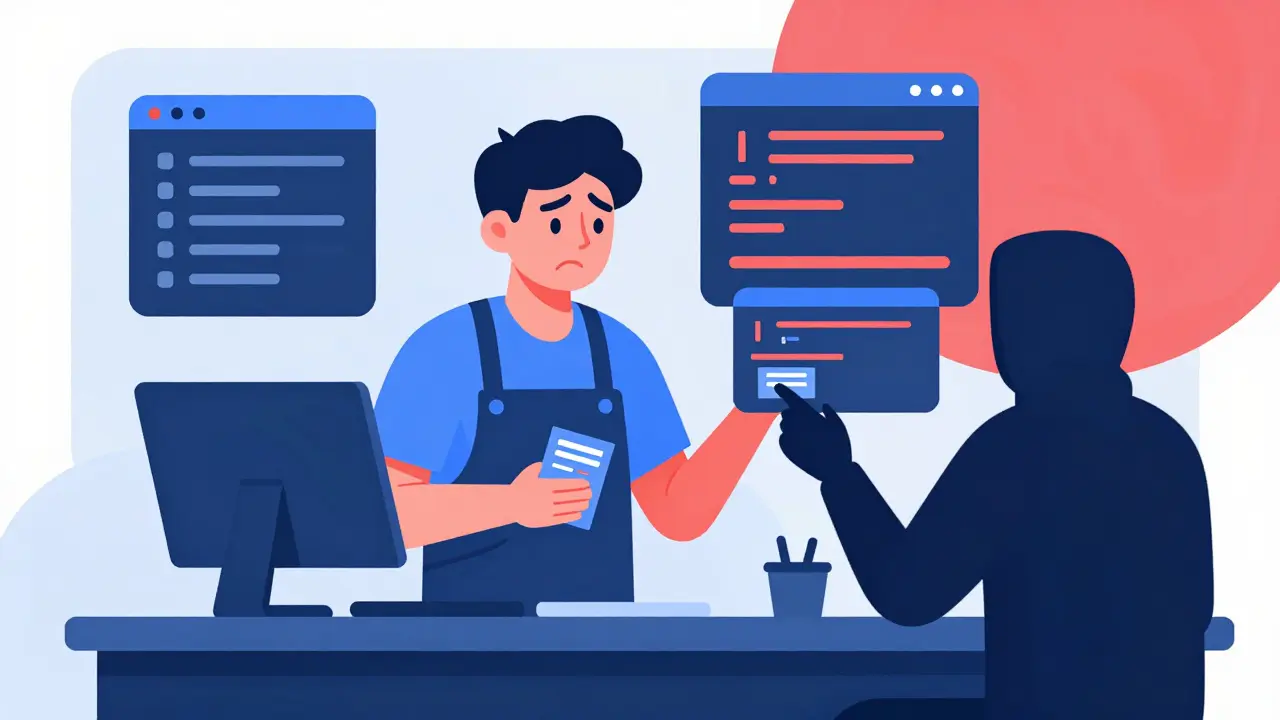
To understand account abstraction, you first need to know what we are abstracting away. In Ethereum and most other blockchains, there are two types of accounts: Externally Owned Accounts (EOAs) and Contract Accounts (CAs). You probably use an EOA every day. It’s controlled by a single private key. If you lose that key, your funds are gone forever. If someone steals it, they take everything. There is no reset button. No customer support. No second chances.
Account Abstraction changes this model entirely. Instead of being tied to a raw private key, your identity on the blockchain becomes a smart contract. This contract can contain complex rules. It can say, "Only allow transactions if two out of three trusted devices sign them," or "Let me pay gas fees using USDC instead of ETH." Or even simpler: "If I forget my password, let these five friends help me recover access."
The technical standard that made this possible on Ethereum without changing the core protocol is EIP-4337. Proposed by Vitalik Buterin and others in 2021 and launched in March 2023, this proposal created a new layer on top of Ethereum. It allows users to interact with the network through smart contracts while keeping the underlying blockchain unchanged. This means existing apps and infrastructure don’t need to be rewritten to support better user experiences.
How Smart Contract Wallets Work
If you’ve never coded a smart contract, the idea might sound intimidating. But think of it like upgrading from a basic landline phone to a smartphone. A landline does one thing: connects calls. A smartphone runs apps, has biometric locks, and can update its software. Your wallet is getting that same upgrade.
Here is the engine room of account abstraction, broken down into four main parts:
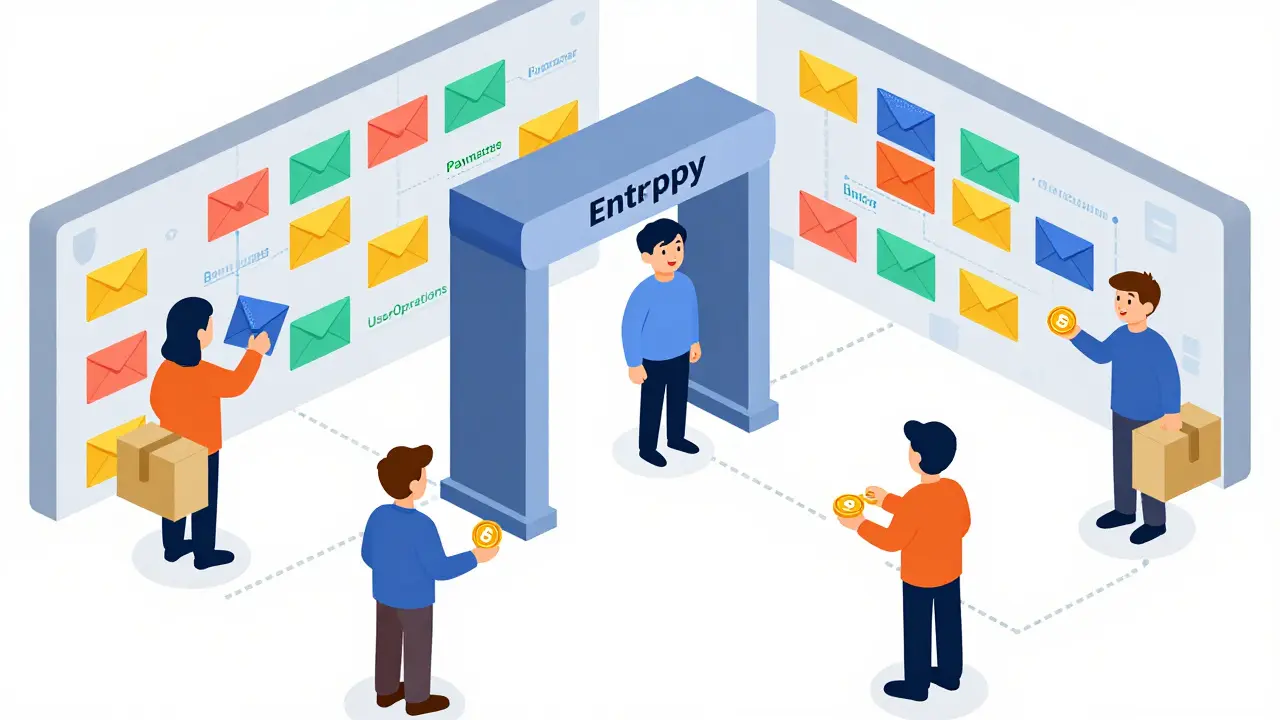
- UserOperations: Think of this as your transaction package. Unlike a standard transaction that just says "send X to Y," a UserOperation includes extra data. It tells the network who you are, what you want to do, and how you prove it’s really you (your signature).
- Bundlers: These are specialized nodes that collect UserOperations. They act like mail carriers, gathering packages from different users and delivering them to the blockchain in batches. This batching helps reduce costs and improves efficiency.
- EntryPoint Contract: This is the universal gatekeeper. Every UserOperation must pass through this single contract on Ethereum. It validates the signatures and ensures the rules are followed before executing the action.
- Paymasters: This is the game-changer for user experience. Paymasters are entities that can pay your gas fees for you. Want to swap tokens but don’t have any ETH for gas? A Paymaster can cover the cost, allowing you to pay later in the token you received, or letting a dApp sponsor the fee entirely.
The beauty of this system is that it happens off-chain initially. Your UserOperation goes into an alternative memory pool (alt-mempool), gets validated by bundlers, and then hits the chain. You never directly touch the base layer consensus mechanism, which keeps things flexible and fast.
Why Switch from Traditional Wallets?
You might be wondering, "My current MetaMask wallet works fine. Why bother?" The answer lies in the friction points that drive millions of people away from crypto. According to Coinbase data from 2023, 68% of new users abandon transactions when forced to buy native tokens just to pay for gas. That is a massive barrier to entry.
Smart contract wallets solve this with several killer features:
| Feature | Traditional EOA (e.g., MetaMask) | Smart Contract Wallet (AA) |
|---|---|---|
| Login Method | Seed Phrase / Private Key | Biometrics, Social Login, Passkeys |
| Gas Fees | Must hold native token (ETH/SOL) | Pay with any token or sponsored by dApp |
| Recovery | None (Lost key = Lost funds) | Social Recovery (Trusted contacts restore access) |
| Transaction Signing | One-by-one confirmation | Batch multiple actions in one click |
| Security Model | Static key protection | Programmable rules (e.g., daily spend limits) |
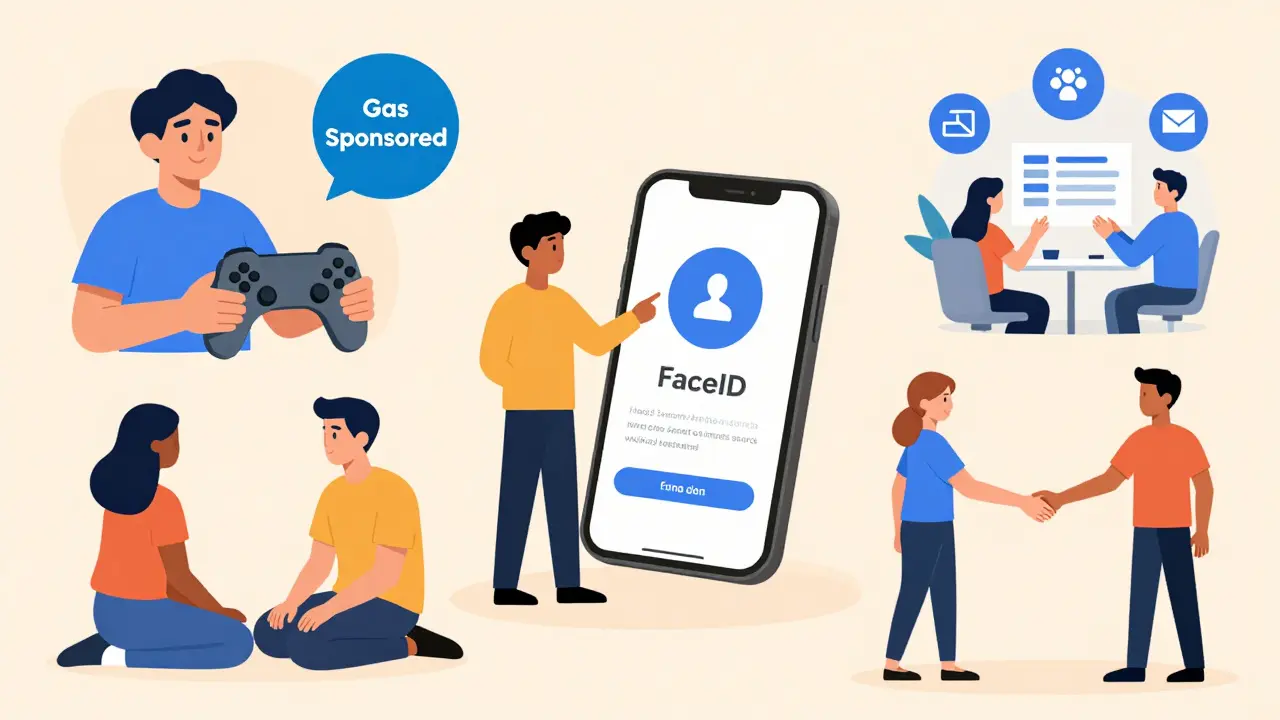
Imagine logging into your wallet with FaceID on your phone. If you lose your phone, you don’t panic about a 12-word phrase. Instead, you contact three friends you designated as guardians, and they vote to restore your access. This is social recovery, and it makes self-custody accessible to non-technical users.
Then there is batching. Ever wanted to approve a token, swap it, and deposit it into a lending protocol all at once? With an EOA, that’s three separate transactions, each requiring a signature and gas payment. With a smart contract wallet, it’s one atomic operation. If one step fails, the whole thing reverts, protecting you from partial failures.
Security: Better or Riskier?
Security is the elephant in the room. Critics argue that smart contracts introduce code complexity, and code can have bugs. And they are right. OpenZeppelin’s 2023 audit found critical vulnerabilities in several early AA implementations. However, these were mostly issues with specific coding errors, not flaws in the ERC-4337 standard itself.
In fact, many experts believe smart contract wallets are *more* secure in the long run. Why? Because they remove the human element of key management. You aren’t relying on remembering a random string of words. You are relying on cryptographic proofs and multi-signature logic. Plus, features like session keys allow you to give a game or app temporary permission to move small amounts of assets without exposing your main balance. Once the session expires, the access vanishes.
However, there is a new risk vector: centralization of bundlers. Currently, a few large providers handle most UserOperations. If these bundlers go offline or decide to censor transactions, it could disrupt the network. The community is actively working on decentralized bundler incentives (like EIP-7045) to fix this, but it remains a point of watchfulness.
Real-World Adoption and Use Cases
This isn’t theoretical anymore. As of late 2023, over 1.2 million unique smart contract wallets had been created on Ethereum. Gaming and social apps are leading the charge because their users demand Web2-like simplicity. Imagine playing a blockchain game where you don’t need to worry about gas fees for every jump or chat message. The game pays the gas, and you just play.
Enterprise adoption is also growing. Companies are using AA for employee wallet management, ensuring that corporate funds require multiple approvals and adhere to strict spending limits automatically enforced by code. Regulatory frameworks like the EU’s MiCA are beginning to recognize these advanced custody solutions, paving the way for broader institutional use.
Wallet providers like Argent and Safe (formerly Gnosis Safe) have integrated these features seamlessly. Argent’s biometric login and gasless swaps have garnered high user ratings, proving that people prefer convenience when it doesn’t compromise control. Meanwhile, infrastructure giants like Alchemy and Infura are launching dedicated AA networks to speed up confirmations, dropping average wait times from 30 seconds to under 10.
Getting Started with Account Abstraction
If you want to try this out today, you don’t need to write code. Simply download a wallet that supports ERC-4337. Popular options include Argent, Coinbase Smart Wallet, and Safe. Most of these offer a seamless onboarding process where you can create a wallet using just an email address or phone number.
For developers, the learning curve is moderate. You’ll need familiarity with Solidity and Ethereum’s transaction lifecycle. Resources like Thirdweb’s developer guides and the official ERC-4337 documentation provide step-by-step instructions. Start by experimenting with testnets to understand how UserOperations and Paymasters interact before deploying to mainnet.
The future of blockchain interaction is here. It’s safer, easier, and more flexible than ever before. By embracing smart contract wallets, we are bridging the gap between the rigid security of cryptography and the fluid usability of modern apps. The question isn’t whether account abstraction will become standard-it already is. The question is how quickly you will make the switch.
Is account abstraction safe for beginners?
Yes, it is generally safer for beginners because it eliminates the risk of losing seed phrases. Features like social recovery allow trusted friends to help restore access if you lose your device. However, always use reputable wallet providers and keep your guardian contacts secure.
Do smart contract wallets cost more in gas fees?
Individually, transactions may cost 10-15% more due to additional contract execution steps. However, batch processing multiple actions into one transaction often reduces overall costs compared to making several separate EOA transactions. Additionally, Paymasters can sponsor fees, making some interactions completely free for the user.
Can I migrate my existing MetaMask wallet to a smart contract wallet?
Can I migrate my existing MetaMask wallet to a smart contract wallet?
You cannot directly convert an EOA into a smart contract wallet. However, you can transfer your assets from your MetaMask wallet to a new smart contract wallet. Many modern wallets offer easy import tools to facilitate this migration securely.
What happens if a bundler goes offline?
The network relies on multiple independent bundlers. If one goes offline, others will pick up the load. While centralization among top bundlers is a current concern, the ecosystem is developing decentralized incentive models to ensure redundancy and reliability.
Does account abstraction work on chains other than Ethereum?
Yes. While ERC-4337 is the standard for Ethereum and EVM-compatible chains, other blockchains like Solana have implemented native account abstraction at the protocol level. Cross-chain standards are also emerging to enable seamless experiences across different networks.