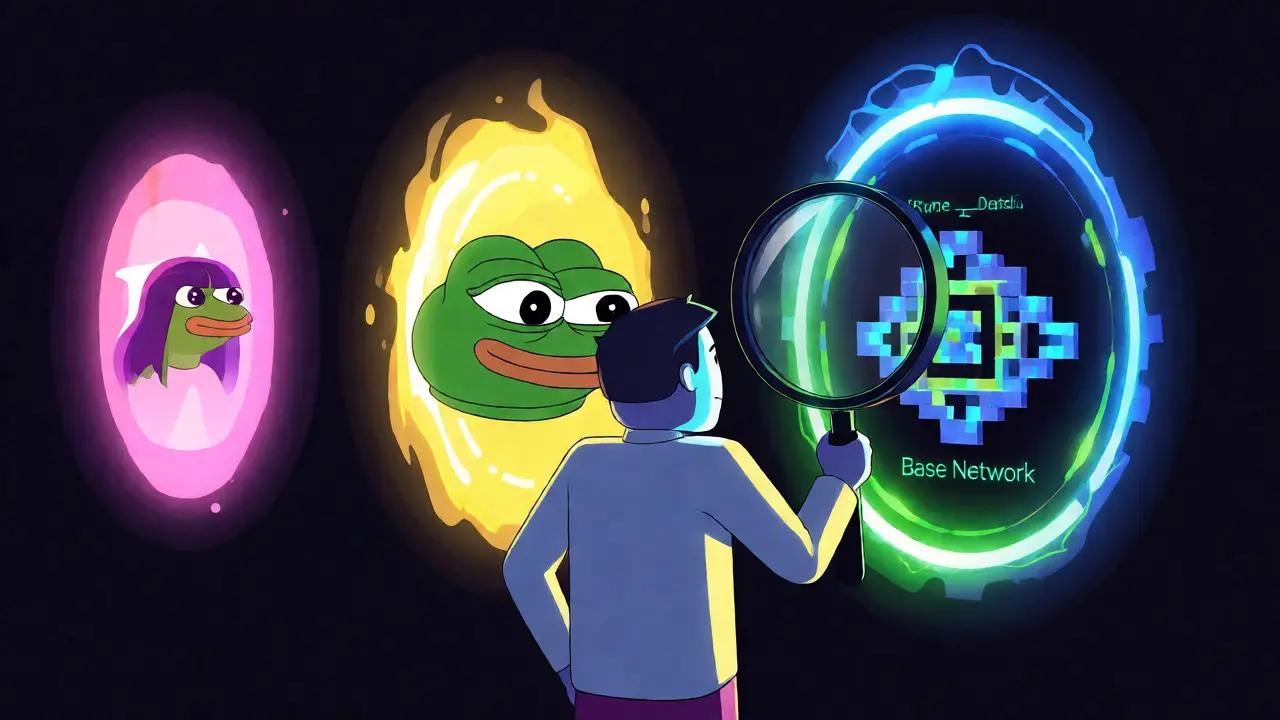

You type "PEPI" into your wallet or exchange, and suddenly you're staring at three different tokens. One is a female counterpart to Pepe on Ethereum, another is a meme coin on Binance Smart Chain, and the third-the one people are actually talking about in niche crypto circles-is PEPi V2, also known as Pepe Inscriptions. It’s a tiny, high-risk experiment on the Base network that tries to blend the fun of memecoins with the collectible nature of NFTs.
If you’re here because you saw a spike in volume or a weird chart pattern, you need to understand what this thing actually is before you throw money at it. Is it an investment? A toy? A scam? The answer isn't black and white, but understanding the mechanics helps you decide if you want to play with fire.
The Core Concept: More Than Just a Meme
Most memecoins are just digital jokes with a ticker symbol. You buy them hoping someone else buys them for more later. PEPi V2 attempts something slightly more complex by using the ERC-20i standard. Think of ERC-20i as a bridge between fungible tokens (like dollars, where every unit is identical) and non-fungible tokens (like art, where every unit is unique).
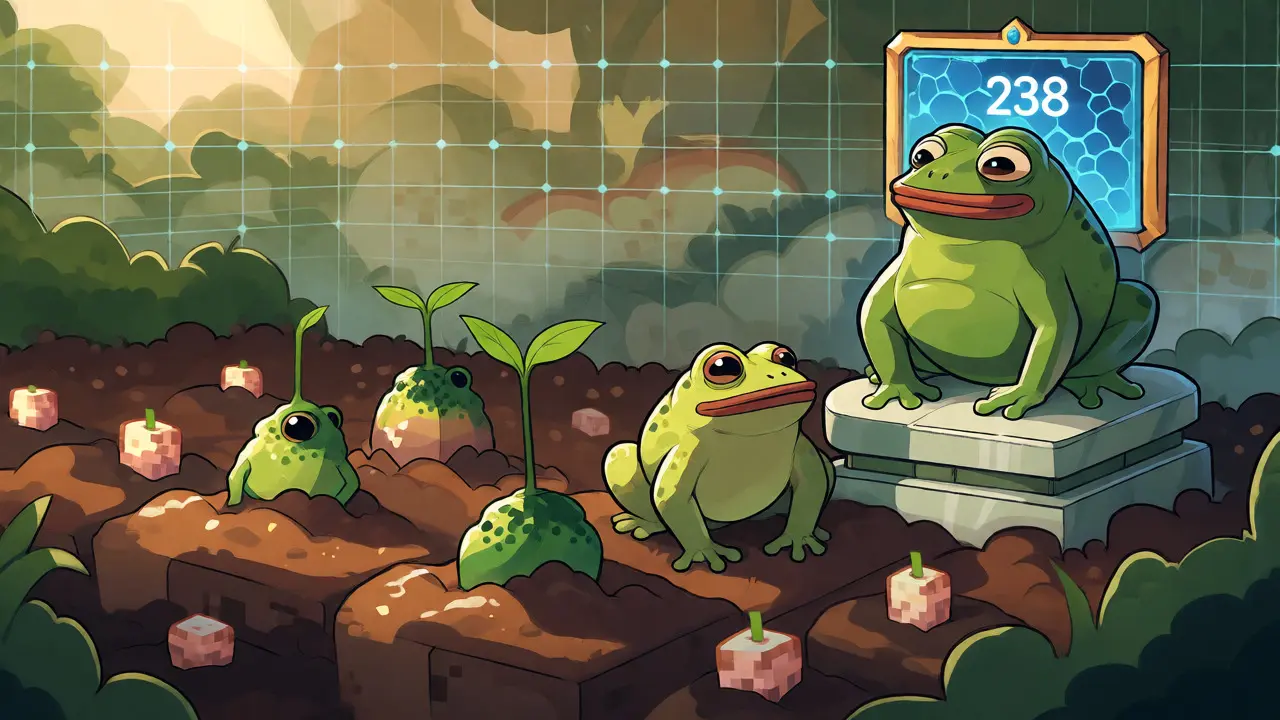
The project claims that each token holds a dynamic, on-chain image. Specifically, it generates a 32-by-32-pixel Pepe image directly on the blockchain. This isn't just a picture hosted on a server that could disappear; it's part of the token's data structure. As you accumulate more PEPI, the visual representation of your holding changes. The project uses a growth mechanic: you start with a seed, and as you hold more, the Pepe "grows up." To reach full adulthood, you need exactly 56 PEPI.
This creates a scarcity game. With a maximum supply capped at 13,370 PEPI, only about 238 fully mature Pepes can theoretically exist at once. It’s less about utility-like paying for coffee or voting in governance-and more about digital collecting. You’re buying a piece of interactive art that lives inside a token.
Why the Name Confusion Matters
Before you buy anything, check the contract address. This is critical because the ticker "PEPI" is overloaded. If you search for it casually, you might end up with the wrong asset entirely.
| Project Name | Blockchain | Total Supply | Key Feature |
|---|---|---|---|
| PEPi V2 (Pepe Inscriptions) | Base (Ethereum L2) | 13,370 | Dynamic on-chain pixel art, growth levels |
| Pepi (Ethereum) | Ethereum Mainnet | 100,000,000 | Community token, female counterpart to Pepe |
| Pepito BSC | Binance Smart Chain | 1,000,000,000 | Standard meme coin inspired by Pepe |
The correct contract address for PEPi V2 on Base is currently reported as 0x3103cd1602d5fa8f4b9283f9d5a7fa2290795d51. Always verify this against official channels like the project's website, pepi.sh, or trusted aggregators. Buying the wrong PEPI means you own a completely different asset with different liquidity and price action.
Market Reality: Liquidity and Risk
Here is the uncomfortable truth about PEPi V2 as of late 2026: it is extremely illiquid. Market data shows a market capitalization hovering around $37,000. That sounds small, but the real danger lies in the trading volume. Recent reports indicate daily trading volumes as low as $28.
Let that sink in. If the entire daily volume is $28, how easy do you think it is to sell $100 worth of tokens without crashing the price? You probably can’t. In markets this thin, a single large sell order can wipe out the price chart. The quoted price of roughly $2.83 per token might look stable on a graph, but it doesn't mean you can exit your position at that number. You might find yourself stuck with a bag of tokens that have no buyers.
Furthermore, the token has experienced significant volatility. It hit an all-time high of over $140 and dropped to under $2. Being down nearly 98% from its peak is common in micro-cap memecoins, but it highlights the speculative nature of the asset. There is no underlying revenue, no staking rewards mentioned in primary sources, and no clear utility beyond the collectible aspect.
Technical Setup and How to Buy
If you still want to try it, you need to be technical. This isn't something you'll likely find on major centralized exchanges like Coinbase or Binance with deep order books. You’ll mostly deal with decentralized exchanges (DEXs) on the Base network.
- Wallet: You need an EVM-compatible wallet like MetaMask.
- Network: Switch your wallet to the Base network.
- Funds: You need ETH on Base to pay for gas fees and swap transactions.
- Contract: Import the specific PEPI V2 contract address manually if it doesn't appear automatically.
Be careful with slippage. Because liquidity is so low, you may need to set higher slippage tolerances to get a trade through, which exposes you to price manipulation or simply bad execution prices. Always test with a tiny amount first-like $5-to see if the transaction works and if you can sell it back immediately.
Security and Transparency Concerns
Who runs this project? The evidence suggests it is pseudonymous. There is no named CEO, no registered legal entity, and no public team page with photos and LinkedIn profiles. For many crypto enthusiasts, anonymity is fine-it fits the Bitcoin ethos. But for a micro-cap token, it raises the risk of rug pulls or abandoned projects.
Security audits are sparse. Some third-party scanners flag multiple alerts, though some report the contract owner as the zero address, which means ownership was renounced. Renouncing ownership prevents the developer from minting new tokens or changing taxes arbitrarily, which is a plus. However, it doesn't protect you from bugs in the code, malicious liquidity pools, or the simple fact that nobody cares about the token anymore.
There is no independent academic study or institutional analyst covering PEPi. The information ecosystem is dominated by the project's own marketing and automated data scrapers. Treat any positive sentiment online as potentially self-generated until proven otherwise.
Is It Worth Your Time?
PEPi V2 is a curiosity. It’s a test case for whether ERC-20i inscriptions can gain traction on Base. If you love the idea of owning a tiny, evolving pixel-art Pepe and you have spare cash you don't mind losing, it’s an interesting experiment. The mechanic is clever, and the community around Base is active.
But don't mistake novelty for value. The lack of liquidity is the biggest hurdle. Without consistent trading volume, the price is theoretical. You aren't investing in a company or a protocol with cash flow; you're betting on attention. And in crypto, attention moves fast.
What is the difference between PEPi and PEPE?
PEPE is the original, massive memecoin on Ethereum with billions in market cap. PEPi (specifically PEPi V2) is a much smaller project on the Base network that uses ERC-20i technology to create dynamic, on-chain images. They are unrelated assets despite similar names.
How many PEPI tokens are there?
The maximum supply of PEPi V2 is fixed at 13,370 tokens. This low supply is designed to create scarcity, especially since 56 tokens are required to unlock the highest tier of the inscription artwork.
Where can I buy PEPi V2?
You typically buy PEPi V2 on decentralized exchanges (DEXs) operating on the Base network, such as Uniswap or Aerodrome. Due to low liquidity, availability can fluctuate, and you should always verify the contract address before swapping.
Is PEPi V2 safe to invest in?
It carries very high risk. With a market cap under $40,000 and daily volume often below $100, it is highly susceptible to price manipulation and illiquidity. There is no guaranteed exit strategy, and the project lacks a publicly identified team or extensive audit history.
What does the 'growth' mechanic mean?
As you accumulate more PEPI tokens, the associated on-chain image evolves. Starting from a seed, the image matures into an adult Pepe when you hold 56 tokens. This adds a gamified collectible element to the token holding experience.