

Imagine waking up to find that your daily routine could cost you billions. For Upbit, South Korea’s biggest cryptocurrency exchange, this wasn’t a nightmare scenario-it was reality in early 2025. Regulators uncovered massive failures in customer identification processes, leading to potential fines totaling an astronomical $34 billion. This isn't just about one company getting in trouble; it is a stark warning shot across the bow of the entire global crypto industry. If the largest exchanges can face existential threats over paperwork errors, what does that mean for smaller players and everyday users?
The Core of the Problem: KYC Failures at Scale
To understand why the penalty was so huge, we have to look at Know Your Customer (KYC) protocols. These are the standard procedures banks and crypto exchanges use to verify who their customers are. It involves checking IDs, verifying addresses, and ensuring people aren't using the platform for illegal activities like money laundering or terrorism financing. In South Korea, these rules fall under the Special Financial Transactions Act.
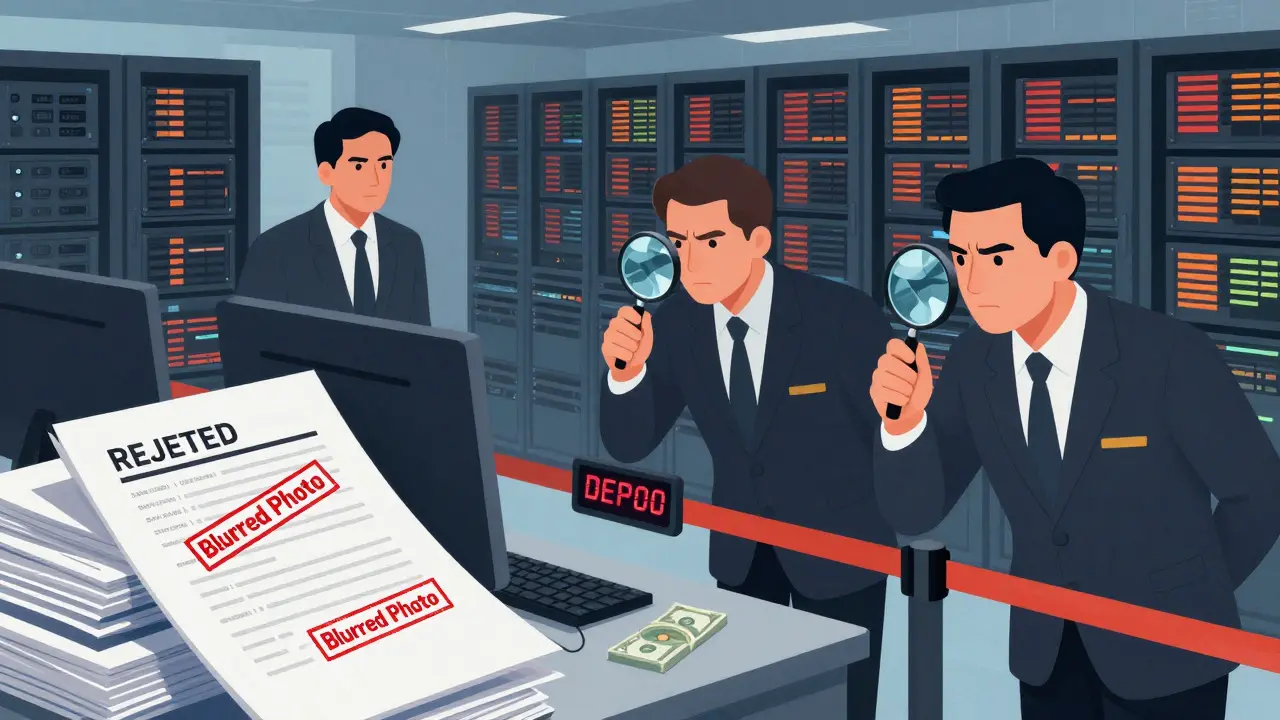
Upbit failed this basic test on a massive scale. During a routine license renewal review in late 2024, investigators from the Financial Intelligence Unit (FIU) found between 500,000 and 700,000 cases where Upbit did not properly identify its users. We aren't talking about minor clerical errors here. The FIU discovered ID documents with blurred photos, unrecognizable pictures, and other critical gaps that made verification impossible. When you multiply those hundreds of thousands of violations by the maximum fine per incident-100 million Korean won (about $68,500)-you get that staggering $34 billion figure.
It also didn't help that Upbit had processed transactions with overseas crypto service providers that weren't registered. This compounded the issue, showing regulators that the exchange's anti-money laundering (AML) systems were broken, not just glitchy. For a platform processing over $8 billion in daily volume, such blind spots are unacceptable.
Regulatory Hammer Drops: Timeline and Sanctions
The timeline of events moved quickly, catching many in the industry off guard. Here is how the crackdown unfolded:
- January 2025: The FIU issued a preliminary suspension notice to Upbit, giving them until January 20 to respond.
- January 21, 2025: The Financial Services Commission (FSC) announced its final decision.
- February 25, 2025: Formal notification was sent to Dunamu, the parent company of Upbit.
The immediate consequence wasn't the full $34 billion bill-that theoretical maximum serves more as a deterrent than a likely invoice-but operational restrictions hit hard. Upbit faced a partial business suspension for three months. During this time, they could not process new customer deposits or withdrawals. Existing users could still trade, but the inability to move money in or out severely limited liquidity and trust. Had the authorities enforced the harshest possible measures, Upbit would have been forced to pause new user registrations for six months. For a growth-dependent business, that is a death sentence.
Why South Korea Is Cracking Down Now
You might wonder why South Korea is being so tough. The answer lies in market dominance and systemic risk. Upbit controls a substantial portion of domestic crypto trading. As the country’s largest platform, its failure poses a threat to the entire financial ecosystem. Regulators fear that if the biggest player ignores rules, smaller competitors will too, leading to a wild west environment ripe for fraud.
This case happened during what experts call "crackdown season" in South Korea. Political instability and regulatory uncertainty in early 2025 pushed the FSC to act decisively. They want to finalize a comprehensive crypto regulatory framework, aiming to draft legislation by the second half of 2025. By punishing Upbit severely, they send a clear message: size does not equal immunity. No matter how big you are, if you break the law, you pay the price.
| Aspect | Detail |
|---|---|
| Entity Penalized | Upbit (Dunamu) |
| Potential Max Fine | $34 Billion USD |
| Violation Count | 500,000 - 700,000 KYC breaches |
| Fine Per Violation | 100 Million KRW (~$68,500) |
| Actual Sanction | 3-month deposit/withdrawal ban |
| Regulatory Body | Financial Services Commission (FSC) |
Upbit's Defense: Technical Complexity vs. Compliance
How did Upbit respond? Through representatives, the company claimed the violations were unintentional. They argued that determining whether overseas exchanges were properly registered was incredibly difficult due to the nature of blockchain transactions. Blockchain is pseudonymous and decentralized, making it hard to trace exactly which entity is operating on the other end of a transaction.
While this highlights real technical challenges, regulators didn't buy it. The argument suggests systemic issues rather than deliberate malice, but in finance, intent matters less than outcome. If you cannot verify your partners, you are facilitating risk. This defense underscores a broader industry problem: keeping up with regulation when technology moves faster than laws. However, as a major public-facing exchange, Upbit is expected to invest heavily in compliance tech to bridge this gap, not shrug it off.

Global Ripple Effects for Crypto Exchanges
This case is not isolated to Seoul. International cryptocurrency exchanges are watching closely. The Upbit saga established new benchmarks for regulatory expectations. It proved that governments are willing to impose severe penalties on even the largest market participants. This signals a maturation of cryptocurrency regulation globally.
Expect to see other exchanges scrambling to upgrade their KYC and AML programs. Sophisticated compliance technologies, like AI-driven identity verification and real-time transaction monitoring, will become standard requirements, not optional extras. The cost of doing business in crypto is rising, but so is the legitimacy of the sector. For users, this means stricter onboarding processes but potentially safer platforms.
The timing coincides with South Korea’s effort to position itself as a leader in both innovation and regulation. They want to support crypto growth while protecting consumers. The Upbit case shows they are serious about the protection part. Other nations may follow suit, creating a wave of enforcement actions worldwide. If you run a crypto business, ignore this at your peril.
What This Means for Everyday Users
If you trade on Upbit or similar platforms, your experience might change soon. Stricter KYC means more hurdles to sign up. Expect longer verification times, requests for additional documentation, and possibly fewer anonymous features. Deposits and withdrawals might undergo deeper scrutiny to prevent money laundering.
However, these changes protect you too. Better KYC reduces the chance of scams, fraud, and market manipulation. When exchanges are forced to know who their customers are, bad actors have a harder time hiding. While it feels like red tape, it builds trust in the system. Over time, this could attract more institutional investors, stabilizing prices and increasing liquidity for everyone.
For now, stay informed. Keep your account details updated, ensure your ID documents are clear and current, and be prepared for occasional pauses in service as exchanges adjust to new rules. The era of the "wild west" in crypto is ending. Welcome to the regulated age.
Will Upbit actually pay the $34 billion fine?
It is highly unlikely. The $34 billion figure represents the theoretical maximum based on multiplying the number of violations by the highest possible penalty per breach. Experts suggest actual fines will be substantially lower, though still significant enough to serve as a strong deterrent against future non-compliance.
What specific KYC violations did Upbit commit?
Investigators found hundreds of thousands of cases where customer ID documents had blurred or unrecognizable photos, failing to meet strict identification standards. Additionally, Upbit processed transactions with unregistered overseas crypto service providers, violating anti-money laundering protocols.
How does this affect my ability to trade on Upbit?
During the initial sanction period, existing users could continue trading normally, but new deposits and withdrawals were suspended for three months. Going forward, expect stricter identity verification processes, potentially longer wait times for account approvals, and enhanced scrutiny on large transactions.
Why is South Korea targeting crypto exchanges so aggressively?
South Korea aims to balance crypto innovation with robust consumer protection and financial stability. With Upbit dominating the local market, its compliance failures posed systemic risks. The government wants to establish strict oversight to prevent fraud, money laundering, and market manipulation, positioning itself as a global leader in responsible crypto regulation.
Will other countries follow South Korea's lead?
Likely yes. The Upbit case sets a precedent that market dominance does not shield companies from enforcement. Global regulators are increasingly focused on KYC and AML compliance. We can expect similar crackdowns and stricter regulations in other major crypto markets as governments seek to legitimize the digital asset sector.