THORChain exchange: What it is, how it works, and where to use it
When you trade crypto across chains—say, swapping Bitcoin for Ethereum—you usually rely on bridges or wrapped tokens that lock your assets in a middleman. But a THORChain exchange, a decentralized network built for native cross-chain swaps without custodians. Also known as THORChain, it lets you trade directly between Bitcoin, Ethereum, BNB Chain, and others using real native assets, not synthetic versions. This isn’t just another DeFi app—it’s a protocol that runs on its own blockchain, using validators and liquidity pools to move coins securely between networks.
What makes THORChain different? Most exchanges require you to trust a company or a smart contract to hold your crypto. THORChain doesn’t. It uses a system called bonded validators, a group of independent nodes that stake THORChain’s native RUNE token to secure swaps. These validators don’t control your funds—they just verify transactions. If they act dishonestly, they lose their staked RUNE. That’s why it’s called a non-custodial cross-chain swap, a system where users keep control of their assets from start to finish. You send Bitcoin to a THORChain address, the network locks it, and then sends you Ethereum on the other side—all without needing a bridge or a middleman.
THORChain’s real strength is liquidity. It doesn’t depend on third-party liquidity providers like Uniswap or Curve. Instead, users add crypto directly into pools, and the network rewards them with RUNE. This creates deep liquidity for major coins, even ones that don’t have native DeFi ecosystems. That’s why traders use it for swaps that other DEXs can’t handle—like swapping Litecoin for Solana or Dogecoin for Polygon.
But it’s not perfect. THORChain has higher fees during network congestion, and you need RUNE to pay for swaps. It also doesn’t support every token—only those with active liquidity pools. And because it’s built on its own chain, you can’t interact with it through regular wallets like MetaMask. You need a wallet that supports the THORChain network, like Keplr or Leap.
That’s why you’ll find posts here about real users who got stuck in swaps, others who made smart moves using RUNE staking, and warnings about fake THORChain sites trying to steal your keys. You’ll also see reviews of platforms that integrate THORChain’s tech, like dYdX or ThorFi, and deep dives into how liquidity pools work under the hood. Whether you’re trying to avoid bridge hacks, looking for the most secure way to swap BTC to ETH, or just curious why THORChain keeps popping up in DeFi circles, the posts below give you the straight facts—not the hype.
THORChain (BEP20) Crypto Exchange Review: Native Cross-Chain Swaps Without Wraps
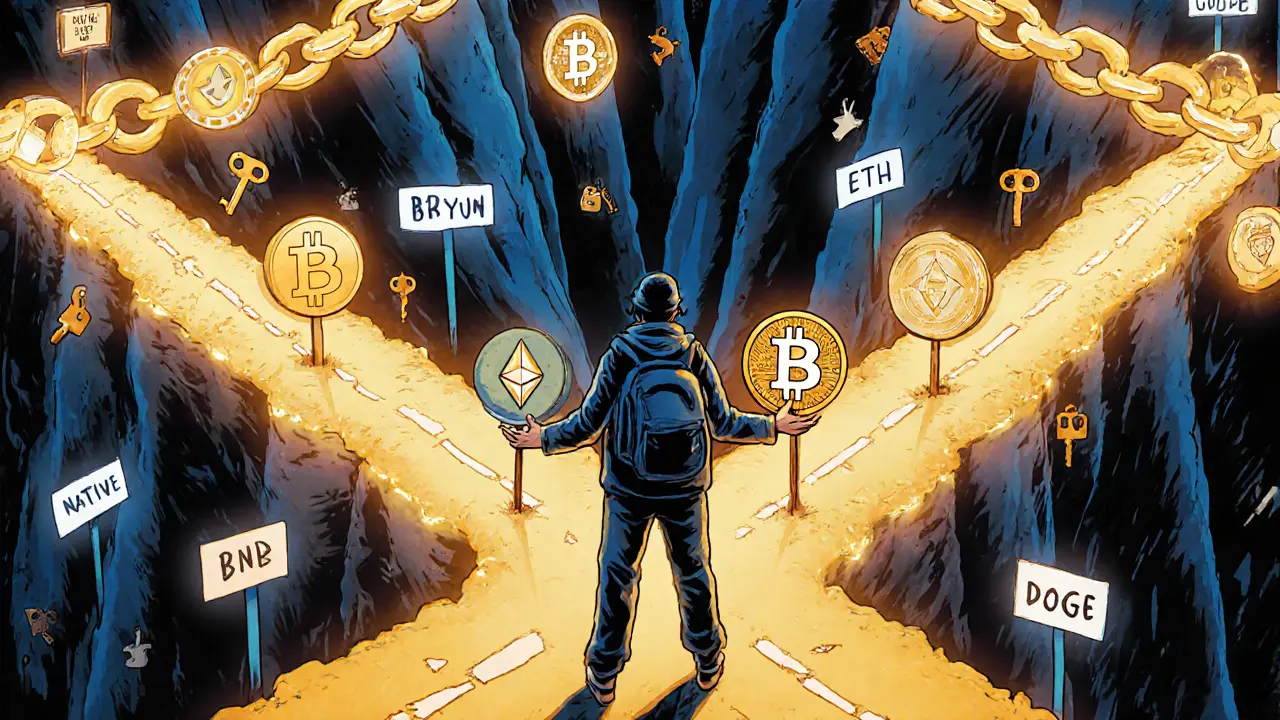

THORChain (BEP20) lets you swap native crypto like BTC and ETH without wrapping or trusting intermediaries. Learn how it works, why RUNE matters, and whether it's safe and worth using in 2025.