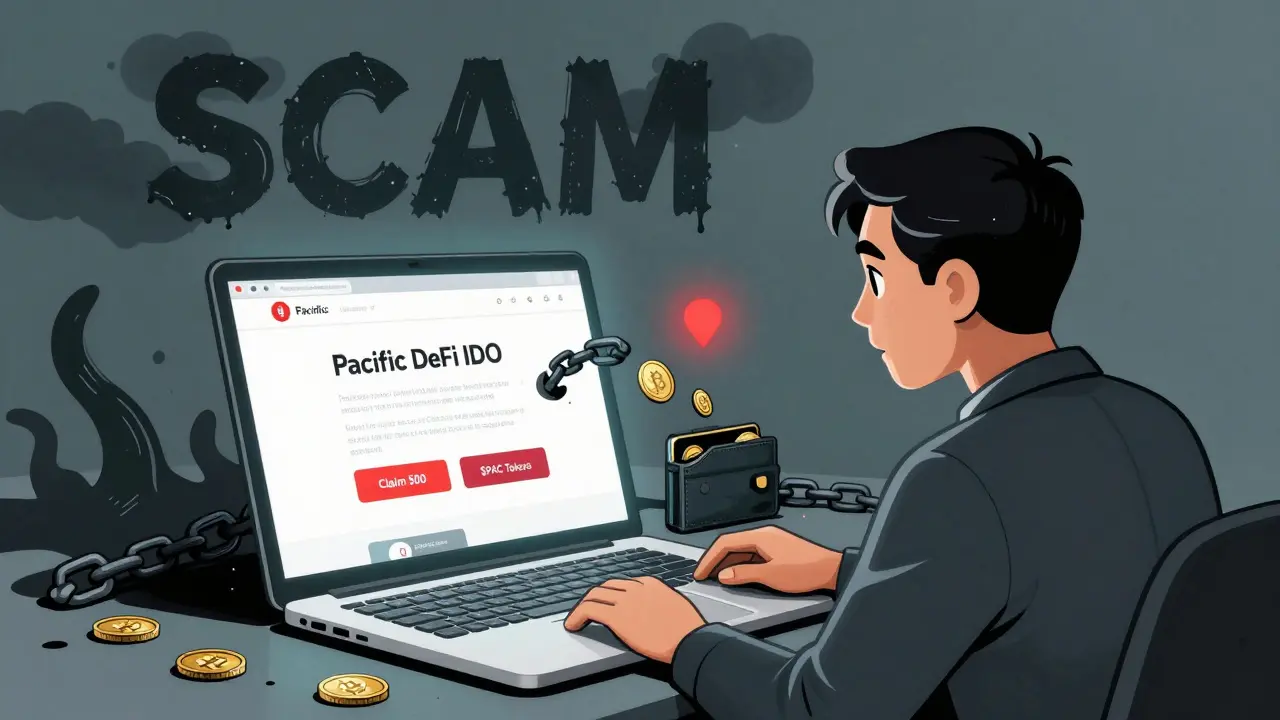

There’s no such thing as a Pacific DeFi IDO or airdrop. Not in the official records. Not on any major launchpad. Not in the wallets of early participants. If you’ve seen a post, tweet, or Telegram group claiming otherwise, you’re being targeted by a scam.
Why You Won’t Find Pacific DeFi Anywhere
Look at any credible source tracking crypto launches in 2025 and 2026: Airdrops.io, ICOAnnouncement.io, ZebPay, ICO Bench, CryptoNinjas. None list Pacific DeFi. Not one. Not even a mention. That’s not an oversight. That’s a red flag.Legitimate DeFi projects don’t disappear from public tracking. They launch on platforms like Polkastarter, DAO Maker, or BSCPad. They publish whitepapers. They have GitHub repos. Their token contracts are verified on Etherscan or Solana Explorer. Their teams are known. Their roadmaps are public.
Pacific DeFi has none of that. No website. No team. No audit. No community. No trace on blockchain explorers. If you can’t find it on a platform that lists over 200 active IDOs, it doesn’t exist as a real project.
How These Scams Work
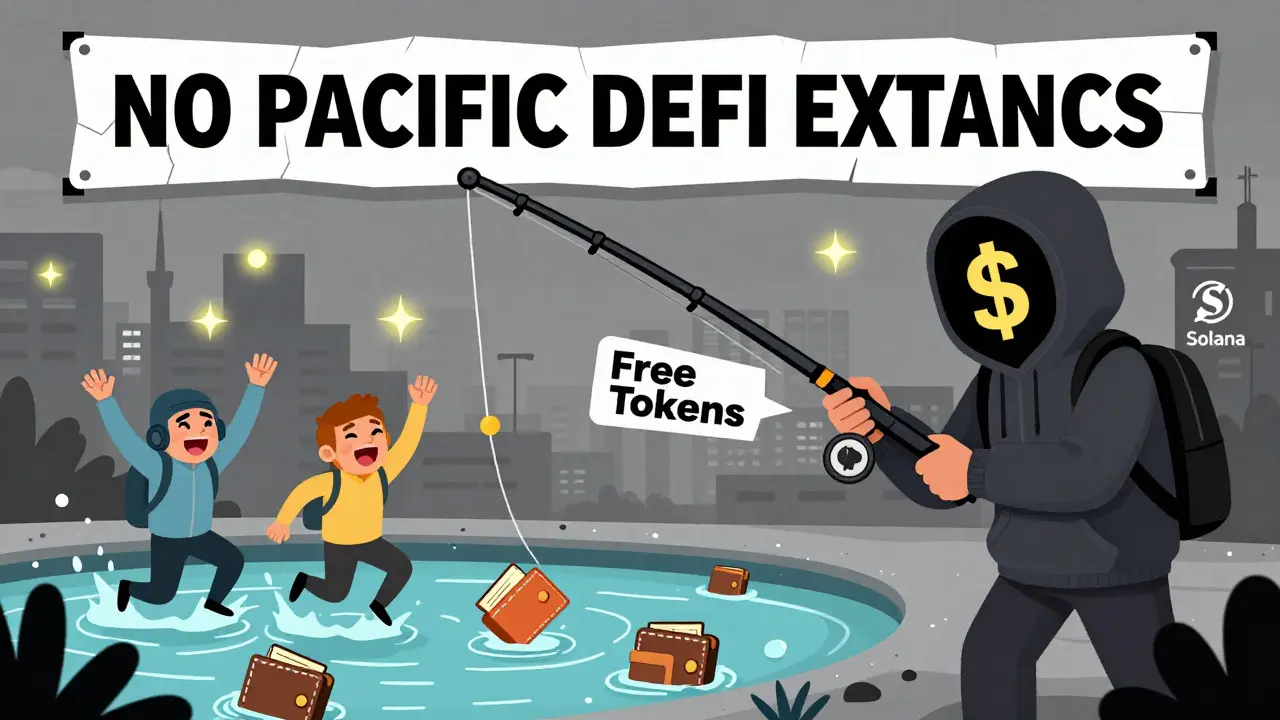
These fake airdrop scams follow a simple playbook:- They create a name that sounds real - something with "DeFi," "Pacific," "Chain," or "Protocol" - to sound like it belongs with Solana, Arbitrum, or zkSync.
- They post on Twitter, Reddit, or Discord with fake screenshots: "Join Pacific DeFi’s IDO! Claim 500 $PAC tokens for free!"
- They ask you to connect your wallet to a fake website. Sometimes they say "approve a small transaction" or "verify your address."
- Once you connect your wallet, they drain it. All your ETH, SOL, or tokens vanish in seconds.
There’s no airdrop. No tokens. No future launch. Just a stolen wallet and a dead link.
Real Airdrops Don’t Ask for Your Wallet
Let’s be clear: legitimate airdrops never ask you to connect your wallet to claim free tokens. If a project wants to reward you, they track your activity on their platform - like holding a specific token, using their dApp, or participating in governance. Then, they send tokens to your wallet automatically. No approval. No connection. No gas fee.For example, the 2025 retroactive airdrops from Uniswap and Arbitrum didn’t ask users to sign anything. They just dropped tokens into wallets that met the criteria. You didn’t have to click a link. You didn’t have to "verify" anything. You just got paid.
If a project says, "Click here to claim your $PAC tokens," and you have to connect MetaMask or Phantom - walk away. That’s not an airdrop. That’s a trap.
What to Look for in a Real IDO
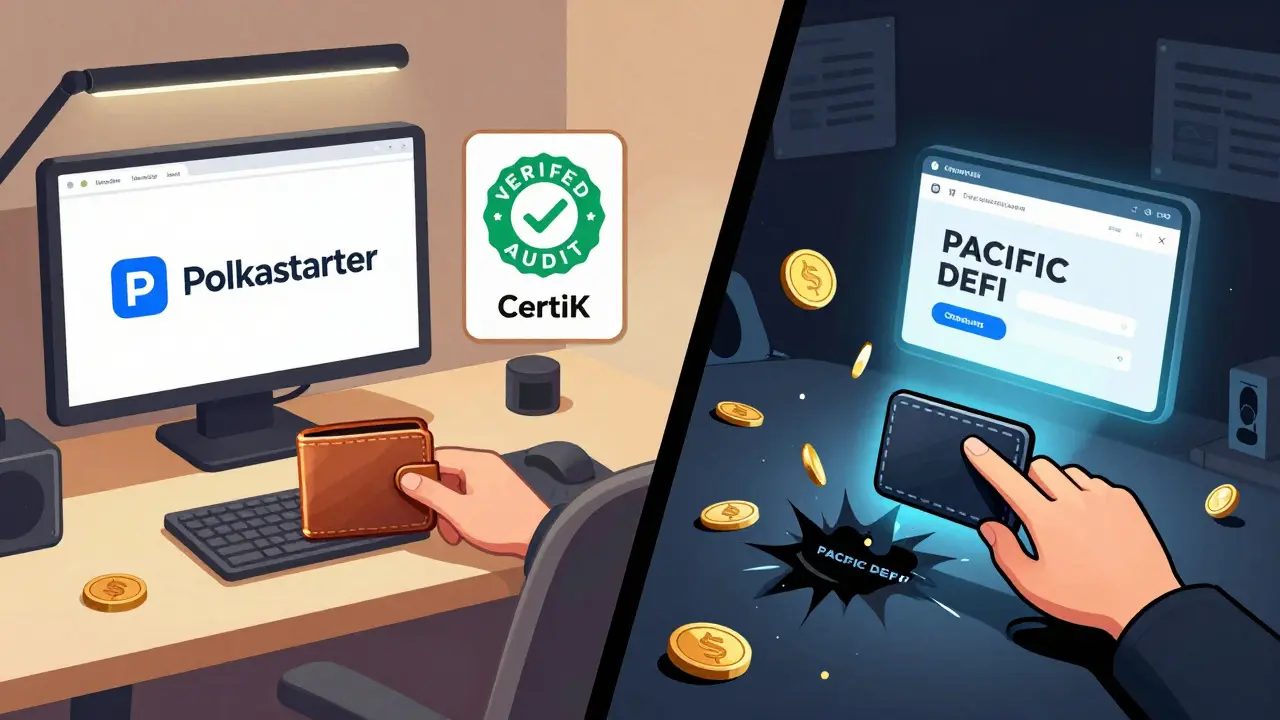
If you’re looking to participate in a real DeFi IDO, here’s what you need to check:- Launchpad: Is it on Polkastarter, DAO Maker, BSCPad, or another known platform? If it’s on a random site you’ve never heard of, it’s not legit.
- Team: Are the founders known? Do they have LinkedIn profiles? Have they worked on other projects? Anonymous teams = high risk.
- Audit: Has the smart contract been audited by CertiK, Hacken, or OpenZeppelin? If not, don’t touch it.
- Tokenomics: Is there a clear supply, vesting schedule, and utility? Vague descriptions like "for ecosystem growth" are warning signs.
- Community: Is there an active Discord with 10,000+ members? Are the moderators responsive? Are there real questions being answered?
Pacific DeFi checks none of these boxes. And that’s not an accident.
Why Scammers Target IDO Airdrops
Crypto airdrops are hot right now. In 2025, over $1.2 billion in tokens were distributed through airdrops - mostly to early users of Layer 2 networks and DeFi protocols. Scammers know people are excited. They know people are afraid of missing out.That’s why they create fake projects with names that sound like the next big thing: "Pacific DeFi," "Nexchain," "Solayer Labs." They use real names to hide fake ones. They copy real designs. They use the same language as real projects.
But real projects don’t need to beg you to join. They don’t need to promise free tokens to get you to click a link. They build trust over time. They earn attention. They don’t rush you.
What to Do If You Already Connected Your Wallet
If you connected your wallet to a Pacific DeFi site - even if you didn’t send any funds - act now:- Disconnect: Go to Etherscan Wallet Connection (or the equivalent for Solana, Polygon, etc.) and revoke all permissions for any site you don’t recognize.
- Monitor: Watch your wallet for any outgoing transactions. Even if nothing happened yet, scammers can trigger drains hours or days later.
- Consider a new wallet: If you had significant funds in that wallet, create a new one and move your assets. Old wallets can be targeted even after revoking access.
- Report: Flag the scam site on Reddit, Twitter, and Discord. Help others avoid it.
Don’t wait. Scammers move fast. The longer you wait, the higher the chance your funds are gone.
How to Stay Safe in 2026
The crypto space is full of opportunity - but also full of predators. Here’s how to protect yourself:- Never connect your main wallet to unknown sites. Use a separate wallet for testing or unknown projects.
- Never approve token spending unless you’re 100% sure. Revoke approvals regularly.
- Only participate in IDOs through well-known launchpads. If you don’t recognize the platform, skip it.
- Check project legitimacy on CoinGecko and CryptoCompare. If it’s not listed, it’s not vetted.
- Join official project channels only. If someone DMs you with a link, block them.
There’s no shortcut to safety. The only way to avoid scams is to assume every unsolicited offer is fake - until proven otherwise.
Final Warning
There is no Pacific DeFi IDO. There is no $PAC token. There is no airdrop. The name is being used to steal your crypto. If you see it again - don’t click. Don’t reply. Don’t engage. Delete it. Block it. Warn others.Real DeFi projects don’t need to trick you. They build. They launch. They earn trust. And they don’t disappear the moment you try to join.
Is Pacific DeFi a real crypto project?
No, Pacific DeFi is not a real project. It does not appear on any verified launchpad, blockchain explorer, or crypto tracking platform like CoinGecko, Airdrops.io, or ZebPay. There are no official websites, whitepapers, team members, or audits linked to it. All references to Pacific DeFi are part of a scam designed to steal crypto wallet access.
Can I get free tokens from Pacific DeFi?
No. Any claim that you can get free $PAC tokens from Pacific DeFi is false. Legitimate airdrops don’t ask you to connect your wallet or approve transactions to claim rewards. If you’re asked to do either, it’s a scam. You won’t receive tokens - you’ll lose your crypto.
What should I do if I connected my wallet to Pacific DeFi?
Immediately go to your wallet’s connection manager (like Etherscan’s Permissions page) and revoke access to all unknown sites. Monitor your wallet for unauthorized transactions. If funds were drained, consider moving remaining assets to a new wallet. Report the scam on social media and community platforms to warn others.
Are there any real DeFi airdrops in 2026?
Yes, but they come from established projects like Arbitrum, zkSync, Solana ecosystem apps, and Layer 2 networks with proven track records. Real airdrops are announced through official channels, require no wallet connection to claim, and are listed on trusted platforms like Airdrops.io or ZebPay. Always verify before participating.
How do I spot a fake IDO or airdrop?
Look for four things: 1) Is it on a known launchpad like Polkastarter or DAO Maker? 2) Is the team public and verifiable? 3) Has the contract been audited? 4) Does it ask you to connect your wallet or approve spending? If the answer to #4 is yes, or if any of the first three are missing, it’s likely a scam.
Comments (8)

- Hannah Campbell
- January 16, 2026 AT 06:17 AM
Oh wow another ‘Pacific DeFi’ scam?? I swear if I see one more Telegram group with ‘500 $PAC FREE’ in the title I’m gonna scream into a pillow
People still fall for this? It’s like they’re using the same template from 2021. ‘DeFi’ + ‘Pacific’ = instant exit scam. No brain needed.
Just delete. Block. Move on. Your wallet will thank you.
Also why is everyone still using MetaMask for random links?? I have a burner wallet just for this nonsense.

- Bryan Muñoz
- January 18, 2026 AT 06:12 AM
They’re not just scams. They’re part of a global fiat-backed disinformation campaign. I’ve seen the pattern - fake names, fake teams, fake audits. They’re testing psychological triggers on the masses. The same people who bought Dogecoin are now clicking ‘Connect Wallet’ for ‘Pacific DeFi’ like it’s a TikTok challenge.
They’re not after your crypto - they’re after your trust. And once they break that, they own you. I’ve been tracking this since 2023. It’s not random. It’s engineered.
🚨 STOP CONNECTING WALLETS. 🚨
They’re watching you right now.

- Pramod Sharma
- January 19, 2026 AT 21:47 PM
Scams exist because hope is cheaper than verification.
People want to believe in the next big thing - not because they’re stupid, but because they’re human.
The real tragedy isn’t the stolen ETH - it’s the erosion of curiosity. When every opportunity feels like a trap, we stop looking. And that’s what the scammers really win.
Stay skeptical. Stay curious. But don’t stop exploring. Just verify first.

- Andre Suico
- January 21, 2026 AT 08:22 AM
Thank you for this comprehensive breakdown. The clarity of your warning is essential in an environment where misinformation spreads faster than verified facts.
For newcomers to DeFi, the distinction between a legitimate airdrop and a phishing attempt is often blurred by professional-looking UIs and persuasive language.
I would add that reputable projects often have their token contracts audited and publicly listed on platforms like CertiK or PeckShield - a simple check that prevents 90% of losses.
Always assume the worst until proven otherwise. It’s not paranoia - it’s due diligence.

- Chidimma Okafor
- January 21, 2026 AT 10:00 AM
Oh my goodness, this is such a vital public service announcement - I cannot express how deeply I appreciate the diligence and care embedded in this post!
Every single line reads like a guardian angel whispering wisdom into the ears of the overwhelmed crypto novice.
Scammers thrive on the urgency of FOMO and the silence of the uninformed - and you have shattered both with elegance and precision.
May your words echo across every subreddit, every Telegram group, every late-night Google search where someone is about to make a catastrophic mistake.
Thank you, truly, from the bottom of my heart.
🙏✨

- Bill Sloan
- January 23, 2026 AT 05:33 AM
Wait wait wait - did anyone else see that ‘Pacific DeFi’ ad on Reddit last week? It looked like it was made in Canva by a 14-year-old with a Discord server.
And the ‘claim your $PAC’ button? It had a GIF of a dolphin jumping through a blockchain. 🐬⛓️
Also the domain was pacificdefi[.]xyz - not .com, not .io, not even .eth. Just… xyz.
I screenshot it and sent it to my crypto group. We all laughed. Then we cried. Then we reported it.
Bro. Just… bro.

- Callan Burdett
- January 23, 2026 AT 06:51 AM
Man I remember when I first got into crypto and thought ‘free tokens’ meant free money. Took me 3 months and $400 in gas fees to learn the hard way.
Now I just scroll past anything that says ‘connect wallet to claim’. No exceptions.
Real projects don’t need to beg. They just show up.
And if you’re still connecting your wallet to sketchy sites… I love you but you’re gonna lose everything.
Go make a burner wallet. You’ll thank yourself later.

- nathan yeung
- January 24, 2026 AT 01:43 AM
Just a quick note - if you’re reading this and you’re new: don’t feel bad for falling for this. Everyone does at first. The scammers are getting better.
The key is not to judge yourself - just learn and move forward.
I used to click every ‘free airdrop’ link. Now I check CoinGecko first. Always.
Small habits save big wallets.
Stay safe out there.