
By 2030, the value of assets on blockchain - stocks, bonds, real estate, even commodities - could hit 30 trillion. That’s not a guess. It’s what Security Token Market’s latest research predicts. And it’s not just hype. Big names like BlackRock and Franklin Templeton are already moving billions into tokenized funds. This isn’t science fiction. It’s happening right now.
What Exactly Are Security Tokens?
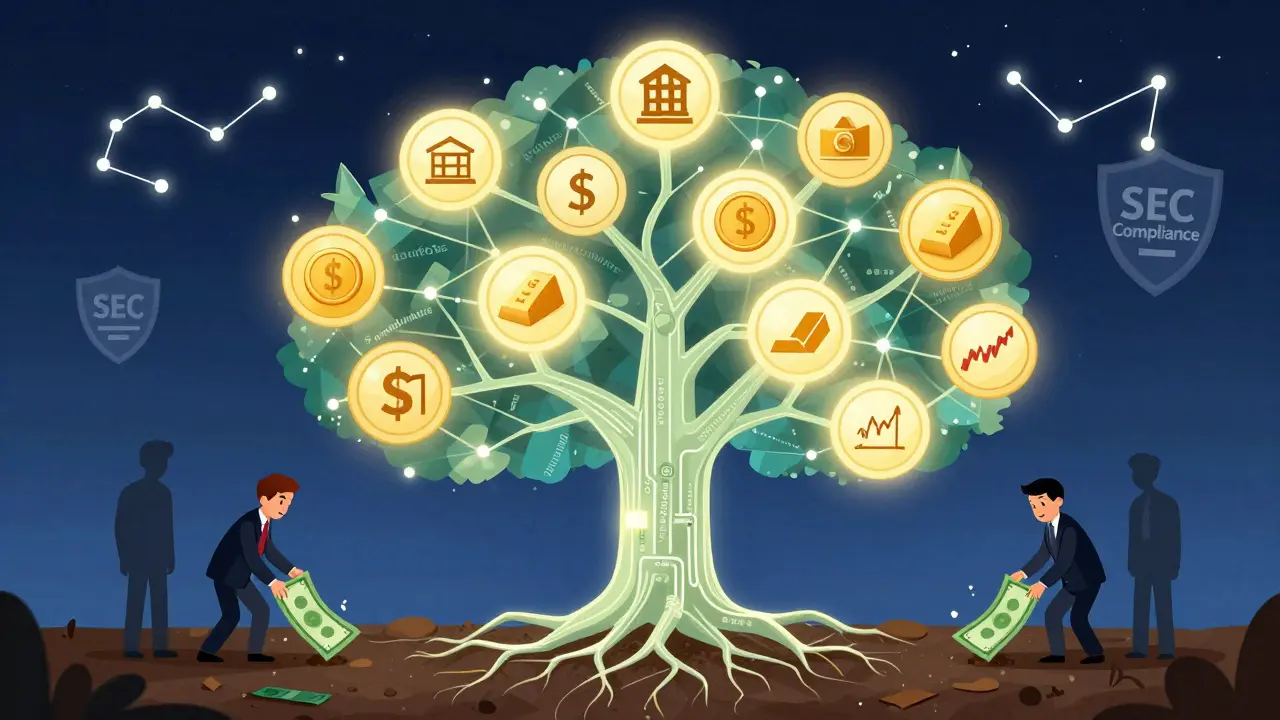
Security tokens are digital versions of traditional investments. Think of them like shares in a company, bonds, or even a slice of a commercial building - but instead of paper certificates or spreadsheets, they live on a blockchain. Each token represents ownership, and because they’re built on code, they can be programmed to do things automatically: pay dividends on schedule, restrict who can buy them, or even split ownership into tiny fractions.
Unlike the wild west of early crypto ICOs, security tokens follow strict rules. In the U.S., the SEC treats them like securities. That means they must be registered, disclose risks, and comply with investor protection laws. This isn’t a loophole - it’s a bridge between old finance and new tech.
Why Is This Growing So Fast?
The numbers don’t lie. In 2024, the total value of tokenized assets - including stocks, bonds, and real estate - was over $250 billion. Stablecoins (tokenized dollars) added another $200 billion. That’s already a quarter-trillion-dollar ecosystem. And it’s accelerating.
One big reason? Regulatory clarity. The U.S. finally gave clear signals: if it acts like a security, it’s a security. That gave institutions the confidence to step in. BlackRock launched its on-chain liquidity fund. Franklin Templeton tokenized a bond fund that now trades 24/7. These aren’t experiments. They’re scalable products.
Another reason? Liquidity. Traditional real estate or private equity is illiquid. You can’t sell a building in minutes. But a tokenized version? You can trade a fraction of it on a blockchain exchange in seconds. That opens up markets to global investors who never had access before.
Real Estate Leads - But Commodities Are Catching Up
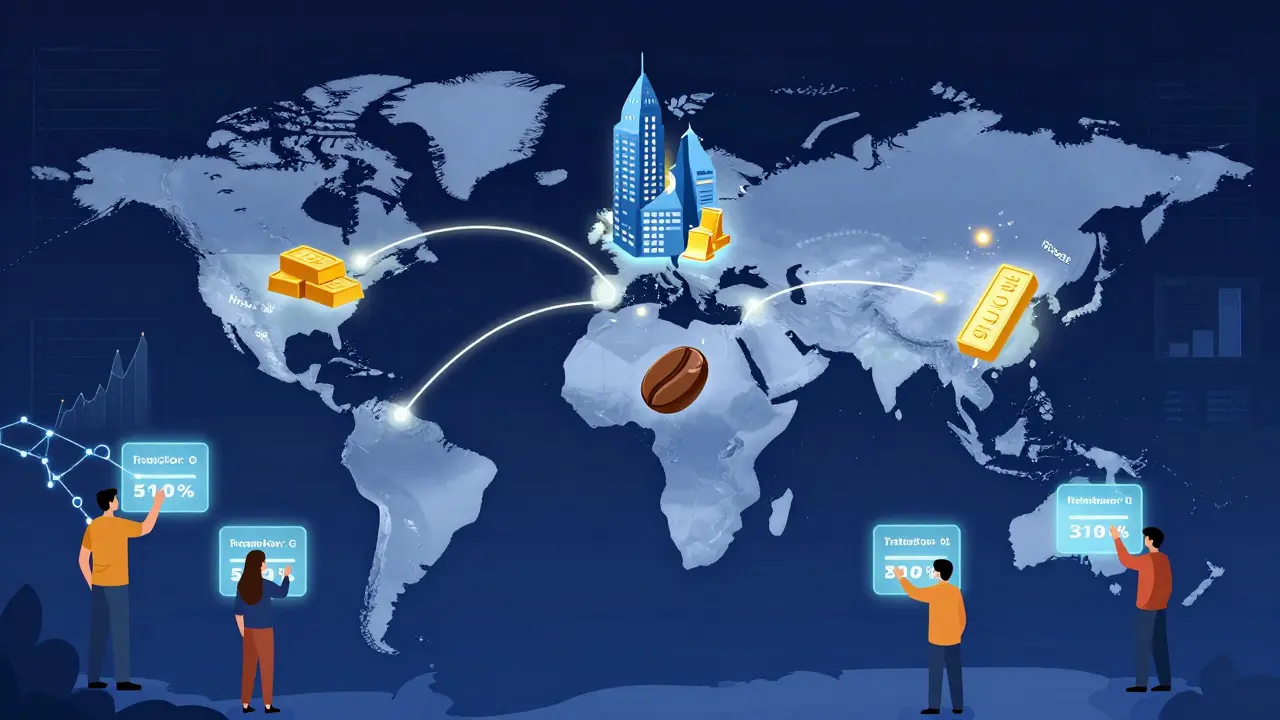
Right now, real estate makes up 30.5% of all tokenized assets. Why? Because property is expensive, hard to divide, and slow to trade. Tokenization fixes all three. A $10 million office building can be split into 10,000 tokens. Anyone with $1,000 can own a piece. Investors in Singapore, Berlin, or Mexico City can buy in - no need for local lawyers or complex paperwork.
But the fastest-growing segment? Commodities. Tokens for gold, oil, or agricultural products are growing at a 50.1% annual rate. Why? Because commodities are already traded globally. Tokenizing them cuts out middlemen, reduces settlement times from days to minutes, and lowers costs. A farmer in Brazil can now sell next season’s coffee harvest as tokens to investors in Tokyo - all settled on-chain.
Who’s Buying? It’s Not Retail Investors
Don’t expect this to be the next Bitcoin craze. Institutional investors controlled nearly 70% of capital in the security token market in 2024. Hedge funds, pension funds, asset managers - these are the players. They have the compliance teams, legal resources, and risk tolerance to navigate the regulatory landscape.
Retail investors are watching, but they’re not driving growth yet. The barriers are real: KYC checks, accredited investor rules, and platform access. But that’s changing. Platforms like Securitize and Polymarket are building user-friendly interfaces. Soon, a teacher in Ohio might be able to buy a token representing a share of a solar farm in Texas - with just a few clicks.
North America Leads, Asia Pacific Is Exploding
North America holds 36.5% of the market today, thanks to the U.S.’s clear regulatory stance. But the fastest growth? That’s in Asia Pacific. Countries like India are pushing tokenization hard. The Reserve Bank of India allows tokenization of RuPay cards. Banks are testing blockchain for cross-border settlements. Singapore and Hong Kong are becoming hubs for tokenized fund issuance.
The Middle East and Africa are set to grow at the highest rate - 27.5% CAGR - as sovereign wealth funds look for new ways to diversify. Saudi Arabia’s NEOM project is exploring tokenized real estate. Nigeria’s fintech boom is creating demand for transparent, digital asset ownership.
Permissionless blockchains - like Ethereum and Polygon - are winning over permissioned ones. Why? Because they offer global access, lower fees, and open liquidity. You don’t need to be approved by a bank to trade on them. That’s the future: open, borderless, and programmable.
The Tech Behind the Tokens
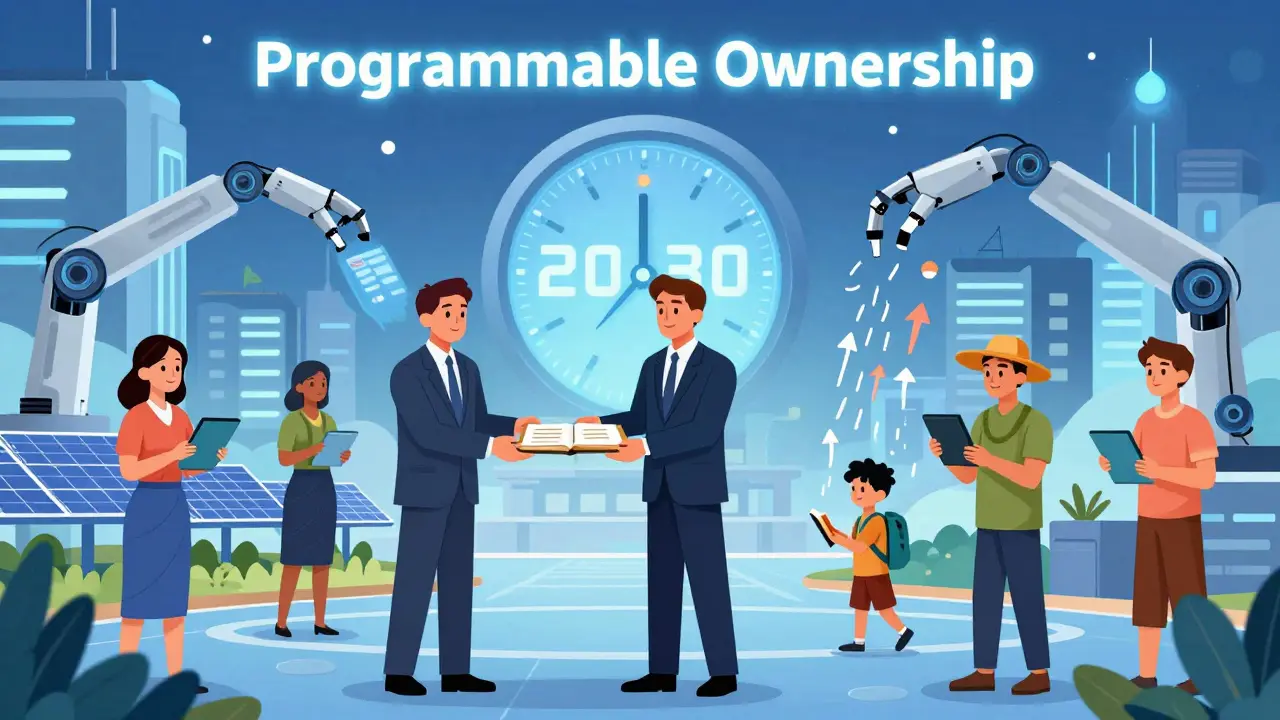
Tokenization isn’t just about putting assets on a ledger. It’s about smart contracts - self-executing code that enforces rules. A token can be programmed to auto-distribute dividends when profits are declared. It can block transfers to sanctioned entities. It can require multi-sig approval for large sales.
Interoperability is the next big leap. Right now, many tokenized assets are locked on specific blockchains. But the future needs cross-chain trading. Projects like Chainlink’s CCIP and Cosmos’ IBC are making it possible to move a tokenized bond from Ethereum to Solana without intermediaries. That’s critical for global liquidity.
On-premises systems still dominate, but cloud-based solutions are rising fast. Financial firms are moving away from private servers to scalable, auditable cloud platforms that integrate with existing compliance tools like Actimize and Chainalysis.
Challenges Still Remain
Don’t think this is easy. Tokenization requires legal frameworks, technical infrastructure, and investor education - all at once. In the EU, MiCA rules are still being implemented. In China, crypto is banned outright. Regulatory fragmentation is real.
Security is another concern. While blockchain itself is secure, the gateways - wallets, exchanges, custodians - are vulnerable. High-profile hacks have happened. That’s why institutional players are demanding cold storage, multi-signature controls, and insurance-backed custody solutions.
And then there’s the problem of standardization. No universal format exists for tokenized bonds or real estate. Different platforms use different metadata standards. Without common protocols, interoperability will stall.
What’s Next? The Road to 2030
The next five years will be about scaling. We’ll see more tokenized private equity funds, sovereign debt, and even intellectual property rights. Imagine owning a share of a patent or a music catalog - with royalties paid automatically in crypto.
Traditional finance won’t disappear. It will absorb blockchain. Banks will offer tokenized bond portfolios. Brokerages will list security tokens alongside ETFs. The line between Wall Street and Web3 will blur.
By 2030, the $30 trillion forecast might still be too low. If even 10% of global real estate, private equity, and fixed income markets become tokenized, we’re already there. The real question isn’t if it will happen - it’s how fast.
Why This Matters for You
If you’re an investor, this opens doors to assets you could never access before. If you’re a business owner, tokenization lets you raise capital without giving up control - issue tokens for a single project, not your whole company. If you’re just curious, this is the quiet revolution reshaping money, ownership, and value.
This isn’t about replacing banks. It’s about making them better. Faster. Fairer. More transparent.
The future of finance isn’t just digital. It’s programmable. And it’s already here.
Comments (7)

- Michael Jones
- January 14, 2026 AT 00:39 AM
Security tokenization is the most significant financial innovation since the advent of electronic trading. The regulatory clarity from the SEC has been the missing piece - finally, institutions can move capital without fear of legal ambiguity. BlackRock’s on-chain fund isn’t a demo; it’s a blueprint. The programmability of dividends, ownership restrictions, and fractional access transforms capital allocation from a bureaucratic process into an automated, transparent system. This isn’t speculation. It’s infrastructure.

- Jill McCollum
- January 15, 2026 AT 08:26 AM
ok but like… can i buy a piece of my local coffee shop with a token?? 😅 i mean, i love my barista and i wanna support small biz but also like… what if i only have $5?? 🤔 this sounds so cool but also kinda outta reach for normal people 😅

- Hailey Bug
- January 17, 2026 AT 01:37 AM
Yes, you absolutely can - and it’s already happening. Platforms like RealT and Securitize allow fractional ownership of rental properties starting at under $100. The same tech applies to small businesses. A bakery in Austin just tokenized its equipment lease to raise $50k from 200 local investors. No middlemen, no bank fees, just smart contracts paying out monthly revenue shares. Retail access is coming fast - the KYC and accreditation walls are being dismantled by compliant platforms. It’s not sci-fi. It’s happening in your town.

- Stephen Gaskell
- January 17, 2026 AT 23:15 PM
USA leads because we don’t let bureaucrats strangle innovation. Europe’s MiCA is a paperwork nightmare. China bans it outright. That’s why the future belongs to America. No other country has the legal clarity or the capital. This isn’t global - it’s American.

- Rod Petrik
- January 18, 2026 AT 18:20 PM
they’re lying about the 30 trillion… the fed is printing crypto to replace the dollar and control us all… blockchain is just a trap to track your money… remember when they said the internet was harmless? 😏 they want your assets on a ledger so they can freeze it anytime… the SEC? totally bought off… watch how fast they shut this down after the bubble pops… they already know…

- Andre Suico
- January 20, 2026 AT 00:14 AM
While the potential of security tokenization is undeniable, the current ecosystem remains fragmented. The absence of universal standards for metadata, asset representation, and cross-chain interoperability introduces operational risk. Institutions are adopting cautiously, not because of skepticism, but due to the lack of harmonized legal and technical frameworks. Until ISO or FINRA establishes baseline protocols, scalability will remain constrained. Progress is real, but maturity is still years away.

- Chidimma Okafor
- January 21, 2026 AT 14:43 PM
In Nigeria, we watch this with both hope and caution. The fintech revolution here has already empowered millions without banks - but tokenization must not become another tool for elite capture. If a Lagos street vendor can sell her spice harvest as a token to a student in Tokyo, that is justice. But if only foreign funds own the infrastructure, then we’ve traded one colonial system for another. Let the code serve the people, not just the balance sheets. The future must be inclusive - not just programmable.