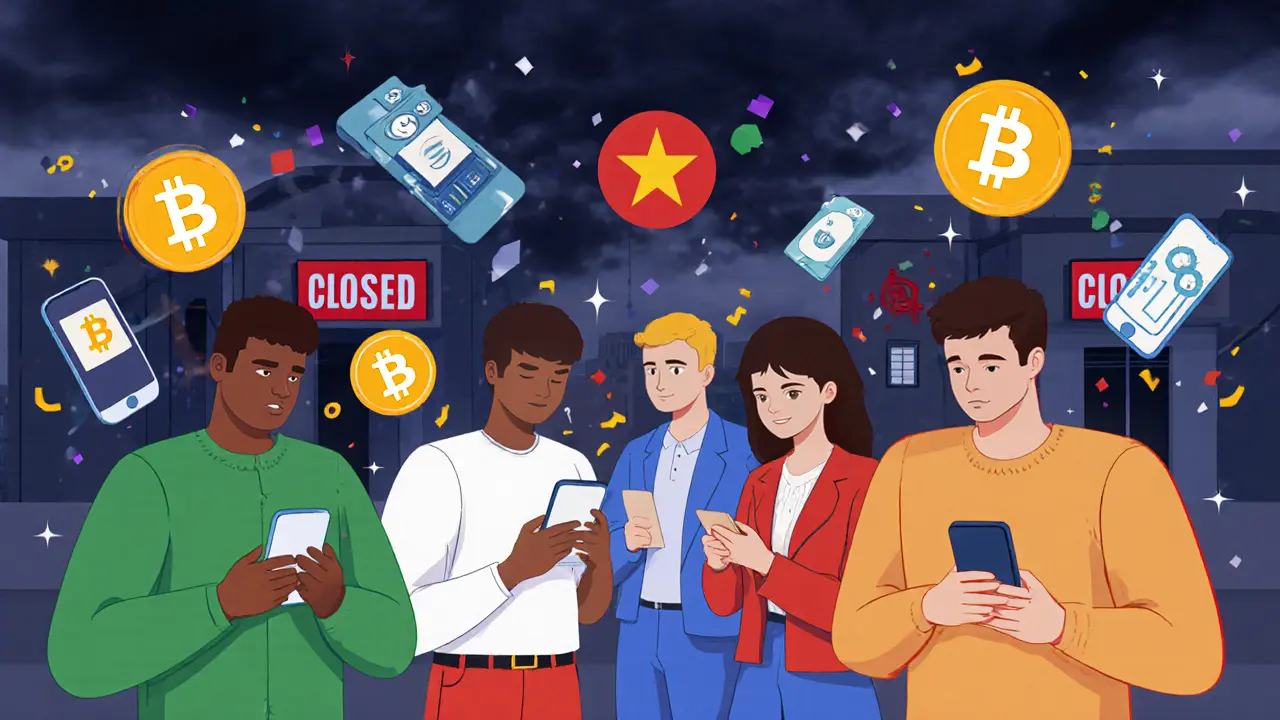

When your bank won’t let you send money abroad, when your government blocks crypto apps, and when your local currency is losing value every week - what do you do? For millions of people in countries like Nigeria, Vietnam, Bangladesh, and Iran, the answer isn’t waiting for permission. It’s finding a way crypto exchanges anyway.
Why Banks Block Crypto - And Why People Still Use It
Countries like Nigeria, China, and Bangladesh didn’t ban crypto because people didn’t want it. They banned it because they lost control. In Nigeria, the Central Bank shut down crypto transactions in 2021 after citizens started using Bitcoin to protect savings from naira collapse. In China, the government cracked down to stop capital flight and reduce energy use from mining. In Bangladesh, trading crypto is illegal under the Money Laundering Prevention Act - punishable by jail time. But bans don’t stop demand. They just push it underground. In 2024, Nigeria ranked 4th globally in crypto adoption, even with banks refusing to touch crypto-related accounts. Vietnam had over 5 million crypto users - 5.3% of its population - despite fines of up to $8,800 for trading. People aren’t gambling. They’re surviving.How They Get In: The Five Main Paths
There’s no single way. It’s a toolkit. People combine tools based on risk, speed, and what’s available in their country.- Peer-to-Peer (P2P) Platforms - This is the most common method. On apps like Paxful and Binance P2P, you buy Bitcoin directly from another person. You pay them via mobile money, bank transfer, or even gift cards. They send you crypto. No bank gets involved. In 2025, P2P made up 38% of all crypto transactions in restricted countries. Paxful alone had 1.2 million active users from Nigeria, Venezuela, and Argentina.
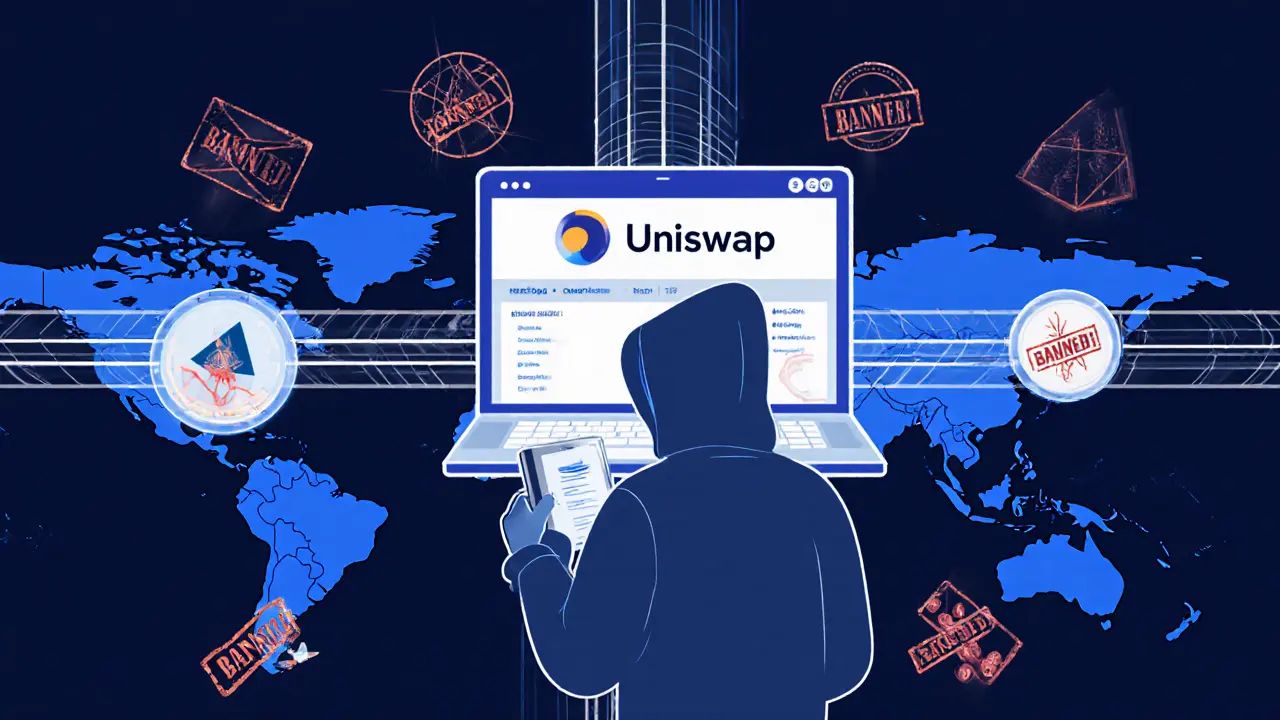
- No-KYC Decentralized Exchanges (DEXs) - Platforms like Uniswap, PancakeSwap, and Bisq don’t ask for ID. You connect your wallet, swap tokens, and go. No paperwork. No waiting. But liquidity is thin. Bisq averages $1.2 million in daily trades. Coinbase? $14.7 billion. You trade slower, but you stay private.
- Virtual Private Networks (VPNs) - If your government blocks Binance or Coinbase, you use a VPN to pretend you’re in the U.S., Germany, or Singapore. NordVPN saw a 342% spike in users from Nigeria and 217% from China between late 2023 and 2024. Tor browser usage jumped 223% in North Korea. It’s not perfect - some exchanges now detect VPN use and freeze accounts - but it’s still the first step for most.
- Gift Card Arbitrage - Buy a $100 Amazon gift card with your naira or taka. Sell it on Paxful for $90 in Bitcoin. You lose 10%, but you bypass banks entirely. Chainalysis tracked $427 million in gift card-based crypto trades from restricted countries in 2024. It’s messy, but it works when nothing else does.
- Hawala Networks Adapted for Crypto - In the Middle East and South Asia, traditional hawala brokers (informal money transfer agents) now help people convert cash to crypto. You give cash to a broker in Dubai. They use a compliant exchange to send Bitcoin to your wallet. Over $30 billion flowed through these channels between mid-2023 and mid-2024.
The Hidden Costs: Risks You Can’t Ignore
It’s not free. It’s not safe. And it’s not easy.- Scams are everywhere. A 2025 study found 67% of users in restricted countries had at least one security incident. One in eight lost serious money to fake P2P traders or phishing sites. No KYC means no recourse. If someone takes your Bitcoin, the police won’t help.
- Account freezes are common. Nigerian users report Bybit accounts locked for using Chipper Cash. Vietnamese traders get banned from Binance P2P for using local bank transfers. Bangladeshi users lost $412,000 in frozen assets in January 2025 alone.
- Internet shutdowns break access. In 2025, 47% of users in restricted countries lost access to exchanges during government-imposed internet blackouts. One user in Sudan told CryptoSlate: “I had $2,000 in crypto locked for 11 days while the country was offline.”
- Technical barriers are high. 78% of new users need help managing their seed phrases. Lose it? Lose everything. Only 37% of no-KYC exchanges offer support in local languages. Response times? Over two days.
What Works Best - And What Doesn’t
Not all methods are equal. Here’s what real users report:| Method | Privacy | Liquidity | Speed | Risk Level |
|---|---|---|---|---|
| P2P (Paxful, Binance) | Medium | High | Minutes to hours | High (scams, freezes) |
| No-KYC DEXs (Uniswap, Bisq) | High | Low | Hours to days | Medium (slippage, smart contract risk) |
| VPNs + Centralized Exchanges | Low (detectable) | Very High | Seconds | High (account bans) |
| Gift Cards | High | Medium | Hours | Medium (price discount, fraud) |
| Hawala + UAE Exchanges | Medium | High | 1-3 days | High (trust-based, no legal protection) |
Most users start with P2P. It’s the most reliable. But as bans tighten, more are shifting to decentralized tools. Uniswap saw an 187% surge in users from restricted countries after OKX banned Algeria and Bangladesh in January 2025.
Real Stories: How People Do It
One Nigerian user, u/NaijaCryptoGuy on Reddit, has been using Bybit through Chipper Cash for 18 months. He sends $3,200 monthly. Only one freeze - in December 2024. He says: “I don’t trust banks anymore. Crypto is my safety net.” A Vietnamese trader, CryptoViet on Tinhte.vn, moved 1.2 billion VND ($49,500) through Binance P2P. He paid a 2.5% premium to middlemen who cashed out his bank transfers. “It’s expensive,” he says, “but better than watching my savings vanish.” In Iran, a 62-year-old teacher uses Monero on a DEX to buy medicine from abroad. “I don’t care if it’s anonymous,” she told Datawallet. “I care that I can get insulin.”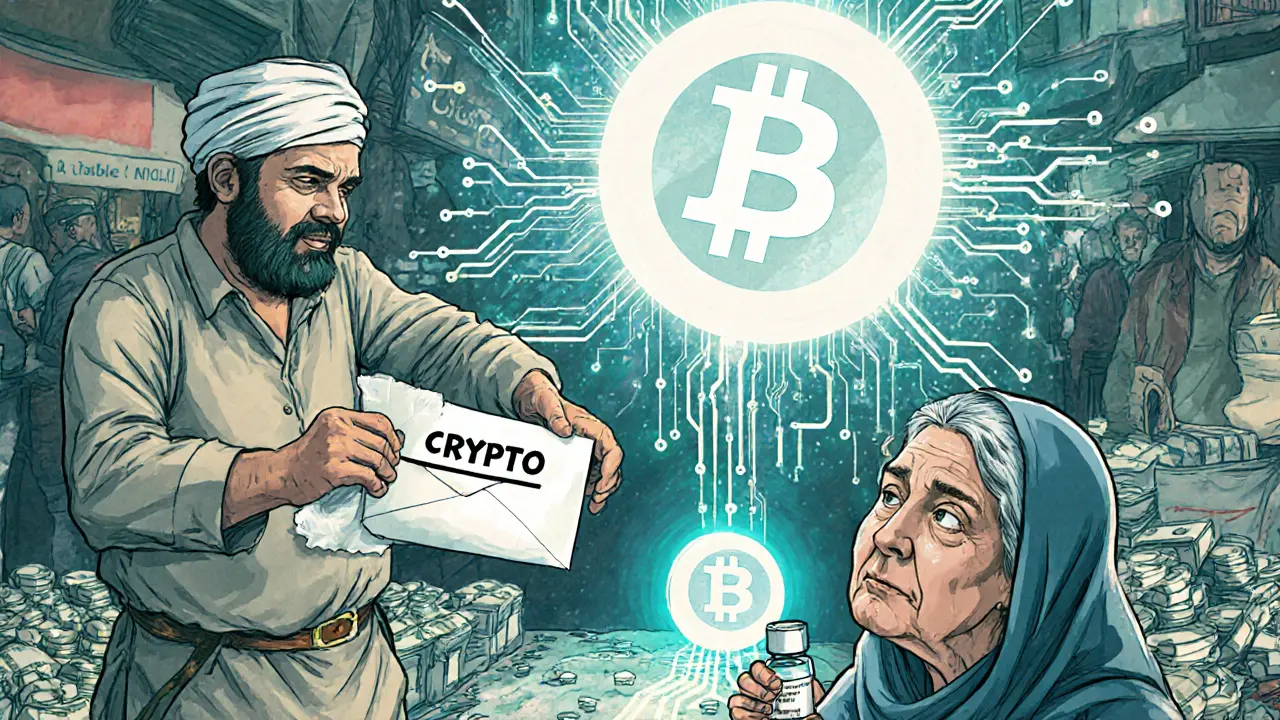
What’s Next? The Arms Race Heats Up
Governments aren’t giving up. The U.S. FinCEN proposed rules in February 2025 that could force exchanges to KYC even small transactions - which would hit users in restricted countries hard, since many rely on U.S.-based infrastructure. Meanwhile, new tools are emerging. Zero-knowledge proofs (ZKPs) are becoming more common. These let you prove you’re eligible to trade without revealing your identity. Gartner predicts a 340% jump in ZKP use in restricted markets by 2026. Privacy coins like Monero and Zcash are growing fast. Adoption rose 317% in China and 289% in Iran since 2023. They’re not perfect - they’re harder to use and less liquid - but for those who need secrecy, they’re worth the effort.Can You Do It Too?
If you’re in a restricted country and want to try:- Get a trusted VPN (NordVPN or ExpressVPN - around $12/month).
- Download a non-custodial wallet like Trust Wallet or Phantom. Write down your 12-word recovery phrase. Keep it offline.
- Start small. Buy $20-$50 in crypto via P2P or a gift card.
- Move it to a DEX like Uniswap to avoid exchange freezes.
- Join local crypto groups on Telegram. There are 147,000 members in “Crypto Without Borders” alone - they share updated workarounds daily.
Don’t expect speed. Don’t expect safety. But expect to have more control than you did yesterday.
Is it legal to use crypto in banking-restricted countries?
It depends. In countries like Nigeria and Vietnam, crypto isn’t legal tender, but owning it isn’t always illegal - using it to bypass banking rules can be. In Bangladesh and Algeria, trading crypto is a criminal offense. Even where it’s not banned, banks and exchanges may freeze accounts. Legal gray areas don’t mean safe.
Can I use crypto to send money to family abroad?
Yes - and that’s one of the most common uses. People in Nigeria, Pakistan, and the Philippines use crypto to send remittances faster and cheaper than Western Union. A $500 transfer via crypto can cost $2-$5 and arrive in minutes. Traditional services charge $20-$40 and take days. But you need someone on the other end with a wallet to receive it.
Which crypto exchange works best in Nigeria or Venezuela?
Binance P2P is the most popular in both countries. It supports local payment methods like bank transfers, mobile money, and gift cards. Paxful is also widely used, especially for Bitcoin. But both have had account freezes. No exchange is 100% safe. Many users rotate between platforms to avoid detection.
Why do some people use gift cards for crypto?
Because gift cards don’t require a bank account. You buy a $100 Amazon card with cash or local currency, then sell it on Paxful for Bitcoin. It’s a workaround for people whose banks block crypto. The catch? You lose 5-15% in value. But for many, that’s better than losing everything to inflation.
Are privacy coins like Monero safer to use?
They offer better privacy because transactions can’t be traced. That’s why adoption jumped 300%+ in Iran and China. But they’re harder to trade, have less liquidity, and aren’t supported by most exchanges. They’re not safer from scams - just harder for governments to track. Use them only if you understand the risks.
What happens if my crypto exchange account gets frozen?
If it’s a centralized exchange like Binance or Bybit, you may lose access for days or weeks - or permanently. No KYC platforms won’t help you recover funds. Your only recourse is community forums, legal advice (if available), or waiting. Never store large amounts on exchanges. Use a personal wallet you control.
Is it worth the risk to use crypto in a restricted country?
For many, yes. When your savings lose 50% of their value in a year, when you can’t pay for medicine or send money home, crypto becomes a necessity - not a luxury. The risks are real: scams, freezes, internet shutdowns. But the alternative - staying trapped in a broken system - is often worse.
Categories
Popular Articles