Crypto Compliance: What It Means, Why It Matters, and How It Affects Your Wallet
When you hear crypto compliance, the set of rules and checks that crypto businesses must follow to prevent money laundering, fraud, and illegal funding. Also known as cryptocurrency regulation, it's not about stopping innovation—it's about keeping bad actors out of the system. Without it, platforms like Binance get blocked in India, exchanges like FTX Turkey collapse for operating without licenses, and stolen crypto from North Korean hackers funds weapons programs with no trace.
Real AML crypto compliance, anti-money laundering rules that require exchanges to verify users and track transaction flows. Also known as Know Your Customer (KYC), it's the backbone of legal crypto trading. Countries like the UAE saw their entire crypto industry transform after clearing the FATF grey list—banks reopened, investors returned, and real adoption took off. Meanwhile, India only lets FIU-IND registered exchanges like CoinDCX operate, because unregistered ones can’t prove they’re not laundering cash. These aren’t arbitrary rules—they’re survival checks.
It’s not just about big exchanges. FATF crypto impact, how global financial watchdogs shape national crypto policies by setting anti-crime standards. When the FATF says a country is risky, banks cut ties. That’s why crypto projects in the UK or UAE must follow strict rules—even if they feel like red tape. And when you trade on a no-KYC exchange or use a bridge with no audits, you’re bypassing those protections. That’s not freedom—it’s gambling with your funds.
You don’t need to be a lawyer to understand this. If an exchange is banned in your country, it’s because it didn’t meet compliance standards. If an airdrop claims to be free but asks for your private key, it’s not a gift—it’s a theft trap. And if you’re paying taxes on crypto gains, you’re already part of compliance. The difference between legal tax avoidance and illegal evasion? One is documented, the other is hidden. The IRS doesn’t guess—you report.
This collection isn’t about politics or fear. It’s about clarity. You’ll find real examples: how North Korea steals billions, why KCAKE airdrops are fake, how UAE’s compliance win changed everything, and why MochiSwap and Libre Swap are dangerous because they skip the basics. You’ll see how blockchain helps insurance claims move faster, but also how cross-chain bridges get hacked because no one checks the code. This is what crypto compliance looks like on the ground—not in press releases, but in lost wallets, collapsed exchanges, and stolen funds.
Licensing Requirements for Crypto Businesses in the U.S. in 2026
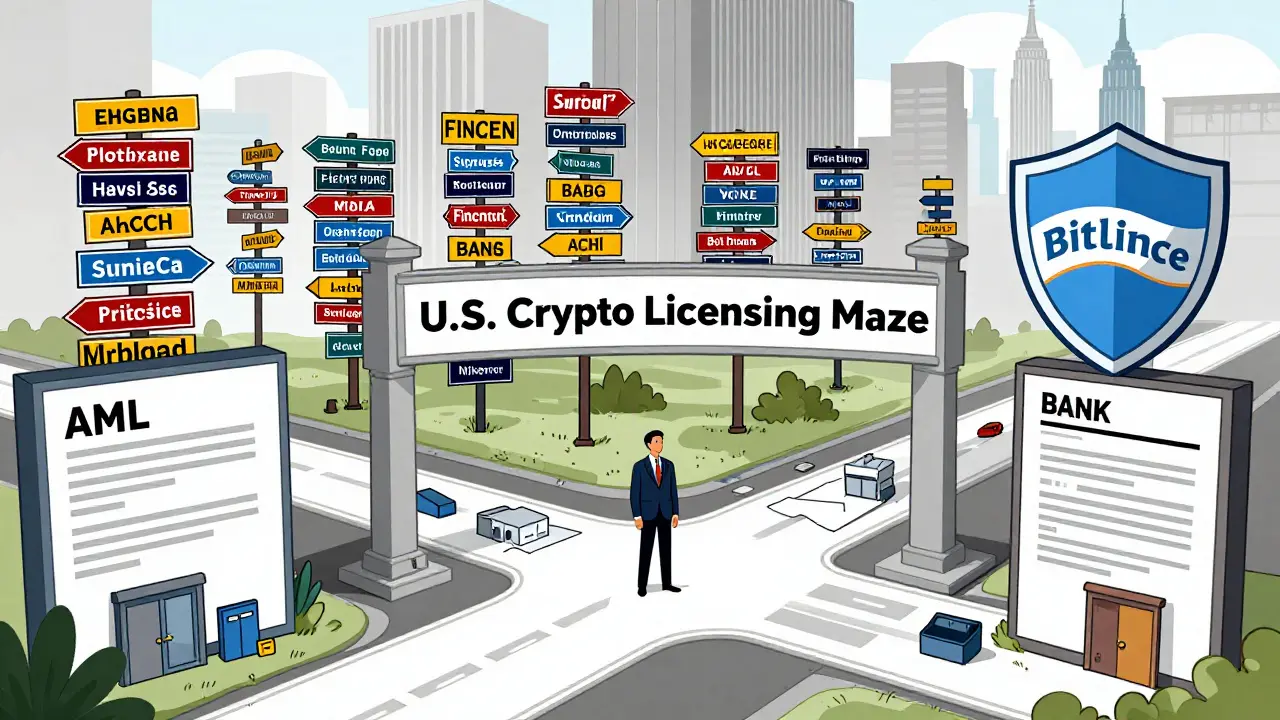

Crypto businesses in the U.S. must navigate federal MSB registration and 47+ state licenses. New York's BitLicense sets the standard, with compliance costs often reaching $2 million. Learn the key requirements, costs, and trends for 2026.
Crypto Business Compliance Checklist for 2025
A practical 2025 crypto business compliance checklist covering licensing, AML/KYC, cybersecurity, MiCA, and regulatory costs. Essential for exchanges, wallets, and stablecoin issuers.
Categories
Popular Articles