
Imagine losing $1.5 billion in a single afternoon. Not from a market crash or a bad trade, but because a team of hackers, backed by one of the world's most isolated regimes, outsmarted your security systems. This isn't a hypothetical scenario; it happened on February 21, 2025, when ByBit, a major cryptocurrency exchange, suffered the largest theft in digital asset history. The culprit? North Korea’s state-sponsored hacking units. While many still view Pyongyang as a relic of the Cold War, its digital footprint tells a different story. It is a sophisticated, well-funded cyber-empire that has turned cryptocurrency theft into a primary funding source for its nuclear ambitions.
The Scale of the 2025 Cyber Heist
If you thought 2024 was bad, 2025 shattered every record. North Korean actors stole over $2.17 billion from cryptocurrency services in just the first part of this year. To put that in perspective, the entire previous year, which saw losses of $1.3 billion, now looks like a warm-up act. The ByBit hack alone accounts for nearly 69% of all funds stolen from crypto platforms this year. This wasn't just a smash-and-grab job; it was a surgical strike that exposed critical vulnerabilities in how we store digital wealth.
The FBI labeled this specific operation "TraderTraitor." What makes it terrifying is not just the amount stolen, but the method. Hackers compromised a "cold" wallet-storage hardware kept offline to prevent online attacks. Breaching cold storage requires immense patience and insider knowledge. It suggests that North Korea didn't just throw code at the problem; they infiltrated the human layer of the organization. This shift from technical exploits to social engineering marks a new era in state-sponsored cybercrime.
How North Korea Evaded the Ban
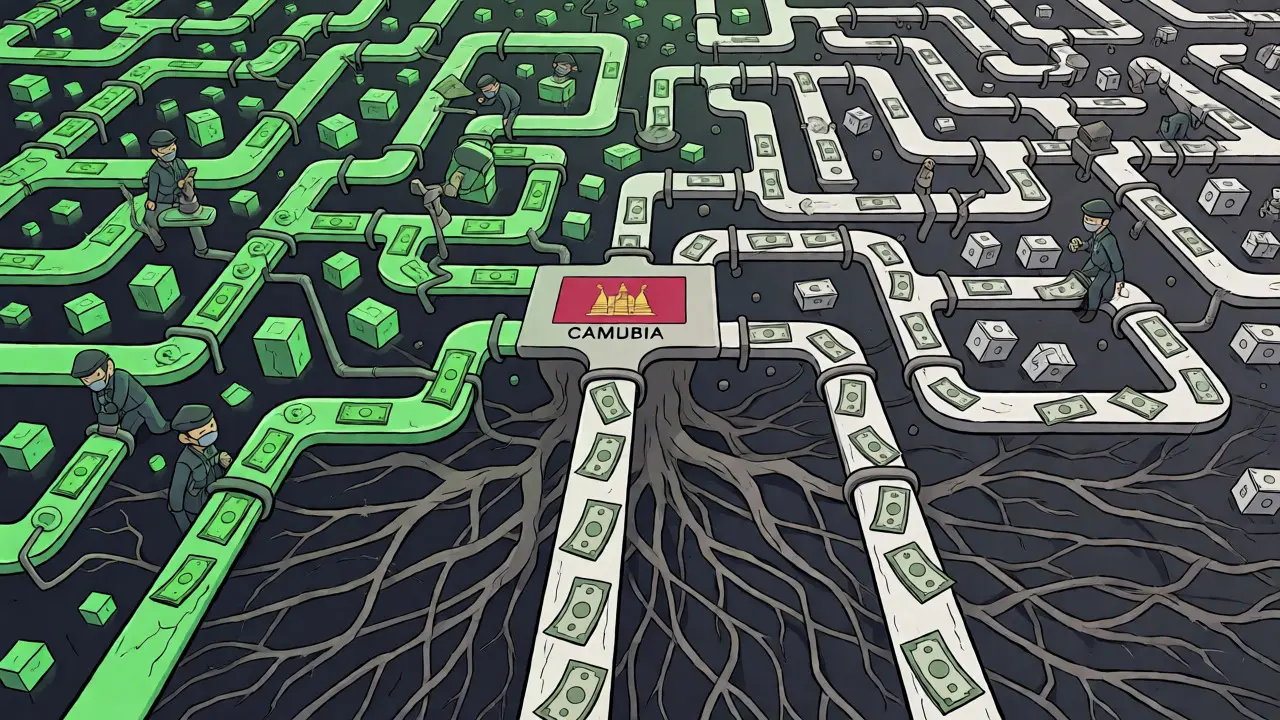
You might ask, if there is a strict international ban on North Korean financial transactions, how does this money actually reach the regime? The answer lies in a complex web of laundering networks spanning multiple continents. North Korea doesn't just steal Bitcoin and buy missiles. They wash the money through third countries with loose regulations, primarily Cambodia.
| Entity | Role | Impact |
|---|---|---|
| Huione Group | Cambodian Money Laundering Hub | Laundered ~$37.6M linked to DPRK (2021-2025) |
| Korea Sobaeksu Trading Company | Front Company for IT Workers | Sanctioned by OFAC for revenue generation |
| TraderTraitor | FBI Designation for DPRK Actors | Executed ByBit hack ($1.5B loss) |
In May 2025, the U.S. Financial Crimes Enforcement Network (FinCEN) designated the Cambodia-based Huione Group as a primary money laundering concern. Between 2021 and 2025, roughly $37.6 million in cryptocurrency linked to North Korea passed through Huione’s ecosystem. Subsidiaries like Huione Guarantee provided the infrastructure for scams, while Huione Crypto issued stablecoins that couldn't be frozen. This allowed North Korea to bypass traditional banking restrictions and convert illicit proceeds into assets that looked legitimate.
The Invisible Workforce: IT Workers Abroad
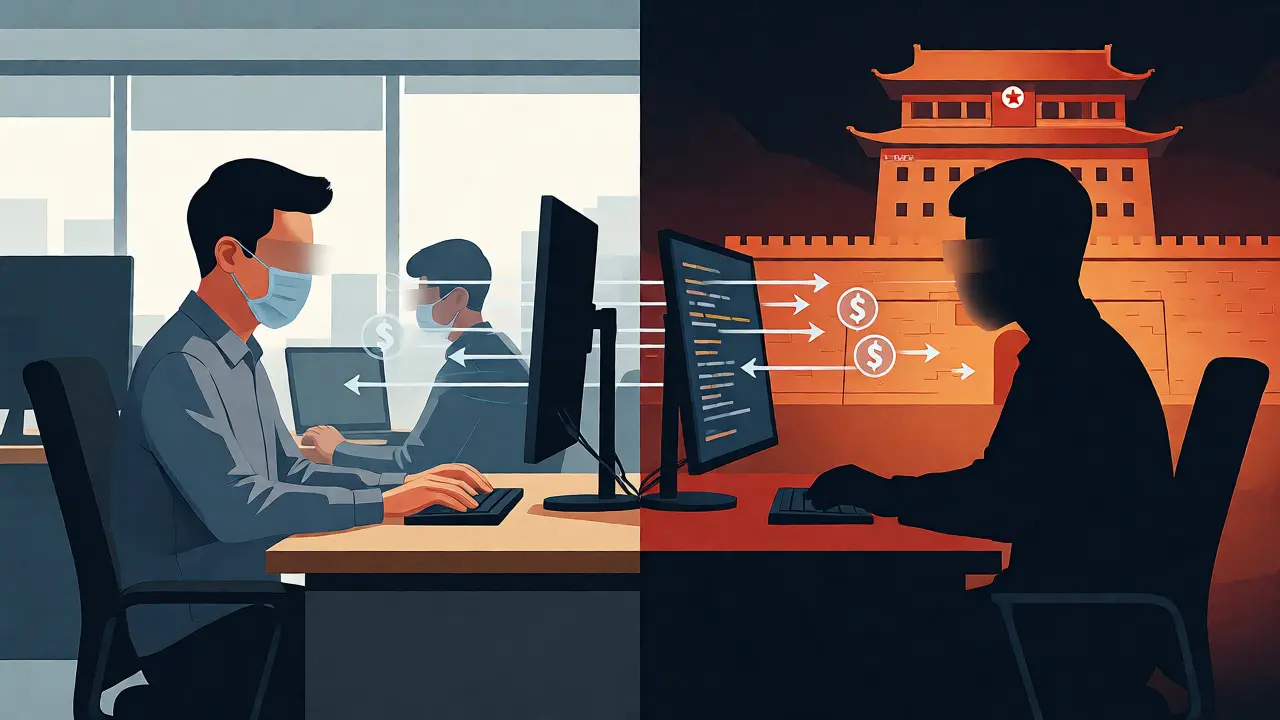
Hacking is only half the battle. The other half is generating steady income. The United Nations estimates that North Korea earns up to $600 million annually by dispatching IT workers abroad. These aren't typical expats. They are highly skilled developers who hide behind virtual private networks (VPNs) and fake identities. They pose as freelancers from China, Russia, or even the United States.
Western tech firms have unknowingly hired thousands of these workers. They create convincing portfolios and remote profiles, working on software projects while sending their salaries back to Pyongyang. Because payments often come in cryptocurrency, tracing the final destination becomes incredibly difficult. This dual strategy-stealing large sums via hacks and earning smaller, consistent sums via labor-creates a resilient financial pipeline that sanctions struggle to choke.
The U.S. Response: Sanctions and Rewards
The U.S. government hasn't been sitting idle. In response to the escalating threat, the Office of Foreign Assets Control (OFAC) sanctioned the Korea Sobaeksu Trading Company and three key individuals: Kim Se Un, Jo Kyong Hun, and Myong Chol Min. These individuals were identified as facilitators who managed cryptocurrency flows and fraudulent IT worker schemes.
Director of OFAC Bradley T. Smith stated that the regime relies on front companies to procure materials for its illegal nuclear programs. But sanctions alone haven't stopped the flow. Senators Elizabeth Warren and Jack Reed pressed Treasury and Justice officials to redouble efforts, specifically questioning why agencies failed to prevent the ByBit breach. The Department of State even offered rewards ranging from $500,000 to $7 million for information leading to the arrest of key DPRK nationals involved in these operations.
Why Traditional Security Failed
So, what went wrong? Why did billions slip through the cracks? Industry experts point to a mismatch between defense spending and attacker capability. Cryptocurrency exchanges often prioritize user experience and speed over rigorous security audits. Meanwhile, North Korean operators treat cybercrime as a national priority, funded by the state and staffed by elite talent.
The sophistication required to breach cold storage suggests that underground financial networks, particularly in China, have enhanced their capacity to absorb illicit funds. When stolen assets are converted to Bitcoin and dispersed across thousands of addresses on multiple blockchains, tracking them becomes a needle-in-a-haystack problem. The FBI has urged RPC node operators, exchanges, and DeFi services to block transactions associated with TraderTraitor addresses, but enforcement remains fragmented.
What This Means for Investors
If you hold cryptocurrency, you need to understand that the risk profile has changed. You are no longer just competing with other traders; you are sharing the ecosystem with state-sponsored actors who have unlimited resources and no legal constraints. The 2025 surge in thefts indicates that attackers are becoming more patient and technically proficient.
- Diversify Storage: Do not keep all assets on a single exchange. Use hardware wallets from reputable manufacturers.
- Audit Security Practices: Look for exchanges that publish regular proof-of-reserves and undergo independent security audits.
- Watch for Anomalies: Be wary of sudden changes in withdrawal policies or unexpected maintenance windows, which can sometimes mask internal breaches.
The partnership between North Korea and local criminal ecosystems in third countries poses a serious threat to international security. As the Trump administration recalibrates global priorities, containing Pyongyang’s digital expansion will likely remain a top agenda item. For now, the cat-and-mouse game continues, with billions of dollars hanging in the balance.
What was the ByBit hack?
The ByBit hack occurred on February 21, 2025, resulting in the theft of approximately $1.5 billion USD in virtual assets. It is considered the largest cryptocurrency theft in history and was attributed to North Korean state-sponsored actors known as TraderTraitor.
How does North Korea launder stolen cryptocurrency?
North Korea uses complex networks in third countries, particularly Cambodia. Entities like the Huione Group provide infrastructure for scams and issue stablecoins that help obscure the origin of funds, allowing the regime to convert illicit crypto into usable fiat currency.
Who are the TraderTraitor actors?
TraderTraitor is the FBI designation for North Korean cybercriminal groups responsible for significant cryptocurrency thefts. They employ advanced social engineering and infiltration tactics to compromise exchanges and steal digital assets.
How much revenue do North Korean IT workers generate?
United Nations reports estimate that North Korean IT workers dispatched abroad generate up to $600 million annually for the regime. These workers often use false identities and work remotely for foreign companies.
What actions has the US taken against North Korean crypto theft?
The US Treasury’s OFAC has sanctioned entities like Korea Sobaeksu Trading Company and individuals involved in laundering. The State Department offers rewards of up to $7 million for information leading to arrests, and the FBI actively disrupts laundering addresses.