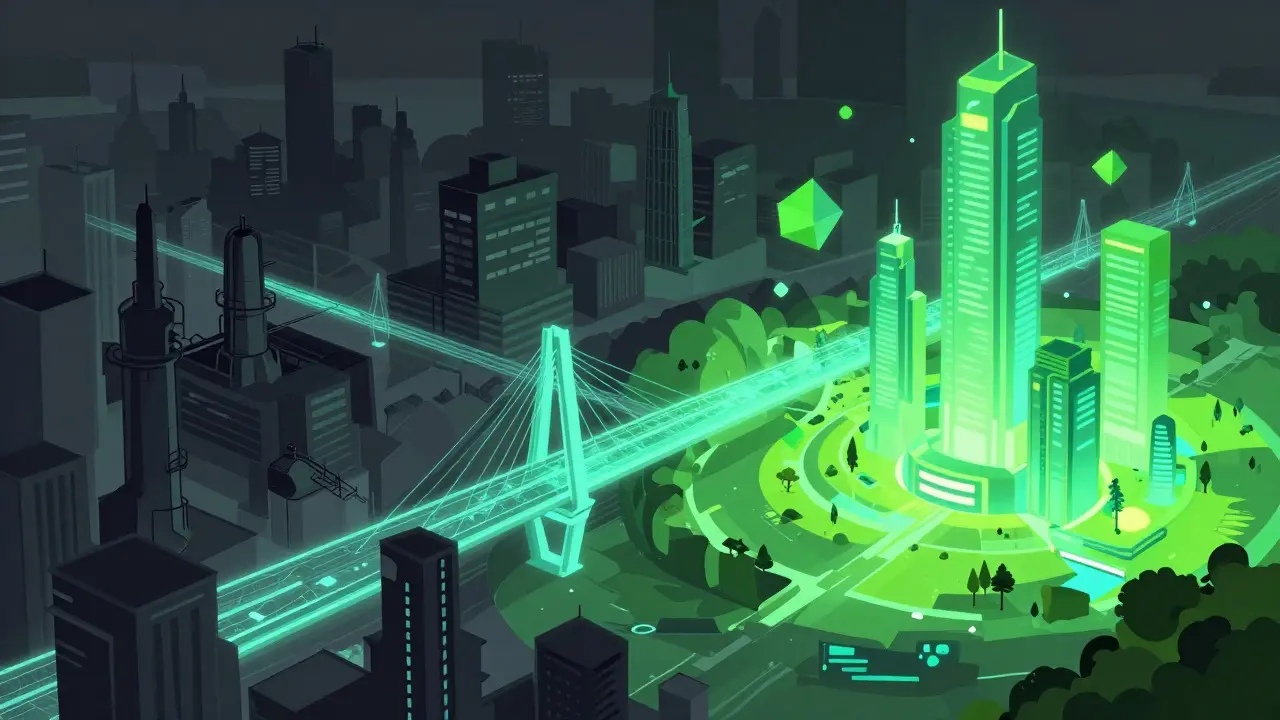

Most people think of crypto as a digital gold mine or a volatile casino, but few realize it has a massive electricity problem. While Bitcoin gets the heat for its energy hunger, Dione Protocol is a blockchain ecosystem launched in 2022 that aims to fix this by bridging the gap between decentralized finance (DeFi) and real-world sustainability. It isn't just another token; it is a full-scale attempt to make the internet of value actually green. If you have ever wondered if a blockchain can truly be eco-friendly without sacrificing security, this project is where that experiment is happening.
Key Takeaways
- DIONE is migrating from an Ethereum-based token to its own Layer 1 blockchain called Odyssey.
- The ecosystem uses AI and DePIN to validate that renewable energy is actually powering its nodes.
- It features a peer-to-peer energy trading platform called Nebra.
- The project focuses on "prosumers"-people who both produce and consume green energy.
The Shift from Ethereum to Odyssey
When Dione Protocol first hit the scene, it started as an ERC20 token. For those not in the loop, that means it lived on the Ethereum network, borrowing its security and infrastructure. While that's a great way to launch, it limits how much a project can actually control its own environmental footprint. That is why the project is moving to Odyssey, a dedicated Layer 1 blockchain designed to be powered entirely by renewable energy.
Why does this move matter? By owning the base layer, Dione can ensure that every transaction and every validator node aligns with its sustainability goals. It transforms DIONE from a simple token into a native coin. This means it will handle the "gas fees" and network security for everything built on Odyssey, making the whole system faster and more efficient than when it relied on a third-party chain.
Core Products: More Than Just a Coin
Dione Protocol isn't just a price chart on an exchange; it's a suite of tools designed to democratize energy. To understand the value, you have to look at the specific products they've built.
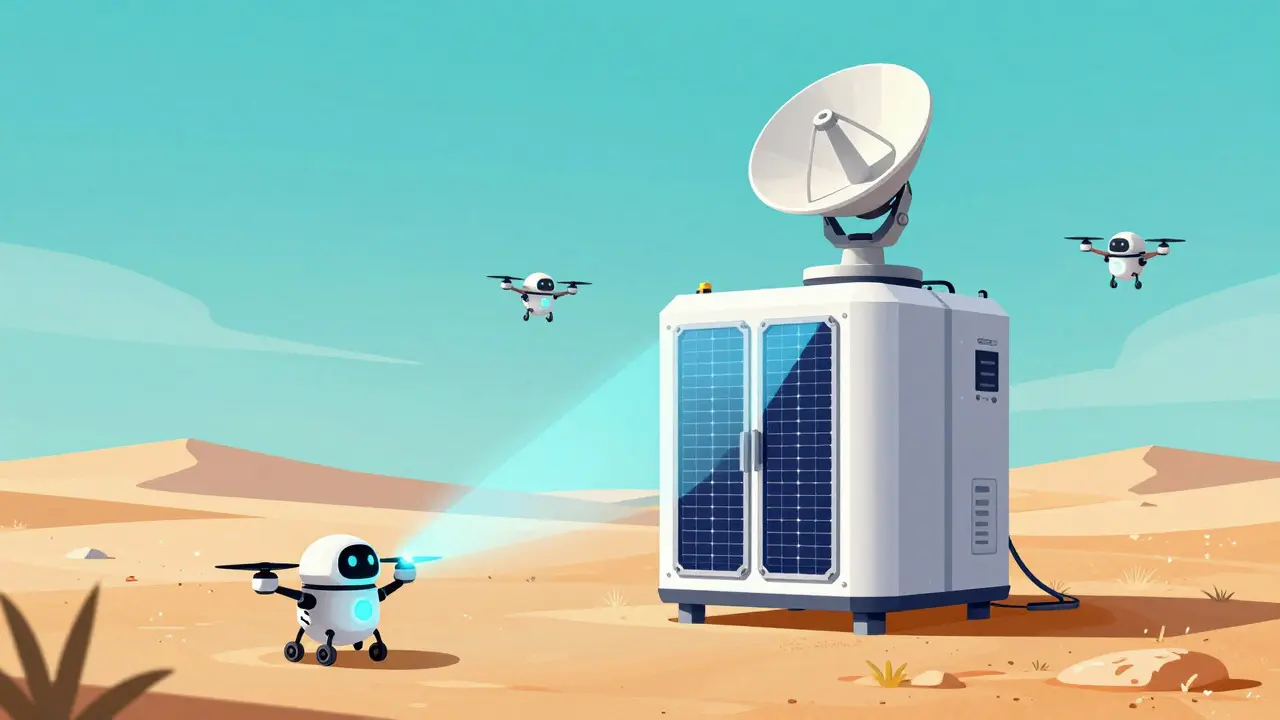
First, there is Orion. This is a Decentralized Physical Infrastructure Network, or DePIN. Instead of just promising to be green, Orion uses Artificial Intelligence to detect and validate that renewable energy sources are actually being used. They've even deployed off-grid validators that run on solar power and use Starlink for connectivity. Imagine a server in the middle of a desert, powered by the sun, securing a global financial network-that is the vision.
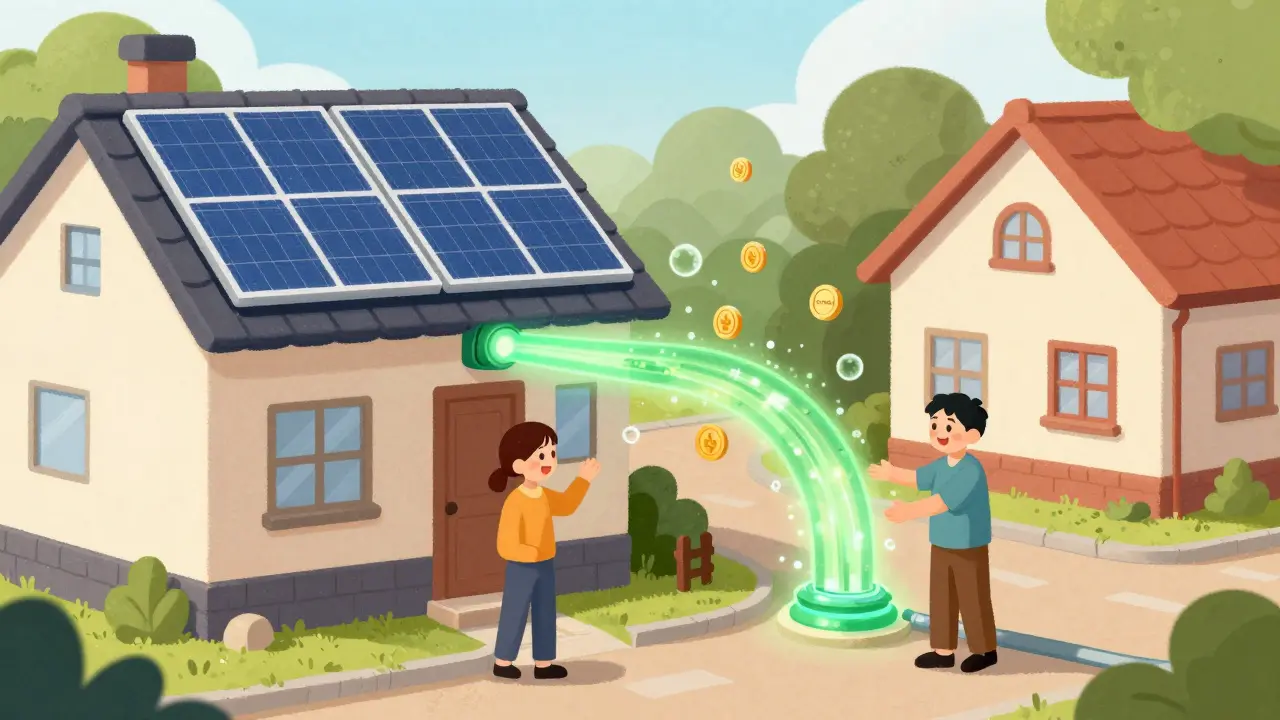
Then there is Nebra. This is essentially an "eBay for energy." Nebra allows individuals to trade renewable energy peer-to-peer. If you have solar panels and produce more power than you need, you can sell that excess directly to your neighbor. This turns regular people into "prosumers," creating a circular economy where green energy is the primary currency.
Finally, the Dione Wallet acts as the entry point. It is designed to be simple enough for someone who has never touched crypto before, while still providing the security tools that pros expect.
| Product | Core Function | Key Attribute |
|---|---|---|
| Orion | Green Energy Validation | AI-driven DePIN with Starlink nodes |
| Nebra | Energy Trading | P2P marketplace for prosumers |
| Odyssey | Network Layer | Renewable-powered Layer 1 Blockchain |
| Dione Wallet | Asset Management | User-friendly interface for all levels |
Security and the Consensus Mechanism
You can't have a sustainable blockchain if it's easy to hack. Dione avoids the energy-heavy "mining" process found in Bitcoin. Instead, it uses Proof of Stake (PoS), a consensus mechanism where validators are chosen based on the number of coins they hold and are willing to "stake" or lock up.
PoS is the secret sauce for sustainability because it doesn't require massive warehouses of computers running 24/7 just to solve a math puzzle. It's significantly more energy-efficient. To keep the bad actors out, the protocol uses economic disincentives; if a validator tries to cheat the system, they risk losing their staked DIONE. To add another layer of protection, the platform uses multi-factor authentication (MFA) and advanced encryption, ensuring that your private keys don't end up in the wrong hands.
Market Reality: Price and Volatility
If you are looking at DIONE from an investment perspective, you'll notice that the numbers vary wildly depending on where you look. As of April 17, 2026, the market is showing typical early-stage volatility. On Binance, the price hovers around $0.000615, while other platforms like CoinMarketCap show it lower, near $0.00009337. This discrepancy usually happens when a project is in a transition phase-like the migration to Odyssey-and liquidity is split across different exchanges.
The circulating supply is roughly between 10 billion and 11.6 billion tokens, leading to a market cap that ranges from roughly $7 million to $18 million. It is a small fish in a big pond. While some exchanges show short-term dips of nearly 30%, others show slight gains. This is the nature of the beast with emerging green-tech coins; the value is tied more to the successful rollout of the technology (the Odyssey mainnet) than to daily hype.
Why Does Dione Matter for the Future?
Most blockchains are just software. Dione is trying to build a bridge between software and hardware. By integrating solar panels, satellite internet, and AI validation, they are creating a physical footprint for their digital assets. This is a move toward "Real World Assets" (RWA), where the value of a coin is backed by something tangible-in this case, actual renewable energy production.
For the average person, this means crypto stops being just a gambling tool and starts being a way to participate in the green energy transition. Whether you are a developer building on Odyssey or a homeowner selling solar power via Nebra, the goal is to make the blockchain a tool for planetary health rather than a burden on it.
Is DIONE a safe investment?
No cryptocurrency is "safe," especially emerging projects. DIONE is in a high-growth, high-risk phase as it migrates to its own Layer 1 blockchain. While the technology is promising, the price volatility and low market cap mean it carries significant risk. Always do your own research and only invest what you can afford to lose.
What is the difference between DIONE and other green coins?
Many "green" coins simply offset their carbon footprint by buying credits. Dione Protocol is different because it builds the infrastructure. Through Orion and Odyssey, they are actively creating a network that is physically powered by renewable energy and validated by AI, rather than just paying for offsets after the damage is done.
How does the Nebra platform work?
Nebra is a P2P energy trading platform. It allows people with renewable energy sources (like solar panels) to sell their excess electricity directly to others. This removes the middleman (traditional power companies) and uses the Dione ecosystem to handle the payments and tracking of energy units.
What happens during the Odyssey migration?
The project is moving from being an ERC20 token on Ethereum to being the native coin of its own Layer 1 blockchain, Odyssey. This transition allows for better scalability, lower fees, and total control over the energy sources powering the network's validators.
What are off-grid validators?
Off-grid validators are hardware nodes that do not rely on a traditional power grid. Dione uses solar power to run these nodes and Starlink satellites for internet connectivity, ensuring the blockchain stays decentralized and green even in remote locations.
Next Steps and Troubleshooting
If you are new to the ecosystem and want to get started, your first step should be the Dione Wallet. It's the simplest way to manage your assets without getting lost in complex seed phrases. If you find that your DIONE balance looks different across different exchanges, don't panic-this is often a result of the migration process to Odyssey and varying tracking methods used by platforms like Coinbase and Binance.
For those looking to contribute, keep an eye on the Odyssey mainnet launch. Moving from a token to a native coin usually involves a "swap" or "bridge" process. If you hold DIONE on an exchange, the exchange usually handles this for you. However, if you hold them in a private wallet, you'll need to follow the official migration guides to ensure your tokens are moved to the new Layer 1 chain.
Comments (4)

- John and Lauren Busch
- April 18, 2026 AT 18:36 PM
Sure, sounds like a total dream lol.

- Michelle Stanish
- April 19, 2026 AT 01:55 AM
I dont think this works. Solar panels are too slow for big servers. Not convinced.

- Jeff Barlett
- April 20, 2026 AT 14:14 PM
Wait, so we're just ignoring the fact that the price is basically a penny stock at this point? This whole 'transition' to Layer 1 is the oldest trick in the book to keep people from selling. First they promise a bridge, then a mainnet, and then suddenly the project vanishes into thin air. It's practically a ritual at this point. I love how we're calling it a 'circular economy' when it's really just a circle of people losing money. Absolute chaos and I'm here for the drama of it all. Who even uses Starlink for a validator? That's just asking for latency issues. Total nightmare scenario disguised as a green utopia.

- Adedamola Oyebo
- April 22, 2026 AT 02:58 AM
The DePIN approach is actually quite smart!!! Using AI for validation solves the transparency issue!! It's a bold move for the energy sector!!!