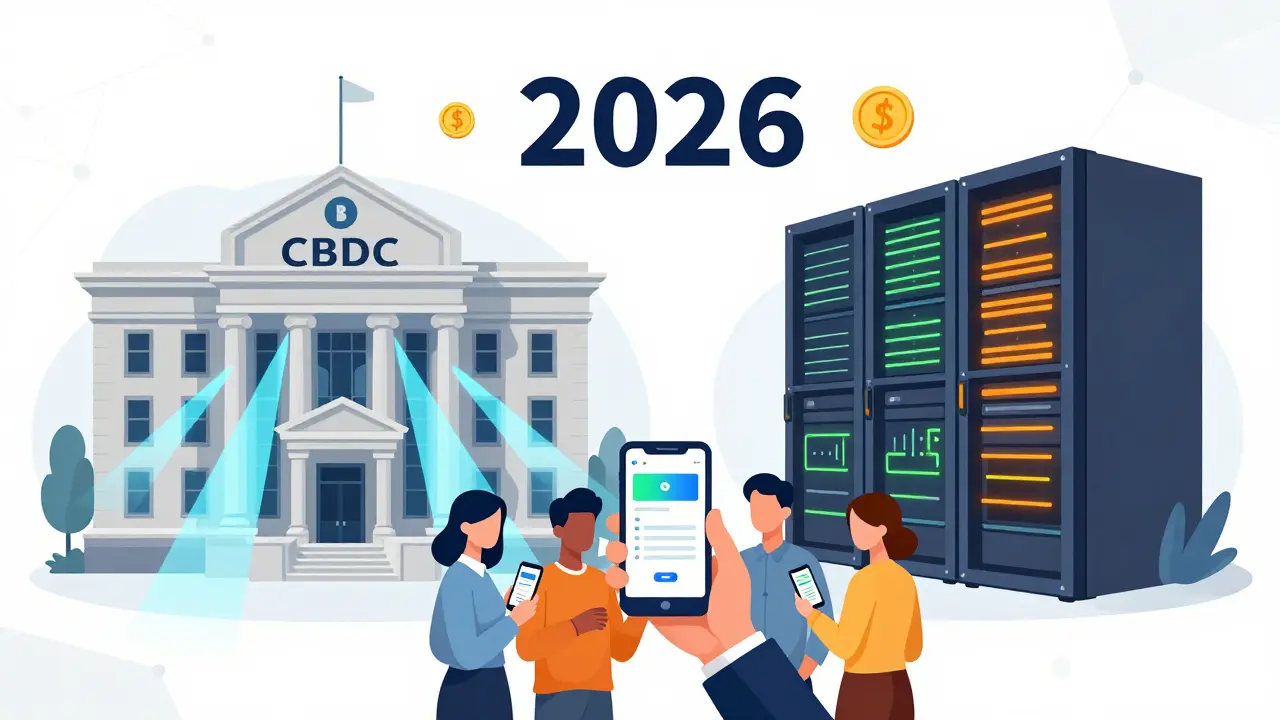

Money is changing. If you look closely at your wallet or banking app today, you might notice something different. You aren't just holding paper notes or seeing simple bank balances anymore. You are likely interacting with a hybrid system where traditional government-issued money lives side-by-side with digital assets. This isn't science fiction; it is the economic reality of 2026. The era of choosing between cash and crypto is over. We are now living in an age of coexistence.
This shift didn't happen overnight. It started after the 2008 financial crisis sparked the creation of Bitcoin, but it truly accelerated when central banks realized they couldn't ignore digital innovation. Today, nearly every major economy is figuring out how to let their national currency share the stage with private digital tokens. For businesses and consumers, this means faster payments, lower fees, and new ways to manage wealth. But it also brings confusion. How do these two worlds actually work together? What does it mean for your daily transactions? Let's break down how fiat and digital currencies are merging into a single, seamless ecosystem.
The Two Pillars: CBDCs vs. Stablecoins
To understand this coexistence, we first need to separate the players. There are two main types of digital currencies competing and collaborating with traditional fiat money: Central Bank Digital Currencies (CBDCs) and private stablecoins. They serve different purposes and operate on different rules.
Central Bank Digital Currencies (CBDCs) are digital versions of a country's official currency. They are issued directly by the nation's central bank, making them legal tender just like the dollar or euro in your pocket. However, instead of physical bills, they exist as entries on a secure digital ledger. As of 2025, 90% of the world's central banks are actively developing or piloting CBDCs, according to the Bank for International Settlements (BIS). Countries like Jamaica, the Bahamas, Nigeria, and Zimbabwe have already launched retail CBDCs for public use. China’s digital yuan is perhaps the most advanced example, currently testing across 26 regions with hundreds of millions of users involved in processing billions in transactions.
On the other side, you have Stablecoins. These are private digital assets designed to keep a steady value by being pegged to real-world assets, usually the US Dollar. Popular examples include USDC and USDT. Unlike CBDCs, which run on permissioned ledgers controlled by governments, stablecoins typically operate on public blockchains like Ethereum or Solana. Their key feature is speed and accessibility. While a CBDC might be restricted to citizens of a specific country, a stablecoin can be sent anywhere in the world instantly, provided you have internet access.
| Feature | CBDCs (e.g., e-Naira, Digital Yuan) | Stablecoins (e.g., USDC, USDT) |
|---|---|---|
| Issuer | National Central Banks | Private Companies (e.g., Circle, Tether) |
| Legal Status | Legal Tender | Private Asset / Not Legal Tender |
| Technology | Permissioned Ledgers (Hybrid DLT) | Public Blockchains (Ethereum, Solana) |
| Primary Use Case | Domestic Retail Payments, Monetary Policy | Cross-Border Transfers, Remittances, Trade |
| Privacy Level | Low (High Regulatory Visibility) | Medium (Pseudonymous but Traceable) |
Why They Need Each Other: The Efficiency Boost
You might wonder why we need both. Why not just stick to one? The answer lies in efficiency and sovereignty. Traditional fiat systems, especially for cross-border payments, are slow and expensive. Sending money from New York to Tokyo via the SWIFT network can take three to five business days and cost several percent in fees. That is frustrating for everyone involved.
Digital currencies solve this bottleneck. According to McKinsey’s April 2025 analysis, stablecoin transactions process 100 to 1,000 times faster than traditional cross-border payments while costing 90% less. In practice, this means a USDC transfer settles in under 30 seconds for about $0.05. Compare that to the old way, and the difference is night and day.
However, digital currencies alone don't replace the need for trust in national economies. Governments need tools to control inflation, manage interest rates, and ensure financial stability. This is where CBDCs come in. They allow central banks to maintain monetary sovereignty in a digital world. By combining the speed of blockchain technology with the backing of state authority, the coexistence model offers the best of both worlds: the reliability of fiat and the agility of digital assets.
Real-World Examples of Integration
This isn't just theory. We are seeing practical integration happen right now. One of the clearest examples is in remittances. MoneyGram, a global payment giant, began using USDC for remittances in 2022. By Q2 2025, they reported reducing average transfer times from three days to under 10 minutes. More importantly, they cut costs from 6.3% to just 1.8% of the transfer value. This helps millions of people sending money home to keep more of their hard-earned cash.
In Africa, Nigeria’s e-Naira has reached 11.3 million active users, representing about 17% of the adult population. The recent upgrade in April 2025 added offline functionality and merchant loyalty programs, boosting monthly active users by 37%. This shows how CBDCs can drive financial inclusion in regions where traditional banking infrastructure is weak.
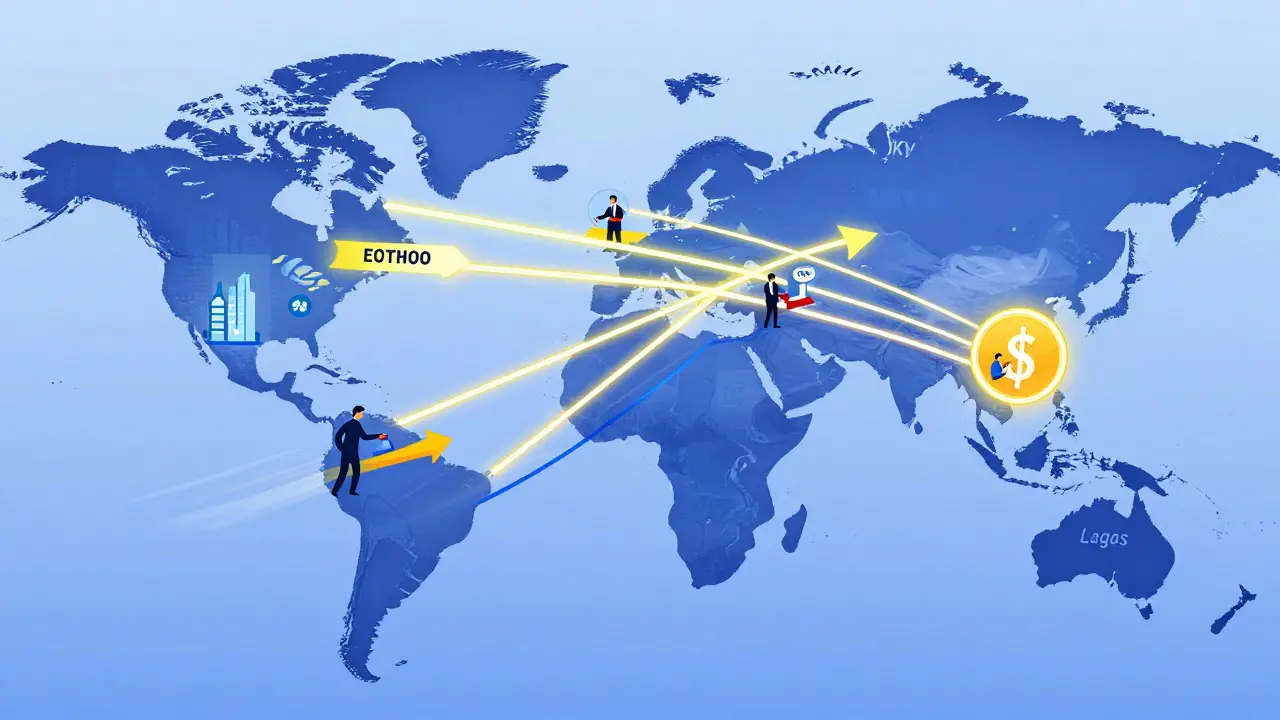
For larger scale operations, the mBridge project is a game-changer. Connecting China, the UAE, Thailand, and Hong Kong, this multi-CBDC platform has processed $22 billion in cross-border transactions since its launch in 2023. It proves that central banks can work together on shared digital infrastructure to streamline international trade without relying entirely on private intermediaries.
Challenges and Risks in the Hybrid System
Despite the benefits, the path forward isn't smooth. Interoperability remains a huge hurdle. Right now, only 37% of CBDC pilots include cross-border functionality. Your digital euro might not easily talk to someone else's digital yuan. This fragmentation forces users to rely on bridges-often private stablecoins-to move value between systems, which introduces complexity and potential points of failure.
Regulation is another minefield. The European Union has implemented the MiCA framework, requiring strict 1:1 reserves and daily attestations for stablecoins. The United States, however, still lacks comprehensive federal regulation, creating a patchwork of rules that global companies struggle to navigate. This regulatory uncertainty can stifle innovation and increase compliance costs.
There are also significant risks to the traditional banking system. Experts warn that if stablecoins grow too large, they could trigger bank runs during times of stress. The Bank of England’s May 2025 report modeled scenarios where rapid shifts to stablecoins could lead to deposit outflows of 15-25% in a severe crisis. To mitigate this, the Basel Committee is implementing stricter reserve requirements for stablecoins in July 2025, mandating 100% high-quality liquid assets. This aims to stabilize the market but may also reduce the profit margins for issuers.
What the Future Holds: A Three-Layer System
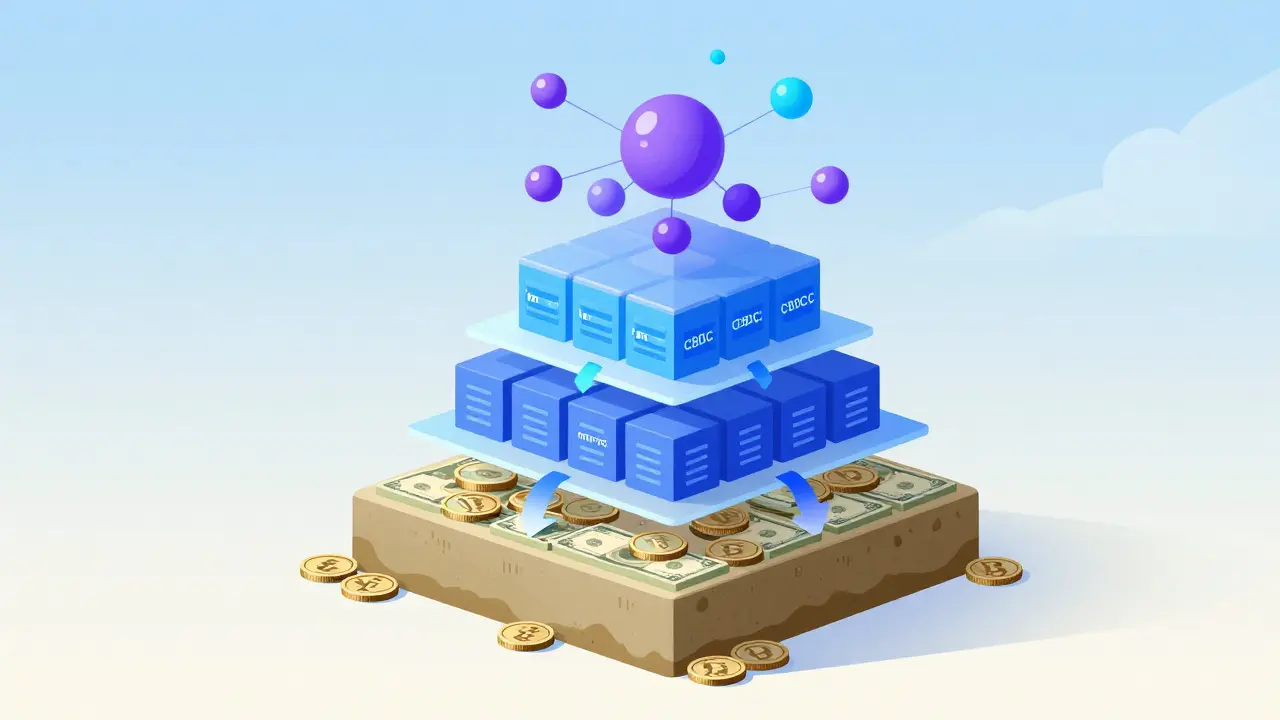
Looking ahead to 2027 and beyond, experts predict a structured coexistence rather than a total replacement. The IMF projects a transition period lasting through 2030, resulting in a three-layer monetary system:
- Layer 1: CBDCs will handle sovereign monetary policy implementation and domestic retail payments. They will be the bedrock of national economies, ensuring trust and stability.
- Layer 2: Regulated Stablecoins will dominate cross-border commerce and enterprise-to-enterprise transactions. Their speed and borderless nature make them ideal for global trade.
- Layer 3: Traditional Fiat will persist for legacy systems, cash-only environments, and specific demographic groups who prefer physical money.
This layered approach allows each type of currency to play to its strengths. CBDCs provide safety and policy control. Stablecoins offer speed and global reach. Traditional fiat ensures inclusivity for those not ready to go fully digital. The goal is not for one to defeat the other, but for them to integrate into a unified ledger concept where tokenized reserves, commercial bank money, and financial assets operate seamlessly together.
Practical Tips for Navigating the Change
As a consumer or business owner, how do you prepare for this shift? Here are some actionable steps:
- Understand Your Local CBDC Status: Check if your country has launched or is piloting a CBDC. If so, familiarize yourself with the wallet apps and security features. Early adoption often comes with incentives like lower transaction fees.
- Evaluate Stablecoin Providers: If you deal with international clients, look into regulated stablecoin options like USDC. Ensure the issuer provides regular transparency reports on their reserves. Avoid obscure tokens with no clear backing.
- Secure Your Digital Assets: Whether it's a CBDC wallet or a crypto exchange account, security is paramount. Use hardware wallets for long-term storage and enable two-factor authentication on all accounts. Never share your private keys.
- Monitor Regulatory Updates: Laws around digital currency change rapidly. Stay informed about regulations in your jurisdiction, especially regarding taxes and reporting requirements for digital asset transactions.
- Diversify Payment Methods: Don't put all your eggs in one basket. Maintain access to traditional bank accounts, digital wallets, and potentially stablecoin holdings to ensure liquidity regardless of which system is most efficient at any given time.
Frequently Asked Questions
Will CBDCs replace physical cash?
Not immediately. Most central banks view CBDCs as a complement to cash, not a replacement. Physical cash will likely remain in circulation for years, serving populations without digital access and providing a backup during technical failures. However, the usage of physical cash is expected to decline gradually as digital convenience grows.
Are stablecoins safe to use?
Major stablecoins like USDC and USDT are backed by reserves of cash and short-term government bonds, making them relatively stable compared to volatile cryptocurrencies like Bitcoin. However, they carry counterparty risk-if the issuing company fails or mismanages reserves, the value could drop. Always choose regulated providers and diversify your holdings.
How do CBDCs protect user privacy?
Privacy protection varies by country. Some CBDC designs offer tiered privacy, where small transactions remain anonymous but larger ones require identification to prevent money laundering. Others, like China's digital yuan, have higher levels of traceability for regulatory oversight. Users should review the specific privacy policies of their country's CBDC before adopting it widely.
Can I use stablecoins for everyday purchases?
Yes, increasingly so. Many online merchants and some physical retailers accept stablecoins via payment processors that convert them to fiat instantly. Apps like PayPal and Venmo also support cryptocurrency transactions. However, widespread acceptance in local brick-and-mortar stores is still growing and depends heavily on regional infrastructure.
What happens if a stablecoin loses its peg?
If a stablecoin loses its peg to the underlying asset (e.g., dropping below $1.00), it can lead to panic selling and potential losses for holders. This happened with TerraUSD (UST) in 2022. To mitigate this risk, regulators are enforcing stricter reserve requirements. Investors should monitor the health of the stablecoin's reserves and avoid lending too much faith to algorithmic stablecoins without substantial collateral.
Comments (9)

- Karthikeyan S
- June 7, 2026 AT 19:27 PM
honestly this whole thing feels like a trap for the little guy 🙄 they say coexistence but really its just more ways for them to watch you spend every penny. i dont trust these cbdc things at all. it reminds me of that movie where everyone gets chipped. why do we need digital money when cash works fine? its so sus.

- Dinesh Pattigilli
- June 8, 2026 AT 10:51 AM
You clearly lack the intellectual capacity to grasp the nuances of monetary sovereignty, my friend. The integration of CBDCs is not merely a 'trap' as your simplistic mind perceives it, but a necessary evolution for global economic efficiency. While stablecoins offer speed, they lack the sovereign backing that ensures stability during crises. It is amusing how the masses cling to physical paper while ignoring the inevitable technological superiority of ledger-based systems. Read up on BIS reports before commenting further.

- Madhu Menon
- June 9, 2026 AT 21:48 PM
The nature of value is shifting from tangible to abstract, much like our perception of reality itself. We are moving into an era where trust is no longer placed in gold or paper, but in code and consensus. This duality of CBDCs and stablecoins reflects the human condition: the desire for order versus the craving for freedom. Perhaps true financial liberation lies not in choosing one, but in understanding the illusion of control both represent. 🤔

- Narendra Kulkarni
- June 11, 2026 AT 12:39 PM
I think its a good point about privacy though. I was worried about my data but seeing how nigerias e-naira works with offline features makes me feel better. Its nice to have options. I just hope the fees stay low for regular people like us who send money home. Thanks for sharing this info!

- verna kennedy
- June 13, 2026 AT 10:02 AM
Let’s be clear here. If you are still using cash for large transactions in 2026, you are actively harming your own financial health. The regulatory frameworks like MiCA exist to protect consumers from the chaos of unregulated tokens. Ignoring the shift to digital assets is not 'freedom'; it is negligence. Adapt or become obsolete. The data supports the efficiency of stablecoins for cross-border transfers unequivocally.

- Kelly Tenney
- June 14, 2026 AT 07:50 AM
It is wonderful to see such detailed analysis! I always encourage people to look into USDC for their international needs because the transparency reports give me peace of mind. Remember, taking small steps to secure your digital assets can make a huge difference in your long-term financial wellness. You got this! 💪

- Caralee Robertson
- June 15, 2026 AT 20:32 PM
i mean i get it but the tech part is kinda scary for me lol. what if i lose my private key? my husband says i should just stick to paypal but he never listens to my concerns. does anyone have tips for beginners who arent tech savy?

- Greg Lewis
- June 17, 2026 AT 06:08 AM
you worry too much caralee. the system is designed to fail you anyway so why bother trying to fit in. maybe you should just burn your bank cards and live off the grid like a real person. society is a construct built on debt and fear. wake up sheeple. the matrix wants you to use their digital leash.

- JEVON HALL
- June 18, 2026 AT 12:05 PM
hey guys just wanted to add that hardware wallets are super important if you hold any crypto long term. i use a ledger and it saves me so much stress. also check out the mbridge project stats in the article its crazy how fast those settlements are now. keep learning yall 🚀💰