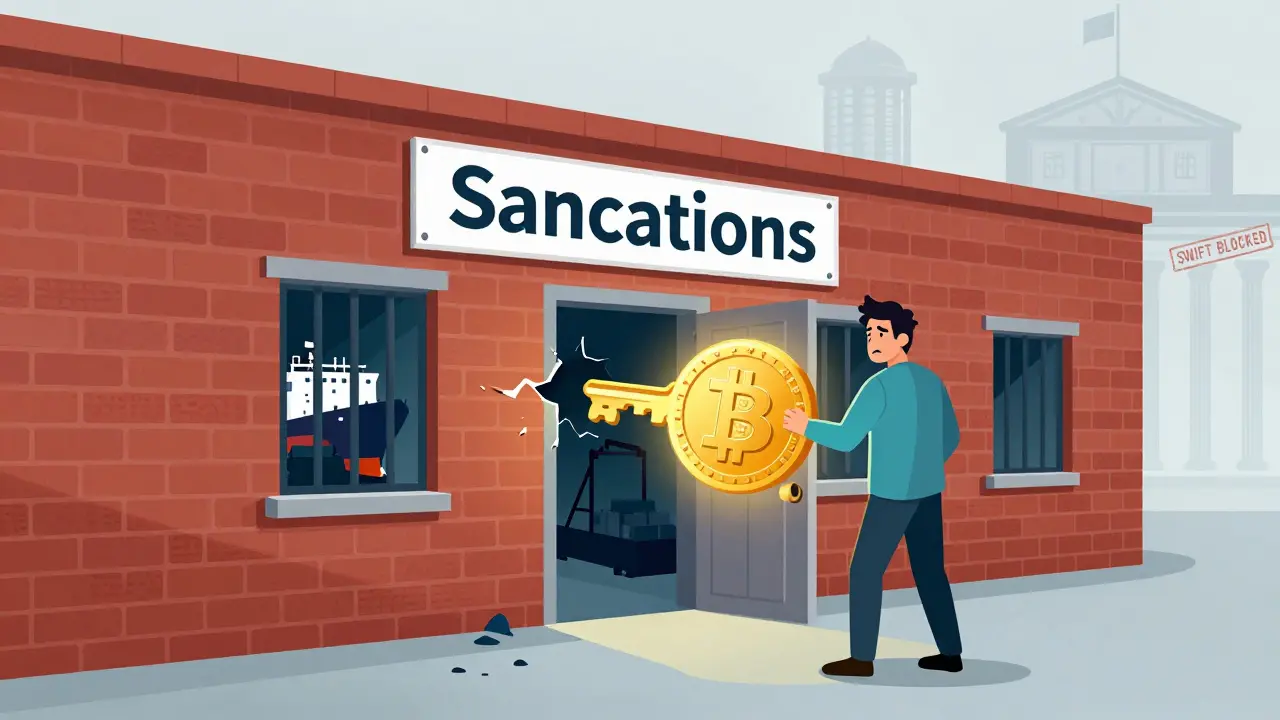

Imagine trying to buy essential machinery from abroad while every major bank in the world refuses to touch your money. For Iranian importers, this isn't a hypothetical nightmare-it's daily reality. Traditional banking channels are blocked by sweeping international sanctions, leaving businesses stranded without access to dollars or euros. But there is a workaround that has quietly reshaped Iran’s economy: cryptocurrency.
In recent years, Bitcoin is a decentralized digital currency that enables peer-to-peer transactions without intermediaries has become more than just an investment asset for Tehran. It is a lifeline. By leveraging crypto, Iran has found a way to settle international debts, import goods, and keep its supply chains moving despite being cut off from the SWIFT global payment system. This shift represents one of the most significant real-world tests of whether digital assets can truly operate outside the reach of Western financial power.
The Dual Regulatory Framework: Mining Yes, Spending No
To understand how this works, you first need to grasp Iran’s unique-and somewhat contradictory-approach to cryptocurrency. The government does not treat all crypto activity the same. Instead, it enforces a strict dual framework overseen by the Central Bank of Iran (CBI) is the nation's central banking authority responsible for monetary policy and financial regulation, the Ministry of Energy, and the Iran Cyber Police (FATA).
Here is the catch: using cryptocurrency for domestic payments within Iran is illegal. You cannot walk into a local shop and pay for groceries with Bitcoin. However, mining Bitcoin is not only legal; it is heavily encouraged and regulated as an industrial activity. The logic is simple. The state wants to generate foreign currency reserves but does not want to lose control over the national rial or allow capital flight through unregulated exchanges.
This distinction creates a specific pipeline for imports:
- Licensed miners produce Bitcoin using subsidized electricity.
- These miners sell their coins exclusively to authorized entities.
- The proceeds are then used by the CBI to settle international trade obligations.
This centralized control ensures that the government captures the value generated by mining before it leaves the country. As of early 2025, the CBI even ordered the closure of rial payment gateways for crypto exchanges, forcing them to obtain strict licenses to operate. This move tightened the noose around informal trading, ensuring that almost all significant crypto flows pass through state-approved channels.
The Role of the IRGC and State-Backed Mining Farms
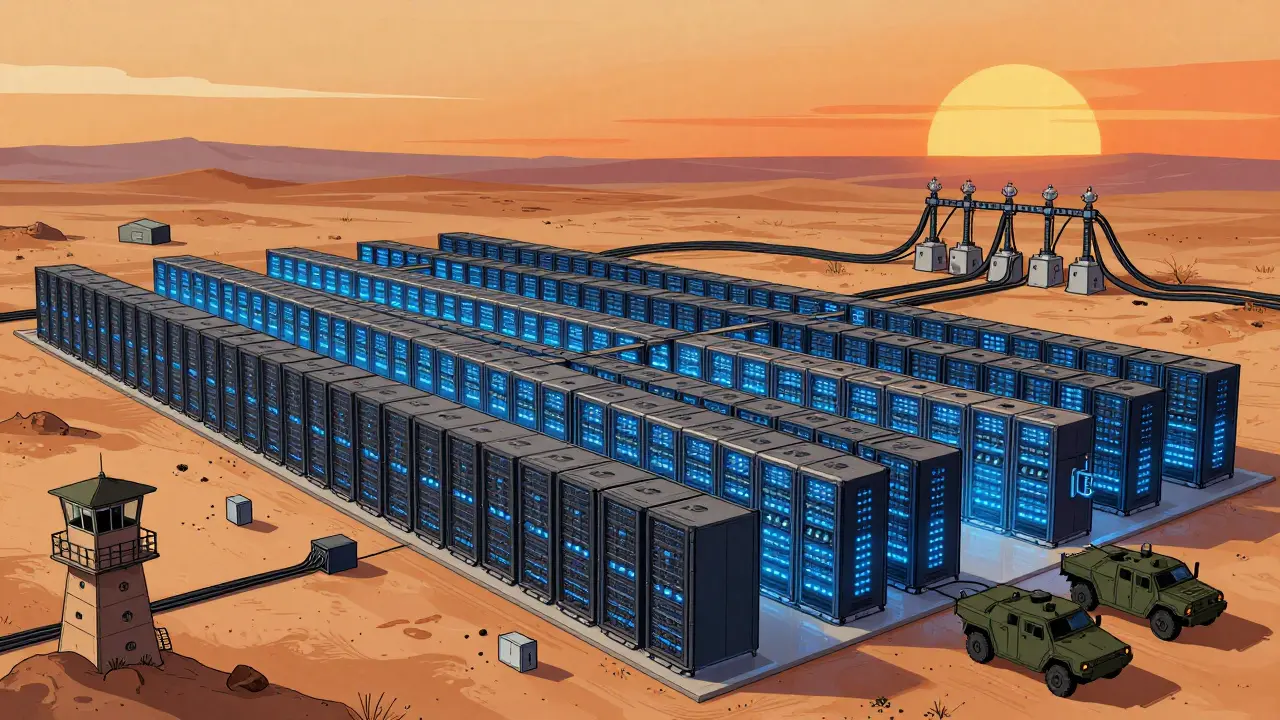
If you think crypto mining in Iran is run by small garages with graphics cards, you are mistaken. The sector is dominated by massive, industrial-scale operations, many of which are linked to powerful state actors. The Islamic Revolutionary Guard Corps (IRGC) is a powerful military and political organization in Iran with significant economic interests has emerged as the dominant force in this space.
Reports indicate that by 2019-2020, the IRGC and entities under Supreme Leader Ali Khamenei moved aggressively into crypto mining. They partnered with Chinese companies to establish huge mining farms, such as the 175-megawatt facility in Rafsanjan, Kerman province. These facilities are often located in special economic zones or on military bases, benefiting from dedicated power feeds and minimal regulatory scrutiny.
Why does the IRGC care? Because these mines generate hard currency. When traditional exports like oil are sanctioned, Bitcoin becomes a substitute export. The IRGC effectively turns Iran’s abundant natural gas and cheap electricity into digital gold, which can then be sold on global markets. Some estimates suggest that IRGC-affiliated firms have processed billions of dollars in transactions through platforms like Binance since 2018 specifically to bypass U.S. sanctions.
This state-backed involvement creates what investigators describe as a "crypto cartel." These organizations enjoy effectively free energy or ignore bills entirely, operating with impunity thanks to political connections. While this boosts the national crypto output, it also exacerbates the country’s chronic power shortages, leading to blackouts in residential areas while mining farms hum along uninterrupted.
How Crypto Facilitates Actual Import Transactions
So, how does a barrel of oil or a shipment of medical equipment actually get paid for? The process is complex and relies on a mix of direct crypto transfers and smart contracts. In August 2023, Iran recorded its first documented cryptocurrency import transaction, paying $10 million for goods using an unspecified digital asset. This was a milestone, proving that the theoretical model could work in practice.
For larger deals, the mechanism often involves bilateral agreements. Iran signed a cryptocurrency cooperation agreement with Russia in November 2018. Since then, negotiations have expanded to include other nations looking to trade outside the dollar-dominated system. The flow typically looks like this:
- An Iranian importer identifies a supplier in a friendly nation (e.g., China or Russia).
- Instead of sending fiat currency, the Iranian side arranges for a transfer of Bitcoin or another stablecoin.
- The supplier receives the crypto, converts it to local currency, and ships the goods.
- All transactions are monitored by the CBI to ensure compliance with anti-money laundering (AML) rules.
This method allows Iran to maintain trade relationships with countries that are also wary of U.S. secondary sanctions. By removing the dollar from the equation, both parties reduce their exposure to American financial enforcement. However, it introduces new risks, primarily volatility. If the price of Bitcoin drops sharply between the time the contract is signed and the payment is made, either party could lose money unless hedging strategies are employed.

Challenges: Volatility, Energy Crises, and Compliance
Despite its utility, relying on Bitcoin for imports is far from perfect. The biggest hurdle remains price volatility. Bitcoin’s value can swing wildly in a matter of hours. For an importer buying raw materials at a fixed cost, a sudden drop in crypto value means they must send significantly more coins to cover the same invoice. Conversely, if prices spike, suppliers may demand immediate conversion to stablecoins or fiat, adding friction to the deal.
Then there is the energy crisis. Iran’s power grid is strained, and large-scale mining consumes vast amounts of electricity. During summer peaks, the country experiences debilitating outages. The government has responded by temporarily banning mining during peak hours or shutting down illegal farms. In 2021, authorities arrested illegal miners who were using subsidized household electricity, signaling a crackdown on unauthorized operations that undermine state control.
Compliance is another major headache. While the CBI oversees authorized transactions, the global landscape is tightening. Major exchanges like Binance have delisted Iranian users or restricted access to comply with U.S. regulations. This forces Iranian traders to use smaller, less secure platforms or peer-to-peer networks, increasing the risk of fraud or hacking. Additionally, the lack of formal capital gains tax due to trading prohibitions creates a gray area where revenue reporting is difficult, complicating audits for legitimate businesses.
| Feature | Traditional Banking (SWIFT) | Crypto-Based Trade |
|---|---|---|
| Sanctions Exposure | High (Blocked by U.S./EU) | Low (Decentralized network) |
| Transaction Speed | Days to Weeks | Minutes to Hours |
| Currency Risk | Stable (USD/EUR) | High (Volatility) |
| Regulatory Oversight | Strict International Standards | State-Controlled (CBI) |
| Accessibility | Unavailable for Most Firms | Available via Licensed Miners |
The Future of Iran’s Crypto Strategy
As we look toward 2026, Iran’s reliance on cryptocurrency shows no signs of slowing down. Analysts forecast the sector will generate $1.5 billion in revenue by 2025, growing to nearly $2 billion shortly after. The goal is clear: create a parallel financial infrastructure that can withstand external pressure.
However, the long-term viability depends on solving two critical issues. First, the energy grid must be stabilized. If mining continues to drain power from hospitals and homes, public backlash could force stricter limits. Second, the technology needs to mature. Current systems rely heavily on manual oversight and trust in state-linked entities. A more robust solution would involve automated smart contracts that execute trades only when delivery is confirmed, reducing the need for intermediaries.
For now, Bitcoin remains Iran’s best tool for breaking through sanctions. It transforms domestic resources-electricity and computing power-into global purchasing power. While it is not a panacea, it offers a pragmatic path forward for a nation determined to trade on its own terms.
Is it legal for individuals in Iran to use Bitcoin for personal imports?
No. The Central Bank of Iran prohibits domestic payments and private trading of cryptocurrencies. Only licensed industrial miners and state-approved entities can engage in crypto transactions for international trade settlement. Individuals attempting to buy crypto for personal use risk legal penalties.
How does the IRGC profit from Bitcoin mining?
The IRGC operates massive mining farms using subsidized or free electricity. They mine Bitcoin and sell it on global exchanges or use it to settle international debts. This generates hard currency revenue that bypasses traditional sanctions on oil exports, providing a steady income stream for the organization.
Which countries trade with Iran using cryptocurrency?
Russia is a key partner, having signed a bilateral crypto cooperation agreement with Iran in 2018. Other potential partners include China and various nations seeking to reduce reliance on the U.S. dollar. These trades often involve commodities like oil, food, and medical supplies.
What are the main risks of using Bitcoin for imports?
The primary risks are price volatility, which can lead to unexpected losses, and regulatory uncertainty. Additionally, the reliance on state-controlled pools means transactions are subject to government delays or censorship. Technical failures or hacks on less secure exchanges also pose significant threats.
Does crypto mining contribute to Iran's power outages?
Yes. Large-scale mining farms consume enormous amounts of electricity, straining the national grid. During peak demand periods, this has led to widespread blackouts in residential and industrial areas. The government has occasionally banned mining temporarily to stabilize the power supply.