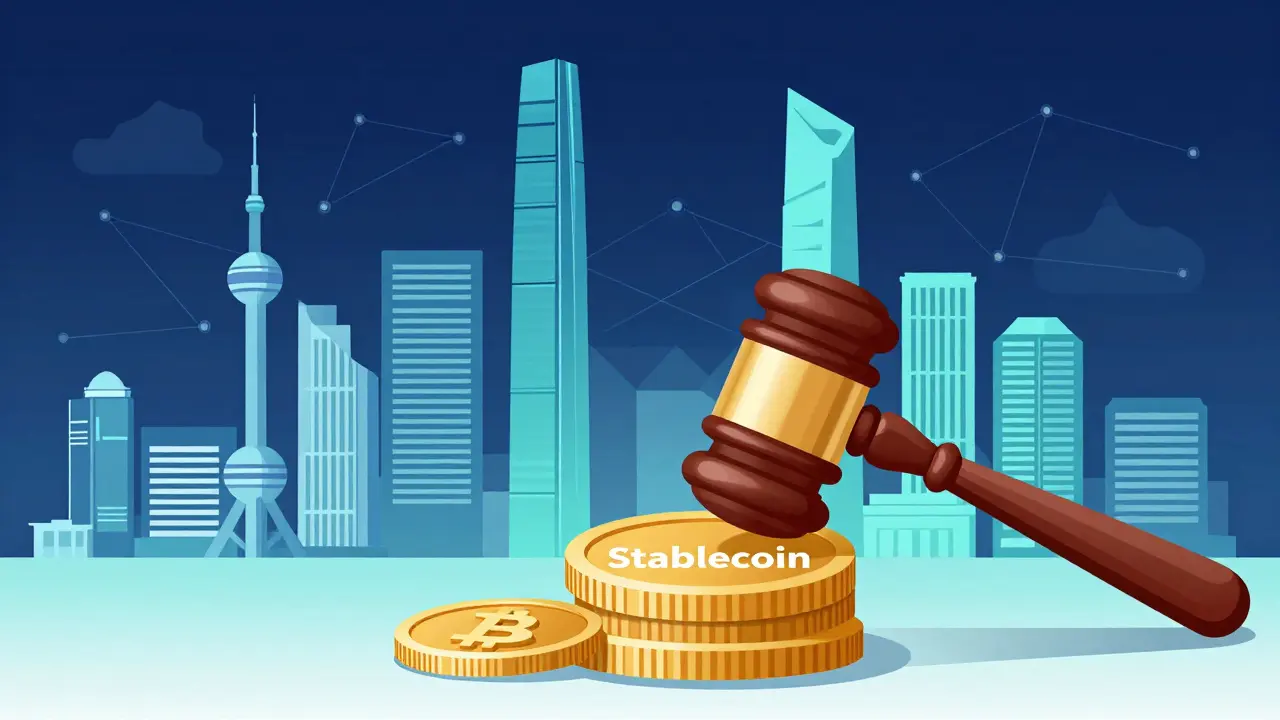

There is no single law called the "Virtual Assets Ordinance 2025." If you are looking for that specific title, you might be confused by industry shorthand. What actually exists in Hong Kong is a comprehensive regulatory framework comprising the Stablecoins Ordinance and new licensing regimes for virtual asset dealing and custody. This multi-layered system launched in phases throughout 2025 to turn the city into a global digital asset hub. For anyone operating in or targeting investors in this region, understanding these rules is not optional-it’s mandatory.
The confusion often stems from how quickly things moved. In June 2025, the Financial Services and Treasury Bureau (FSTB) issued Policy Statement 2.0 on the Development of Virtual Assets, reaffirming its commitment to innovation. Shortly after, on June 27, 2025, the FSTB and the Securities and Futures Commission (SFC) released joint consultation papers proposing strict licensing for dealing and custody services. Then, the first concrete law, the Stablecoins Ordinance, took effect on August 1, 2025. This article breaks down exactly what these laws mean for your business, your wallet, and your future plans in Asia’s crypto market.
What Is the Stablecoins Ordinance?
Let’s start with the law that is already active. The Stablecoins Ordinance establishes a licensing regime specifically for fiat-referenced stablecoin (FRS) issuers. It defines a stablecoin as a cryptographically secured digital representation of value that acts as a medium of exchange, operates on a distributed ledger, and purports to maintain a stable value relative to assets.
Crucially, this ordinance does not cover everything. It explicitly excludes limited purpose digital tokens, securities tokens, stored value facility deposits, banking deposits, and central bank digital currencies. Why? To avoid regulatory overlap. If you are issuing a token backed by the US Dollar or Hong Kong Dollar intended for public use, you need a license under this ordinance. If you are creating a utility token for a private community game, you likely do not.
The implications are significant. Issuers must meet stringent reserve requirements and transparency standards. While the SFC has promised detailed guidance on reserve composition by December 15, 2025, the baseline expectation is full backing and regular audits. This brings institutional-grade security but also heavy operational burdens.
Licensing Regimes for Dealing and Custody
While stablecoin issuers had their rules set in August 2025, the broader market was waiting for the next phase. The consultation period for VA Dealing and Custody Licensing Regimes closed on August 29, 2025, with implementation expected in 2026. These regimes define "VA Dealing" broadly: making or offering to make an agreement, or inducing someone to enter into one regarding virtual assets.
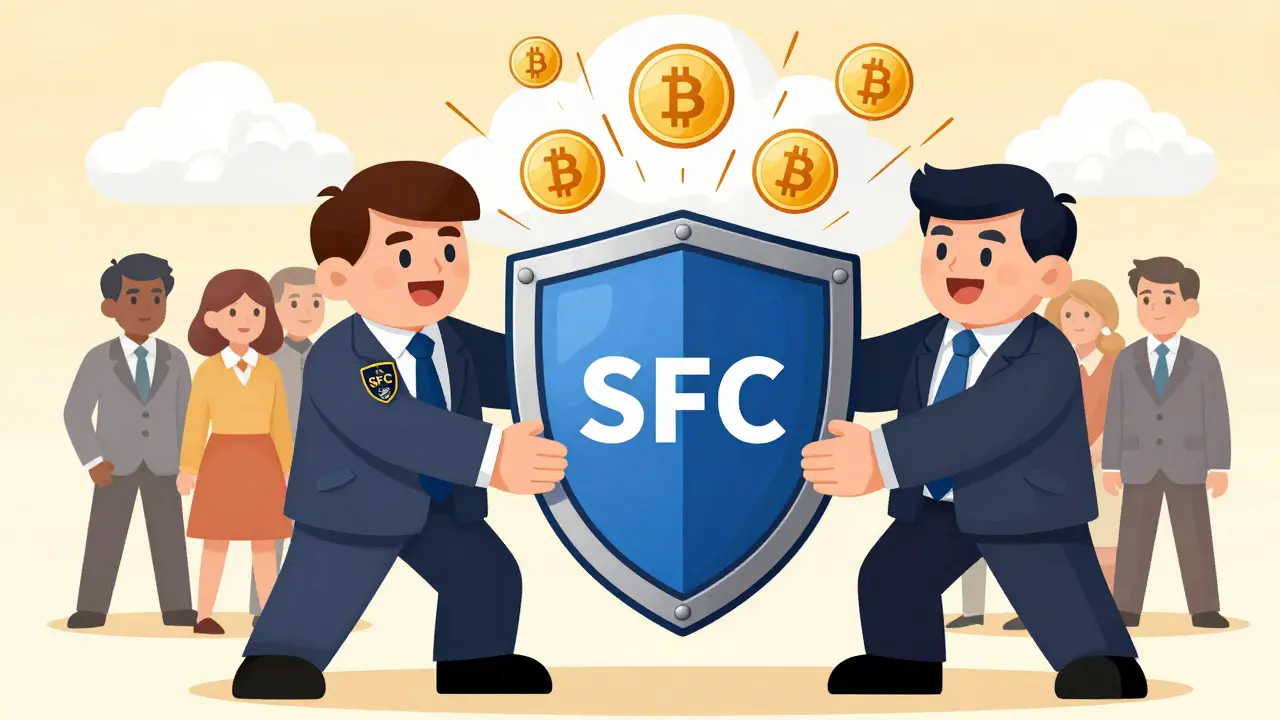
This means exchanges, brokers, and even some portfolio managers will need licenses. The framework uses a dual-regulator approach:
- SFC (Securities and Futures Commission): Acts as the standard-setter, establishing regulatory requirements for trading platforms and asset managers.
- HKMA (Hong Kong Monetary Authority): Serves as the frontline regulator for banks and Stored Value Facility (SVF) licensees providing these services.
You cannot pick and choose. If you are a bank offering custody, you deal with the HKMA. If you are a standalone exchange, you deal with the SFC. But if you cross lines, you face both. This extraterritorial application is key: it applies to any activity targeting Hong Kong investors, regardless of where your company is registered. This closes the loophole that existed in Singapore’s earlier framework, where only locally incorporated entities needed licenses.
Key Requirements and Penalties
The bar for entry is high. Here is what you need to know about the specifics:
| Requirement | Detail | Impact |
|---|---|---|
| Minimum Capital | HK$129,730 (benchmarking Type 3 SFO licence) | High barrier for small startups; increases operational costs by 15-20% |
| Responsible Officer | At least one officer with 3 years of VA portfolio management experience | Talent shortage; requires hiring senior experts |
| Wallet Whitelisting | Mandatory dual approval systems | Increases transaction processing time by 30-40% |
| Supervision | 24-hour active supervision of portfolios | Operationally challenging for multi-timezone firms |
| Penalties | Up to HK$5 million fine + 7 years imprisonment | Severe deterrent for non-compliance |
Notice the penalty section. Seven years in prison is not a slap on the wrist. This signals that regulators are treating virtual asset crimes with the same severity as traditional financial fraud. For smaller firms, the capital requirement of HK$129,730 might seem low compared to major banks, but combined with the need for expensive cybersecurity tools and senior staff, it effectively filters out casual players.
How Hong Kong Compares to Global Standards
If you are deciding between setting up in Hong Kong, Singapore, or the EU, here is the reality check. Hong Kong’s approach is more specialized than Singapore’s Payment Services Act, which regulates stablecoins under a broader payments framework. Unlike the U.S., where the SEC, CFTC, and state regulators create a fragmented mess, Hong Kong offers clear boundaries between the SFC and HKMA.
It shares similarities with the EU’s MiCA regulation in its risk-based approach but differs by implementing regulations in phases rather than all at once. This phased rollout is a double-edged sword. On one hand, it gives firms time to adapt. On the other, it creates uncertainty about when exactly certain rules will bite.
A key advantage of Hong Kong is its extraterritorial reach. Singapore’s framework primarily targets locally incorporated entities. Hong Kong’s targets activities *directed* at Hong Kong investors. This makes it harder for offshore scammers to target local residents without facing consequences. However, the downside is cost. Switzerland’s permissive approach attracts those who want speed over scrutiny. Hong Kong chooses scrutiny. Industry surveys show 78% of Asian virtual asset firms prefer Hong Kong’s phased approach over Singapore’s abrupt implementation, citing "clear milestone dates" as helpful. But 43% report that dual-approval requirements have slowed their operations significantly.

Market Impact and Future Outlook
Despite the hurdles, money is flowing in. Asia’s crypto asset value grew from $315 billion in Q1 2024 to $428 billion in Q2 2025. Hong Kong currently holds 18.7% of Asia’s institutional crypto custody market, trailing Singapore’s 28.3% but growing at 32% year-over-year. Institutional use dominates, representing 83% of activity versus 17% retail. This reflects the SFC’s focus on professional investors.
Innovation is accelerating too. Eleven tokenized real-world asset (RWA) funds launched in Q3 2025, managing $2.3 billion in assets. Morgan Stanley predicts Hong Kong could capture 25-30% of Asia’s institutional virtual asset custody market by 2027, generating $450-550 million annually in fees. The FSTB plans a legal review on tokenization focusing on bonds in Q1 2026, and the HKMA will launch a regulatory sandbox for cross-border stablecoin transactions in Q2 2026 involving giants like Standard Chartered and HSBC.
User sentiment is mixed but leaning positive. A Reddit discussion showed 62% optimism about regulatory clarity. One user noted, "The Stablecoins Ordinance gives us certainty that wasn't there before, though the minimum capital is tough for small startups." The Hong Kong Fintech Association has resolved over 1,200 queries since June 2025, indicating a busy but supportive ecosystem.
Steps to Compliance for Your Business
If you are planning to operate in Hong Kong, here is your roadmap:
- Identify Your License Type: Determine if you fall under Stablecoins Ordinance (if issuing FRS), VA Dealing, or Custody. Check the exclusion lists carefully.
- Secure Capital and Staff: Ensure you have the HK$129,730 minimum capital and hire a responsible officer with three years of VA experience.
- Implement Tech Controls: Set up dual-approval wallet whitelisting and 24-hour supervision systems. Use blockchain analytics tools like Chainalysis, adopted by 68% of compliant firms.
- Apply Early: The SFC aims to process 100% of applications within 120 days by Q3 2026. Start preparing documentation now.
- Monitor Updates: Watch for the SFC’s stablecoin reserve guidance (due Dec 2025) and the HKMA’s sandbox announcements (Q2 2026).
The learning curve is steep-expect 3-6 months to achieve full compliance. But the reward is access to one of Asia’s fastest-growing institutional markets.
Is there a single "Virtual Assets Ordinance 2025" in Hong Kong?
No. There is no single law with that exact name. The term refers to a collective framework including the Stablecoins Ordinance (effective August 1, 2025) and proposed licensing regimes for VA dealing and custody (implementation expected in 2026). Always refer to specific ordinances for legal accuracy.
Who regulates virtual assets in Hong Kong?
Two main bodies: the Securities and Futures Commission (SFC) sets standards for trading platforms and asset managers, while the Hong Kong Monetary Authority (HKMA) regulates banks and stored value facility providers offering these services.
What are the penalties for violating the regulations?
Violations can result in fines up to HK$5 million and imprisonment for up to seven years. This severe penalty structure emphasizes the seriousness of compliance.
Do I need a license if my company is based outside Hong Kong?
Yes, if your activities target Hong Kong investors. The regulations apply extraterritorially to any service directed at residents or institutions in Hong Kong, closing loopholes used by offshore operators.
When will the VA dealing and custody licenses take effect?
Implementation is expected in 2026. The consultation period closed in August 2025, and firms should prepare for compliance during this transition period.