
Imagine buying shares of a major company like MercadoLibre, the leading e-commerce and fintech platform in Latin America, but doing it through your crypto wallet instead of a traditional brokerage. That’s exactly what MELIon, a tokenized version of MercadoLibre stock issued by Ondo Finance offers. It bridges the gap between Wall Street and Web3, letting you hold exposure to a real-world asset (RWA) without needing a US bank account or waiting for market hours.
If you’ve been hearing buzz about “tokenized equities” or “RWAs” in crypto circles, MELIon is one of the clearest examples of this trend in action. But what exactly is it? Is it safe? And how does it actually work under the hood? Let’s break it down so you can decide if it fits your portfolio.
What Exactly is MELIon?
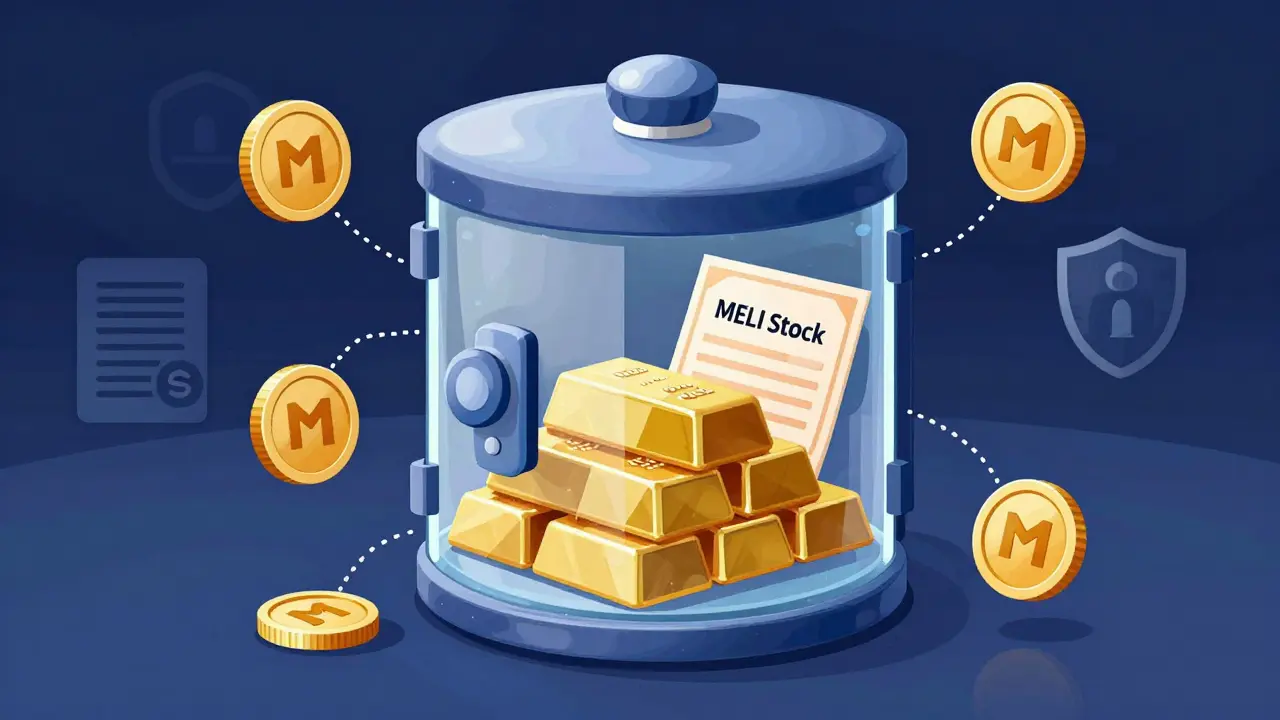
MELIon isn’t a standard cryptocurrency with its own utility or network. Instead, it’s a digital representation of actual shares in MercadoLibre Inc., a publicly traded company listed on NASDAQ under ticker MELI. Think of it as a receipt that proves you own a specific value tied to that stock, but stored on a blockchain.
The token is created and managed by Ondo Finance, a protocol specializing in bringing institutional-grade financial products on-chain. When you buy MELIon, you’re not just betting on a coin’s hype; you’re gaining economic exposure to MercadoLibre’s business performance. If MercadoLibre’s stock goes up, MELIon generally follows. If they pay dividends, those are automatically reinvested into the token structure.
This setup solves a big problem: access. Traditionally, non-US residents face hurdles buying direct US stocks due to regulatory restrictions or high minimums. MELIon removes those barriers, allowing global investors to mint (buy) or redeem (sell) tokens anytime, provided they meet the platform’s compliance checks.
How Does the Tokenization Process Work?
To understand MELIon, you need to grasp the mechanics behind the scenes. It’s not magic; it’s a structured financial process wrapped in blockchain technology.
- Underlying Asset: Ondo Finance holds actual shares of MercadoLibre in custody. These aren’t virtual points; they’re real equities backed by legal agreements.
- Minting: When an investor wants to enter, they deposit funds (usually stablecoins like USDC). Ondo uses these funds to buy the underlying MELI stock and issues corresponding MELIon tokens to the buyer’s wallet.
- Trading: You can trade MELIon on supported exchanges or peer-to-peer. The price tracks the value of the underlying stock plus any accrued dividends.
- Redemption: To exit, you send your MELIon tokens back to Ondo. They burn the tokens and return the equivalent value in cash or stablecoins, having sold the underlying stock.
This model relies heavily on trust in Ondo Finance’s operational integrity and their custodians. Unlike Bitcoin, which has no central issuer, MELIon depends on Ondo executing these steps correctly and legally.
Key Features and Benefits of MELIon
Why would anyone choose MELIon over just buying MELI stock directly? Here are the main advantages that drive demand:
- 24/5 Trading: Traditional stock markets close at night and on weekends. MELIon trades around the clock during weekdays, giving you flexibility to react to news instantly.
- Global Access: No need for a US brokerage account. If you have a crypto wallet and access to a supported exchange, you can participate.
- Automated Dividend Reinvestment: Instead of receiving cash dividends that might sit idle, MELIon automatically reinvests them, compounding your exposure over time.
- DeFi Integration: As an ERC-20 token, MELIon can potentially be used in decentralized finance applications, such as collateral for loans, depending on future protocol support.
However, convenience comes with trade-offs. You lose some control compared to direct ownership. For instance, you can’t vote on shareholder proposals unless Ondo provides a proxy mechanism, which is rare for retail token holders.
Price Performance and Market Data (2026 Context)
Like all crypto assets, MELIon experiences volatility, though it tends to mirror MercadoLibre’s stock movements more closely than meme coins do. As of early 2026, here’s where things stand:
| Metric | Value |
|---|---|
| All-Time High | $2,541.77 (Sept 2025) |
| Recent Price Range | $1,650 - $1,800 USD |
| Circulating Supply | ~400 tokens |
| Market Cap | ~$720K USD |
| Primary Exchange | MEXC Global |
Note the low circulating supply. This isn’t a mistake. Because each token represents a significant chunk of equity value, there are fewer tokens in play compared to typical cryptocurrencies. This means even small trades can impact the price slightly, leading to higher volatility relative to the underlying stock.
The price dropped from its late-2025 peak by nearly 30% by March 2026. This correction reflects broader market cooling and profit-taking after the initial hype cycle of tokenized stocks. Traders should watch volume trends carefully-low liquidity can make entering or exiting positions difficult during sudden market moves.
Risks You Must Consider Before Buying
Before you rush to mint MELIon, let’s talk about the risks. This isn’t free money; it’s a complex financial instrument.
- Counterparty Risk: Your investment depends on Ondo Finance operating honestly and securely. If they go bankrupt or act maliciously, your tokens could become worthless.
- Smart Contract Risk: The code governing MELIon has received a CertiK security score of 3.5/5. While audited, no contract is immune to bugs or exploits. A vulnerability could lead to loss of funds.
- Regulatory Uncertainty: Governments are still figuring out how to classify tokenized securities. If regulators decide MELIon violates local laws, exchanges could delist it, trapping your assets.
- Liquidity Constraints: With only a few hundred tokens circulating, finding a buyer or seller at your desired price can be hard. Slippage costs may eat into profits.
- Tax Complexity: Selling MELIon might trigger capital gains taxes in your country. Additionally, automatic dividend reinvestment could create taxable events every time dividends are processed, complicating your tax filing.
Always consult a local tax professional before engaging with RWAs. The rules vary wildly by jurisdiction.

How to Buy and Store MELIon
If you’ve weighed the pros and cons and decided to proceed, here’s how to get started:
- Choose an Exchange: Currently, MEXC Global offers the most reliable liquidity for MELIon. Other platforms like Binance and Bybit may list it, but check availability first.
- Create a Wallet: Use a secure non-custodial wallet like MetaMask. Ensure it supports Ethereum-compatible networks since MELIon is an ERC-20 token.
- Fund Your Account: Deposit USDT or USDC into your exchange account via bank transfer or crypto purchase.
- Execute Trade: Search for the MELIon trading pair (e.g., MELIon/USDT) and place your buy order. Be mindful of the spread due to low liquidity.
- Withdraw to Wallet: For long-term holding, withdraw your tokens to your personal MetaMask wallet. Never leave large amounts on an exchange.
Double-check the contract address before transferring anything. Scammers often copy legitimate token names. The official MELIon contract starts with 0x2816....
Is MELIon Right for You?
MELIon appeals to a specific type of investor: someone who believes in MercadoLibre’s growth story but wants the flexibility and accessibility of crypto. It’s ideal for:
- Non-US residents restricted from buying direct US stocks.
- Crypto natives looking to diversify into blue-chip equities without leaving their wallets.
- Traders who want to exploit weekend gaps in traditional stock pricing.
It’s less suitable for:
- Beginners unfamiliar with blockchain transactions or gas fees.
- Investors seeking passive, low-risk income without monitoring smart contract updates.
- Those who prioritize voting rights in corporate governance.
Remember, MELIon is a bridge between two worlds. It inherits the risks of both volatile crypto markets and regulated equity structures. Do your homework, start small, and never invest more than you can afford to lose.
Can I convert MELIon back to regular MercadoLibre stock?
Not directly. MELIon allows redemption for cash or stablecoins through Ondo Finance, not for physical shares sent to your brokerage. You would need to sell the tokens for fiat currency and then buy the stock separately on a traditional exchange.
Is MELIon available on Coinbase?
While Coinbase tracks the price index for MELIon, it does not currently offer direct trading pairs for the token. Most users trade it on MEXC Global or via decentralized swaps using MetaMask.
What happens if Ondo Finance shuts down?
This is the primary counterparty risk. If Ondo ceases operations, the ability to redeem tokens for underlying assets could disappear. Always monitor the company’s financial health and regulatory status.
Does MELIon pay dividends?
Yes, but indirectly. Any dividends paid by MercadoLibre are captured by the reserve holding the stock and automatically reinvested into the token pool, increasing the value per token over time rather than sending cash payouts.
How liquid is MELIon?
Liquidity is moderate to low. With only around 400 tokens in circulation, large orders can significantly move the price. Check the order book depth on MEXC before placing substantial trades to avoid slippage.