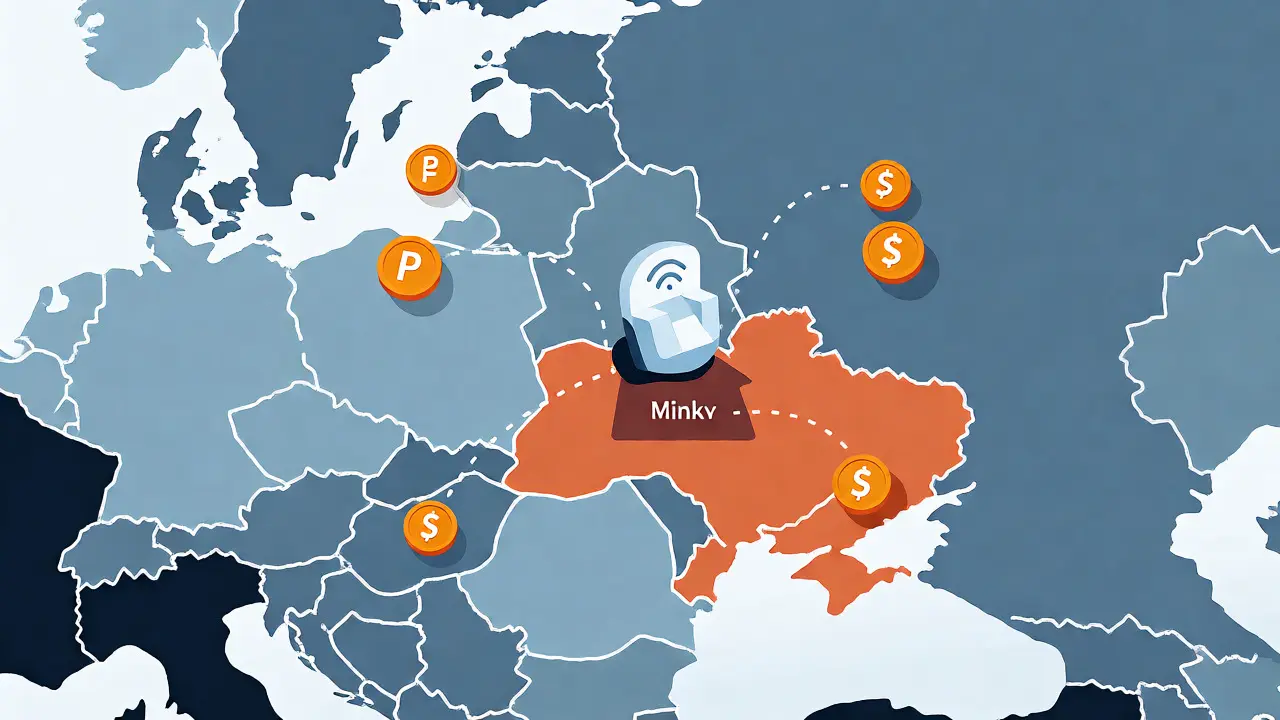

You found a niche crypto exchange with over 300 coins and decent-looking fees. Then you checked the location. Minsk, Belarus. Suddenly, your confidence wavers. That is the exact dilemma many traders face when they stumble upon FREE2EX. It promises easy access to fiat currencies like the Russian Ruble and Belarusian Ruble, which major global platforms often ignore. But does convenience outweigh the risk of operating in a high-regulatory-risk zone? This review breaks down exactly what you get, what you don't, and whether your capital stays safe.
What Exactly Is FREE2EX?
FREE2EX is a centralized cryptocurrency exchange launched in April 2020, registered under PIKSEL INTERNET, OOO in Minsk, Belarus. Unlike giants like Binance or Coinbase, it doesn't aim for global dominance. Instead, it targets Eastern European users who need specific local currency pairs that disappeared from other platforms after geopolitical shifts. The platform supports spot trading and leverage, handling assets like Bitcoin (BTC), Ethereum (ETH), and Tether (USDT).
The legal structure matters here. While it claims to operate under "European regulatory frameworks," this is a bit of a stretch. Belarus has its own specific crypto laws, heavily influenced by Decree No. 8 and subsequent updates. In late 2022, President Lukashenko tightened restrictions, making crypto operations trickier for local banks. If you are outside Belarus, you might not care about local banking hurdles, but you should care about jurisdictional stability. A platform based in a sanctioned or isolated economy faces different risks than one in Switzerland or Singapore.
Fees and Trading Costs: Are They Competitive?
Let's look at the numbers. FREE2EX charges a flat 0.25% trading fee for all spot pairs. For context, Binance charges 0.1% (or less with BNB discounts), and Kraken hovers around 0.16%-0.26% depending on volume. So, FREE2EX sits in the middle-not the cheapest, but not outrageous.
The real cost hits when you move money in and out. Credit and debit card deposits incur a steep 3% fee. Withdrawals via VISA/MasterCard cost 2.2%. Compare this to Coinbase, where instant card buys can hit 3.49%, or Kraken, which offers cheaper bank transfers. If you use wire transfers, check if those are available for your country; many users report friction there due to SWIFT restrictions affecting Belarusian banks.
| Feature | FREE2EX | Binance | Coinbase |
|---|---|---|---|
| Spot Trading Fee | 0.25% | 0.10% | 0.60% (Basic) |
| Card Deposit Fee | 3.0% | ~2-3% (Varies) | ~3.49% |
| Card Withdrawal Fee | 2.2% | N/A (Bank preferred) | ~$0.25 - $1.50 + % |
| Supported Fiat | USD, EUR, RUB, BYN | Global (varies) | Major Global Currencies |
Security Claims vs. Reality
Safety is the biggest question mark. FREE2EX states it uses multi-signature cold wallets and SSL/TLS encryption. These are standard features. Every serious exchange has them. What sets top-tier exchanges apart is transparency. Coinbase publishes quarterly Proof-of-Reserves reports audited by independent firms. Kraken provides detailed security whitepapers.
FREE2EX mentions an "annual technical and financial audit by one of the Big Four companies." Which company? Where is the report? Without public documentation, this claim remains unverified. There is also mention of a $1 million insurance fund against cyber attacks. Who insures it? Lloyd's of London? A local Belarusian insurer? If the insurer is local, international validity could be questionable during a crisis.
Furthermore, there is no evidence of a bug bounty program. Top exchanges pay hackers thousands to find vulnerabilities before criminals do. The absence of this suggests a smaller budget for proactive security testing. In 2023 alone, the crypto industry lost billions to hacks. Relying on a small, opaque exchange increases your exposure to these systemic risks.
User Experience and Liquidity Concerns
Here is where things get practical. You sign up, pass KYC (which users say is fast, often completing Level 2 verification quickly), and start trading. But then you try to sell a mid-cap altcoin. On Binance, you get filled instantly. On FREE2EX, you might wait. Why? Volume.
FREE2EX lacks verifiable public trading volume data. CryptoCompare tracks billions in daily volume for major players. FREE2EX doesn't appear in top-tier rankings. Low liquidity means wider spreads (the difference between buy and sell prices). You might see a price of $100 for a token, but only be able to sell it for $98 because there aren't enough buyers. This hidden cost eats into profits faster than the 0.25% fee.
User reviews are sparse. Trustpilot shows minimal activity compared to Binance's 14,000+ reviews. Reddit threads from 2023-2025 mention withdrawal delays-some citing 72 hours for fiat withdrawals to local banks. If you are trading actively, waiting three days for cash is a dealbreaker. If you are holding long-term, it matters less, provided you trust the platform won't freeze assets.
Regulatory Risk: The Elephant in the Room
Operating from Belarus introduces unique geopolitical risks. Since 2022, international sanctions have complicated banking relationships. Many Western banks refuse transactions involving Belarusian entities. If FREE2EX relies on traditional banking rails for fiat processing, a sudden regulatory change could halt deposits or withdrawals overnight.
The platform claims to be "legally regulated," but this likely refers to local Belarusian registration rather than EU MiCA compliance or US SEC oversight. For US citizens, using such exchanges can be tricky regarding tax reporting and legal standing. Always consult a tax professional before moving significant funds to offshore, non-US regulated exchanges.
Who Should Use FREE2EX?
This isn't a bad exchange for everyone. It serves a specific niche.
- Eastern European Traders: If you live in Russia, Belarus, or nearby regions and struggle to find exchanges accepting RUB/BYN without heavy penalties, FREE2EX solves a real problem.
- Altcoin Hunters: If you want early access to obscure tokens listed on FREE2EX but not yet on major US exchanges, it offers exposure.
- Diversifiers: Keeping a small portion of your portfolio on a secondary exchange reduces reliance on any single point of failure.
Conversely, avoid it if you need high-frequency trading, deep liquidity, or strict regulatory protection. It is not suitable for large institutional moves or conservative investors who prioritize absolute safety over niche access.
Is FREE2EX safe to use?
FREE2EX employs standard security measures like cold storage and encryption, but it lacks the transparency of larger competitors. There are no publicly available audit reports, and the insurance fund details are vague. It is considered higher risk than tier-1 exchanges like Coinbase or Kraken due to its jurisdiction and lower liquidity.
Does FREE2EX support USD and EUR?
Yes, FREE2EX supports trading pairs involving USD, EUR, RUB, and BYN. However, deposit and withdrawal methods for these currencies may vary by region, and card fees are relatively high (3% for deposits).
How long do withdrawals take on FREE2EX?
Crypto withdrawals are typically processed within minutes to hours, depending on network congestion. Fiat withdrawals, especially to local banks in Eastern Europe, can take longer, with some user reports citing up to 72 hours due to banking intermediaries and compliance checks.
Is FREE2EX regulated?
It operates under Belarusian law as a registered entity. It claims to follow European frameworks, but it does not hold licenses from major regulators like the FCA (UK) or FinCEN (USA). Regulatory status in Belarus has fluctuated, adding uncertainty.
What are the main drawbacks of FREE2EX?
Key drawbacks include low trading volume leading to poor liquidity, high card processing fees, lack of transparent proof-of-reserves, and potential geopolitical risks associated with its Belarus-based operations.
Final Verdict: Proceed with Caution
FREE2EX fills a gap for users needing specific fiat-crypto bridges in Eastern Europe. Its interface is functional, and the asset selection is broad. However, the lack of transparency regarding audits, combined with jurisdictional risks, means you shouldn't park your life savings there. Treat it as a tool for specific tasks-like buying a niche coin or accessing local currency-rather than your primary vault. Keep most of your funds on established, highly liquid exchanges, and only move what you intend to trade immediately to FREE2EX.
Comments (10)

- Mary Burnett
- September 8, 2026 AT 21:30 PM
I appreciate the balanced perspective here, especially regarding the emotional toll of managing assets in volatile jurisdictions. It is comforting to see a review that validates the anxiety many of us feel when considering platforms outside traditional regulatory hubs.

- Stephen McElreavy
- September 9, 2026 AT 07:35 AM
Listen up, folks! 🌍 As someone who has navigated the murky waters of cross-border digital finance for years, I have to say this breakdown is spot on but misses the cultural nuance of Eastern European fintech adoption. The geopolitical friction isn't just a bug; it's a feature of their market structure. You are dealing with a legacy infrastructure that operates on different trust models entirely. If you don't understand the local banking rails' limitations, you will get burned by SWIFT restrictions faster than you can say 'KYC'. This isn't just about fees; it's about systemic resilience in a sanctioned economy. Do not underestimate the liquidity fragmentation caused by these isolated networks. It creates a unique arbitrage opportunity for those brave enough to dive in, but it requires a sophisticated understanding of correspondent banking relationships. Most retail traders simply do not have the toolkit to manage these risks effectively. You need to be aware of the counterparty risk inherent in local Belarusian insurers versus global reinsurance markets. It is a fascinating, terrifying landscape for the uninitiated. Proceed with extreme caution and deep due diligence. 📉📈

- Indu Nair
- September 11, 2026 AT 01:30 AM
STOP BEING SO NEGATIVE! 😤 The fact that they even exist is a miracle! People always whine about safety while ignoring the massive upside of accessing coins that aren't diluted by Western institutional dumping. You think Binance is safe? Look at their history! FREE2EX is the underdog we need to support. If you're scared, stay home. If you want real gains, you take the risk. That's how wealth is built. Not by hiding in Swiss banks. 💪🔥

- Dominic Jones
- September 12, 2026 AT 05:28 AM
The philosophical implication of choosing an exchange based in Minsk over one in Zug is profound... It speaks to our fundamental desire for control versus convenience... We trade security for access... But what happens when the state intervenes?... History shows us that capital controls often precede economic collapse... Or perhaps... it is merely a test of faith in decentralized systems?... One must consider the long-term trajectory of Belarusian crypto policy... It is not static... It evolves... And those who adapt survive... Those who cling to outdated models perish... Think deeply before clicking 'buy'... ⚖️💭

- Edward Ogunfolaju
- September 13, 2026 AT 17:28 PM
LET'S GOOOO! 🔥 This is exactly why I love niche exchanges! Big players are too slow and too regulated to catch the next big thing! FREE2EX is moving fast and breaking things! Don't let fear hold you back from the alpha! Get in there and grab those low-cap gems before everyone else wakes up! Momentum is everything! 🚀🚀🚀

- Sasha Wilde
- September 14, 2026 AT 00:41 AM
lol imagine trusting a belarusian exchange after seeing what happened to ftx 😂🤡 transparency = zero audits = fake news insurance = joke 🤷♂️ keep your money where u can actually withdraw it 💸

- Ferdinand Friday
- September 15, 2026 AT 18:29 PM
The allure of the obscure token listing acts as a siren song for the modern trader, luring them away from the safe harbors of established exchanges into the choppy, uncertain waters of peripheral markets like FREE2EX. It is a seductive narrative, one that promises untapped potential and exclusive access to digital assets that have yet to be discovered by the masses, thereby offering the possibility of exponential returns for those willing to endure the friction of high transaction costs and opaque operational structures. However, one must critically examine the foundational pillars upon which such platforms rest, particularly when they are situated in jurisdictions characterized by significant geopolitical volatility and regulatory ambiguity. The promise of convenience often masks the underlying fragility of the system, where a single change in local decree or international sanction could render one's holdings illiquid or inaccessible overnight. Therefore, the decision to engage with such entities should not be made lightly, but rather through a lens of rigorous skepticism and an acceptance of the heightened risk profile that accompanies such exotic financial instruments. It is a gamble, certainly, but one that requires a nuanced understanding of both the technical mechanics of blockchain technology and the macroeconomic forces that govern state-level interventions in private capital flows. Only then can one truly appreciate the precarious balance between opportunity and peril that defines the experience of trading on platforms like FREE2EX.

- Saket Kulkarni
- September 15, 2026 AT 21:17 PM
I respectfully disagree with the harsh criticism leveled against FREE2EX in some quarters. While the regulatory environment in Belarus presents challenges, it also offers a degree of stability that is absent in more chaotic emerging markets. For users in the CIS region, the ability to transact in RUB and BYN without excessive conversion losses is invaluable. The platform serves a critical function in the ecosystem by providing liquidity options that larger, globally-focused exchanges neglect. We must acknowledge the utility it provides to its specific user base. Furthermore, the team appears responsive to community feedback, which is a positive sign for long-term viability. Let us maintain a constructive dialogue about improvements rather than dismissing the platform outright. 🙏

- Kathy Siew
- September 17, 2026 AT 07:15 AM
oh wow another 'trust me bro' audit claim 🙄 because nothing says security like a vague pdf nobody can find. good luck getting your cash out if they decide to freeze accounts for 'compliance reasons' lol. classic move. 💅

- Brittany Ross
- September 18, 2026 AT 03:33 AM
Yeah, the withdrawal delays mentioned in the article really worry me 😟 I hate waiting days for my money when I might need it urgently. Safety first for me! 🛡️❤️