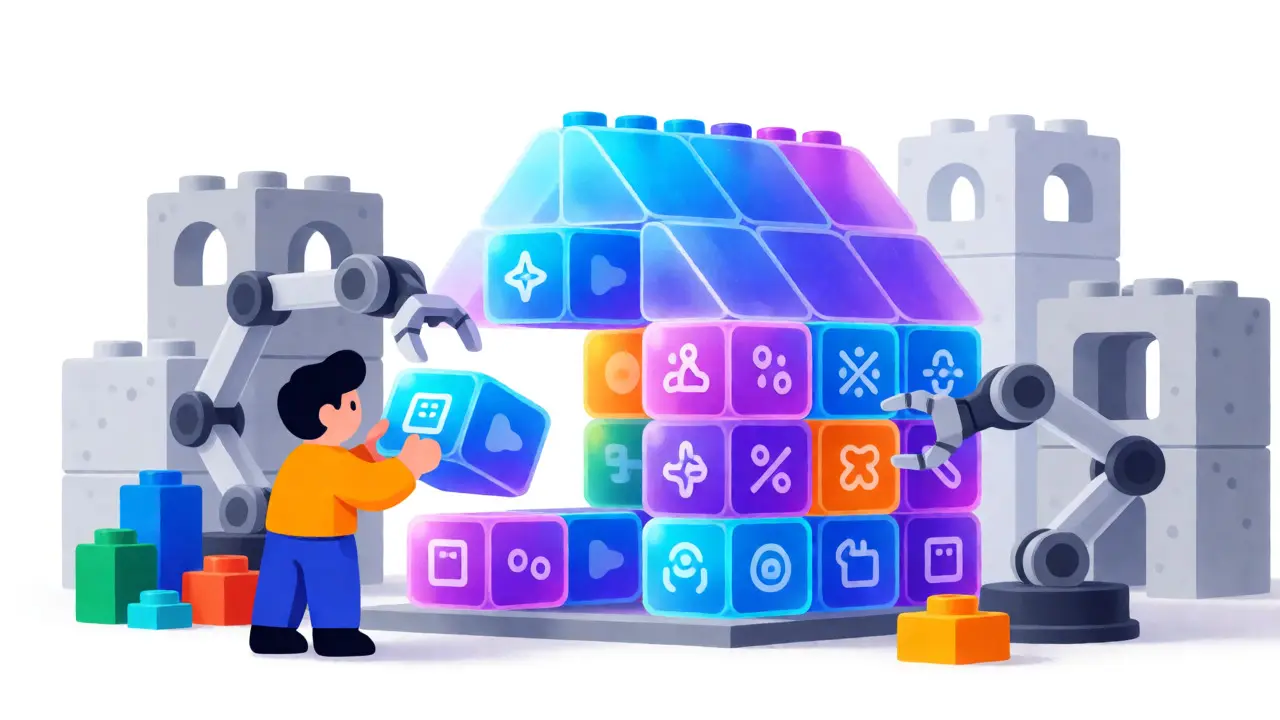

Imagine you need to build a house. In the traditional crypto world, that’s like being forced to use one specific blueprint for everything-whether you’re building a tiny shed or a skyscraper. You can’t easily swap out the plumbing for better pipes without tearing down the walls. NULS is a modular, microservices-driven blockchain infrastructure designed to let developers build custom blockchains using plug-and-play modules. It treats blockchain components like LEGO bricks rather than a solid concrete slab. If you’ve ever wondered why some chains feel rigid while others adapt quickly to business needs, this is where NULS comes in.
This guide breaks down exactly what NULS is, how its unique architecture works, and why it matters for enterprises looking to deploy blockchain solutions without starting from scratch. We’ll look at the tokenomics, the consensus mechanism, and the practical tools like ChainBox that make this ecosystem tick.
The Core Concept: Modularity Over Monoliths
Most major blockchains are monolithic. This means all their functions-networking, storage, consensus, smart contracts-are tightly coupled into one codebase. If you want to upgrade one part, you often risk breaking another. NULS flips this model on its head by adopting a microkernel architecture inspired by Linux. The core system provides only the basic mechanisms, while everything else runs as independent modules.
Think of the microkernel as the operating system base, and the functional modules as apps you install. Need a different consensus algorithm? Swap the module. Want a new storage solution? Plug it in. This decoupling allows for faster upgrades and reduces the risk of system-wide failures. If one module crashes, the rest of the chain keeps running. For businesses, this means you can tailor a blockchain specifically for your supply chain or finance app without inheriting the baggage of a general-purpose platform like Ethereum.
How Proof of Credit Consensus Works
Security and efficiency are usually at odds in blockchain design. Proof of Work (PoW) is secure but energy-hungry. Proof of Stake (PoS) is efficient but can lead to centralization among the wealthy. NULS introduces Proof of Credit (PoC), which combines delegated proof-of-stake with a credit rating system to determine node eligibility and rewards.
Here’s the logic: nodes don’t just stake tokens; they also build a "credit" score based on their performance and behavior over time. High-credit nodes get more opportunities to produce blocks and earn rewards. This creates a meritocracy where reliability matters as much as capital. It’s not perfect-no consensus mechanism is-but it aims to balance fairness with security. Unlike pure PoS, where rich whales dominate, PoC tries to reward consistent, honest operation.
ChainBox: The Toolkit for Building Custom Chains
If modularity is the theory, ChainBox is the software development kit (SDK) that allows users to rapidly assemble new blockchains by selecting specific functional modules. It’s essentially a drag-and-drop interface for blockchain creation. Instead of writing thousands of lines of code from zero, a developer selects pre-built modules for networking, accounts, ledger, and consensus.
Why does this matter? Speed. Building a custom blockchain used to take months. With ChainBox, an enterprise can spin up a testnet in days. The toolkit supports Java natively, which is huge because Java is the language of choice for many large corporations. This lowers the barrier to entry significantly. You’re not learning a niche language like Solidity or Rust if you don’t have to; you’re working with tools your team already knows.
| Feature | NULS (Modular) | Traditional (Monolithic) |
|---|---|---|
| Upgrade Process | Independent module updates | Full network hard forks |
| Customization | High (plug-and-play modules) | Low (fixed architecture) |
| Development Language | Java, Multi-language support | Solidity, Rust, Go (varies) |
| Risk of Failure | Isolated to specific module | System-wide potential outage |

Cross-Chain Interoperability and AI Integration
A single chain is rarely enough. Enterprises often need to move assets or data between different networks. NULS builds cross-chain technology directly into its infrastructure, allowing seamless communication between the main NULS chain and subchains built on its platform. This isn’t just about swapping tokens; it’s about sharing state and data securely across isolated environments.
Recently, the project has leaned into NULS AI, branding that highlights the integration of artificial intelligence tools with modular blockchain services. While details remain sparse, the goal is clear: use AI to optimize module selection, predict network loads, or automate governance decisions. It’s an ambitious pivot, trying to stay relevant in a market where AI is the current buzzword. Whether it delivers tangible utility or just marketing fluff remains to be seen, but the technical foundation for such integrations exists thanks to the modular design.
Tokenomics: Utility Beyond Speculation
The native asset, NULS, serves multiple roles within the ecosystem. It’s not just a speculative coin you trade on exchanges. Its primary utilities include:
- Node Setup: You need NULS to register and run validator nodes.
- Voting: Token holders vote for delegates who maintain the network.
- Staking: Users can stake NULS to earn yields or participate in the SCO (Staked Coin Output) platform.
- Resource Payment: Creating tokens or deploying smart contracts on subchains requires burning or locking NULS.
Market data shows significant volatility. As of mid-2026, prices have fluctuated wildly compared to previous years, reflecting broader market trends and liquidity issues common in smaller-cap altcoins. However, the token’s value proposition is tied to actual usage-more chains built on NULS means more demand for the token for staking and fees.
Who Is NULS For?
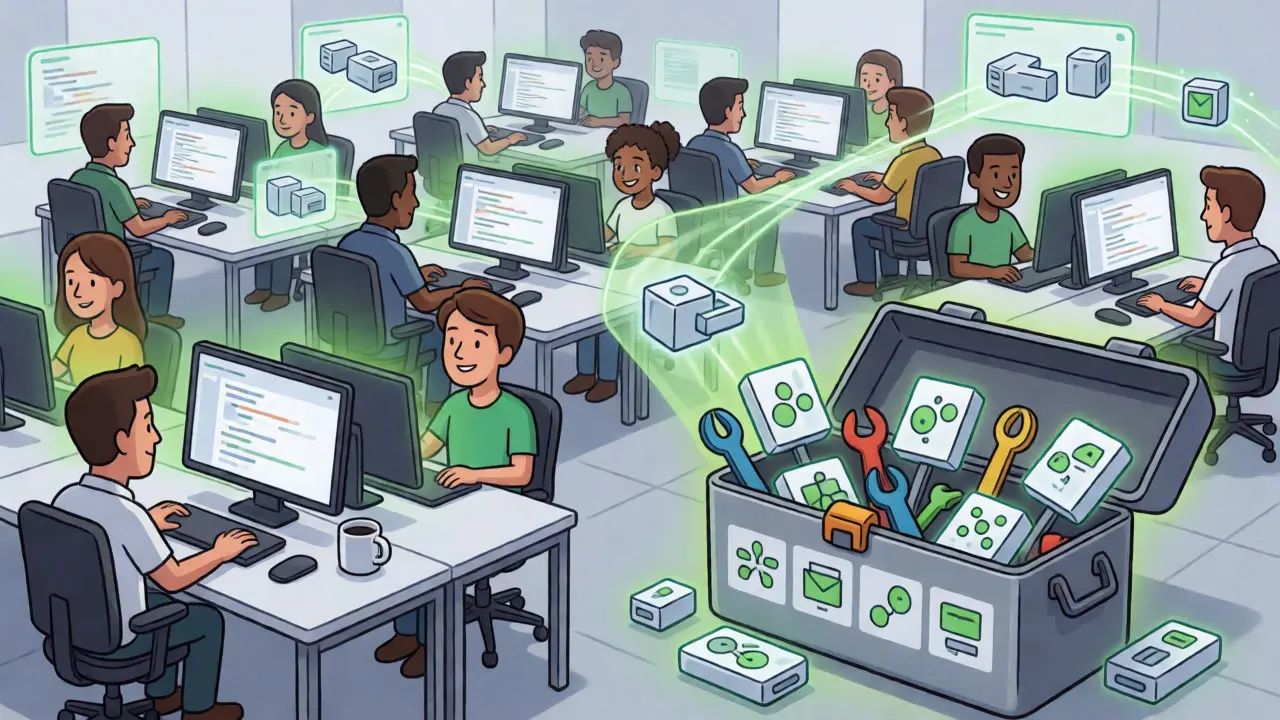
NULS isn’t trying to replace Bitcoin or compete directly with Ethereum’s DeFi dominance. It targets a specific niche: enterprises and developers who need a private or consortium blockchain that can interact with public networks. If you’re a logistics company wanting a transparent tracking system that occasionally settles payments on a public chain, NULS offers a way to build that custom tracking chain quickly using ChainBox, then bridge it to the outside world.
It’s also appealing to Java developers. Most blockchain projects force you to learn new languages. NULS lets you stick with Java, leveraging existing enterprise talent pools. This practical compatibility is a strong selling point for corporate adoption.
What makes NULS different from other modular blockchains like Cosmos?
While both offer interoperability, NULS focuses heavily on a microkernel architecture where every component is a swappable module, similar to Linux. Cosmos uses a hub-and-zone model with specific protocols (IBC). NULS also emphasizes Java-based development and its proprietary Proof of Credit consensus, whereas Cosmos typically uses Tendermint BFT.
Can I mine NULS with my computer?
No, NULS does not use Proof of Work mining. Instead, it uses Proof of Credit, which relies on staking. You lock up NULS tokens to become a delegate candidate or voter. Your ability to earn rewards depends on your stake size and your node's credit rating, not your computational power.
What is ChainBox?
ChainBox is NULS's software development kit (SDK). It allows developers to select pre-built modules for networking, consensus, and storage to create a custom blockchain rapidly. It simplifies the process of launching a new chain by abstracting complex underlying code.
Is NULS suitable for retail investors?
It can be, but it carries higher risk due to lower liquidity compared to top-tier coins like BTC or ETH. Retail investors should view it as a bet on the adoption of modular enterprise blockchain solutions. Staking NULS can provide yield, but price volatility is significant.
How does the Proof of Credit system prevent centralization?
By incorporating a credit rating system alongside staking. Nodes must maintain good performance and uptime to keep high credit scores. This prevents purely wealthy entities from dominating solely through capital, rewarding operational reliability instead.
Final Thoughts
NULS represents a pragmatic approach to blockchain infrastructure. It sacrifices some decentralization purity for enterprise usability, speed, and customization. The modular design solves real problems for developers tired of rigid platforms. While it faces stiff competition from larger ecosystems, its focus on Java compatibility and rapid deployment via ChainBox gives it a distinct lane. If you’re building a business application that needs blockchain features without the headache of managing a full protocol stack, NULS deserves a look.
Comments (9)

- Jess Emmerson
- September 4, 2026 AT 20:49 PM
honestly the java support is the real sleeper feature here. most enterprise devs are stuck in legacy systems and forcing them to learn rust or solidity just for a pilot project kills momentum. chainbox lowering that barrier is huge.

- Gabriela Gonzalez
- September 5, 2026 AT 15:27 PM
This is exactly what the industry needs right now!! 🚀 Stop trying to reinvent the wheel with every new L1 and start building on top of modular infrastructure! The future is interoperable and customizable, not monolithic silos! 💪🔥

- Ritchie Grogg
- September 5, 2026 AT 22:26 PM
i feel like i'm drowning in noise sometimes... everyone screams about scalability but nobody talks about how exhausting it is to maintain these rigid chains. nuls feels like a breath of fresh air, like someone finally acknowledged that we're tired of tearing down walls just to change a pipe. it's sad though, because most people won't get it until they've been burned by a bad hard fork. i just hope this doesn't turn into another ghost town where developers leave because the community isn't emotionally supportive enough to keep them engaged during the bear market. we need more empathy in tech, not just better code.

- Rishi Mehta
- September 6, 2026 AT 22:02 PM
oh please spare me the marketing fluff about ai integration. it's just a buzzword slapped onto a half-baked consensus mechanism to attract retail investors who don't understand credit scoring. you think swapping modules fixes the fundamental flaw of centralization? no. it just makes the centralization easier to manage for the few insiders who control the module registry. while you all clap your hands thinking you've solved blockchain trilemma you're actually just creating a walled garden for corporations to exploit users without the transparency of true decentralization. it's pathetic really.

- Michael Rubin
- September 8, 2026 AT 09:09 AM
I appreciate the breakdown of the microkernel architecture. It helps clarify why NULS positions itself differently from Cosmos. I will take some time to digest the implications for enterprise adoption before forming a strong opinion.

- Emerson Droguet
- September 9, 2026 AT 18:14 PM
It is worth noting that the emphasis on Java compatibility significantly lowers the opportunity cost for existing financial institutions. If one considers the sheer volume of legacy Java applications running in banking sectors today, the ability to integrate blockchain logic without retraining the entire workforce is a pragmatic advantage. Furthermore, the Proof of Credit model introduces a behavioral incentive structure that traditional staking lacks. One must consider whether this credit score is transparently auditable by third parties; if not, the meritocracy argument weakens considerably. Nevertheless, as a tool for rapid prototyping within corporate environments, ChainBox appears to be a robust solution. I encourage readers to look beyond the token price and examine the developer documentation for API stability metrics.

- Sheryl Nelsen Hutton
- September 9, 2026 AT 19:43 PM
While the modularity paradigm offers a compelling narrative regarding architectural flexibility and reduced technical debt accumulation over extended development cycles, one must critically assess the potential fragmentation risks inherent in such decentralized component ecosystems, particularly when considering the long-term maintenance overhead associated with ensuring backward compatibility across disparate module versions and the subsequent cognitive load imposed upon developers who must navigate an increasingly complex dependency graph rather than adhering to a singular, unified protocol standard which traditionally fosters greater network effects through shared understanding and streamlined interoperability patterns.

- Kathryn Haber
- September 11, 2026 AT 16:20 PM
we are so obsessed with efficiency that we forget the soul of the thing. a blockchain isn't just a database its a social contract written in code. when you make it too easy to swap out the rules like legos do you lose the trust that comes from rigidity? maybe the pain of upgrading is what keeps us honest. maybe we shouldn't want it to be easy. maybe we should want it to be hard so only those who truly believe stay. i don't know. i just feel like we're building castles on sand and calling it innovation because the sand moves faster now.

- Alexander James
- September 13, 2026 AT 13:29 PM
Listen, I get the excitement, but let's be real about the moral hazard here. By focusing on 'enterprise usability' and 'speed', NULS is essentially admitting that pure decentralization was a failed experiment for business. That's fine! But don't pretend it's still the same ethos. We are trading sovereignty for convenience. And frankly, seeing big corps adopt this means they will dictate the modules. Who decides which module gets deprecated? Not the community. It's a boardroom decision. So yes, build your custom chains, but remember that you are renting space in someone else's digital landlord's apartment. It’s convenient, sure, but it’s not freedom. And in crypto, freedom is the only currency that matters in the end.