
Mining Difficulty Impact Calculator
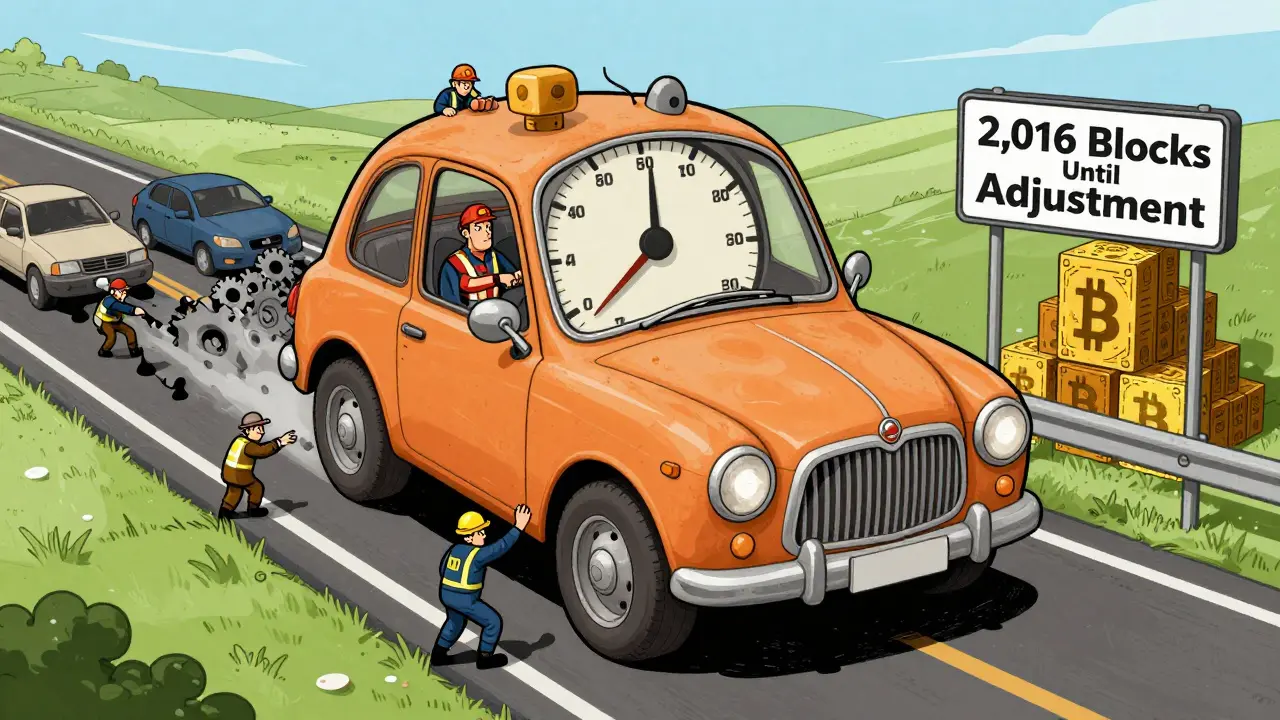
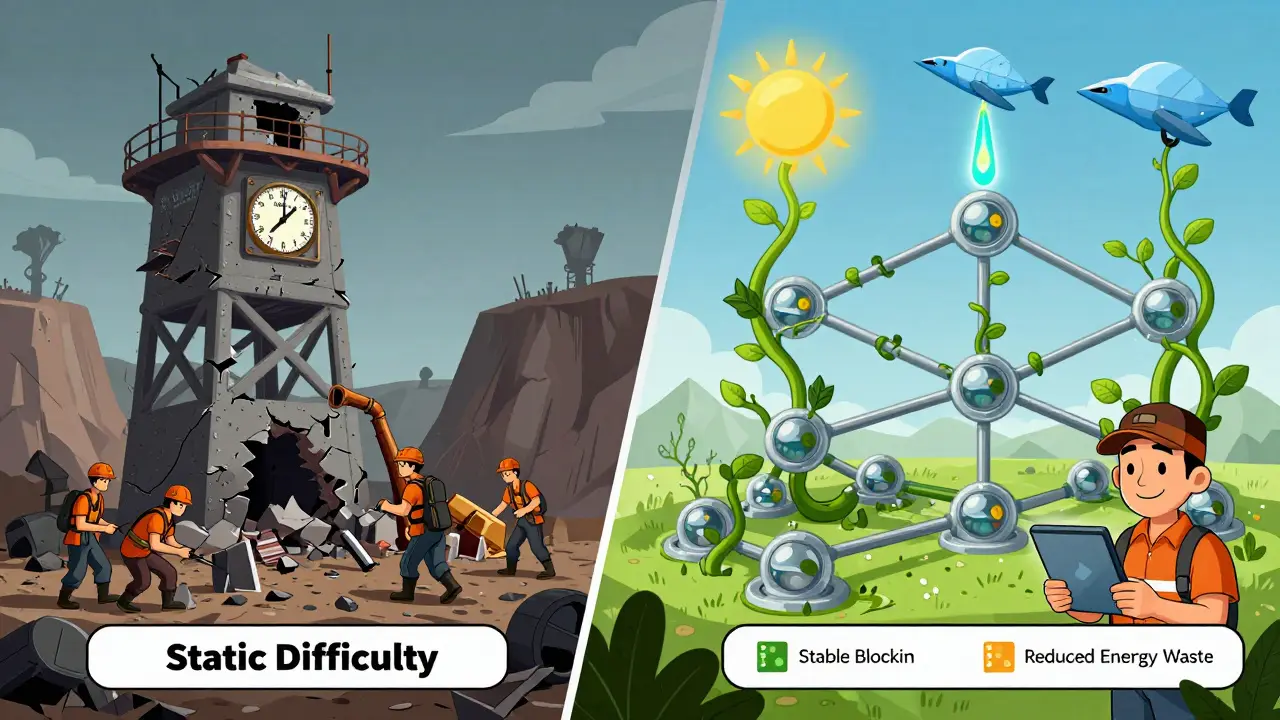
The current system for adjusting mining difficulty in blockchains like Bitcoin is broken. It waits two weeks - exactly 2,016 blocks - before even thinking about changing how hard it is to mine. That’s like trying to steer a car by checking the speedometer once every hour. If traffic suddenly clears, you keep accelerating. If it jams, you keep cruising. And that’s exactly what happens in blockchain networks when miners flood in or vanish overnight.
In October 2024, Bitcoin’s mining difficulty hit a record 95.7 trillion. That’s not a number you can ignore. It meant miners had to spend more electricity, buy newer machines, or move to cheaper power just to break even. Meanwhile, during the 2021 China mining ban, Bitcoin’s hash rate dropped by over 50% in days. The network waited two weeks to respond - and then slashed difficulty by 28%. That’s the biggest single drop in Bitcoin’s history. By then, the damage was done: miners were already shutting down, and the network had been vulnerable to attacks for weeks.
How Mining Difficulty Works Today
Right now, Bitcoin’s algorithm measures how long it took to mine the last 2,016 blocks. If it took less than 20,160 minutes (14 days), difficulty goes up. If it took longer, it goes down. Simple math. But here’s the catch: it doesn’t care why. A miner in Kazakhstan upgrades their rig? Difficulty rises. A blackout in Texas shuts down 10% of global hash power? Difficulty stays high for days. No reaction. No adaptation.
This rigidity creates predictable windows for attacks. Bad actors can temporarily flood the network with cheap hash power - say, by renting GPUs from cloud providers - mine a few blocks fast, then vanish. The network doesn’t notice until two weeks later. That’s called selfish mining. And it’s gotten easier as mining becomes more centralized.
Other blockchains tried fixes. Litecoin adjusts every 2.5 minutes. Ethereum used a "difficulty bomb" to slowly make mining harder - not to improve security, but to force users off Proof of Work entirely. But neither solved the core problem: delayed response.
What Adaptive Mining Difficulty Actually Means
Adaptive mining difficulty isn’t just faster adjustments. It’s real-time tuning. Think of it like cruise control that senses every hill, wind gust, and traffic jam - and adjusts throttle instantly. Instead of waiting for 2,016 blocks, the network checks every single block. It looks at:
- How long it took to mine the last block
- How fast new blocks spread across nodes
- Patterns in miner behavior - are they abandoning blocks? Are they switching locations?
- Hash rate distribution - is one pool suddenly controlling 40%?
Research from the Journal of Blockchain and Cryptocurrency shows a new protocol that lets miners record abandoned blocks as special transactions. These aren’t wasted. They become data points. The network learns from mistakes. If miners keep dropping blocks because difficulty is too high, the system lowers it - immediately. No two-week lag.
This isn’t theoretical. Testnets using adaptive algorithms have cut block time variance by 70%. During simulated hash rate spikes, block times stayed within 8-12 seconds instead of plunging to 2 seconds or spiking to 30 seconds. That’s stability. That’s reliability.
Why It Matters for Security
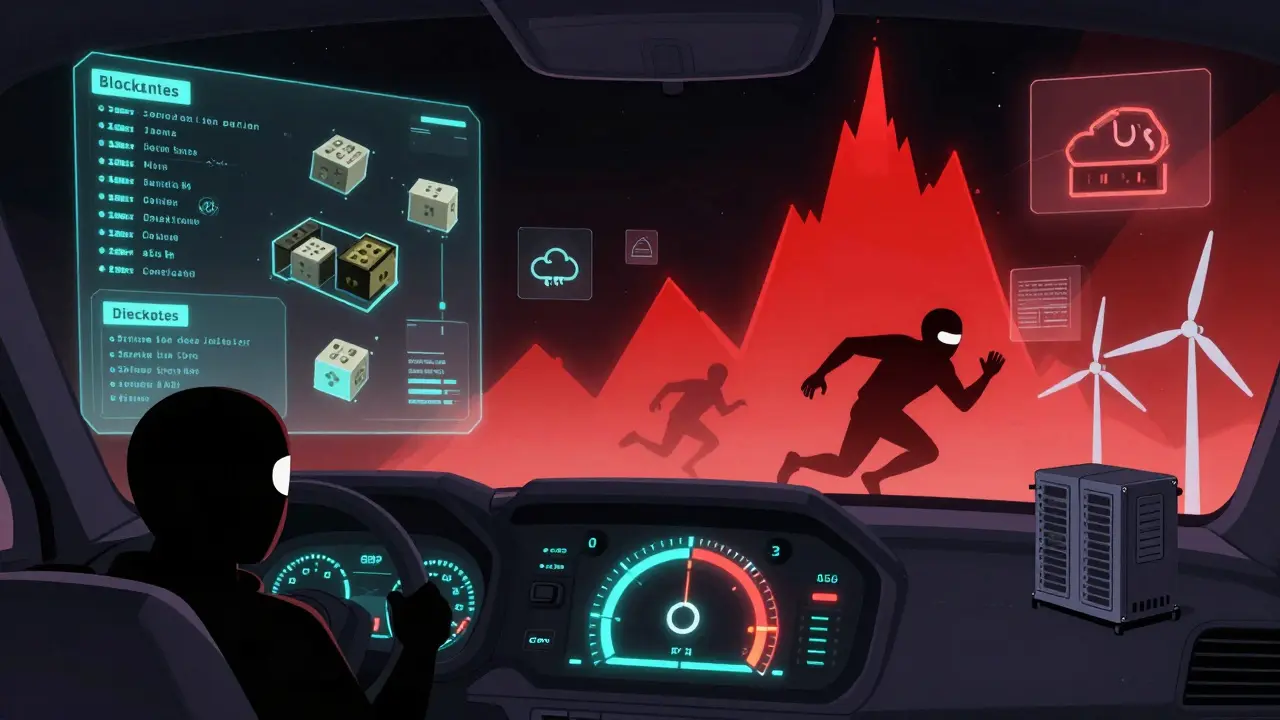
Static difficulty is a gift to attackers. They know exactly when the next adjustment is coming. They time their attacks. They wait for a drop. They exploit the lag.
Game theory models show that adaptive systems change the math. If you can’t predict when difficulty will change, there’s no profit in selfish mining. Why spend $500,000 on rented hardware to mine for 36 hours, only to have difficulty spike 15% before you cash out? It’s not worth it anymore.
Adaptive systems also prevent network overload. Imagine a sudden surge in mining - maybe a new ASIC factory opens in Iceland. Under today’s system, blocks could start appearing every 2 seconds. That floods the network with transactions, overwhelms nodes, and causes delays. Adaptive difficulty detects the surge within minutes and raises the bar - keeping block times steady.
And it’s not just about Bitcoin. If Ethereum’s post-merge research on difficulty algorithms is any clue, the future of Proof of Work is being rewritten - even if Bitcoin resists.
The Hidden Costs
Adaptive mining isn’t magic. It comes with trade-offs.
Full nodes - the computers that verify every transaction - now need to store more data. Abandoned blocks, timestamps, miner IDs, propagation delays - all become part of the chain. That means more storage. More bandwidth. More processing power.
Small miners worry. They’re used to planning around two-week cycles. Buy new rigs? Wait for the next adjustment. Budget for electricity? Know exactly when difficulty will drop. With adaptive systems, that predictability vanishes. Profitability becomes a moving target.
Some mining pools already use real-time dashboards. But for a solo miner with a few rigs in their garage? They’ll need new tools. New software. New skills. The learning curve isn’t steep, but it’s real.
And then there’s consensus. Bitcoin’s developers are famously cautious. They won’t upgrade unless they’re 99% sure it won’t break something. That’s why, even though the tech exists, Bitcoin hasn’t adopted it. The community is divided. Some say stability is worth the risk. Others say the system is already broken - and waiting is the real danger.
What’s Already Changing
Adaptive difficulty isn’t coming. It’s already here - just not on Bitcoin.
Private blockchains, like those used by banks or supply chain firms, have been using adaptive algorithms for years. No need for Bitcoin-style consensus. They can upgrade overnight.
New public chains? Most of them bake it in from day one. Chains like Zcash, Ravencoin, and newer Layer 2 protocols use dynamic difficulty. They don’t wait. They adjust. They learn. And they’re faster, cheaper, and more secure because of it.
Even Bitcoin’s competitors are pushing for change. Ethereum’s research into post-merge difficulty models is being studied by Bitcoin Core developers. Machine learning is being tested to predict difficulty changes based on energy prices, hardware availability, and even weather patterns in mining hubs.
By 2026, most new blockchains will use adaptive difficulty as standard. The question isn’t if - it’s when Bitcoin will follow.
The Road Ahead
Adaptive mining difficulty isn’t just about efficiency. It’s about survival.
Regulators are watching. The EU’s MiCA rules, the U.S. Senate hearings on crypto energy use, the carbon taxes being debated in Canada - all of them target Proof of Work. Networks that can prove they’re optimizing energy use will survive. Those stuck with outdated systems won’t.
Adaptive systems could cut energy waste by 15-25%. That’s not a small number. That’s the difference between being labeled a climate threat and being seen as a responsible innovation.
For miners, it means more volatility in the short term. But in the long run, it means fewer sudden crashes. Fewer wiped-out operations. Fewer abandoned rigs.
For users, it means faster confirmations. Fewer delays. A network that doesn’t break when the world changes.
The future of mining difficulty isn’t about making it harder. It’s about making it smarter.
Static systems are relics. Adaptive systems are the only way forward.
Comments (5)

- Jon Visotzky
- December 7, 2025 AT 06:36 AM
bro the car analogy is spot on i mean who the hell steers by checking the speedometer once an hour
bitcoin’s like that one uncle who refuses to upgrade his iphone because ‘it still works’
but seriously if your network can’t react to a 50% hash rate drop in days you’re not secure you’re just lucky

- Isha Kaur
- December 8, 2025 AT 03:14 AM
i’ve been thinking about this for weeks and honestly the real issue isn’t just the two-week delay-it’s that we’re treating mining like a mechanical system when it’s actually a living, breathing ecosystem of humans, machines, and energy markets
right now the algorithm is blind to the fact that a miner in kazakhstan might flip a switch and vanish because the power bill doubled overnight, or that a new ASIC factory opens in iceland and suddenly 10% of global hash power appears out of nowhere
adaptive difficulty isn’t just about speed-it’s about context awareness
if the network could learn from abandoned blocks, track propagation delays, and sense when a single pool is creeping toward 40% control, we wouldn’t just be safer-we’d be more resilient
the trade-off? yes, full nodes need more storage and solo miners lose predictability
but isn’t that better than losing your entire rig because the difficulty didn’t drop until after you’d already gone bankrupt?
we’ve been clinging to this 14-day cycle like a security blanket, but it’s not keeping us safe-it’s just making us slower to react
and honestly, if we’re going to keep calling this ‘digital gold,’ we need to treat it like something that can adapt to real-world shocks, not something frozen in 2009
bitcoin’s not broken because it’s old-it’s broken because it refuses to evolve

- Glenn Jones
- December 8, 2025 AT 18:35 PM
OMG THIS IS THE MOST IMPORTANT THING EVER
THEY’RE JUST GONNA LET BITCOIN DIE BECAUSE SOME CORE DEV IS AFRAID OF A HARD FORK???
THIS IS A 500K ATTACK WINDOW PEOPLE
CLoud GPU RENTALS ARE ALREADY BEING USED TO FLOOD THE NETWORK
AND YOU’RE TALKING ABOUT ‘STABILITY’ LIKE IT’S A FEATURE NOT A FLAW
THEY’RE NOT KEEPING IT SECURE THEY’RE KEEPING IT SLOW
AND THE ENERGY WASTE???
LIKE 25% OF MINING POWER IS JUST SPINNING WHEELS BECAUSE DIFFICULTY IS OUT OF TOUCH
THIS ISN’T INNOVATION THIS IS A CRIME AGAINST TECHNOLOGY
IF YOU’RE NOT FOR ADAPTIVE DIFFICULTY YOU’RE PROBABLY A MINING POOL OWNER WHO WANTS TO KEEP THE STATUS QUO
STOP HIDING BEHIND ‘CAUTION’-THIS IS A CLEAR AND PRESENT DANGER

- Madison Agado
- December 10, 2025 AT 11:46 AM
it’s funny how we treat blockchain like it’s this perfect, immutable machine-but it’s really just a reflection of human behavior, greed, and inertia
adaptive difficulty isn’t a technical upgrade, it’s a philosophical one
we’re choosing to prioritize predictability over resilience
but resilience isn’t about never changing-it’s about changing smartly
if we can build AI that predicts stock crashes and weather patterns, why can’t a blockchain adjust to its own miners’ movements?
the fear of complexity is not a valid reason to ignore systemic risk
we don’t fix bridges by ignoring cracks-we patch them before they become chasms
bitcoin’s biggest threat isn’t regulators or hackers-it’s its own unwillingness to evolve
and if the community keeps valuing dogma over pragmatism, we’ll wake up one day and realize the network we loved is just a museum piece

- Roseline Stephen
- December 10, 2025 AT 23:41 PM
just wanted to say i’ve been solo mining for 3 years and the unpredictability scares me-but i get why we need this.
Post-Comment
Categories
Popular Articles