
Most people searching for Fraxswap (Fantom) are looking for a fast, cheap way to swap tokens on the Fantom network. But here is the hard truth: while the protocol is technically impressive, it is currently one of the quietest decentralized exchanges on the chain. If you are holding FRAX or FXS and want to move them without touching a centralized exchange, this platform works. But if you are expecting deep liquidity or high daily volume, you might be disappointed.
This review breaks down what Fraxswap actually offers on Fantom, how its unique TWAMM feature changes the game for large traders, and whether it holds up against giants like SpookySwap or SpiritSwap. We will look at the real data from 2025-2026 to help you decide if your wallet belongs there.
What Exactly Is Fraxswap on Fantom?
Fraxswap is a decentralized automated market maker (AMM) protocol developed by Frax Finance that allows users to trade tokens using smart contracts instead of an order book. The version deployed on the Fantom blockchain mirrors the main Ethereum deployment but operates within the specific ecosystem of the Fantom network.
Unlike traditional exchanges where buyers and sellers match orders, Fraxswap uses liquidity pools. You swap tokens against a pool of assets provided by other users. The core technology follows the constant product formula ($x \times y = k$), similar to Uniswap. However, Fraxswap adds a proprietary layer called TWAMM (Time-Weighted Average Market Maker).
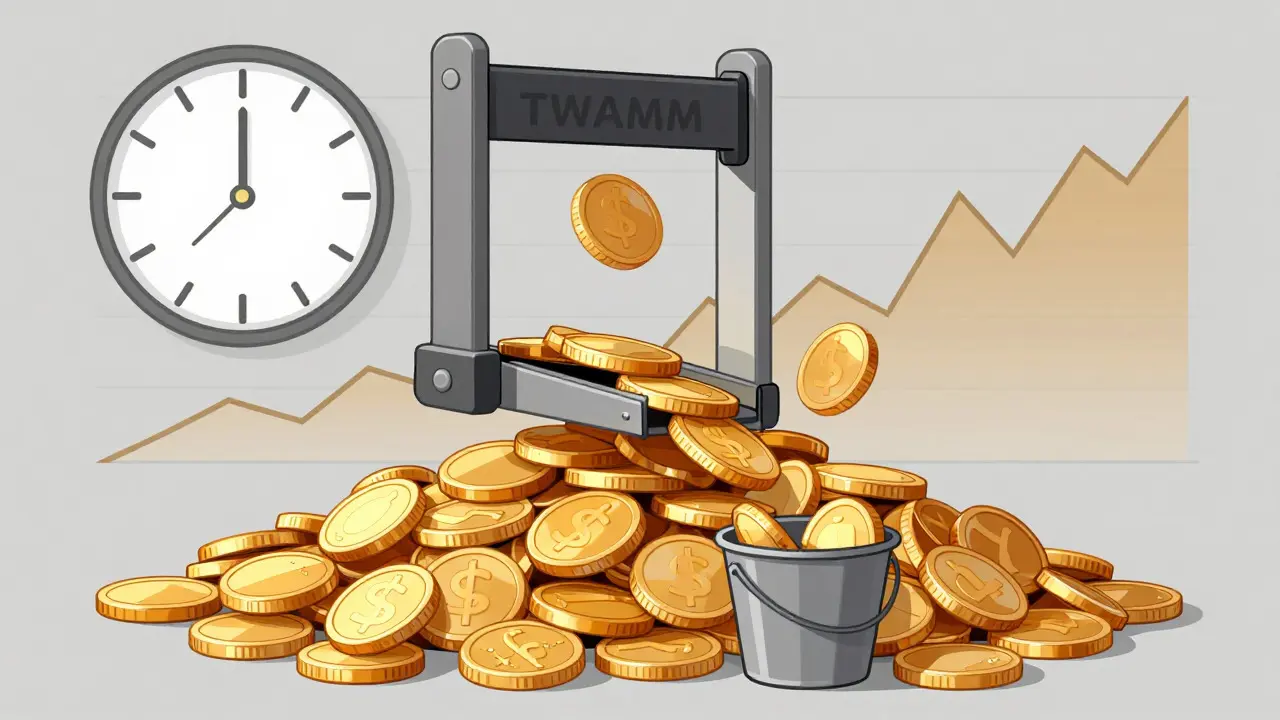
Here is why that matters: standard AMMs execute trades instantly. If you sell a large amount of a token, the price drops immediately because you are eating through the liquidity pool. This is known as slippage. TWAMM splits large trades into smaller chunks executed over time. This minimizes the impact on the current price, making it ideal for DAOs managing treasuries or institutions moving significant capital.
Liquidity and Trading Volume: The Reality Check
Let’s talk numbers, because this is where Fraxswap (Fantom) struggles. As of late 2025 and early 2026, the platform is classified as an "Untracked Listing" on major analytics sites like CoinMarketCap. This usually means the trading volume is too low to register consistently on top-tier dashboards.
Data from CoinCodex shows a stark picture. In recent periods, the total 24-hour trading volume for Fraxswap V1 on Fantom has hovered around $0.66. Yes, less than one dollar. The most active pair, WFTM/FRAX, accounts for nearly all of this activity. Compare this to competitors:
| Platform | Avg Daily Volume | Primary Use Case | Liquidity Depth |
|---|---|---|---|
| SpookySwap | $10M - $50M+ | General retail trading | High |
| SpiritSwap | $5M - $20M+ | Stablecoin swaps | Medium-High |
| Beethoven X | $2M - $10M | Yield farming | Medium |
| Fraxswap (Fantom) | < $100 | Niche FRAX/FXS swaps | Very Low |
If you are trying to swap more than a few hundred dollars worth of tokens on Fraxswap (Fantom), expect significant slippage. The liquidity pools are simply not deep enough to absorb large orders without moving the price against you. For small swaps of FRAX or FXS, it works fine. For anything else, you are better off elsewhere.
The TWAMM Feature: Who Is It Actually For?
You might wonder why anyone would use a DEX with such low volume. The answer lies in the TWAMM functionality. While retail traders care about speed, institutional players care about price efficiency.
Imagine a DAO holds 1 million FRAX tokens and needs to convert them to FTM over two weeks to pay for gas fees. Selling 1 million FRAX at once on a low-liquidity pool would crash the price. They would lose thousands of dollars in value just due to market impact. By using Fraxswap’s TWAMM module, they can schedule the sale to happen slowly over 14 days. The algorithm executes small buys/sells throughout the day, averaging out the price and minimizing loss.
This feature makes Fraxswap a specialized tool rather than a general-purpose exchange. It is not designed for the average user flipping memes or swapping stablecoins for lunch money. It is built for treasury management. If you are running a project or managing a large portfolio, this is a genuine utility. If you are a casual trader, it is irrelevant overhead.
How It Compares to Other Fantom DEXs
To understand where Fraxswap fits, we need to look at its direct competitors on the Fantom network. Each platform serves a different niche.
- SpookySwap: The volume king. It has the deepest liquidity and the most pairs. If you want to trade almost any token on Fantom, this is the default choice. It lacks the advanced TWAMM features but wins on raw usability and depth.
- SpiritSwap: Focuses heavily on stablecoins. If you are swapping USDC for FRAX or DAI for FTM, SpiritSwap often offers tighter spreads and lower fees due to its focused liquidity pools.
- Beethoven X: Known for complex yield farming strategies. It attracts sophisticated DeFi users who want to optimize returns, but the interface is steeper for beginners.
- Fraxswap (Fantom): Niche player. Its strength is integration with the Frax ecosystem and the TWAMM tool. Its weakness is lack of community and low volume.
For 90% of users, SpookySwap or SpiritSwap will provide a better experience. You get faster execution, better prices, and a more active community. Fraxswap only becomes the superior choice if you specifically need TWAMM execution or are deeply embedded in the Frax stablecoin ecosystem.
Security and Smart Contract Risks
When using any DeFi protocol, security is paramount. Fraxswap is part of the Frax Finance ecosystem, which has undergone multiple audits by reputable firms. The smart contracts are open-source, meaning anyone can inspect the code before interacting with it.
However, "audited" does not mean "risk-free." Here are the specific risks for Fraxswap (Fantom):
- Smart Contract Bugs: Even audited code can have vulnerabilities. Always check the latest audit reports on the Frax GitHub or documentation page before depositing large sums.
- Low Liquidity Risk: This isn't a hack risk, but an economic risk. If a rug pull happens on a minor token paired with FRAX on Fraxswap, the exit liquidity might be non-existent. You could be stuck holding a worthless asset because no one else wants to buy it.
- Protocol Abandonment: With such low usage, there is a risk that the team focuses resources solely on the Ethereum version. If the Fantom deployment loses maintenance, bugs may go unfixed for longer periods.
Mitigation strategy: Only use Fraxswap (Fantom) for assets you already hold and plan to keep long-term. Do not use it as a primary entry point for new investments. Use it for exiting positions in FRAX or FXS when convenient, not for aggressive trading.
Getting Started: A Practical Guide
If you’ve decided to try it out, here is how the process works. It follows standard Web3 patterns, so if you have used MetaMask or Trust Wallet before, you’ll feel right at home.
- Connect Your Wallet: Open the Fraxswap interface and connect your Web3 wallet (MetaMask, Rabby, etc.). Make sure your wallet is set to the Fantom network.
- Check Gas Fees: Ensure you have some FTM in your wallet for transaction fees. Fantom gas fees are negligible, usually under $0.01 per transaction.
- Select Your Pair: Choose the token you want to sell and the token you want to buy. Note that the list of available pairs is limited compared to SpookySwap.
- Set Slippage Tolerance: Because liquidity is low, you may need to increase your slippage tolerance (the percentage price movement you accept). Start with 1-2%. If the transaction fails, try increasing it slightly.
- Execute Trade: Click Swap and confirm in your wallet. Wait for the confirmation. On Fantom, this takes seconds.
Pro Tip: Before executing a large trade, use a simulator or check the current pool depth on a block explorer. If the pool size is less than 10x your trade size, expect significant price impact.
Is Fraxswap (Fantom) Right for You?
There is no single answer, but here is a quick decision framework:
- Use Fraxswap if: You are a DAO treasurer, an institutional trader, or a heavy holder of FRAX/FXS who needs to move assets with minimal price impact. You value the TWAMM feature over raw speed.
- Avoid Fraxswap if: You are a retail trader looking for the best price on common pairs (like FTM/USDC). You want high liquidity for large entries/exits. You prefer a vibrant community and frequent updates.
For most users, the safer bet is to stick with established giants like SpookySwap for general trading and only dip into Fraxswap when dealing specifically with Frax ecosystem tokens or needing scheduled executions. The technology is solid, but adoption is the bottleneck. Until volume picks up, it remains a niche tool rather than a mainstream exchange.
Is Fraxswap (Fantom) safe to use?
Yes, it is generally safe. The contracts are audited and open-source. However, always verify the official URL to avoid phishing sites. The main risk is not hacking, but low liquidity leading to poor trade prices.
What is the difference between Fraxswap and Uniswap?
Both are AMMs. The key difference is that Fraxswap includes a TWAMM (Time-Weighted Average Market Maker) feature that allows large trades to be executed slowly over time to reduce slippage. Uniswap primarily focuses on instant spot swaps.
Why is the trading volume on Fraxswap (Fantom) so low?
The platform targets institutional and DAO users who use TWAMM for large, slow trades. Retail traders prefer higher-volume platforms like SpookySwap for immediate liquidity. This results in very low daily volume metrics.
Can I earn rewards by providing liquidity on Fraxswap?
Yes, liquidity providers earn a share of swap fees. However, given the low volume, the annual percentage yield (APY) from fees alone is likely very low. Most yields come from external incentive programs, which vary over time.
Do I need to hold FTM to use Fraxswap on Fantom?
Yes, you need FTM (or FTMc) in your wallet to pay for gas fees. The amounts required are extremely small, usually fractions of a cent per transaction, but you must have some balance to interact with the smart contracts.
Comments (10)

- Alan Hawkins
- August 26, 2026 AT 19:48 PM
Great breakdown. The point about liquidity depth is crucial and often overlooked in these reviews.

- Martha Packard
- August 27, 2026 AT 08:44 AM
You all are blind to the obvious truth here. This isn't a DEX, it's a graveyard for your capital. Why would you trust a platform with less than a dollar in volume when SpookySwap has millions? It's not 'niche', it's failure dressed up in fancy TWAMM jargon. The market has already spoken, and it said 'run'.
Stop pretending that institutional interest means anything for retail holders. They don't care about your slippage; they care about exit liquidity. And if the pool is empty, there is no exit. Just another place to lose money slowly while telling yourself it's 'advanced strategy'.

- Steve Sulley
- August 28, 2026 AT 07:27 AM
Martha is being dramatic as usual but she hits a nerve. I think the whole concept of TWAMM on Fantom is just... overkill. We have instant swaps for pennies. Who needs to wait two weeks to sell their tokens? It’s like using a sledgehammer to crack a nut. Unless you are a DAO with a million dollars, this is useless complexity. Also, the typo in the article title was annoying but whatever.

- Linda Jevne
- August 30, 2026 AT 04:20 AM
It’s fascinating how we view 'volume' as the sole metric of success in DeFi. Is a tool only valuable if everyone uses it? Or can a specialized instrument hold worth even in a quiet room?
Consider the analogy of a scalpel versus a kitchen knife. You wouldn't use a scalpel to chop onions, but you certainly wouldn't dismiss its existence because it doesn't cut bread quickly. Fraxswap on Fantom might be that scalpel. For the vast majority, the kitchen knife (SpookySwap) is indeed superior for daily tasks.
However, for the specific case of treasury management, where price impact is the enemy, the time-weighted approach is not just a feature, it's a necessity. The low volume is a symptom of its target audience, not necessarily a flaw in the mechanism itself. It is a quiet corner of the ecosystem, yes, but silence does not always mean emptiness. Sometimes it just means precision.

- Ellie Brooks
- August 31, 2026 AT 23:27 PM
Ooh, love the philosophical angle Linda! It really makes you stop and think about how we measure value in crypto, right? I mean, we are so focused on the hype and the daily numbers that we forget the actual utility is what keeps us alive in this space. It is so important to remember that not every tool is for every person, and that is totally okay!
I personally stick to SpookySwap for my small trades because it is fast and easy, but knowing that Fraxswap exists for the big players gives me peace of mind that the ecosystem is diverse. It shows that Fantom is not just about meme coins and quick flips, but also about serious infrastructure. Keep thinking deeply, folks!

- Kelechi Precious Nwachukwu
- September 1, 2026 AT 09:03 AM
Respectfully, the 'scalpel' analogy is a bit of a stretch. A scalpel cuts clean lines. This protocol leaves you bleeding out in slippage if you aren't careful. The risk of abandonment mentioned in the post is real. If the team ignores the Fantom version, you are left holding the bag with a broken contract. I have seen too many sidechains get neglected after the initial launch hype dies down. It is a dangerous game to play with your main assets.

- Valentine Okpala
- September 3, 2026 AT 01:11 AM
Typical. Always looking for the downside before checking if you even need the tool 🙄. But fair point on the maintenance risk. I’ve been watching Frax for a while now, and their Ethereum deployment is solid, but the Fantom one feels like an afterthought. Still, if you're holding FXS long-term, having an on-chain exit route without touching CEXs is nice. Just don't expect a party atmosphere here. It's a library, not a club 📚

- Rajni Mathur
- September 3, 2026 AT 15:27 PM
Let us be precise here, shall we? The distinction between 'low volume' and 'low utility' is critical. One must not conflate the two. The data presented in the review is accurate: the 24-hour volume is negligible. However, to label it 'failure' is intellectually lazy. It is a specialized venue. 📉📊
If one were to manage a portfolio of $50,000 in FRAX, the cost of immediate liquidation on a thin pool could exceed 2-3% due to impact. Using the TWAMM module, that cost could be reduced to near zero over a week. That is not a trivial saving; that is pure profit preservation. Therefore, for the correct user, the value proposition is robust, regardless of the retail indifference. 🧐💰

- Bill Patterson
- September 4, 2026 AT 20:40 PM
too much words. just use spooky swap. frax is dead on fantom anyway. why bother with twamm when you can just buy more ftm for cheap. save yourself the headache. most people reading this are going to ignore it anyway so might as well close the tab. simple as that. no need for the philosophy or the deep dives. just trade and move on. life is short. gas fees are low. do something fun.

- Rachel Etheridge
- September 6, 2026 AT 02:41 AM
Bill, you’re missing the point entirely! It’s not about whether *you* will use it, it’s about whether the ecosystem needs it. Diversity in DeFi is what saves us from total collapse when one chain or protocol fails. Having multiple options for swapping stablecoins is a safety net, not a waste of time. Don’t be so quick to judge a tool just because it doesn’t fit your personal workflow. Maybe next time you’ll need to move a large amount of FRAX and you’ll be glad this option exists! 🌟✨