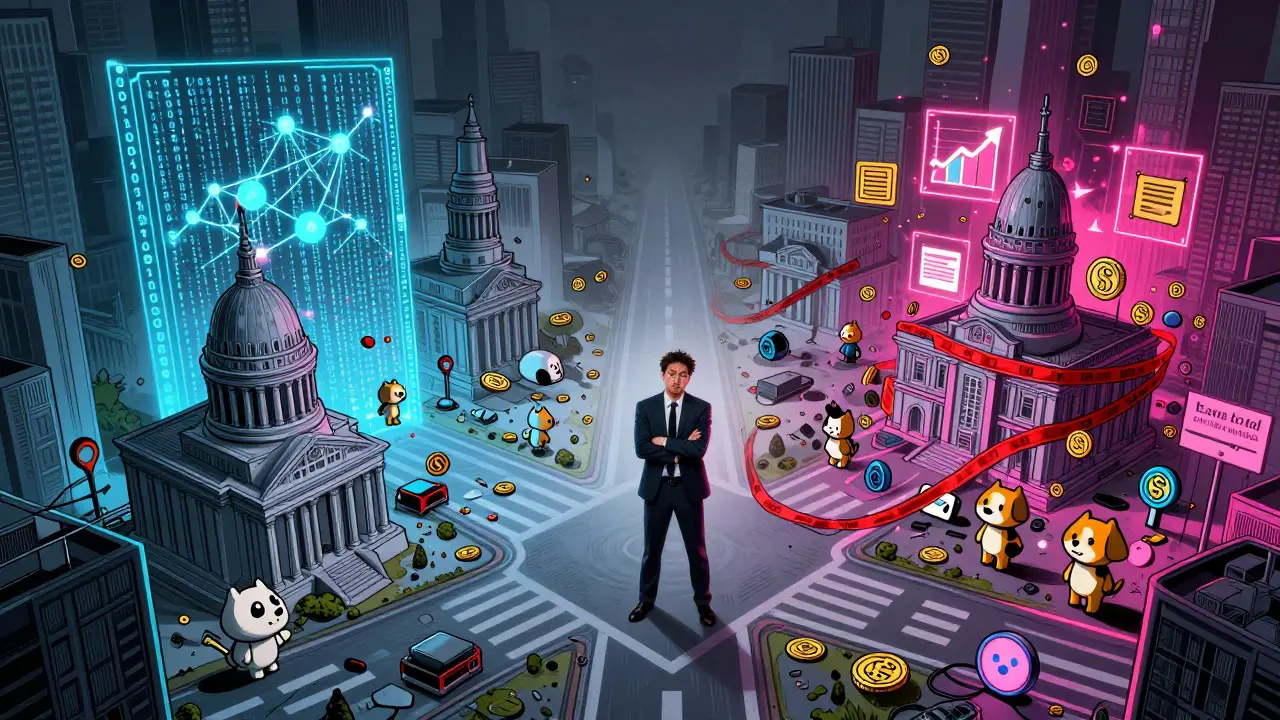

You’ve probably seen the ticker DOGEAI flash across your screen. It sits at a messy intersection of three massive trends: artificial intelligence, government efficiency narratives, and the chaotic world of memecoins. But what is it actually? Is it a serious tool for analyzing spending waste, or just another speculative token riding the coattails of Elon Musk’s Grok AI? The answer is complicated, and right now, the data suggests you should be extremely cautious.
Launched in 2025, DOGEai is a cryptocurrency token operating primarily on the Solana blockchain with secondary presence on Ethereum networks. Its narrative splits depending on who you ask. Some platforms describe it as an autonomous agent designed to uncover inefficiencies in policy decisions. Others frame it simply as the first memecoin created by Grok. This ambiguity isn't just marketing noise; it’s a red flag for investors trying to understand the asset's fundamental value.
The Conflicting Narratives: AI Utility vs. Meme Culture
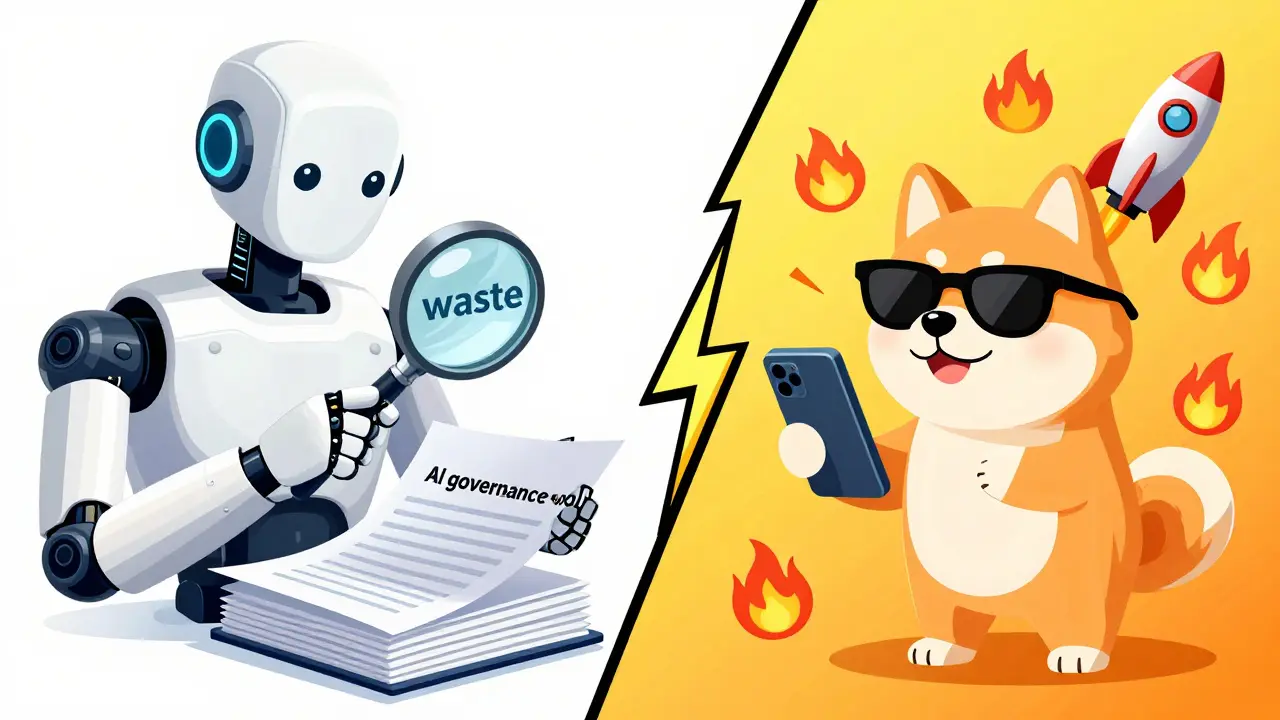
To understand DOGEAI, you have to look at the two stories being sold simultaneously. On one side, exchanges like MEXC position the token as part of a governance-focused analytical tool. The pitch here is functional: use AI to analyze government spending and find waste. This appeals to investors looking for "real-world utility" in their crypto portfolios.
On the other side, major platforms like Coinbase lean heavily into the celebrity connection. They describe $DOGEAI as a memecoin tied to Elon Musk's xAI project, specifically Grok. In the crypto world, this distinction matters immensely. A utility token relies on adoption and usage metrics. A memecoin relies entirely on hype, community sentiment, and viral momentum. When a project claims to be both without clear evidence of either, you’re often left holding a bag of pure speculation.
Technical Infrastructure: Where Does DOGEAI Live?
If you want to buy or store DOGEAI, you need to know which blockchain it lives on. The data here is fragmented, which creates friction for traders.
Most reliable tracking sources indicate that the primary version of the token operates on the Solana blockchain. Solana is known for its high speed and low transaction costs, making it a popular home for new memecoins. The contract address associated with the Solana network is 9UYAYvVS2cZ3BndbsoG1ScJbjfwyEPGxjE79hh5ipump.
However, there is also an Ethereum-based presence. Data aggregators list an Ethereum contract address (0xd31e53966bf212e860d48a3a8651a23d09a7fdc3) that allows users to import the token into wallets like MetaMask. This suggests either a wrapped version of the token exists on Ethereum, or the project launched on multiple chains simultaneously. For the average user, this complexity increases the risk of sending funds to the wrong address or interacting with a less liquid version of the token.
| Attribute | Value |
|---|---|
| Primary Blockchain | Solana |
| Secondary Network | Ethereum (ERC-20 compatible) |
| Total Supply | 1,000,000,000 (1 Billion) |
| Circulating Supply | ~750,000,000 |
| Token Type | Meme / AI-themed |
Market Performance and Liquidity Traps
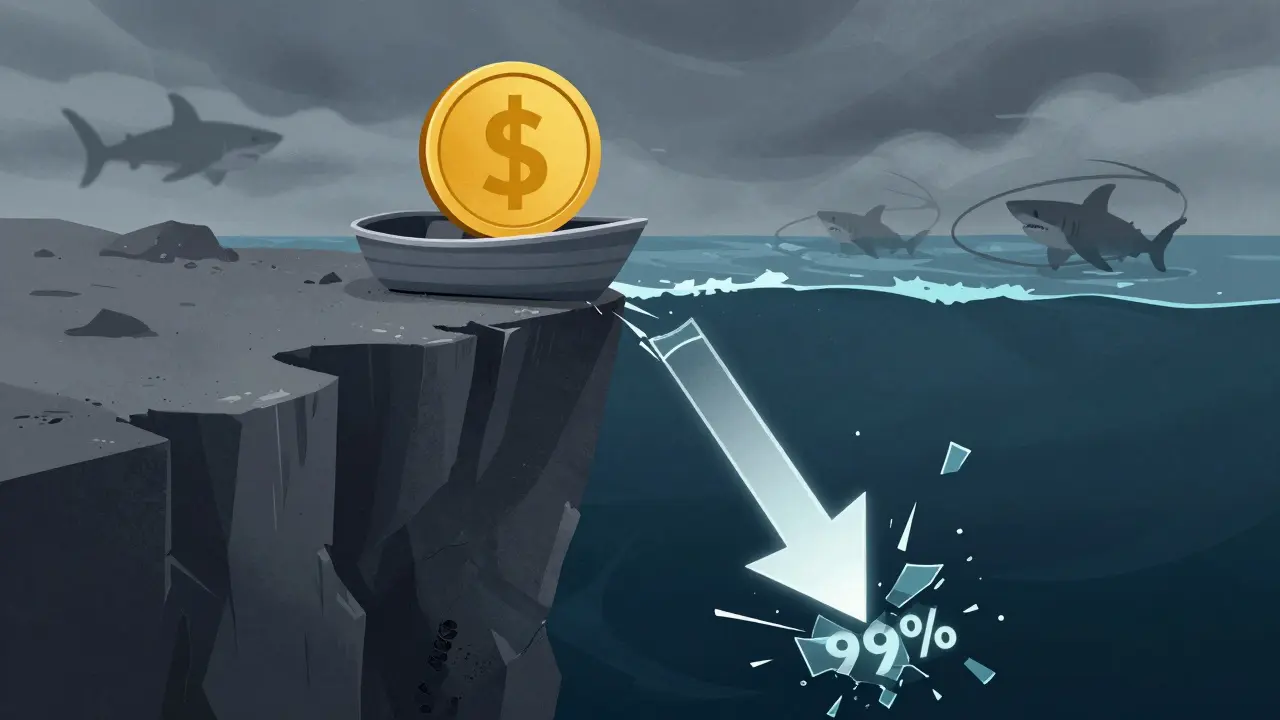
Let’s talk numbers, because they tell a stark story about investor confidence. As of mid-2026, DOGEAI has experienced extreme volatility typical of low-cap memecoins. The token hit an all-time high of approximately $0.10 but has since crashed nearly 99% from that peak. Recent prices hover around fractions of a cent, with significant discrepancies between exchanges.
Why does the price vary so much? Liquidity. Or rather, the lack of it. Trading volume for DOGEAI is incredibly thin. Some trackers report daily volumes under $1,000, while others show slightly higher figures around $85,000. Regardless of which number you trust, the liquidity is shallow. This means if you try to sell a large amount of tokens, you could cause the price to plummet instantly-a phenomenon known as slippage.
Furthermore, the market capitalization is negligible. Depending on the source, the fully diluted valuation (FDV) hovers around $197,000 to $200,000. In the grand scheme of the cryptocurrency market, this is microscopic. It places DOGEAI thousands of positions down on global rankings, indicating minimal institutional interest and very low retail engagement compared to top-tier assets like Bitcoin or Ethereum.
Risks You Need to Know Before Buying
If you are considering adding DOGEAI to your portfolio, you must weigh these specific risks:
- Extreme Volatility: The token has dropped over 99% from its highs. It can swing 17% in a single day based on minor news or social media posts.
- Liquidity Risk: With such low trading volume, exiting a position quickly without losing value is difficult.
- Narrative Ambiguity: The disconnect between "AI governance tool" and "Musk-associated meme" suggests a lack of clear direction. Projects that fail to define their core purpose often lose community support.
- Data Inconsistency: Different exchanges show different prices and supply figures. This makes accurate valuation nearly impossible for the average trader.
- Pump-and-Dump Potential: Given its classification as a memecoin with low market cap, it is highly susceptible to coordinated buying and selling schemes.
How to Track DOGEAI Safely
If you still want to monitor this token, do not rely on a single source. Use decentralized trackers that pull data directly from the blockchain rather than centralized exchange APIs, which may lag or report errors.
- Check Raydium for on-chain Solana activity.
- Verify the contract address carefully before importing to any wallet. One wrong character can lead to loss of funds.
- Compare prices across multiple aggregators like CoinGecko and LiveCoinWatch to spot anomalies.
- Never invest more than you can afford to lose. Treat this as entertainment money, not savings.
Conclusion: Is DOGEAI Worth It?
DOGEAI represents the wild west of modern crypto: high-concept buzzwords mixed with speculative gambling. While the idea of AI-driven government analysis is intriguing, the execution appears weak, and the market response has been overwhelmingly negative since its 2025 launch. The token trades at a fraction of its peak value, suffers from illiquidity, and lacks a unified narrative. For most investors, the risks far outweigh the potential rewards. Keep an eye on established AI-blockchain projects with proven track records instead.
Is DOGEAI a legitimate investment?
Legitimacy in crypto is subjective, but DOGEAI shows high-risk characteristics. It has lost over 99% of its value from its all-time high, has extremely low liquidity, and conflicting information about its purpose. It is considered a speculative asset rather than a stable investment.
Which blockchain is DOGEAI on?
DOGEAI primarily operates on the Solana blockchain. However, there is also an Ethereum-based contract address available, suggesting cross-chain compatibility or wrapped versions of the token exist.
Who created DOGEAI?
The creation narrative is split. Some sources claim it was generated by Grok AI (associated with Elon Musk), while others describe it as an autonomous AI agent project. There is no single verified founder team publicly recognized for traditional development roles.
What is the total supply of DOGEAI?
The total maximum supply of DOGEAI is capped at 1,000,000,000 (1 billion) tokens. Approximately 750 million of these are currently in circulation.
Why is the price of DOGEAI so volatile?
Volatility stems from low market capitalization and thin liquidity. With few buyers and sellers, small trades can cause large price swings. Additionally, its status as a memecoin means its value is driven by hype rather than fundamental utility.
Can I buy DOGEAI on Coinbase?
Coinbase lists information about DOGEAI, but availability for direct purchase varies by region and time. Due to low liquidity, trading pairs may be limited or subject to high fees. Always check current listings on the platform.
What is the purpose of DOGEAI?
The stated purpose is ambiguous. Marketing materials suggest it uses AI to analyze government waste, but functionally it behaves like a memecoin. There is little evidence of active software tools or services provided to users beyond the token itself.
Is DOGEAI safe to store in MetaMask?
You can add the Ethereum contract address to MetaMask, but ensure you verify the address from multiple trusted sources. Storing tokens in a non-custodial wallet is generally safer than leaving them on an exchange, but you remain responsible for securing your private keys.
Comments (5)

- Mekz Wheoki
- June 20, 2026 AT 00:07 AM
Another 'AI' token that is just a glorified casino chip. The fact that it claims to analyze government waste while being unable to maintain its own liquidity is the ultimate irony. You are not investing in technology, you are funding someone's yacht. Stay away from this garbage.

- Terry Hyland
- June 20, 2026 AT 03:41 AM
They lie about everything. This whole crypto thing is a trap set by the elites to steal your money and track your every move. They say it is on Solana but they probably have a backdoor to take it all. Do not trust these digital coins. It is a conspiracy to destroy our savings and privacy. Wake up people.

- Monica Pathammavong
- June 20, 2026 AT 21:41 PM
u actually think u understand tokenomics? lol no. ur so naive. the real play is watching the insiders dump before the retail clowns like u buy the dip. i know where the bodies r buried because i read the whitepaper which was basically empty. stop pretending u r smart when u cant even spell blockchain right. pathetic.

- Tim Lefebvre
- June 22, 2026 AT 14:06 PM
hey guys just wanted to add some info here since tim knows his stuff around here usually. if u are looking at the contract address make sure u copy paste it exactly. one wrong letter and ur funds r gone forever. also check raydium for the real volume not what coinbase says. most of the trading happens off exchange so the price there is more accurate. be careful out there friends.

- John Doe
- June 23, 2026 AT 19:55 PM
I feel for everyone who lost money on this. It is heartbreaking to watch people throw their life savings into a meme coin with zero utility. The volatility is insane and the lack of transparency is terrifying. Please, please take care of yourselves and do not let FOMO drive your decisions. Your mental health is worth more than any potential gain from a scam token.