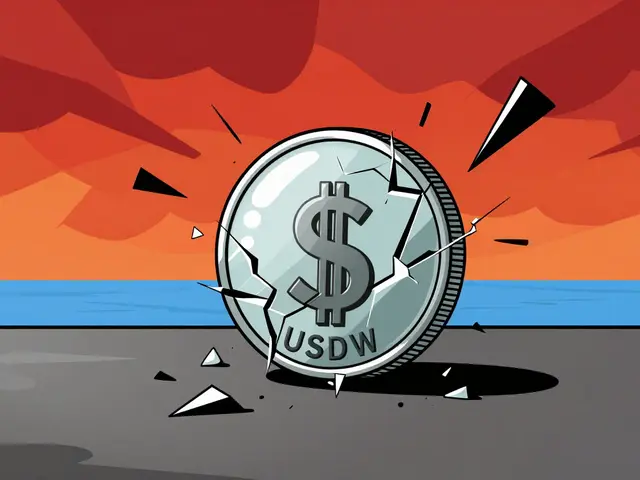

Imagine you have $10,000 ready to buy Bitcoin. Do you dump it all in today, or drip-feed $500 a week for twenty weeks? This isn't just a math problem; it's a psychological test. In traditional stocks, Lump Sum usually wins because markets tend to rise over time. But crypto? It’s a different beast entirely. With daily swings that would make a stock trader faint, the "right" answer depends less on spreadsheets and more on your ability to sleep at night when the charts turn red.
The debate between Dollar-Cost Averaging (DCA) and Lump Sum investing is one of the most heated topics in the blockchain community. One side argues that timing the market is impossible, so spreading out risk is safer. The other side argues that sitting in cash while prices skyrocket is a guaranteed way to lose money. Let’s break down what actually happens when you deploy capital into volatile digital assets like Bitcoin or Ethereum, using real data from recent cycles.
The Math Behind the Money
Here is the cold, hard truth: historically, Lump Sum investing beats DCA about 68% of the time. This statistic comes from analyzing decades of market data, both in traditional finance and increasingly in crypto. Why? Because markets spend more time going up than they do going down. If you invest everything today, you capture every bit of future upside. If you wait, you often end up buying back in at higher prices as the trend continues upward.
However, crypto introduces extreme variables. A 20% drop in a single day is common for altcoins, whereas the S&P 500 might move 1%. When you go all-in with Lump Sum, you are fully exposed to this volatility immediately. If Bitcoin drops 30% the day after you buy, you feel the pain on your entire portfolio instantly. With DCA, that same drop only hurts a fraction of your total capital, allowing you to buy more coins at the lower price later.
| Feature | Lump Sum Investing | Dollar-Cost Averaging (DCA) |
|---|---|---|
| Market Exposure | 100% immediate exposure | Gradual exposure over time |
| Transaction Fees | Lower (one-time fee) | Higher (multiple transaction fees) |
| Psychological Stress | High during initial drawdowns | Low (automated, predictable) |
| Best For | Bull markets, high conviction | Bear markets, uncertain trends |
| Timing Risk | Very High (buying at the top) | Moderate (average entry price) |
Why DCA Dominates Retail Sentiment
If Lump Sum is mathematically superior, why do 78% of new crypto investors on Reddit prefer DCA? Simple: fear. Human beings are wired to avoid loss more than we seek gain. Behavioral economics calls this "loss aversion." When you see your portfolio drop 40% in a week, the urge to sell is overwhelming. DCA acts as an emotional buffer. By committing to small, regular purchases-say, $100 every Monday-you remove the decision-making process. You don’t ask, "Is this the bottom?" You just buy. And then you buy again next week, regardless of whether the price went up or down.
This approach smooths out the average cost basis. If Bitcoin crashes, your fixed dollar amount buys more coins. When the market recovers, those cheaply acquired coins drive significant gains. It turns volatility from an enemy into an ally. However, there is a catch: opportunity cost. During strong bull runs, DCA underperforms significantly. Backtesting data from Nakamoto Portfolio showed that a 12-month DCA strategy accumulated nearly 75% less Bitcoin compared to a lump-sum strategy deployed at the start of a rising trend. You are essentially paying an insurance premium against bad timing.
The Hidden Costs of Splitting Your Buy
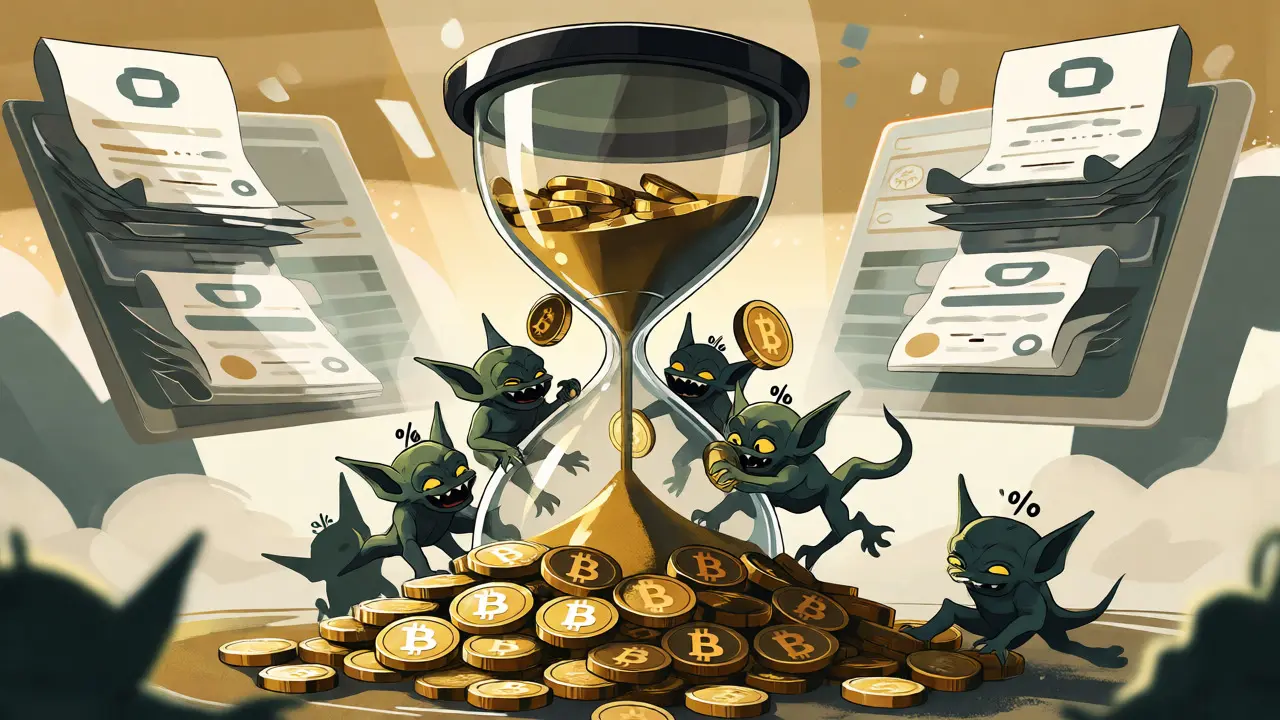
One factor often ignored in these debates is fees. Cryptocurrency exchanges like Coinbase, Binance, or Kraken charge trading fees. While spot trading fees are low (often around 0.1% to 0.6%), they add up when you split a large purchase into dozens of smaller ones. Investing $10,000 in one go costs you one fee. Doing it in ten chunks costs you ten fees. Over years of automated buying, this "fee drag" can eat into your returns, especially if you are trading on platforms with higher spreads or withdrawal costs.
Furthermore, not all exchanges offer seamless automation. While major players now support recurring buys, setting up and monitoring these orders requires some technical setup. If you are using decentralized exchanges (DEXs) to avoid centralized risks, gas fees on networks like Ethereum can make frequent small purchases prohibitively expensive. On Layer-2 solutions like Arbitrum or Base, this is less of an issue, but it’s still a consideration for micro-DCA strategies.
When Lump Sum Actually Makes Sense
So, should you abandon DCA? Not necessarily. Lump Sum shines when you have high conviction and clear market signals. Institutional investors, who dominate the smart money flow, often use Lump Sum for strategic allocations. According to Farside Reports, 92% of institutional crypto purchases in Q1 2024 were Lump Sum transactions. These entities have sophisticated risk management tools and don’t panic-sell during short-term dips.
You might consider Lump Sum if:
- You have identified a specific undervalued asset based on fundamental analysis.
- You believe the market is entering a confirmed breakout phase.
- You have a long time horizon (5+ years) and won’t need the cash soon.
- You are emotionally resilient enough to watch your portfolio dip 50% without selling.
A notable example occurred in early 2023. An investor who put $5,000 into Bitcoin at $16,000 saw it drop to $19,000 shortly after, causing immense stress. But by holding through the volatility, that position grew to $47,000. Had they used DCA, their average entry price would have been higher, reducing the overall percentage gain. Timing the bottom is rare, but catching the early stages of a recovery cycle with full capital deployment maximizes ROI.

The Hybrid Approach: Best of Both Worlds?
Since neither strategy is perfect, many experienced investors adopt a hybrid model. This involves deploying a portion of your capital immediately (e.g., 50%) and automating the rest via DCA over a set period (e.g., 3-6 months). This reduces the risk of buying the absolute top while ensuring you have skin in the game if the market rallies immediately.
This method addresses the two biggest fears: missing out on a rally (FOMO) and crashing right after buying. It also helps with liquidity management. You keep half your cash available for emergencies or potential deeper dips, while locking in a baseline position. Recent surveys suggest that 38% of new investors in 2024 adopted this partial-lump-sum strategy, indicating a shift toward more nuanced portfolio construction rather than binary choices.
Key Takeaways for Your Strategy
Choosing between DCA and Lump Sum isn't about finding the "correct" formula; it's about aligning your strategy with your personality and market conditions. Here is how to decide:
- Know Your Risk Tolerance: If seeing a red portfolio makes you want to quit, choose DCA. Consistency beats perfection.
- Assess Market Regime: In choppy, sideways, or bearish markets, DCA excels. In strong, trending bull markets, Lump Sum captures more upside.
- Factor in Fees: If you are trading small amounts on high-fee exchanges, minimize transaction frequency.
- Automate to Remove Emotion: Whatever you choose, automate it. Manual decisions lead to panic selling or hesitation buying.
Remember, the goal in crypto isn't to get rich quick; it's to survive the volatility long enough to benefit from adoption growth. Whether you drip-feed or dive in, consistency and discipline are the true drivers of wealth creation in blockchain assets.
Is DCA really better than Lump Sum for beginners?
Yes, for most beginners, DCA is recommended despite being mathematically inferior in rising markets. It mitigates the psychological impact of volatility, preventing panic sells during inevitable crypto drawdowns. Beginners often lack the experience to time entries effectively, making the averaged entry price of DCA a safer learning ground.
How much does DCA underperform Lump Sum in bull markets?
In sustained bull runs, DCA can underperform Lump Sum by 25-75% depending on the duration and intensity of the uptrend. Historical backtests show that while Lump Sum captures maximum upside, DCA results in fewer accumulated units of the asset because subsequent purchases occur at higher prices.
Do transaction fees matter when choosing between DCA and Lump Sum?
Yes, fees matter. Lump Sum incurs a single transaction fee, whereas DCA incurs multiple fees. For example, splitting a $10,000 investment into 10 trades on an exchange with 0.6% fees costs $60 total, versus $60 for a single trade. However, on major exchanges with low fees or zero-fee tiers, this difference is negligible for most retail investors.
Can I switch from DCA to Lump Sum mid-cycle?
Absolutely. Many investors start with DCA to build a core position and then switch to Lump Sum deployments if they identify a clear breakout or accumulation zone. Flexibility is key in crypto markets, which can shift rapidly due to macroeconomic news or regulatory changes.
What is the ideal DCA frequency for crypto?
Weekly or monthly intervals are most common. Daily DCA offers little statistical advantage over weekly due to the law of large numbers smoothing out variance, but it increases transaction fees and administrative overhead. Monthly is often preferred for salaried individuals to align investments with income streams.