
Have you ever heard of Loop Network, also known as LOOP, and wondered if it’s just another flash-in-the-pan cryptocurrency or a serious contender in the blockchain space?
The short answer is complicated. On paper, Loop Network promises to solve some of the biggest headaches in crypto: slow transactions, high fees, and privacy concerns. It claims to handle up to 75,000 transactions per second-a number that makes Ethereum look sluggish by comparison. But when you look at the market data, the picture gets murkier. Low liquidity, wild price swings across exchanges, and a ranking well outside the top 100 suggest a project that is still fighting for relevance.
This guide breaks down exactly what Loop Network is, how its technology works, why the prices vary so wildly between exchanges, and whether it has any real staying power in a crowded Layer-1 market. We’ll skip the hype and focus on the mechanics, the risks, and the actual utility behind the LOOP token.
The Core Concept: What Is Loop Network?
Loop Network is a Layer-1 blockchain framework designed to offer high-speed transactions, enhanced privacy, and cross-chain compatibility. Launched on January 31, 2022, it operates primarily on the BNB Chain as a BEP-20 token.
To understand where LOOP fits, you need to know what "Layer-1" means. In blockchain terms, Layer-1 refers to the base protocol-the main network itself (like Bitcoin or Ethereum). Layer-2 solutions sit on top of these to speed things up (like Optimism or Arbitrum). Loop Network positions itself as a standalone Layer-1 solution, meaning it doesn’t rely on another chain for security or finality. It aims to be the foundation, not an add-on.
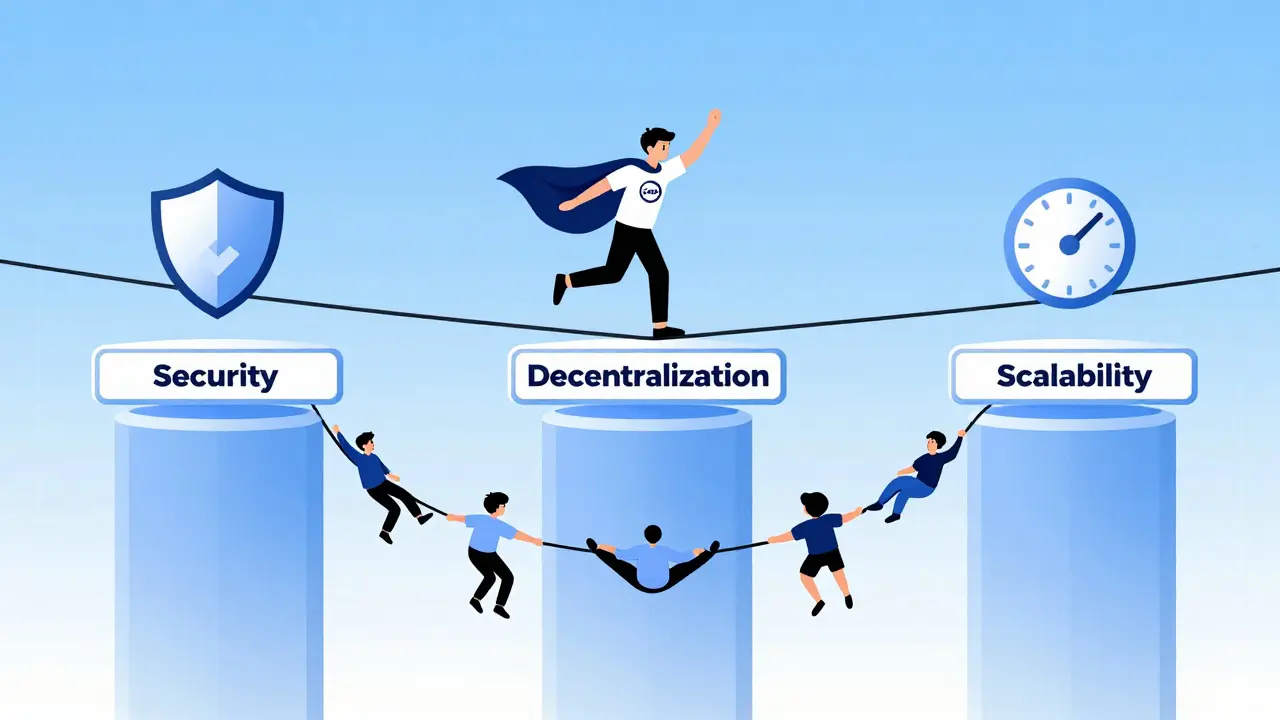
The primary goal? To fix the scalability trilemma. You know the old rule: you can only pick two-security, decentralization, or scalability. Loop Network argues its architecture lets you have all three, specifically targeting the limitations users face with Ethereum, such as congested networks and gas fees that can spike into the hundreds of dollars during busy periods.
Under the Hood: The PoSA Consensus Mechanism
The secret sauce behind Loop Network’s speed isn’t magic; it’s a specific consensus mechanism called Proof of Stake and Authority (PoSA). This is a hybrid model that combines elements of Proof of Stake (PoS) and Proof of Authority (PoA).
Here’s how it works in plain English:
- Proof of Stake Component: Validators are chosen based on how many tokens they stake. This ensures that people with skin in the game are securing the network.
- Proof of Authority Component: Once selected, validators take turns producing blocks in a deterministic order. Unlike pure PoS, where everyone competes simultaneously, PoSA reduces computational waste and speeds up block confirmation.
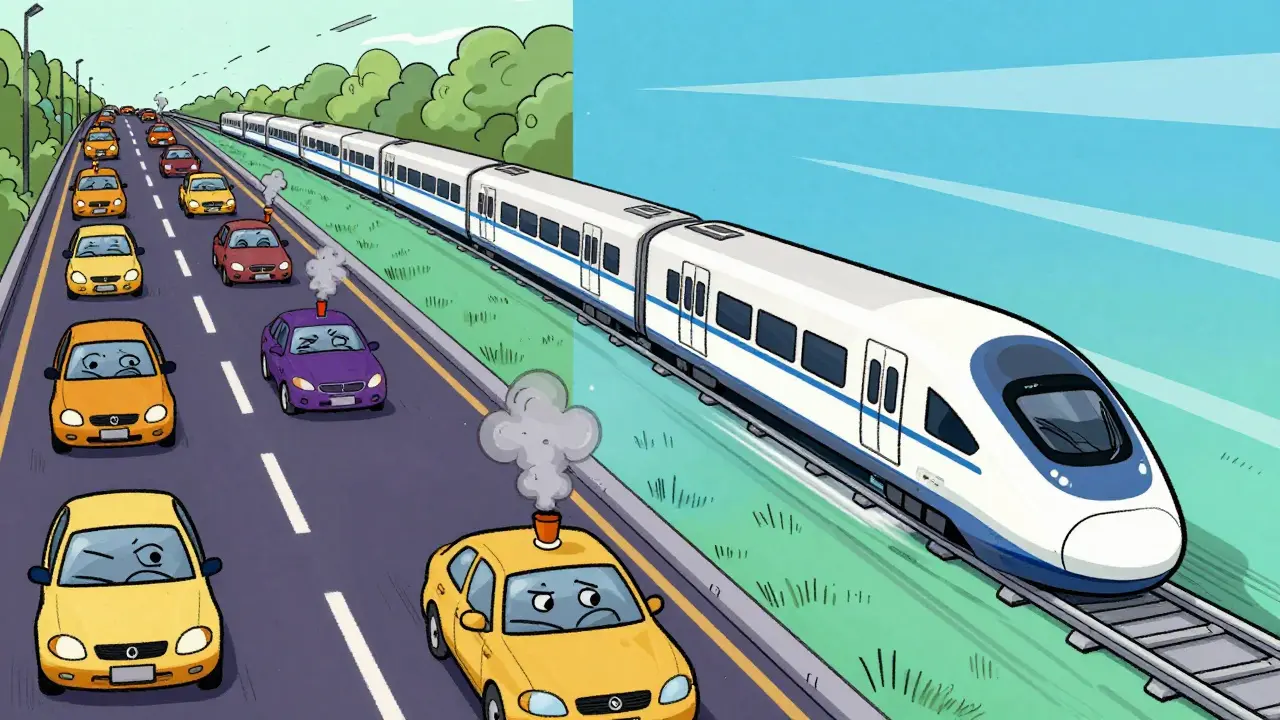
This combination allows Loop Network to achieve a block time of approximately 2.7 seconds. For context, Ethereum takes about 12-15 seconds per block, while Bitcoin takes roughly 10 minutes. That 2.7-second window is critical for user experience. If you’re buying a coffee or trading NFTs, waiting 15 seconds feels like forever compared to 2.7 seconds.
Binance’s analysis suggests this setup enables up to 75,000 transactions per second (TPS). Whether the network consistently hits this theoretical maximum under load is a different question, but the architecture is built for high throughput.
EVM Compatibility: Why Developers Care
One of the biggest hurdles for new blockchains is getting developers to build on them. Rewriting smart contracts from scratch is expensive and error-prone. Loop Network solves this by being EVM-compatible.
EVM stands for Ethereum Virtual Machine. It’s the environment where Ethereum smart contracts run. Because Loop Network supports EVM, developers can deploy existing Ethereum code onto Loop Chain without modification. This lowers the barrier to entry significantly. If you already have a decentralized application (dApp) on Ethereum, you can essentially copy-paste it to Loop Network to benefit from lower fees and faster speeds.
This compatibility extends to tools as well. Wallets like MetaMask and development frameworks like Hardhat or Truffle work seamlessly with Loop Network. This interoperability is a major selling point for teams looking to migrate away from Ethereum’s congestion without abandoning their existing tech stack.
Tokenomics: Supply, Taxes, and Scarcity
Understanding the economics of the LOOP token is crucial before considering any investment. Here are the hard numbers:
| Metric | Value |
|---|---|
| Total Max Supply | 200 Million LOOP |
| Circulating Supply | ~180 Million LOOP |
| Buy/Sell Tax | 10% |
| Tax Allocation | 60% Development, 40% Marketing |
| Standard | BEP-20 (BNB Smart Chain) |
The fixed supply cap of 200 million tokens creates artificial scarcity, which proponents argue could drive value appreciation if demand increases. However, the 10% buy and sell tax is a significant factor for traders. Every time you trade LOOP, 10% of your transaction volume is deducted. Half of that goes to marketing, and half funds development.
For casual investors, this tax structure can eat into profits quickly, especially in volatile markets. It also signals that the project relies heavily on trading activity to fund its operations, rather than generating revenue from ecosystem usage alone. Always check the current tax rates on official channels, as these can change through governance votes.
Market Reality: Price Volatility and Liquidity Issues
If you’ve looked at LOOP prices recently, you might be confused. Why does one exchange show $0.022 while another shows $0.005? This discrepancy highlights a critical issue: low liquidity.
As of mid-2026, Loop Network trades on a limited number of exchanges, including Gate.com, Coinbase, and Crypto.com. However, the trading volumes are extremely low. Gate.com reported a 24-hour volume of around $43,000, while Crypto.com showed volumes near $400. When liquidity is this thin, large orders can cause massive price slippage. Buying $1,000 worth of LOOP might move the price significantly more than buying $1,000 worth of Bitcoin.
Here’s a snapshot of recent pricing variations:
- Gate.com: ~$0.0225 USD
- Coinbase: ~$0.0227 USD
- CoinMarketCap/Crypto.com: ~$0.0050 USD
This gap suggests that arbitrage opportunities exist but are risky due to transfer times and potential hidden fees. More importantly, it indicates that LOOP is not yet a widely adopted asset. Its all-time high was around $0.29 in March 2023. Current prices represent a decline of over 90% from that peak. While crypto markets are cyclical, a drop of this magnitude often reflects waning interest or failed product-market fit.

Competitive Landscape: How Does LOOP Stack Up?
Loop Network isn’t operating in a vacuum. It competes directly with established Layer-1 blockchains like Solana, Avalanche, and Polygon. Let’s compare key metrics:
| Feature | Loop Network | Ethereum | Solana |
|---|---|---|---|
| Consensus | PoSA | PoS | PoS (Proof of History) |
| Block Time | ~2.7 seconds | ~12-15 seconds | ~400 milliseconds |
| TPS (Theoretical) | 75,000 | ~15 | 65,000+ |
| EVM Compatible | Yes | Yes (Native) | No (Requires adaptation) |
| Transaction Fees | Low | High (Variable) | Very Low |
While Loop Network beats Ethereum on speed and cost, Solana generally offers faster block times and higher throughput. However, Solana has faced stability issues in the past, whereas Loop’s PoSA model aims for consistent reliability. The real advantage for Loop is its EVM compatibility combined with low fees, making it an attractive option for developers who want Ethereum-like functionality without the Ethereum-like costs.
Use Cases: Where Can You Use LOOP?
So, what can you actually do with Loop Network? The platform targets several key areas:
- Decentralized Applications (dApps): High-throughput apps like gaming platforms, social media protocols, and prediction markets benefit from fast, cheap transactions.
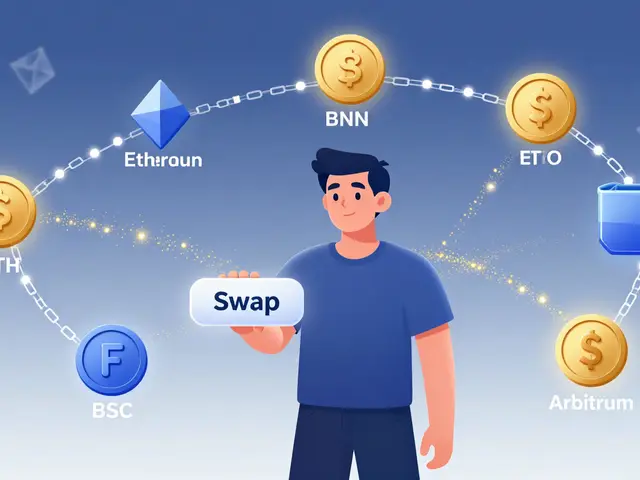
- Cross-Chain Bridging: Loop Network supports native cross-chain communication. This allows assets to move seamlessly between Loop Chain and other blockchains, enhancing liquidity and interoperability.
- NFT Marketplaces: Minting and trading NFTs on Ethereum can be prohibitively expensive. Loop Network offers a cheaper alternative for creators and collectors.
- DeFi Protocols: Automated market makers (AMMs) and lending platforms can operate with lower overhead costs, potentially offering better yields to users.
The vision includes integrating with emerging technologies like AI and IoT, though concrete implementations in these areas are still in early stages.
Risks and Challenges to Consider
No investment is without risk, and Loop Network faces significant headwinds:
- Liquidity Risk: As noted, low trading volumes mean you might struggle to exit large positions without impacting the price.
- Competition: With giants like Ethereum, Solana, and Avalanche dominating the market, gaining developer mindshare is incredibly difficult.
- Adoption Metrics: Public data on active users, dApp deployments, and total value locked (TVL) is limited. Without strong adoption metrics, it’s hard to gauge true utility.
- Price History: The 90%+ drop from all-time highs indicates significant volatility and potential loss of investor confidence.
Always conduct your own research (DYOR) and never invest more than you can afford to lose. Cryptocurrencies remain highly speculative assets.
Is Loop Network (LOOP) a good investment in 2026?
Investing in LOOP carries high risk due to low liquidity, significant price depreciation from all-time highs, and intense competition from larger Layer-1 chains. While its technology offers low fees and EVM compatibility, the lack of widespread adoption and limited trading volume make it a speculative play. Only consider it if you thoroughly understand the risks and have a long-term horizon.
How does Loop Network differ from Ethereum?
Loop Network differs from Ethereum primarily in speed and cost. It uses a PoSA consensus mechanism to achieve block times of ~2.7 seconds and theoretical TPS of 75,000, compared to Ethereum’s ~12-15 second blocks and ~15 TPS. Additionally, Loop offers significantly lower transaction fees. However, Ethereum remains the leader in developer ecosystem and total value locked.
Why is the LOOP price different on various exchanges?
The price discrepancies are due to low liquidity and limited trading volume. When few people are trading an asset, small buy or sell orders can cause large price swings. Different exchanges may have varying levels of liquidity, leading to divergent prices until arbitrageurs equalize them.
Can I use MetaMask with Loop Network?
Yes, because Loop Network is EVM-compatible and operates on the BNB Chain as a BEP-20 token, you can interact with it using MetaMask. You will need to add the correct RPC endpoints for the Loop Chain to your wallet settings.
What is the maximum supply of LOOP tokens?
The maximum supply of LOOP tokens is fixed at 200 million. Approximately 180 million are currently in circulation. A 10% tax is applied to buys and sells, with proceeds split between development and marketing.
Comments (5)

- Tobias Gjerlufsen
- May 10, 2026 AT 11:12 AM
you people really think a PoSA chain on BNB is 'scalable' lol its just centralized validators taking turns like a kindergarten circle time. the whole point of crypto is decentralization not a club where five guys agree on what blocks get added. loop network is basically a private ledger with extra steps and a marketing budget. dont fall for the TPS numbers they are theoretical maxes in a vacuum chamber not real world usage. you want speed? use solana or just wait for eth l2s to mature. this is just another rug pull waiting to happen.

- Ruben Michel
- May 10, 2026 AT 14:03 PM
The assertion that Proof of Stake and Authority lacks legitimacy due to its deterministic validator selection is, frankly, a profound misunderstanding of enterprise-grade blockchain architecture. One must appreciate the nuance of prioritizing finality and throughput over the chaotic inefficiency of pure Proof of Work or even standard Proof of Stake models. Loop Network’s integration with the Ethereum Virtual Machine allows for seamless migration of existing smart contracts, thereby preserving capital efficiency while enhancing operational velocity. It is rather pedestrian to dismiss such sophisticated engineering based on superficial metrics of decentralization which, in practice, often lead to network congestion and exorbitant gas fees. The market will eventually reward those who understand the value of stability and speed.

- Gavin Wonnacott
- May 11, 2026 AT 06:46 AM
ruben you absolute clown. stop pretending like you know anything about code. you sound like a press release written by an intern. nobody cares about your 'enterprise-grade' nonsense when the liquidity is thinner than watered down vodka. i checked the order books myself and there is literally nothing there. you cant sell more than $500 without crashing the price. it is pathetic how you defend these dead coins just because someone paid you to write fancy words. wake up sheeple.

- Samara McCallum
- May 11, 2026 AT 21:34 PM
i feel like we are missing the bigger picture here everyone is so focused on the numbers but what about the soul of the project? is it truly connecting us or just another tool for greed? i mean look at the tax structure 10 percent is huge but maybe it means they care about long term growth instead of quick flips. i am not saying buy or sell i just think we need to ask ourselves what kind of future we want to build with our digital assets. sometimes the quietest projects are the ones that change everything.

- Sheldon Friesen
- May 12, 2026 AT 04:57 AM
Oh, bravo! A philosophical take on a tokenomics table! Truly, the intersection of existential dread and BEP-20 standards is where innovation thrives, isn't it? Let's be honest, though; the 10% tax is less 'long-term growth strategy' and more 'how do we keep the lights on when no one is using the dApps?' It is a fascinating experiment in financial engineering, certainly. But expecting users to pay a premium for the privilege of funding marketing campaigns is a bold choice. I suppose if you enjoy watching your portfolio evaporate slowly, this might be the perfect companion. Keep dreaming, Samara.