
You’ve probably heard of Pudgy Penguins. They are the cute, blocky penguins that took over your social media feed and eventually became a global brand with toys in major retail stores. But if you dig deeper into the crypto rabbit hole, you might have stumbled upon something called Lil Pudgys (LPENGU), described as a community-driven cryptocurrency token associated with the Lil Pudgys NFT collection on the Solana blockchain. It sounds official. It uses the same branding. It shares the name. So, what exactly is it? Is it the next big thing, or is it just digital noise?
The short answer is that LPENGU is a very small, unofficial meme coin. It sits on the fringe of the massive Pudgy Penguins ecosystem. While the main project has billions in value and physical products, LPENGU operates in the shadows with almost no liquidity and confusing data. Before you throw any money at it, you need to understand where it fits-and more importantly, how it differs from the real deal.
Quick Summary / Key Takeaways
- Unofficial Status: LPENGU is not the official token of the Pudgy Penguins brand; it is a community-created meme coin.
- Official Alternative: The actual ecosystem token is PENGU, which trades on major exchanges like Binance.
- Extreme Risk: LPENGU has a market cap in the single-digit thousands and near-zero liquidity, making it highly volatile.
- Data Conflicts: Major trackers disagree on supply and price, indicating poor tracking and low trading volume.
- Solana Based: Unlike the Ethereum-based NFTs, LPENGU lives on the Solana network.
The Difference Between LPENGU and PENGU
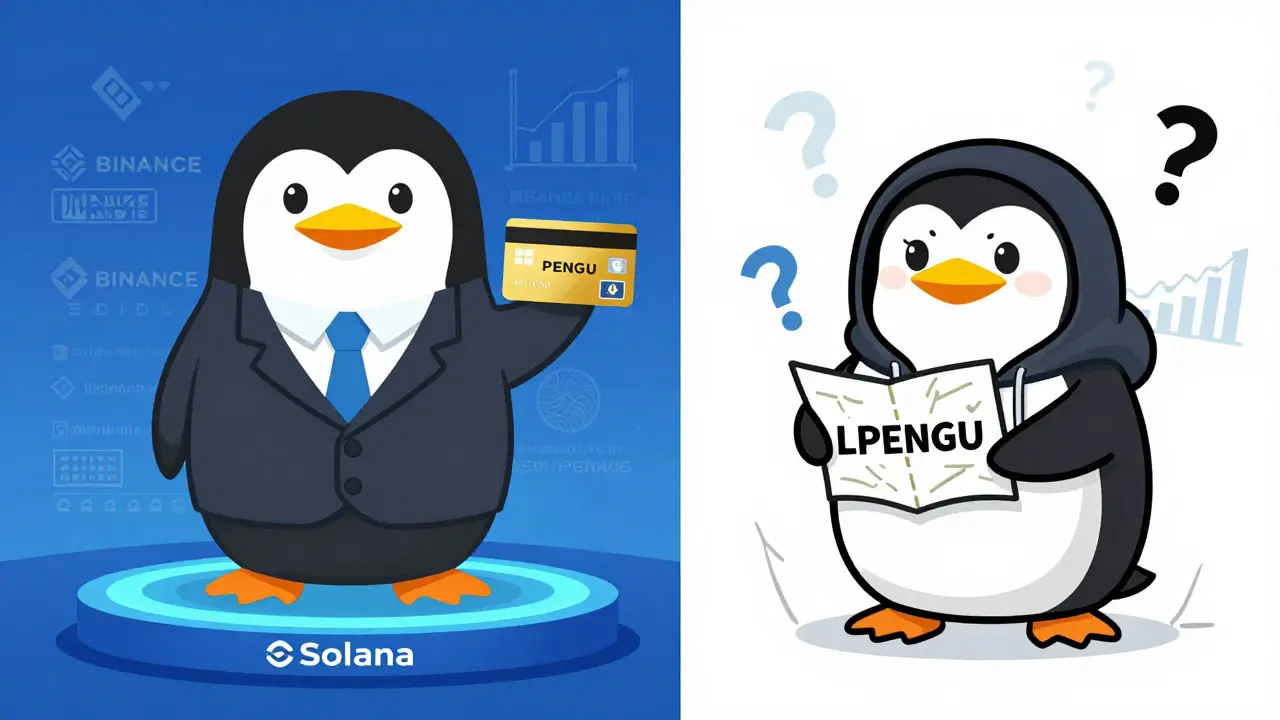
This is the most critical distinction you can make. In the world of crypto, names matter, but so does authority. The Pudgy Penguins ecosystem, led by Igloo Inc., launched its own official token called PENGU, defined as the official meme and community token of the Pudgy Penguins ecosystem, launched on Solana in late 2024. PENGU was announced by founder Luca Netz in December 2024, listed on Binance, and has tens of millions of dollars in daily trading volume. It is integrated into the brand’s strategy for future products and community rewards.
LPENGU, on the other hand, is different. It is tied specifically to the Lil Pudgys NFT collection-the smaller, "cute" spin-off series of 22,222 penguins launched in 2021. However, despite the name similarity, LPENGU is not endorsed by the core team. It is a separate asset created by enthusiasts who wanted a tradable token linked to the Lil Pudgys vibe. Think of PENGU as the corporate credit card and LPENGU as a fan-made coupon book. One buys you into the system; the other is just a piece of paper that some people find interesting.
| Feature | LPENGU (Lil Pudgys) | PENGU (Official) |
|---|---|---|
| Status | Community/Unofficial | Official Ecosystem Token |
| Blockchain | Solana | Solana |
| Market Cap (Mid-2026) | ~$7,900 - $10,000 | Billions (High Liquidity) |
| Exchange Listings | DEXs only (Phantom, Raydium) | Binance, Coinbase, Others |
| Utility | Speculative/Meme only | Airdrops, Governance, Brand Access |
Understanding the Tokenomics and Supply Issues
If you look up LPENGU on different websites, you will get conflicting information. This isn’t because the numbers are changing rapidly; it’s because the token is so thinly traded that data aggregators struggle to track it accurately. As of mid-2026, reports vary wildly.
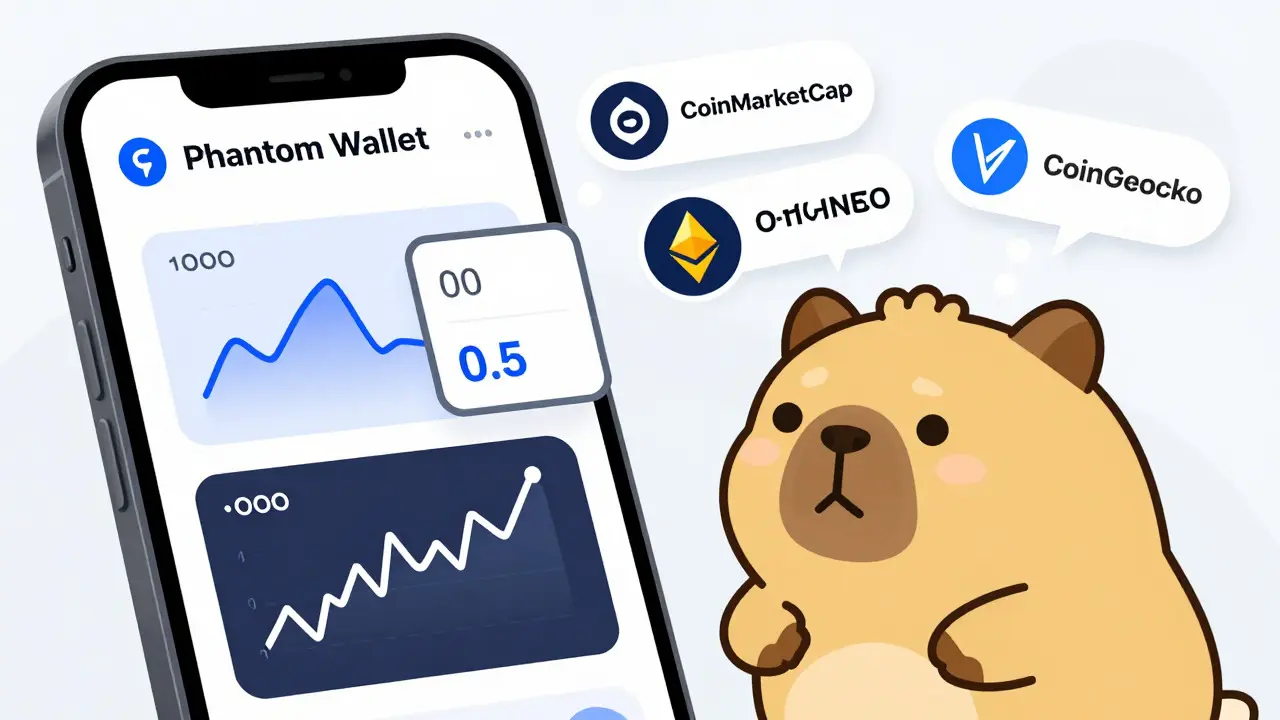
CoinMarketCap lists a total supply of roughly 999.87 million tokens, claiming nearly all are in circulation. Phantom Wallet’s explorer shows a similar circulating supply but notes there is technically no maximum supply cap, meaning new tokens could theoretically be minted. Meanwhile, Bitget-a major exchange-lists the circulating supply as zero, likely because they don’t actively list it for trading, using placeholder data instead.
Why does this matter? In crypto, supply mechanics drive value. If a token has an infinite supply or unclear minting rights, inflation can destroy its price. For LPENGU, the lack of a clear, audited smart contract audit means you are trusting the community to keep things honest. There is no formal whitepaper detailing how these tokens will be used, burned, or distributed. It is pure speculation based on brand association.
The Value Behind the Name: Lil Pudgys NFTs
To understand why LPENGU exists, you have to look at the NFTs it references. The Lil Pudgys are a collection of 22,222 ERC-721 NFTs originally launched on Ethereum in December 2021. These were designed as an affordable entry point into the Pudgy universe. Original Pudgy Penguin holders could claim them for free, while others bought them in a public sale.
The NFTs themselves hold significant value. In early July 2026, the floor price for a Lil Pudgy NFT hovered around 0.46 ETH (approximately $760), giving the collection a market capitalization of over $16 million. Holders of these NFTs get perks like access to events, XP boosts on partner chains like Abstract, and eligibility for airdrops of the official PENGU token.
LPENGU tries to capitalize on this energy. It allows people who love the Lil Pudgys brand to trade a liquid asset without buying a full NFT. However, since the NFTs use LayerZero technology to bridge across Ethereum, Polygon, BNB Chain, and Arbitrum, the ecosystem is complex. LPENGU simplifies this by staying strictly on Solana, offering a quick swap option for those who want exposure to the brand without dealing with multi-chain NFT bridging.
Risks and Realities of Trading LPENGU
Let’s talk about the risks, because they are substantial. When you buy LPENGU, you are entering a micro-cap market. We are talking about a total market value that often falls below $10,000. To put that in perspective, a single large sell order from one holder could crash the price by 50% or more instantly.
Here are the specific dangers:
- Liquidity Trap: You might buy LPENGU easily through a wallet like Phantom, but selling it later could be difficult. If there are no buyers waiting on the decentralized exchange (DEX), your tokens become stuck until someone else decides to buy.
- No Utility: Unlike PENGU, holding LPENGU doesn’t currently grant you voting rights, staking rewards, or direct access to Pudgy merchandise. Its value is derived entirely from what other people think it’s worth right now.
- Data Volatility: Because trackers like CoinGecko and CoinMarketCap update infrequently for such low-volume assets, the price you see might be stale. You could be looking at a price from three days ago.
- Brand Dilution: Since it is unofficial, the Pudgy Penguins team could decide to distance themselves from the name further, potentially hurting sentiment.
Expert analysts rarely cover LPENGU. You won’t find price targets or technical analysis from major financial outlets. The silence speaks volumes: professionals view this as a niche collectible rather than an investment vehicle.
How to Buy and Store LPENGU
If you still want to proceed, here is how the process works. Since LPENGU is a Solana token, you cannot use standard Bitcoin wallets or Ethereum-only tools.
- Get a Solana Wallet: Download Phantom Wallet, which is a popular non-custodial wallet for managing Solana assets and interacting with dApps. Set it up securely and write down your seed phrase offline.
- Fund with SOL: Buy Solana (SOL) on a major exchange like Coinbase or Binance and send it to your Phantom wallet address. You need SOL to pay for transaction fees (gas).
- Use a DEX: Open the swap feature inside Phantom or go to a decentralized exchange like Raydium or Jupiter. Search for the LPENGU contract address. Be careful to verify the address, as fake tokens with similar names are common.
- Swap: Exchange your SOL for LPENGU. Expect high slippage settings due to low liquidity.
Keep in mind that once you have the tokens, they sit in your wallet. There is no central customer support to call if you lose access. You are responsible for your own security.
Is LPENGU Worth Your Attention?
For the average investor, the answer is likely no. If you want exposure to the Pudgy Penguins brand, buying the official PENGU token or holding the Lil Pudgys NFTs provides much clearer utility and liquidity. PENGU is backed by the company, listed on top-tier exchanges, and has a roadmap for development.
LPENGU serves a specific audience: hardcore fans who want to gamble on a community experiment. It is a way to show skin-in-the-game for the Lil Pudgys sub-community. But treat it like buying a lottery ticket, not a stock. Only spend what you are comfortable losing entirely. The charm of the penguin characters is undeniable, but in crypto, charm doesn't always equal cash flow.
Is LPENGU the same as PENGU?
No. PENGU is the official token of the Pudgy Penguins ecosystem, launched by the creators and listed on major exchanges. LPENGU is an unofficial, community-created meme token associated with the Lil Pudgys NFT collection. They are distinct assets with different values and utilities.
Which blockchain is LPENGU on?
LPENGU operates on the Solana blockchain. This makes it compatible with Solana wallets like Phantom and decentralized exchanges like Raydium. Note that the Lil Pudgys NFTs themselves originated on Ethereum but can bridge to other chains.
Does LPENGU have any utility?
As of mid-2026, LPENGU has no documented official utility. It does not provide governance rights, staking rewards, or direct access to Pudgy Penguins products. Its value is primarily speculative and driven by community sentiment.
Why do different sites show different prices for LPENGU?
LPENGU has extremely low trading volume and liquidity. Data aggregators like CoinMarketCap, Bitget, and Phantom rely on limited trade data, leading to discrepancies. Some platforms may show placeholder zeros or outdated prices because few transactions occur regularly.
Can I buy LPENGU on Binance?
Generally, no. Binance lists the official PENGU token. LPENGU is typically traded on decentralized exchanges (DEXs) within the Solana ecosystem, such as Raydium or via swaps in Phantom Wallet. Always verify the contract address before swapping.
Comments (6)

- Candice Cornett
- August 1, 2026 AT 10:24 AM
you guys really think this is an investment? its a meme coin with no utility and near zero liquidity. the article says it all but nobody reads past the title just to hop on the bandwagon. stop pretending you understand crypto when you are buying tokens that could vanish in seconds because one whale decides to sell. it is pure gambling disguised as community spirit.

- Lance Jantz
- August 1, 2026 AT 17:40 PM
Ah, the tragic comedy of modern finance! We see here not merely a token, but a mirror reflecting our collective desperation for meaning in a void. The distinction between PENGU and LPENGU is not just technical; it is philosophical. One represents order, the sanctioned narrative of Igloo Inc., while the other is chaos incarnate, the wild id of the internet screaming into the abyss. To hold LPENGU is to embrace the absurdity of existence itself. It is beautiful in its futility, isn't it?

- Qolbina Islami
- August 2, 2026 AT 01:06 AM
This is exactly what happens when we let unregulated digital scrip run rampant!! The American investor deserves better than this Solana garbage!!! Why are we even discussing these micro-cap scams instead of real assets backed by tangible value??? It is a disgrace to our financial system that people fall for these unofficial knockoffs!!! Wake up people!!!

- Lorraine Surringer
- August 2, 2026 AT 04:34 AM
i feel like everyone here is missing the point about the emotional connection to the lil pudgys nfts themselves. sure the token is risky but the community vibe is so cute and wholesome why does it have to be so cold and analytical? i just want to support the little penguins and if that means holding a volatile token then so be it. also did anyone else notice how the data discrepancies are kind of funny in a chaotic way? feels like the universe is playing a joke on us all lol.

- Alex Di Mango
- August 3, 2026 AT 08:18 AM
I think there is merit in both perspectives here. While Candice makes a valid point about the extreme risk and lack of utility, Lance raises an interesting point about the cultural significance of such tokens. It is important to remember that for many, crypto is still a space for experimentation and community building, not just cold hard numbers. However, I agree with Qolbina that caution is necessary. Perhaps we can find a middle ground where enthusiasts enjoy the fun aspect without losing their shirts. Let us keep the discussion respectful and informative for those who might be new to this space.

- Amor Jordan
- August 3, 2026 AT 19:14 PM
It is heartbreaking to see how easily people get swept up in the hype without understanding the underlying mechanics. I worry about those who lose everything chasing a dream that was never meant to be realized. Please take a deep breath before you buy anything. Listen to your gut. If it feels too good to be true or too confusing to understand, step back. Your peace of mind is worth more than any potential gain from a speculative token. Be kind to yourselves and each other in this volatile journey.