
Imagine a cryptocurrency born not from a whitepaper, but from a public argument between two tech heavyweights. That is Gorbagana (GOR). It’s a token on the Solana blockchain that blends meme culture with actual developer infrastructure. If you’ve ever wondered how a joke about "garbage" turned into a functioning devnet, you’re in the right place. This isn’t just another pump-and-dump; it’s an experiment in community-driven code.
The Origin Story: From Twitter Feud to Token
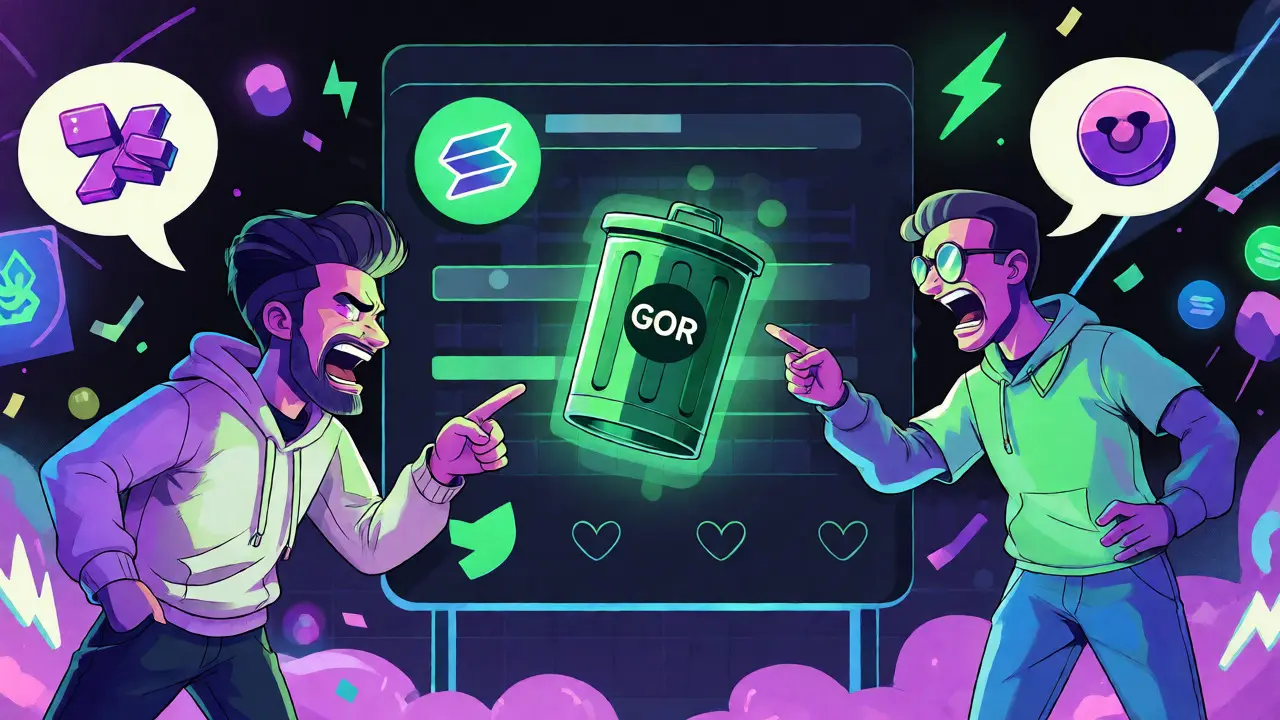
Most coins launch with quiet marketing campaigns. Gorbagana launched with a shout. In early June 2025, Anatoly Yakovenko, co-founder of Solana, got into a heated debate with Lex_Node, founder of MetaLeX. They argued over decentralization and brand control. The tension peaked when Yakovenko publicly challenged the community to build a "Gorbagana chain" within 48 hours. He wasn’t joking.
Pseudonymous developers known as Moonshot and MidTermDev took the dare seriously. They responded by launching GOR via Pumpfun, a popular Solana launchpad. The name itself is a tongue-in-cheek play on "garbage," inspired by Oscar the Grouch from Sesame Street. It was satire wrapped in smart contracts. Within hours, the market cap jumped from zero to $1.6 million. Then it hit $10 million. Eventually, fueled by Yakovenko’s own engagement-specifically a reply containing three trash-can emojis-it briefly crossed $40 million. That’s a 400x surge in roughly 24 hours.
Fair Launch Tokenomics: No Insiders Allowed
If you’re tired of seeing tokens where insiders hold 50% of the supply, Gorbagana offers a refreshing change. The project launched with no venture capital backing. There were no team allocations. No insider wallets. One hundred percent of the supply went straight to the public.
The total supply sits at approximately 999.99 million GOR. Because nearly all tokens are circulating, there’s no looming unlock schedule to crash the price months later. This structure aligns incentives directly with the community. You buy it, you own it, and you help steer its direction. It’s a radical departure from the typical VC-funded model, aiming to prove that grassroots movements can sustain technical projects without corporate oversight.
Beyond the Meme: Utility and Infrastructure
Here is where Gorbagana separates itself from the sea of dog-themed coins. It’s not just a trading chip. It powers GorbaganaChain, a Solana-compatible devnet designed for testing decentralized applications.
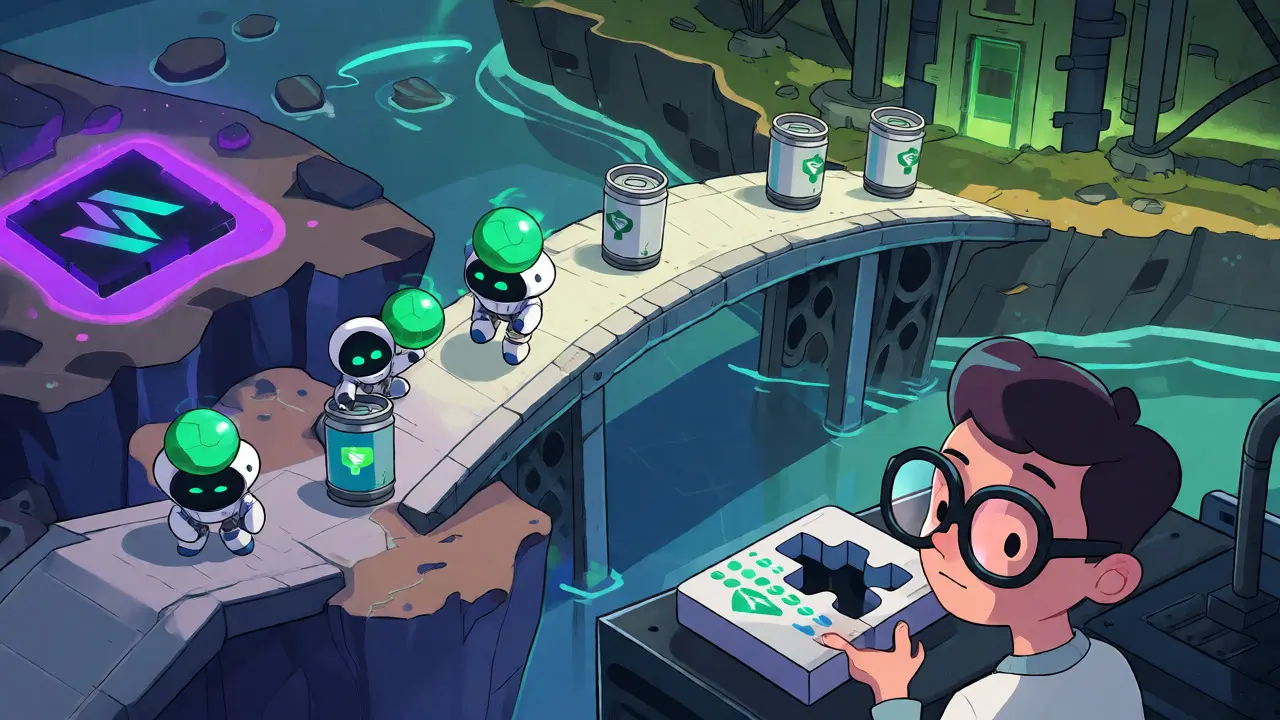
To interact with this devnet, you need gGOR. Think of GOR as the ticket and gGOR as the fuel. You bridge GOR from the main Solana network to GorbaganaChain using a trustless, zero-fee bridge. The exchange rate is strictly 1:1. No slippage. No middlemen taking a cut. Once bridged, gGOR acts as the gas token for transaction fees on the devnet. Developers use it to deploy and test smart contracts under Solana’s virtual machine model. This creates a dual-purpose asset: a speculative meme coin on the mainnet and a functional utility token on the experimental layer.
How to Get Started with GOR
Getting involved depends on whether you want to trade or build. For traders, GOR is listed on several centralized exchanges like CoinEx and LBank, as well as decentralized venues like PumpSwap. You can swap SOL for GOR easily through standard interfaces.
For developers or curious users wanting to explore the ecosystem, the process involves a specific wallet setup:
- Download Backpack Wallet: This Solana-native wallet supports Gorbagana configurations out of the box.
- Enable Gorbagana Configuration: Go into settings and add support for the GorbaganaChain devnet.
- Use the Faucet: Visit the official faucet interface to claim a small amount of free GOR for testing.
- Bridge to gGOR: Use the integrated bridge tool to convert your GOR into gGOR for devnet transactions.
This workflow allows you to send small amounts of GOR to friends or experiment with transfers without risking significant capital. It’s a low-stakes way to understand Solana’s speed and the unique mechanics of the Gorbagana bridge.
| Feature | Gorbagana (GOR) | Typical Meme Coin |
|---|---|---|
| Launch Model | Fair Launch (100% public) | VC-backed or Team Allocation |
| Utility | Gas for Devnet (gGOR), Bridge Asset | Speculation only |
| Infrastructure | Active Devnet & Zero-Fee Bridge | None or Minimal |
| Origin | Social Debate / Satire | Marketing Campaign |
| Mainnet Status | Devnet Only (Experimental) | N/A (Token only) |
Risks and Current Market Reality
Let’s be real: volatility is high. After peaking near $40 million in mid-2025, the market cap contracted significantly. By late 2025 and into 2026, valuations dropped below $1 million. This is typical for micro-cap assets driven by social sentiment. When the hype cycle cools, prices correct sharply.
Another critical limitation is that GorbaganaChain remains a devnet. There is no mainnet yet. While the roadmap hints at future deployment, it hasn’t been announced with firm dates. This means the infrastructure is still a sandbox. Developers can test here, but production-grade applications aren’t running on GorbaganaChain yet. If you’re looking for a stable store of value, this might not be it. But if you’re interested in participating in an active experiment regarding governance and community power, the current status offers a front-row seat.
Why It Matters: The Rise of MemeFi
Gorbagana represents a shift toward "MemeFi." This term describes the fusion of meme culture with decentralized finance tooling. Instead of existing solely as jokes, these tokens bootstrap communities around real software. The rapid development of the Gorbagana chain in under 48 hours proved that community energy can drive technical execution faster than traditional corporate timelines.
It also serves as a case study in Solana’s ecosystem dynamics. The platform has become a hotspot for experimental tokens because of its low fees and high throughput. Gorbagana leveraged this environment to turn a social media spat into a lasting piece of infrastructure. Whether it survives long-term depends on whether the community continues to build, rather than just trade. As of now, with over 14,000 holders and active trading volumes, the pulse is still beating.
Is Gorbagana a scam?
Not necessarily. It launched with a fair distribution model, meaning no insiders held large portions of the supply. However, like all meme coins, it carries high risk due to extreme volatility and its status as an experimental project. Always do your own research before investing.
What is the difference between GOR and gGOR?
GOR is the primary token traded on the Solana mainnet. gGOR is the version of the token used on the GorbaganaChain devnet. You bridge GOR to get gGOR, which is then used to pay for transaction fees (gas) on the devnet.
Does Gorbagana have a mainnet?
As of the latest updates, GorbaganaChain operates only as a devnet. A mainnet deployment has been hinted at in the roadmap but has not been officially launched or dated.
Which wallet supports Gorbagana best?
Backpack Wallet provides native support for Gorbagana, including easy configuration for the GorbaganaChain devnet and integration with the bridge tools needed to swap GOR for gGOR.
Where can I buy GOR?
GOR is available on several centralized exchanges such as CoinEx and LBank, as well as decentralized exchanges like PumpSwap on the Solana network.