
For years, if you tried to buy a cup of coffee with Bitcoin or hold some Ethereum in the U.S., you were operating in a legal fog. Was it a commodity? A security? A currency? The answer depended on which regulator you asked and what mood they were in that day. That uncertainty just ended. On July 18, 2025, President Trump signed the GENIUS Act, officially creating the first federal regulatory framework for payment stablecoins in the United States. This isn't just another memo from the SEC; it’s a law that changes how billions of dollars move through the American economy.
If you’re an investor, a developer, or just someone trying to understand why your bank suddenly cares about your crypto wallet, this guide breaks down exactly what the new rules mean. We’ll look at who controls what, why banks are happy (and why some aren’t), and where the cracks still exist in this new system. Because while we have clarity now, the landscape is far from simple.
The End of the Wild West: What the GENIUS Act Actually Does
The core problem the GENIUS Act solves is ambiguity. Before this law, the Securities and Exchange Commission (SEC) treated many tokens as securities, applying strict disclosure rules that didn’t fit digital assets. The new framework draws a hard line in the sand specifically for payment stablecoins-digital currencies pegged to the U.S. dollar.
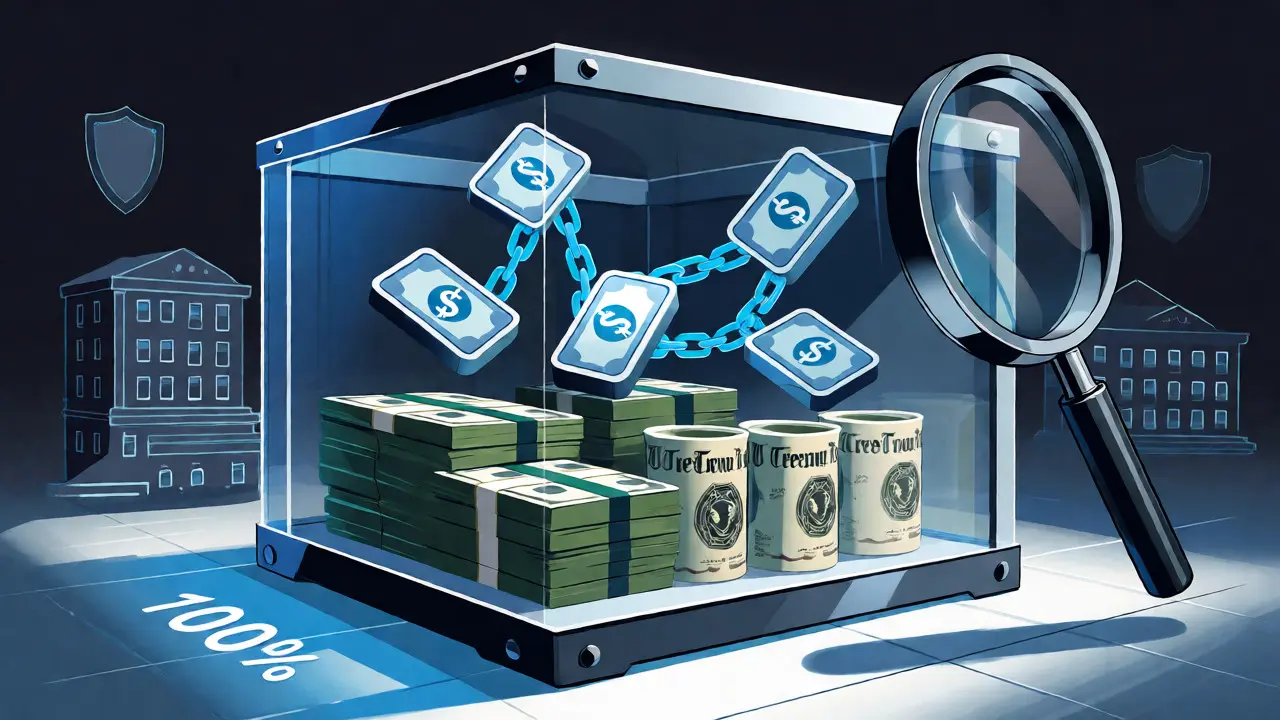
Here is the basic rule: If you issue a stablecoin, you must back every single token with 100% reserves. These reserves can’t be vague promises or other cryptocurrencies. They must be cash, short-term U.S. Treasuries, or similarly liquid assets. And here is the kicker: you have to publish a monthly report showing exactly what those reserves are. No more hiding behind "we promise we have the money." You have to show the receipts.
This shift moves stablecoins from the shadows into the regulated financial system. Issuers are now classified as financial institutions under the Bank Secrecy Act. That means they need to register with FinCEN (the Financial Crimes Enforcement Network) and follow anti-money laundering (AML) protocols just like a traditional bank does. For users, this adds a layer of safety, but it also removes the anonymity that early crypto adopters loved.
Federal vs. State: Who Is Watching Your Wallet?
You might think one federal law means one set of rules everywhere. Not quite. The U.S. loves its dual regulatory system, and the GENIUS Act keeps that tradition alive. It creates a split jurisdiction based on size.
- Federal Oversight: Large issuers-those managing more than $10 billion in stablecoins-fall under federal supervision. This likely includes giants like Circle (issuer of USDC) and Tether (if they fully comply with U.S. standards).
- State Supervision: Smaller issuers, those handling $10 billion or less, remain under state regulators. States retain "supervisory, examination, and enforcement authority" over these entities.
This structure aims to reduce the burden on small startups while keeping big players in check. However, it creates complexity. If you’re a mid-sized issuer growing fast, you’re constantly watching your market cap to see when you’ll trigger federal oversight. Georgetown Law Professor Hilary Allen warned in October 2025 that this threshold could create "regulatory gaps," especially if companies game the system to stay just under the limit. For now, if you’re using a small, niche stablecoin, your primary regulator might be your state’s banking department, not Washington D.C.
The Interest Ban: Why You Can’t Earn Yield on Regulated Stablecoins
This is the most controversial part of the new framework. The GENIUS Act explicitly prohibits Permitted Payment Stablecoin Issuers (PPSIs) from paying interest or yield to holders. If you hold USDC in a regulated wallet, you don’t get paid to hold it. Period.
Why ban interest? Traditional banks argued that if stablecoins offered high yields, people would pull deposits out of savings accounts and move them into crypto. This "disintermediation" could destabilize the banking system. By banning interest, lawmakers protected traditional banks but annoyed crypto-native users.
But wait-didn’t Coinbase offer rewards on USDC before? Yes, and that loophole is still open. The law bans the *issuer* from paying interest, but it doesn’t clearly stop third-party platforms like exchanges or fintech apps from offering "rewards" programs. Banks and policymakers are worried this is a sneaky way to pay interest anyway. As of late 2025, the House Financial Services Committee is holding hearings to close this potential gap. If you’re earning yield on your stablecoins today, expect scrutiny on where that money is coming from.
SEC and CFTC: The Remaining Puzzle Pieces
While the GENIUS Act handles stablecoins, it doesn’t cover everything. What about Bitcoin? Ethereum? Non-fungible tokens (NFTs)? The SEC and the Commodity Futures Trading Commission (CFTC) are still fighting over jurisdiction, though things are getting clearer.
In Spring 2025, the SEC released a regulatory agenda with six specific initiatives for digital assets. They are working on rules for trading, custody, and dealer definitions. The goal, according to SEC Chair Paul Atkins, is to "draw clear regulatory lines" and distinguish securities from non-securities. Meanwhile, the CFTC plans to propose rules for crypto derivatives by December 2025.
| Regulator | Primary Focus | Key Recent Actions |
|---|---|---|
| SEC | Securities, Investor Protection | Created Crypto Task Force; proposed custody rules for Q2 2026 |
| CFTC | Derivatives, Commodities | Planning crypto derivatives rules by Dec 2025 |
| Treasury/FinCEN | AML/KYC, Stablecoin Reserves | Enforcing GENIUS Act reserve requirements |
The distinction matters because if your token is deemed a security, you face heavy registration costs. If it’s a commodity, you deal mostly with the CFTC. The SEC’s updated custody rules, expected soon, will require firms to prove they actually control the private keys to your assets, meeting NIST security standards. This is a big win for consumer protection but a technical headache for smaller custodians.

Global Context: How the U.S. Compares to the EU and Asia
The U.S. didn’t create this framework in a vacuum. Europe implemented the Markets in Crypto-Assets (MiCA) regulation earlier, which covers all crypto-assets, not just stablecoins. China banned crypto transactions entirely. Singapore has a comprehensive Payment Services Act.
The U.S. approach is narrower. By focusing only on stablecoins, it avoids regulating every meme coin and NFT immediately. Critics call this "regulatory arbitrage," where projects avoid being called stablecoins to escape strict rules. But supporters argue it allows innovation to flourish in unregulated sectors while stabilizing the critical payment infrastructure.
Interestingly, the U.S. position has improved. After years of falling behind, the GENIUS Act helped push U.S.-issued stablecoins to 68% of the global market share in 2025, up from 52% in 2024. Institutional investors love certainty. Fidelity reported a 214% increase in digital asset custody clients since the act passed. When big money enters, it usually brings stability-and higher compliance costs.
What Happens Next? Implementation Challenges
Having a law is one thing; enforcing it is another. Chainalysis reported in October 2025 that 78% of surveyed issuers needed six months or more to build systems capable of freezing assets and reporting to regulators. That’s a massive operational lift.
Smaller issuers face estimated annual compliance costs between $2 million and $5 million. For a startup, that’s life-or-death money. Many may merge with larger entities or shut down. Meanwhile, the Treasury Department is already warning that banning interest on regulated stablecoins pushes yield-seeking behavior into decentralized finance (DeFi) protocols, which operate outside these rules. So, we’ve cleaned up the regulated lane, but the unregulated side roads might get crowded and risky.
Looking ahead, the Presidential Working Group on Digital Asset Markets will release its first effectiveness assessment in March 2026. Expect tweaks. Maybe the interest ban gets loosened. Maybe the $10 billion threshold shifts. The framework is alive, and it will evolve.
Does the GENIUS Act regulate Bitcoin?
No. The GENIUS Act specifically targets payment stablecoins. Bitcoin is generally considered a commodity by the CFTC, though the SEC still monitors its spot ETFs and related products. Non-stablecoin cryptocurrencies remain subject to existing securities and commodities laws, which are still being clarified by ongoing SEC and CFTC rulemaking.
Can I still earn interest on my stablecoins?
It depends on where you hold them. The law prohibits the issuer (like Circle) from paying interest directly. However, third-party platforms like Coinbase or Binance may still offer "rewards" programs. These are under scrutiny, and future regulations may restrict them, so check your platform's terms carefully.
What happens if a stablecoin issuer fails?
The GENIUS Act prioritizes stablecoin holders' claims over other creditors in insolvency proceedings. Since issuers must hold 100% reserves in liquid assets, the hope is that funds can be returned quickly. However, this is not FDIC insurance, so there is still risk if the reserves themselves lose value or if fraud occurs.
Who regulates small stablecoin issuers?
Issuers with less than $10 billion in circulation are primarily regulated by state authorities. Each state has its own banking department or financial services agency that oversees these smaller entities, leading to a patchwork of state-level compliance requirements.
How does this affect my privacy?
Regulated stablecoin issuers must follow Anti-Money Laundering (AML) and Know Your Customer (KYC) rules. This means you likely need to provide identification to use these coins, and transactions can be traced by regulators. Privacy-focused coins and decentralized exchanges offer more anonymity but lack the same regulatory protections.