
Imagine your paycheck gets cut in half every four years, not because you did a bad job, but because the rules of the game were written into stone over a decade ago. That is essentially what happens to Bitcoin miners during a Bitcoin halving event. It’s one of the most misunderstood yet critical features of the cryptocurrency world. If you’ve ever wondered why people call Bitcoin "digital gold," this mechanism is the primary reason. It’s not magic; it’s math.
At its core, Bitcoin halving is a programmed event that automatically cuts the reward for mining new blocks by 50%. This isn’t something a CEO decides on a whim or a government mandates via legislation. It’s hard-coded into the Bitcoin protocol by its creator, Satoshi Nakamoto. The goal? To control inflation and ensure scarcity. Unlike fiat currencies like the US Dollar, which central banks can print endlessly, Bitcoin has a fixed supply cap of 21 million coins. The halving is the throttle that slows down the production of new coins until we hit that ceiling around the year 2140.
The Mechanics: How the Halving Actually Happens
You might think the halving happens on a specific calendar date, like January 1st. It doesn’t. It triggers based on block height. Miners compete to solve complex mathematical puzzles to validate transactions and add them to the blockchain. When the network reaches every 210,000th block, the reward for successfully mining that block drops by half. Since blocks are mined roughly every 10 minutes, this cycle takes approximately four years.
Let’s look at the history to make this concrete. In 2009, when Bitcoin launched, miners earned 50 BTC per block. By November 2012, at block 210,000, that dropped to 25 BTC. July 2016 saw the second drop to 12.5 BTC. May 2020 reduced it further to 6.25 BTC. Most recently, in April 2024, the fourth halving occurred, cutting the reward to 3.125 BTC. We are currently living in this era where miners earn less than they did just two years ago, despite the network being more secure and valuable than ever.
| Halving Event | Date | Block Height | Reward Before | Reward After |
|---|---|---|---|---|
| First Halving | Nov 28, 2012 | 210,000 | 50 BTC | 25 BTC |
| Second Halving | Jul 9, 2016 | 420,000 | 25 BTC | 12.5 BTC |
| Third Halving | May 11, 2020 | 630,000 | 12.5 BTC | 6.25 BTC |
| Fourth Halving | Apr 20, 2024 | 840,000 | 6.25 BTC | 3.125 BTC |
Why Scarcity Drives Value
Economics 101 tells us that if demand stays the same while supply decreases, prices tend to rise. Bitcoin halving creates a structural supply shock. Before the 2024 halving, about 900 new bitcoins entered circulation daily. After the event, that number dropped to 450. For investors, this reduction in new supply is significant because it means fewer coins are hitting the market from miners who need to sell to cover their electricity bills.
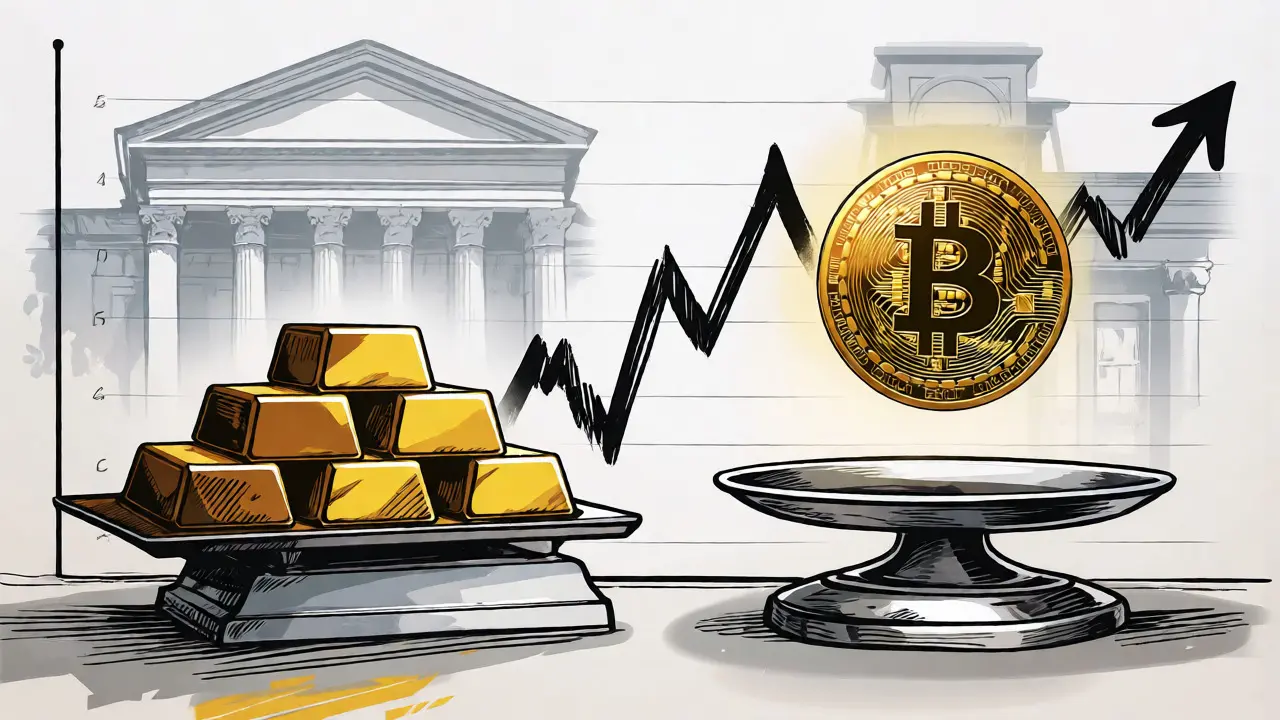
This dynamic is why many analysts compare Bitcoin to gold. Gold’s annual supply growth is roughly 1-2% due to mining efforts. Following the 2024 halving, Bitcoin’s annual issuance rate fell below 1%, making it scarcer than gold in terms of new production relative to existing stock. This verifiable scarcity is a key selling point for institutional investors looking for a hedge against inflation. When central banks print money, your purchasing power dilutes. When Bitcoin halves, the dilution rate slows down.
The Impact on Miners: A Double-Edged Sword
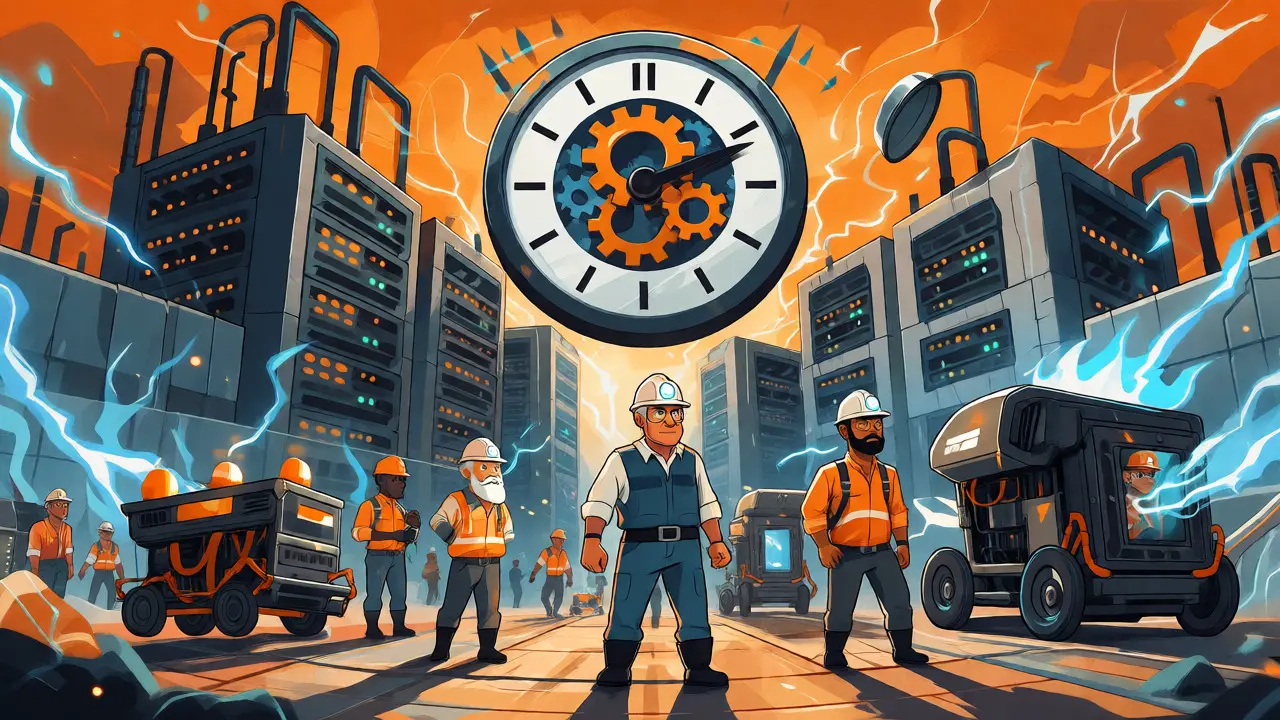
While investors cheer for higher prices, miners face immediate pressure. Their revenue from block rewards instantly drops by 50%. If the price of Bitcoin doesn’t double quickly enough to compensate, their profit margins shrink. This forces the industry to become more efficient. You’ll see older, less efficient mining rigs getting shut down because they can no longer afford the electricity costs required to mine the smaller reward.
We saw this play out after previous halvings. Small-scale miners often exit the market, leading to consolidation among larger players with access to cheaper energy. For example, companies like Marathon Digital Holdings have acquired competitors’ hardware to scale up operations. This isn’t necessarily bad for the network; in fact, it can increase security by concentrating hashing power in professional facilities that optimize uptime and cooling. However, it does raise concerns about decentralization if too much power rests in the hands of a few large entities.
Price Predictions: Correlation vs. Causation
It’s tempting to look at historical data and assume the price will skyrocket immediately after a halving. Historically, there has been a strong correlation between halvings and bull markets. The 2012 halving preceded a massive run-up in price, as did the 2016 and 2020 events. But here’s the catch: correlation does not equal causation.
Many factors influence Bitcoin’s price beyond the halving. Macroeconomic conditions, interest rates, regulatory news, and adoption trends all play huge roles. For instance, the 2020 halving coincided with global monetary expansion due to pandemic stimulus checks, which likely drove more demand than the halving itself. Similarly, the recent approval of Spot Bitcoin ETFs in early 2024 created a new source of demand that interacts with the reduced supply from the halving. So, while the halving reduces selling pressure from miners, it doesn’t guarantee a price spike on its own. It’s one piece of a much larger puzzle.
What’s Next for the Network?
As we move past the fourth halving, the next major event is projected for August 2028, when rewards will drop to 1.5625 BTC. Over time, as the block subsidy approaches zero, miners will rely increasingly on transaction fees rather than block rewards to stay profitable. This transition is already underway. In times of high network congestion, transaction fees can spike, compensating miners for lower block subsidies.
For developers, this raises interesting questions about long-term security. If transaction fees aren’t sufficient to incentivize miners, could the network become vulnerable to attacks? Currently, the consensus seems to be that as Bitcoin becomes more widely used as a settlement layer, fee volume will grow to meet this challenge. But it’s a delicate balance that the community continues to monitor closely.
Frequently Asked Questions
Does Bitcoin halving happen every four years exactly?
Not exactly. While the target interval is four years, the actual timing depends on how fast miners find blocks. Since the difficulty adjustment aims for a 10-minute block time, fluctuations in network hash rate can cause the 210,000-block milestone to arrive slightly earlier or later than four years.
Will my Bitcoin holdings double in value after a halving?
There is no guarantee. While historical data shows positive returns following halvings, past performance does not predict future results. Market sentiment, macroeconomic factors, and regulatory changes significantly impact price. The halving reduces supply, which can support price appreciation if demand remains constant or increases, but it is not a direct cause-and-effect relationship.
How does halving affect transaction fees?
Initially, the halving does not directly change transaction fees. However, as block rewards decrease, miners may prioritize transactions with higher fees to maximize their earnings. Over the long term, as block rewards approach zero, transaction fees are expected to become the primary incentive for miners, potentially influencing fee structures during periods of high network usage.
Can the Bitcoin halving schedule be changed?
Changing the halving schedule would require a fundamental change to the Bitcoin protocol through a hard fork. Given the decentralized nature of Bitcoin and the importance of its predictable monetary policy, such a change would require overwhelming consensus from the community, miners, and users. It is considered highly unlikely due to the trust placed in the original code.
When will all 21 million Bitcoins be mined?
The final Bitcoin is expected to be mined around the year 2140. At that point, the block reward will effectively reach zero, and miners will rely entirely on transaction fees for income. Until then, the halving process will continue approximately every four years, gradually reducing the rate of new coin issuance.