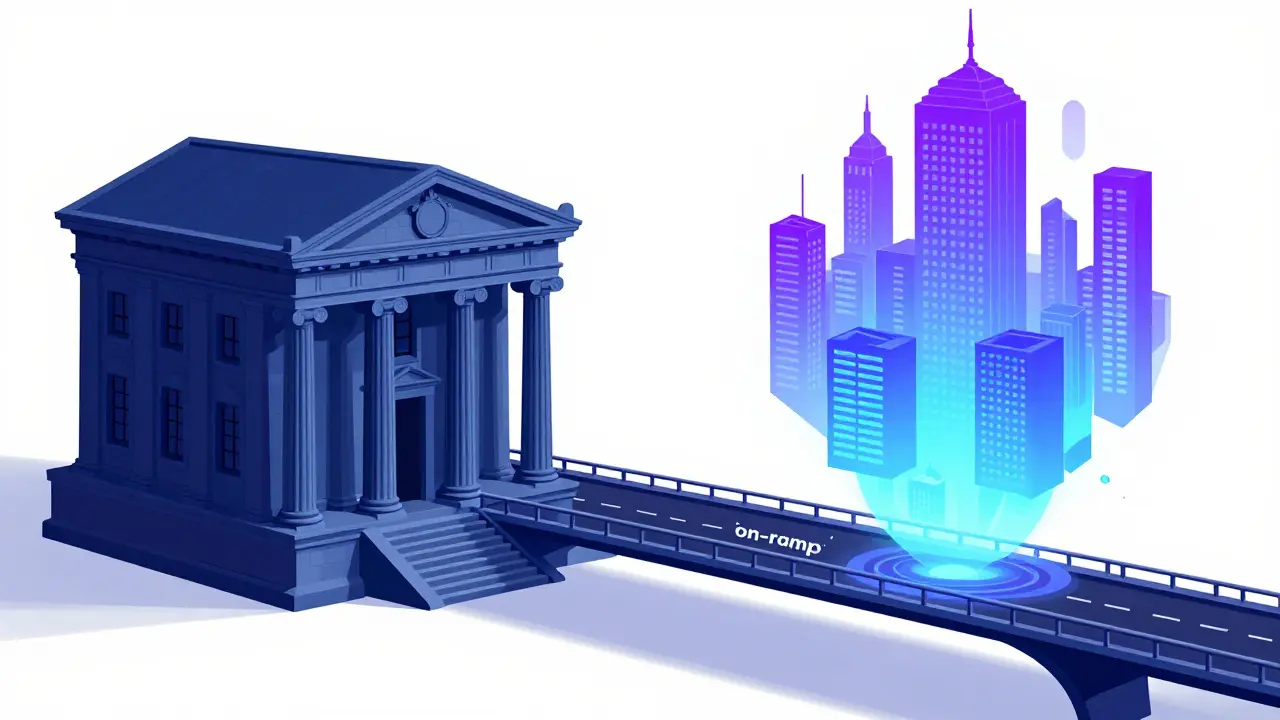

Have you stumbled upon CODEX Exchange, a platform promising to be the "universal" bridge between traditional finance and the wild west of cryptocurrency? You aren't alone. In a market flooded with established giants like Coinbase and Kraken, new platforms pop up daily claiming to offer better security, lower fees, or hybrid features that don't exist elsewhere. But before you link your bank account or deposit your life savings, you need to know if this is the next big thing or just another empty shell.
This review cuts through the marketing noise. We’ll look at what CODEX actually offers, who it’s for, and-most importantly-the red flags you should watch out for in 2026. If you are looking for a detailed breakdown of whether this platform deserves a spot in your portfolio, keep reading.
The Core Promise: A Hybrid Trading Experience
At its heart, CODEX Exchange positions itself as a universal platform that combines centralized ease of use with decentralized control. The idea is appealing. Most traders have to choose between a Centralized Exchange (CEX) where they give up custody of their funds for convenience, or a Decentralized Exchange (DEX) where they keep control but deal with complex interfaces and slippage. CODEX claims to do both.
The platform advertises a suite of features designed to serve everyone from the casual buyer to the institutional whale. These include:
- Fiat Gateway: Direct conversion from traditional currencies like USD or EUR into crypto.
- Credit Card Purchases: Instant buying power using standard payment methods.
- Margin & Leverage Trading: Tools for advanced strategies that allow you to borrow funds to amplify positions.
- Decentralized Exchange (DEX) Features: Non-custodial trading options for users who prefer self-sovereignty.
- Launchpad: Access to new token offerings, similar to Initial DEX Offerings (IDOs).
- OTC Desk: Over-The-Counter services for large-volume trades that shouldn’t impact market price.
On paper, this sounds like a complete ecosystem. However, the devil is in the details. While major competitors like Binance or Kraken have spent years refining these specific tools, CODEX presents them as a bundled package without deep technical transparency on how each component operates under the hood.
Safety First? The Licensing Question
When it comes to crypto, safety isn't just a feature; it's the foundation. The biggest claim CODEX makes is that it possesses "all necessary licenses" to safely store and exchange digital funds. This is a bold statement. In the post-FTX era of 2026, regulatory compliance is the single most important factor for user trust.
However, here is the catch: specific licensing details are not publicly disclosed. Unlike Coinbase, which clearly states its registration with the U.S. Money Services Business (MSB) program and operations in over 100 countries, or Kraken, which holds various global financial licenses, CODEX remains vague about its jurisdictions.
Why does this matter? If an exchange is regulated in Malta, the rules differ vastly from those in New York or Singapore. Without knowing exactly where CODEX is licensed, it is impossible to verify if your funds are protected by local insurance schemes or customer compensation funds. For a platform promising "safety," this lack of transparency is a significant gap.
User Sentiment: What Are People Saying?
Data tells a different story than marketing brochures. Currently, CODEX Exchange sits at a modest rating of 3 out of 5 stars based on just two user reviews tracked by independent evaluators like Cryptogeek. Let that sink in. Two reviews.
In the world of crypto exchanges, volume matters. Established platforms have thousands of reviews across Trustpilot, Reddit, and specialized forums. A sample size of two suggests one of two things: either the platform is brand new and has barely launched, or it has struggled to gain traction among early adopters.
The limited feedback makes it hard to gauge true user satisfaction. Are users happy with the withdrawal speeds? Is customer support responsive during market crashes? Or are they frustrated by hidden fees? With such sparse data, you are essentially entering as a beta tester.

How Does It Stack Up Against the Giants?
To understand where CODEX fits, we need to compare it to the incumbents. The crypto exchange landscape is saturated. Here is how CODEX compares to two of the most trusted names in the industry.
| Feature | CODEX Exchange | Coinbase | Kraken |
|---|---|---|---|
| Regulatory Transparency | Vague / Unspecified | High (US-regulated) | High (Global licenses) |
| Fee Structure | Undisclosed | 0.00% - 0.60% | 0.00% - 0.26% |
| User Reviews | Very Low (2 reviews) | High Volume | High Volume |
| Trading Model | Hybrid (CEX + DEX) | Centralized (CEX) | Centralized (CEX) |
| Best For | Early Adopters / Speculators | Beginners / Safety | Pro Traders / Low Fees |
As you can see, CODEX lacks the proven track record of Coinbase or Kraken. Coinbase dominates the beginner space with its simplicity and regulatory backing. Kraken appeals to pros with deep liquidity and rock-bottom fees. CODEX tries to differentiate with its hybrid model, but without competitive fee structures or clear regulatory advantages, it faces an uphill battle.
The Missing Pieces: Fees, Coins, and KYC
If you are ready to trade, you need concrete numbers. Unfortunately, public sources for CODEX are silent on several critical operational details:
- Trading Fees: Maker and taker fees are the primary cost of doing business. Without knowing if CODEX charges 0.1%, 0.5%, or more, you cannot calculate profitability.
- Supported Cryptocurrencies: Does it list Bitcoin and Ethereum only? Or does it offer altcoins and meme coins? Major exchanges list hundreds of assets. CODEX’s asset list is unspecified.
- KYC Requirements: Know Your Customer (KYC) laws vary by region. Some platforms offer no-KYC trading for privacy (like MEXC or dYdX), while others require strict ID verification. CODEX’s stance is unclear.
- Withdrawal Limits: Can you move $10,000 instantly? Or are there daily caps that lock your funds during volatility?
This opacity is common among newer platforms but risky for users. In 2026, top-tier exchanges publish their fee schedules and supported pairs prominently on their homepage. Hiding this information often signals that the terms may change frequently or unfavorably.

Who Should Use CODEX Exchange?
Given the current state of information, CODEX Exchange is not for everyone. Here is a quick decision tree:
- Avoid if: You prioritize capital preservation, need guaranteed regulatory protection, or want transparent fee structures. Stick to Coinbase, Kraken, or Binance.
- Consider if: You are an experienced trader comfortable with risk, interested in testing hybrid CEX/DEX models, and willing to act as an early adopter. Even then, start with small amounts you can afford to lose.
The platform’s inclusion of a Launchpad suggests it aims to attract investors looking for early access to new tokens. This can be lucrative but is also high-risk. Without a documented history of successful launches, it’s hard to judge the quality of projects CODEX vets.
Final Verdict: Proceed with Caution
CODEX Exchange presents an ambitious vision of a unified trading environment. The combination of fiat gateways, leverage, and decentralized features is theoretically powerful. However, theory doesn't pay bills. The lack of specific licensing details, minimal user feedback, and undisclosed fee structures create a fog of uncertainty.
In the crypto world, transparency is currency. Until CODEX publishes clear regulatory documents, detailed fee tables, and accumulates a broader base of user reviews, it remains a speculative option. For most users in 2026, sticking with established, regulated platforms is the safer bet. If you do decide to try CODEX, treat it as a secondary wallet, not your primary treasury.
Is CODEX Exchange regulated?
CODEX claims to hold "all necessary licenses," but as of 2026, specific regulatory jurisdictions and license types are not publicly disclosed. This contrasts with major exchanges like Coinbase, which clearly state their US-based regulatory compliance.
What are the fees on CODEX Exchange?
The exact trading fees (maker/taker rates) for CODEX Exchange are not specified in available public sources. Users should check the official website directly or contact support for current fee schedules before trading.
Is CODEX safe for beginners?
Due to limited user reviews (only 2 found) and lack of transparent regulatory information, CODEX is considered higher risk for beginners. Platforms like Coinbase or Kraken offer more proven safety records and educational resources.
Does CODEX offer decentralized trading?
Yes, CODEX advertises Decentralized Exchange (DEX) features alongside its centralized services. This hybrid approach allows users to potentially trade non-custodially, though specific technical implementations are not detailed.
Can I buy crypto with a credit card on CODEX?
According to the platform's feature list, CODEX supports Credit Card Purchase options for direct cryptocurrency acquisition, along with a Fiat Gateway for traditional currency conversions.