
Have you ever seen a cryptocurrency that seems to exist in two different realities at once? That is exactly what happens when you try to figure out GME Mascot, also known by its ticker symbol BUCK. This token claims to be tied to the legendary GameStop stock saga, but digging into the details reveals a maze of contradictions. Is it a stablecoin pegged to the dollar? Is it a wild memecoin on Solana? Or is it an Ethereum-based utility token?
The short answer is: nobody really knows for sure, and that uncertainty is your biggest risk. If you are looking at BUCK because you remember the 2021 GameStop frenzy, you need to understand that this token operates in a very different, much darker corner of the crypto world. Let’s break down what BUCK actually is, where the data gets messy, and why you should proceed with extreme caution.
The Identity Crisis: What Exactly Is BUCK?
If you ask three different crypto exchanges about GME Mascot, you will likely get three completely different answers. This isn't just a minor discrepancy; it is a fundamental split in how the token is defined across the industry.
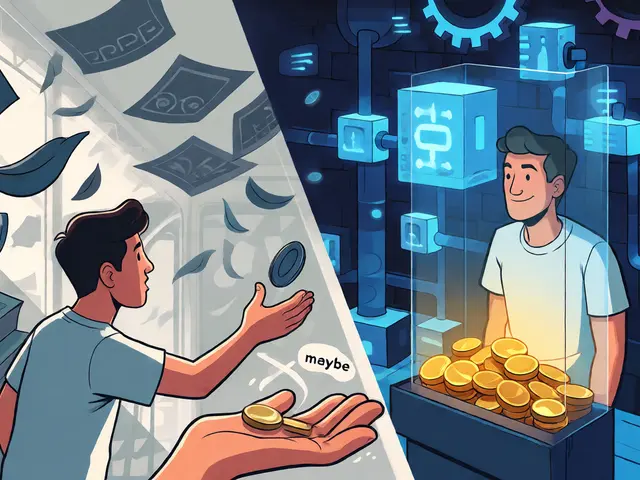
On one side, platforms like Gate.io describe BUCK as a stablecoin operating on the Sui Network. According to this narrative, BUCK is designed to stay pegged to $1 USD. It supposedly uses a collateralized debt position (CDP) system, meaning users lock up SUI tokens to mint BUCK. In theory, this makes it a tool for stability, protecting holders from market crashes.
On the other side, sources like Bitget Wallet and DexScreener label BUCK as a memecoin on the Solana blockchain. Here, there is no dollar peg. Instead, it is treated as a speculative asset driven by community hype, nostalgia for the "Buck the Bunny" mascot, and NFT collectibles. This version trades on Raydium, a decentralized exchange on Solana, with a specific contract address that looks nothing like a traditional financial instrument.
Then there is Coinbase, which lists BUCK as an Ethereum-based token launched in 2024. So, we have a single ticker symbol-BUCK-claiming to be a stablecoin on Sui, a meme coin on Solana, and an ERC-20 token on Ethereum. For a regular investor, this confusion is a massive red flag. It suggests either poor communication from the developers or, more worryingly, multiple unrelated projects using the same name to confuse buyers.
| Platform/Source | Claimed Blockchain | Token Type | Primary Function |
|---|---|---|---|
| Gate.io | Sui Network | Stablecoin | Pegged to $1 USD via collateral |
| Bitget / DexScreener | Solana | Memecoin / NFT Utility | Community speculation & collectibles |
| Coinbase | Ethereum | Utility Token | GameStop ecosystem integration |
The Numbers Don't Add Up: Supply and Price Chaos
Beyond the technical confusion, the basic math of BUCK is broken. In any legitimate cryptocurrency, the total supply is a fixed, verifiable number. For BUCK, it depends entirely on who you ask.
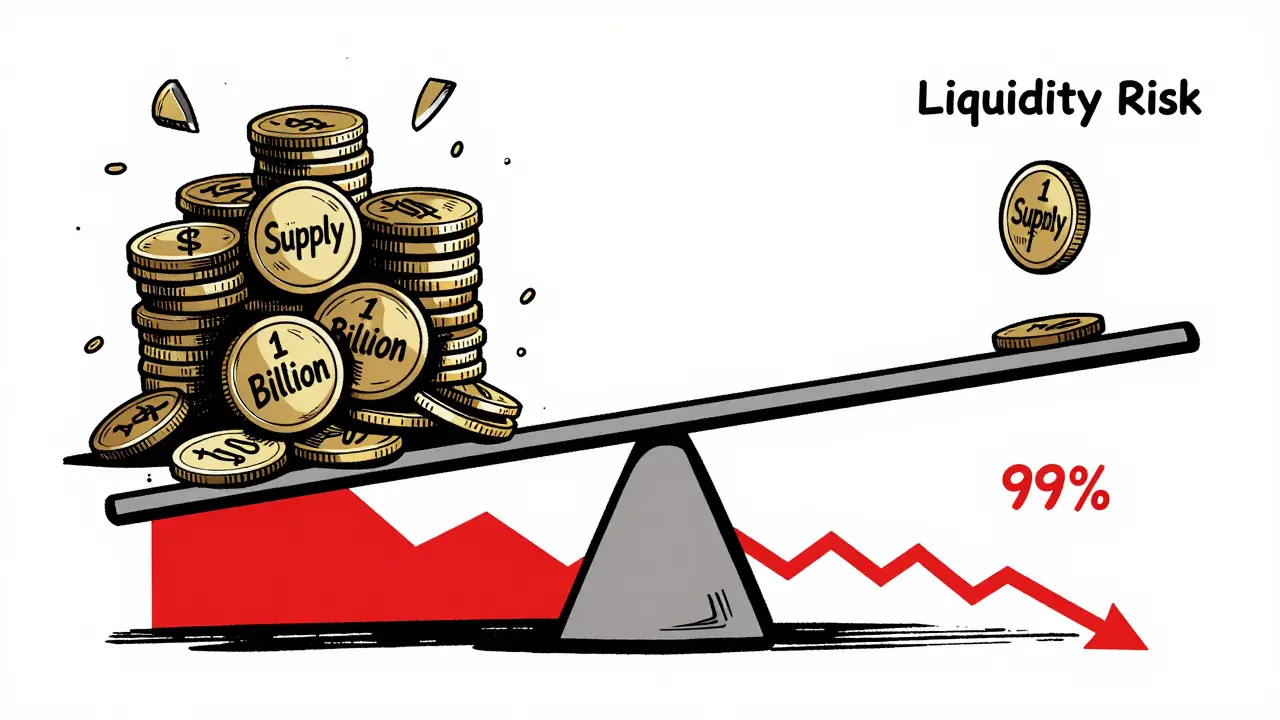
CoinCarp reports a maximum supply of 1 billion tokens. Coinbase and Crypto.com, however, list the supply at 10 billion. That is a tenfold difference. If you are calculating the market cap-the total value of all tokens in circulation-a 10x error in supply means your valuation is off by 90%. This makes it impossible to know if the project is undervalued or overvalued.
Price data is equally unreliable. As of mid-2026, prices for BUCK range wildly:
- LiveCoinWatch: ~$0.000411
- Gate.io: ~$0.000690
- Crypto.com: ~$0.00000256 (and marked as not tradable)
Why such a huge gap? It comes down to liquidity. The 24-hour trading volume for BUCK is tiny, often hovering between $3,000 and $14,000 across all platforms combined. When volume is this low, a single person buying $500 worth of tokens can spike the price by 10% or crash it by just as much. This is called price manipulation, and it is common in low-cap coins. You might see a green candle on a chart and think you’ve found a winner, only to sell minutes later and find the price has collapsed because there were no real buyers left.
To put this in perspective, BUCK hit an all-time high of roughly $0.065 in early days. Today, it trades for fractions of a cent. That represents a loss of over 99% of its value. Most investors do not recover from drops of this magnitude.
The "Community Takeover" Red Flag
One of the most concerning aspects of GME Mascot is its governance history. In November 2024, records show that the community claimed ownership of the BUCK token on Solana/Raydium. The message from the community was blunt: "Dev didn't see the massive potential of $GME Mascot $BUCK and we do."
In crypto slang, this is often called a "community takeover," but in practice, it usually means the original developers abandoned the project. When founders leave, several things happen:
- No Roadmap: There is no team building new features, updating smart contracts, or fixing bugs.
- No Accountability: If the code has a vulnerability, there is no one to patch it. Hackers love abandoned projects.
- No Legal Entity: If something goes wrong, you cannot sue a ghost. There is no company behind the token, just a wallet address held by anonymous users.
This lack of structure is typical of "rug pulls" or failed experiments. Legitimate projects, even small ones, maintain active development teams and clear communication channels. BUCK has neither. The absence of a whitepaper, security audits, or a public team roster means you are betting on hope, not fundamentals.
Is BUCK Actually Related to GameStop?
This is the question that draws most people in. The name "GME Mascot" and the character "Buck the Bunny" clearly evoke GameStop. However, there is no evidence that GameStop Corporation officially endorses, issues, or supports the BUCK token.
GameStop has explored blockchain technology and NFTs in the past, but they have never announced a partnership with a token called BUCK. The use of the mascot is likely an attempt to ride the wave of the 2021 Reddit-fueled stock surge. This is a common tactic in the crypto space: create a token with a famous brand's imagery to attract retail investors who assume there is an official connection. Always verify official announcements directly from the company's website or press releases, not from social media hype.
Risks You Cannot Ignore
If you are considering buying BUCK, you need to understand the specific risks involved. These are not generic warnings; they are direct consequences of the data inconsistencies we’ve discussed.
- Liquidity Risk: With daily volumes under $15k, you may not be able to sell your tokens when you want to. Imagine trying to sell a house with only one interested buyer-you have to accept their price, no matter how low.
- Data Integrity Risk: Because trackers disagree on the blockchain and supply, you might buy the "wrong" BUCK. You could intend to buy the Solana memecoin but accidentally purchase an obscure Ethereum token with zero value.
- Regulatory Risk: Tokens that mimic stablecoins without proper reserves or audits are prime targets for regulatory crackdowns. If authorities deem BUCK an unregistered security or a fraudulent stablecoin, exchanges could delist it overnight.
For context, compare BUCK to established meme coins like Dogecoin or Shiba Inu. Those tokens have massive communities, transparent development histories, and deep liquidity. BUCK has none of these. It is a micro-cap asset with structural flaws.

How to Verify Crypto Information Yourself
You don’t have to take my word for it. Here is how you can check the facts yourself before putting any money into a confusing token like BUCK:
- Check Multiple Block Explorers: Go to Etherscan (for Ethereum), Solscan (for Solana), and Suiscan (for Sui). Paste the contract addresses provided by different exchanges. Do they match? If not, you are dealing with different tokens.
- Look for Official Links: Does the token website link to a verified GitHub repository? Are there regular commits showing code updates? If the last update was months ago, the project is likely dead.
- Read the Contract: If you are technical, look at the token’s smart contract. Can anyone mint new tokens? If yes, the supply is infinite, and your investment is worthless.
- Ignore Social Hype: Twitter and Telegram groups are filled with bots promoting low-cap coins. Real interest shows up in consistent, organic trading volume, not just chat messages.
Final Thoughts on GME Mascot
GME Mascot (BUCK) is a perfect example of why due diligence matters in crypto. It promises the excitement of the GameStop rally but delivers the chaos of an unregulated, poorly documented experiment. The conflicting data on its blockchain, purpose, and supply suggests it is not a serious financial product. Whether it is a failed stablecoin experiment or a abandoned meme coin, the outcome for the average holder is likely the same: significant loss of capital.
If you are looking for exposure to the gaming or meme sectors, there are dozens of other tokens with clearer roadmaps, active development teams, and transparent metrics. BUCK offers none of these advantages. Treat it as a cautionary tale rather than an investment opportunity.
Is GME Mascot (BUCK) an official GameStop token?
No. There is no official endorsement or partnership between GameStop Corporation and the BUCK token. The use of the "Buck the Bunny" mascot appears to be unauthorized branding intended to capitalize on the company's popularity.
Which blockchain does BUCK run on?
There is conflicting information. Some sources say it is on Ethereum, others claim Solana, and some report it is on the Sui Network. This inconsistency is a major warning sign that you may be looking at multiple different tokens using the same name.
Is BUCK a stablecoin?
Only one major source (Gate.io) describes it as a stablecoin pegged to $1 on the Sui Network. Other sources describe it as a volatile memecoin on Solana. Given the price fluctuations and lack of audit transparency, it does not function reliably as a stablecoin.
Why is the price of BUCK so different on different sites?
The differences are due to extremely low liquidity and fragmented trading pools. With daily volumes under $15,000, small trades cause large price swings. Additionally, different sites may be tracking different contract addresses for tokens with the same name.
Who developed GME Mascot?
The original developers appear to have abandoned the project. In late 2024, the community claimed ownership, indicating there is no active professional team maintaining the token or providing customer support.
Can I trade BUCK on major exchanges like Coinbase?
While Coinbase lists pricing data for BUCK, it does not currently allow trading on its platform. Most trading occurs on decentralized exchanges like Raydium, which carries higher risks regarding slippage and counterparty safety.
Comments (10)

- Russ Fincham
- July 13, 2026 AT 13:10 PM
Look, I’ve been in this game since the early days of Bitcoin, and let me tell you, BUCK is a disaster waiting to happen. The fact that three different exchanges list it as three completely different assets on three different blockchains isn’t just confusing; it’s criminal negligence by anyone who lists it. You’re not investing; you’re gambling on a glitch in the matrix. Gate.io says stablecoin, Coinbase says utility, Solana says meme? Pick a lane or get out of the way. It’s basic market hygiene.

- Linda Hilliard
- July 14, 2026 AT 16:40 PM
Oh, please. How quaint that you think 'basic market hygiene' applies to the crypto space. 🙄 Let us be clear: this is precisely why retail investors are so easily preyed upon. The lack of regulatory oversight allows for such egregious mislabeling. If one cannot discern the difference between a CDP-backed stablecoin on Sui and a speculative memecoin on Solana, perhaps they should stick to savings accounts. It is truly pathetic how many people ignore the fundamental principles of due diligence. 😒

- Winston Lacewing
- July 16, 2026 AT 09:48 AM
I mean, can we talk about the sheer audacity of these devs abandoning ship? 💀 Like, really? You launch a token with a bunny mascot tied to GameStop hype and then just ghost everyone when the community tries to take over? That’s not just bad business; that’s morally bankrupt. We’re talking about real people losing their life savings here because some anonymous wallet holder decided to run away. It makes my blood boil every time I see another rug pull like this. 😡📉

- Kristine Lawson
- July 16, 2026 AT 21:29 PM
While your emotional outburst is certainly... vivid, it lacks analytical precision. The term 'rug pull' is often misapplied. In this specific instance, the 'community takeover' suggests a transfer of control rather than a malicious exit scam, albeit an incompetent one. However, the absence of a legal entity remains a critical flaw. One must consider the implications of unregulated governance structures. Is it truly moral to invest in an asset with no accountability mechanism? Precisely.

- Tawny Holmes
- July 18, 2026 AT 03:16 AM
It’s a dead coin. Don’t buy it.

- Jessie Smith
- July 19, 2026 AT 09:31 AM
yo, the whole concept of value is kinda illusory anyway right? 🤔 BUCK is just a digital mirage reflecting our collective desire for financial validation through nostalgia. The blockchain doesn't care about Buck the Bunny, it cares about hash rates and consensus mechanisms. But hey, if buying a token that might be on Ethereum or maybe Solana brings you joy, who am i to judge? its all just vibes and code in the end. 🌌

- Drew M
- July 19, 2026 AT 17:55 PM
Absolutely fascinating perspective! ✨ I totally agree that the philosophical underpinnings of crypto are often overlooked. But let's be real, most people aren't thinking about hash rates; they're thinking about Lambos. The confusion around BUCK is actually a feature, not a bug, for those who thrive on chaos. It’s like a digital carnival where nobody knows the rules but everyone is playing. 🎡💸

- Deep Rahman
- July 21, 2026 AT 14:09 PM
When we look at the history of financial instruments, we see that trust is built over centuries, not months. This token attempts to borrow trust from a video game retailer without any actual connection. It is like trying to build a house on sand. The wind blows, and the foundation disappears. People need to understand that money is a social construct, and if the society does not agree on what the money is, then it has no value. The confusion is natural because the object itself is confused. It is sad to watch people lose money because they do not understand the nature of trust.

- Melissa Beckwith
- July 21, 2026 AT 16:21 PM
I have spent considerable time analyzing the smart contract vulnerabilities associated with abandoned projects, and the risk profile here is untenable. Without active maintenance, even minor exploits can drain liquidity pools entirely. The discrepancy in supply figures-ranging from 1 billion to 10 billion-is not merely a data entry error but likely indicative of minting functions that remain unchecked. This creates an infinite dilution scenario for existing holders. It is imperative that investors recognize that low liquidity combined with unknown supply mechanics guarantees eventual total loss of capital.

- Anuj Kashyap
- July 22, 2026 AT 03:22 AM
Honestly, reading all this drama makes me want to go back to mining Bitcoin in 2010. 😂 The irony is thick enough to cut with a knife. Everyone is arguing over which blockchain BUCK is on, while the developers are probably sipping piña coladas somewhere. 🍹 It’s a perfect storm of incompetence and greed. Just imagine if GameStop actually released a token? Then we’d have real FUD. Until then, this is just noise. Stay safe, folks. 🧘♂️✨