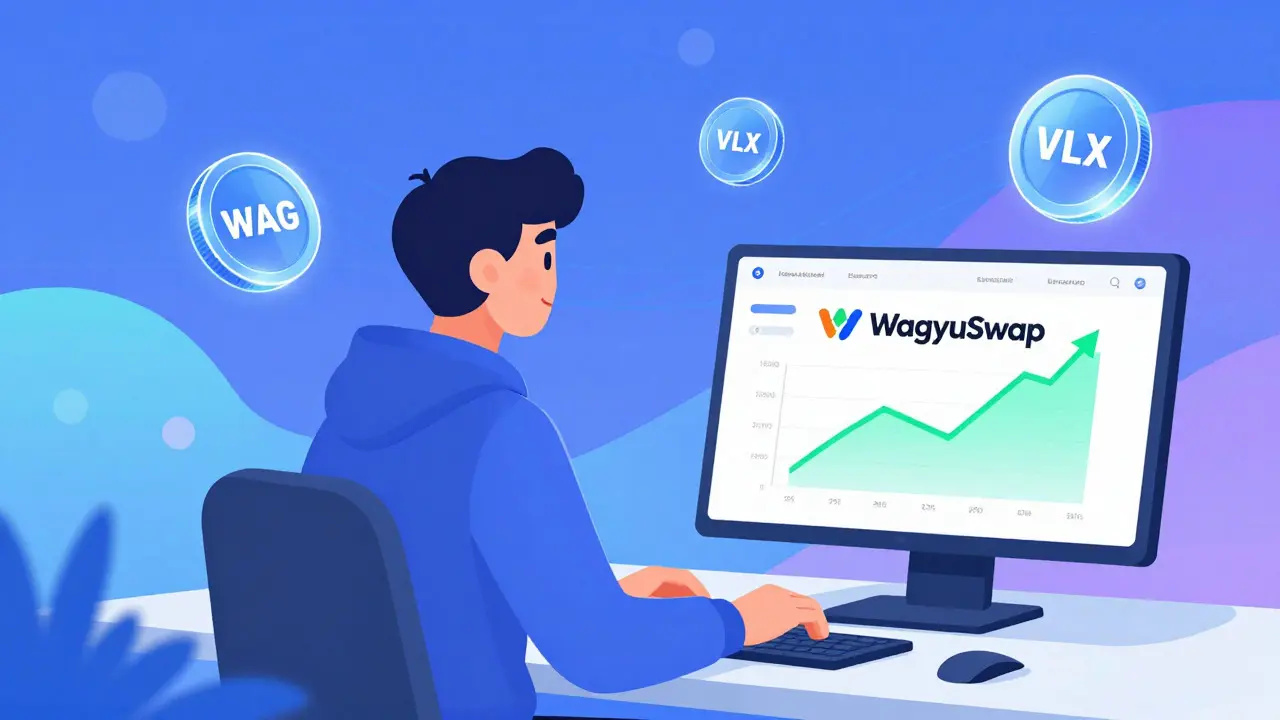

You’ve heard the buzz about WagyuSwap, a decentralized exchange that promises high-speed trading on the Velas Network. But does the hype match reality? Especially when it comes to the much-discussed IDO launch airdrop?
If you’re looking to claim free tokens or start trading WAG, you need more than just hope. You need a clear map of how this platform works, where the risks lie, and whether those airdropped tokens are worth your time. This guide cuts through the noise. We’ll break down the WagyuSwap ecosystem, explain how to navigate its IDO mechanics, and give you the practical steps to participate safely.
What Is WagyuSwap and Why Does It Matter?
WagyuSwap is a decentralized exchange (DEX) built on the Velas Network. Launched in September 2021, it positions itself as the first DEX on a blockchain that claims to be faster than most competitors by leveraging Solana’s codebase while maintaining Ethereum Virtual Machine (EVM) compatibility.
Why does this matter to you? Speed and cost. Traditional Ethereum transactions can be slow and expensive during peak times. WagyuSwap aims to solve this by offering near-instant swaps with minimal fees. The platform supports token swapping, liquidity provision, staking, and yield farming-all without requiring KYC (Know Your Customer) verification. This means you can keep your identity private while participating in decentralized finance.
The native token, WAG, plays a central role in the ecosystem. It’s used for governance, rewarding liquidity providers, and mitigating impermanent loss-a common risk for anyone providing liquidity to trading pairs. With a total supply capped at 500 million tokens, scarcity is baked into the design, though only about 54 million were circulating as of late 2025.
Understanding the IDO Launch Airdrop Mechanics
Initial DEX Offerings (IDOs) have become a standard way for new projects to bootstrap liquidity and community engagement. Unlike Initial Coin Offerings (ICOs), which often lack immediate trading options, IDOs list tokens directly on a decentralized exchange from day one.
The WagyuSwap IDO launch airdrop was designed to reward early adopters and incentivize users to provide initial liquidity. Here’s how these campaigns typically work:
- Eligibility Criteria: Most airdrops require you to hold specific tokens, complete social tasks (like joining Telegram or Discord), or provide a minimum amount of liquidity before a snapshot date.
- Token Distribution: Tokens are distributed proportionally based on your contribution or randomly among eligible wallets. For WagyuSwap, historical data suggests rewards were tied to early liquidity provision on the Velas Network.
- Claiming Process: Once the snapshot is taken, you usually connect your wallet to the WagyuSwap interface and click “Claim.” There may be a vesting period, meaning tokens unlock gradually over weeks or months to prevent immediate dumping.
However, details on the exact current airdrop mechanics are sparse. Many IDO campaigns end quickly, and if you missed the initial window, secondary opportunities might exist through partnerships or community events. Always verify information on official channels-never trust random DMs or unverified links.
How to Participate Safely: Step-by-Step Guide
Participating in a WagyuSwap airdrop or trade requires preparation. Follow these steps to ensure you don’t lose funds to scams or technical errors.
- Set Up a Compatible Wallet: Since WagyuSwap operates on the Velas Network, you need a wallet that supports VEP20 tokens. MetaMask is widely used, but you must configure it to recognize the Velas chain. Add the Velas network RPC details manually: Chain ID 106, Symbol VLX, and the correct block explorer URL.
- Fund Your Wallet: You’ll need some Velas (VLX) tokens for gas fees. Buy VLX on a major exchange like Binance or KuCoin, then withdraw it to your MetaMask address. Keep extra VLX for future transactions.
- Connect to WagyuSwap: Visit the official WagyuSwap website. Double-check the URL to avoid phishing sites. Click “Connect Wallet” and approve the connection request in MetaMask.
- Check Eligibility: If an active airdrop exists, look for a dedicated “Airdrop” tab. Enter your wallet address to see if you qualify. Some campaigns require holding a certain amount of LP tokens or completing social tasks.
- Claim and Manage Tokens: If eligible, click “Claim.” Monitor your transaction status on the Velas block explorer. Once received, decide whether to hold, stake, or swap your WAG tokens.
Pro Tip: Always test with a small amount first. Before committing significant capital, send a tiny transaction to ensure your wallet configuration is correct.
Market Reality: Price Performance and Risks
Let’s talk numbers. As of August 2026, WAG trades around $0.00015, a far cry from its all-time high of $0.00435. That’s a decline of over 93%. What does this mean for you?
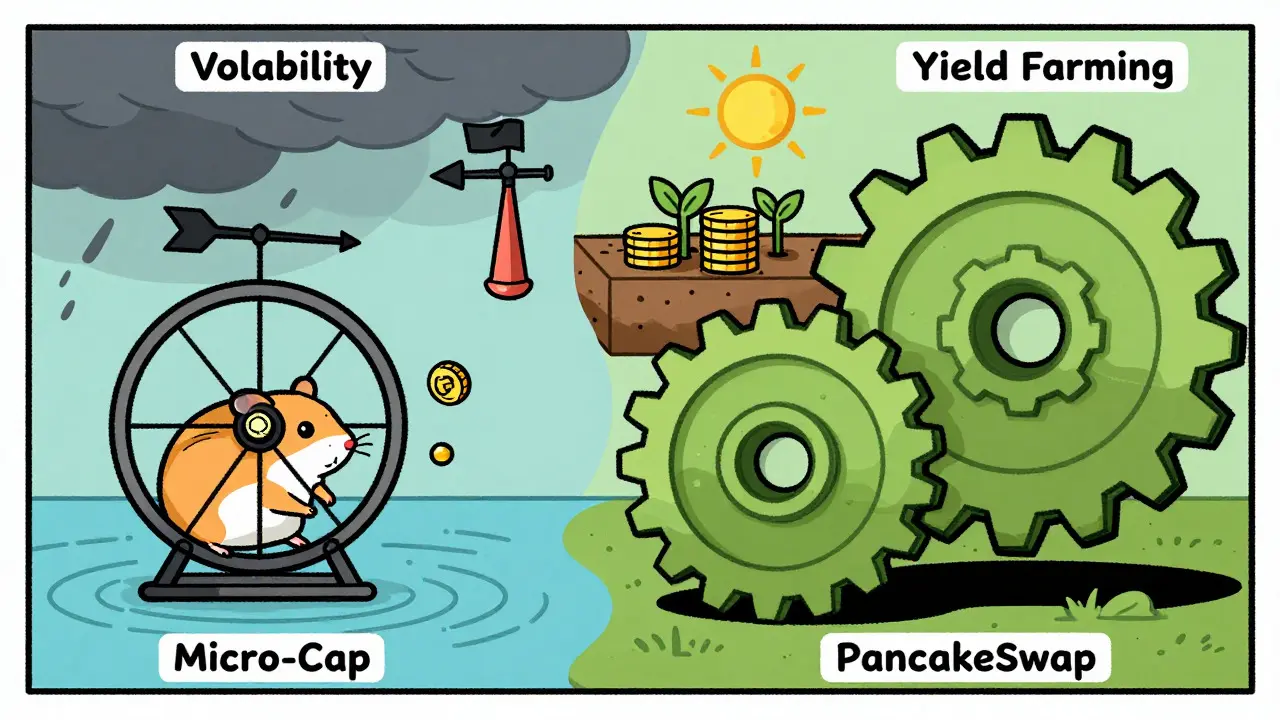
Volatility is inherent in crypto, especially for smaller-cap tokens. WagyuSwap’s market cap hovers between $9,700 and $16,000, ranking it outside the top 3,000 cryptocurrencies. Low trading volume-sometimes hitting zero in 24-hour periods-indicates limited liquidity. This makes buying or selling large amounts difficult without impacting the price significantly.
| Metric | Value | Implication |
|---|---|---|
| Current Price | $0.000151 - $0.0001525 | Highly speculative; low entry barrier but high risk. |
| Total Supply | 500 Million WAG | Capped supply limits inflation but doesn't guarantee value. |
| Circulating Supply | ~54.16 Million WAG | Only ~10% of total supply is actively traded. |
| Market Cap | $9,770 - $16,000 | Micro-cap status; highly susceptible to manipulation. |
| TVL (Total Value Locked) | $182,150 | Low liquidity depth; slippage risk on larger trades. |
| All-Time High | $0.00435 | 93% drop indicates strong bearish pressure. |
Technical indicators paint a cautious picture. The 50-day Simple Moving Average (SMA) sits at $0.000169, and the 200-day SMA is at $0.000422. Both lines slope downward, suggesting persistent selling pressure. Analysts predict further declines, with some models forecasting a 25% drop by late 2025. While the Fear & Greed Index reads 74 (indicating greed), this sentiment hasn’t translated into sustained buying power for WAG.
Yield Farming and Liquidity Provision: The Core Utility
If the price action looks grim, why would anyone use WagyuSwap? The answer lies in yield farming. By providing liquidity to trading pairs (e.g., WAG/VLX), you earn a share of trading fees plus additional WAG rewards.
Here’s the catch: Impermanent Loss. When you provide liquidity, you lock two assets in a smart contract. If the price of one asset changes drastically compared to the other, you might end up with less value than if you had just held the assets separately. WagyuSwap attempts to mitigate this by rewarding LPs with WAG tokens. However, if WAG’s price continues to fall, the rewards may not offset the loss.
To minimize risk:
- Diversify Pairs: Don’t put all your capital into one volatile pair. Consider stablecoin pairs if available.
- Monitor TVL: A growing Total Value Locked indicates confidence. Currently, at $182k, it’s modest.
- Understand Slippage: With low liquidity, even small trades can move the price. Set tight slippage tolerances in your wallet settings.
Comparing WagyuSwap to Established DEXs
How does WagyuSwap stack up against giants like Uniswap or PancakeSwap? Let’s compare key attributes.
| Feature | WagyuSwap | Uniswap | PancakeSwap |
|---|---|---|---|
| Network | Velas (Solana-based) | Ethereum / L2s | Binance Smart Chain |
| Transaction Speed | Very High (claimed) | Variable (congested) | High |
| Gas Fees | Low | High (on Mainnet) | Low |
| Market Cap | ~$10k - $16k | Billions | Billions |
| Liquidity Depth | Shallow | Deep | Deep |
| KYC Required | No | No | No |
WagyuSwap’s niche is speed and low cost on the Velas Network. If you’re already invested in Velas or believe in its long-term potential, WagyuSwap offers a gateway. However, for general-purpose trading, established DEXs offer deeper liquidity and more robust security audits. WagyuSwap remains a high-risk, high-reward play suited for experienced DeFi users comfortable with micro-cap volatility.
Future Outlook: Can WagyuSwap Recover?
The broader crypto market is cyclical. While WAG has suffered significant losses, recovery depends on several factors:
- Velas Network Adoption: If more developers build on Velas, demand for its native DEX will rise.
- AI Integration: WagyuSwap claims AI-powered features. If these deliver tangible benefits (like better price discovery or automated strategies), they could attract users.
- Community Growth: Social sentiment drives meme and micro-cap coins. Active communities can spark rallies.
Regulatory uncertainty also looms. As governments scrutinize DeFi platforms, non-KYC exchanges like WagyuSwap may face challenges. Stay informed about legal developments in your jurisdiction.
In short, WagyuSwap isn’t a passive investment. It requires active monitoring, risk management, and a belief in the Velas ecosystem. Treat any airdropped tokens as speculative assets, not guaranteed wealth.
Is the WagyuSwap IDO airdrop still active in 2026?
Most initial IDO airdrops occur shortly after launch. As of 2026, the primary launch airdrop is likely closed. However, check the official WagyuSwap Twitter or Discord for seasonal giveaways or partnership promotions. Never enter private keys on unofficial sites.
How do I add Velas Network to MetaMask?
Go to MetaMask Settings > Networks > Add Network. Enter: Network Name: Velas, New RPC URL: https://evmexplorer.velas.com/rpc, Chain ID: 106, Currency Symbol: VLX, Block Explorer URL: https://evmexplorer.velas.com. Save and switch to Velas.
What is impermanent loss on WagyuSwap?
Impermanent loss occurs when the price of your deposited tokens changes relative to each other. WagyuSwap tries to compensate via WAG rewards, but if WAG drops in value, your net position may still lose value compared to simply holding the assets.
Is WagyuSwap safe to use?
Like all DeFi platforms, WagyuSwap carries smart contract risk. Always verify URLs, start with small amounts, and diversify your portfolio. Check for recent security audits on their documentation page before depositing large sums.
Why is WAG price so low compared to its ATH?
The 93% drop reflects broader market corrections, reduced liquidity, and competition from larger DEXs. Micro-cap tokens are highly volatile. Price recovery depends on renewed interest in the Velas Network and successful utility expansion for the WAG token.
Comments (8)

- Carl Michaud
- August 5, 2026 AT 07:55 AM
the narrative is a fabrication designed to extract liquidity from the uninitiated masses. look at the metrics, they are screaming manipulation. the tvl is abysmal, barely two hundred grand, which means anyone with a decent wallet can rug the pool in seconds. this isn't finance, it's a predatory extraction mechanism disguised as innovation. the centralization of the velas network contradicts the very ethos of decentralization, creating a single point of failure that regulators will exploit to crush retail participation. we are being herded into these micro-cap traps by algorithmic shills and paid influencers who have already exited their positions. the 93% drop is not volatility, it is the inevitable correction of a fraudulent valuation. stay away from this digital snake oil or prepare to be liquidated by the institutional algorithms waiting to front-run your buys.

- Prudence Flemming
- August 7, 2026 AT 05:12 AM
liquidity is merely a social construct agreed upon by participants in a void. when you provide assets to wagyuswap you are engaging in a philosophical exercise regarding the nature of value itself. does the token have intrinsic worth or is it a mirror reflecting our collective greed? the impermanent loss described here is just the entropy of market forces acting on static capital. perhaps the true yield is the knowledge gained from observing the absurdity of assigning numerical values to code. i find myself contemplating the existential dread of watching a chart decline while holding bags of nothingness. the jargon of defi obscures the simple truth that we are playing monopoly with imaginary money on a blockchain that moves too fast for human comprehension. yet we persist because the alternative is facing the silence of a fiat system that inflates our savings into oblivion every day. so yes claim the airdrop but do so with the detachment of a monk observing a storm. the tokens are dust but the experience is eternal.

- Lance Jantz
- August 8, 2026 AT 08:02 AM
oh my stars, don't let the gloomy doom-mongers ruin your afternoon sunshine! 🌞 lance here to tell you that life is too short to not take a swing at the high-speed trading revolution. sure the charts look like a heart monitor flatlining but think of the potential energy stored in that compressed despair! it's like a coiled spring waiting to snap back with magnificent force. why sit on the sidelines when you could be part of the velvet rope exclusive club of early adopters? the risk is real but so is the reward baby! imagine waking up to find your digital cattle have multiplied overnight. it's a beautiful dream wrapped in a risky package tied with a bow of uncertainty. go forth and farm those yields with a smile on your face and a prayer on your lips. after all fortune favors the bold and the slightly delusional!

- Don Fizy
- August 8, 2026 AT 08:11 AM
hey there friend! :) let's break this down together because you've got this. first off make sure your metamask is set up correctly for the velas network. it's super easy once you get the hang of it. just add the rpc details carefully and double check everything. start small like really small to test the waters. no need to dive in headfirst right away. remember that patience is key in defi. take a deep breath and follow the steps one by one. you're doing great! keep learning and stay safe out there in the wild west of crypto. we're all in this together cheering you on! :)

- Phil Babb
- August 9, 2026 AT 04:14 AM
LISTEN UP EVERYONE!!! IF YOU ARE NOT ALREADY ON VELAS NETWORK YOU ARE BEHIND THE CURVE!!! THE SPEED IS UNMATCHED AND THE FEES ARE NONEXISTENT!!! WHY WOULD YOU PAY ETH GAS FEES WHEN YOU CAN SWAP INSTANTLY FOR PENNIES??? IT IS A NO BRAINER!!! GET YOUR WALLET READY AND PREPARE TO FARM YIELDS LIKE NEVER BEFORE!!! DO NOT SLEEP ON THIS OPPORTUNITY OR REGRET IT LATER!!! THE COMMUNITY IS GROWING FAST AND WE WANT YOU WITH US!!! JOIN THE DISCORD NOW!!! LET'S GOOOO!!!

- Dominic Greco
- August 9, 2026 AT 23:18 PM
they want you to believe it's decentralized but look closer 👀 the smart contracts are likely backdoored by the same entities that ruined your other investments. it's all a setup to track your wallet activity and sell your data to the highest bidder. the airdrop is just bait to get you to connect your wallet and sign transactions that drain your funds slowly over time. wake up sheeple! 🐑 the elites are laughing at us while we chase these ghost tokens. protect your keys and trust no one especially not the people telling you to 'claim' rewards. it's a surveillance capitalism nightmare wrapped in blockchain tech. stay paranoid stay safe 🔒🚫

- Sean Rowland
- August 10, 2026 AT 20:41 PM
It is quite fascinating how the masses rush towards such obvious inefficiencies without a second thought. One might argue that the very concept of an IDO airdrop is fundamentally flawed due to the inherent asymmetry of information between insiders and retail participants. The notion that speed equates to value is a fallacy propagated by technologists who lack understanding of economic fundamentals. Furthermore the reliance on a niche network like Velas suggests a desperate attempt to create artificial scarcity rather than organic demand. It is truly disheartening to witness such a lack of critical analysis in public discourse. Perhaps if individuals took the time to read whitepapers thoroughly instead of skimming headlines they would avoid such precarious financial exposures. But alas convenience often trumps diligence in this modern age.

- Sus Sawyer
- August 11, 2026 AT 19:42 PM
yo fam sus here to drop some real talk. dont sleep on the slippage settings tho. ive seen too many peeps lose chunks of their stack cuz they left it on default. set it tight like 0.5% or less unless ur moving big weight. also diversify bruh. dont put all ur eggs in the wagyu basket. maybe mix it with some stable pairs to hedge the vol. its a grind but u gotta be smart about it. keep yer eyes peeled for any new updates on the ai features cause that could be the catalyst we need. stay sharp and trade safe yall. lets get that bag but keep it intact 💰🔥