P2P Crypto: How Peer-to-Peer Crypto Works and Why It Matters
When you send P2P crypto, a system where users exchange digital assets directly without intermediaries like banks or centralized exchanges. Also known as peer-to-peer blockchain, it's the backbone of Bitcoin and the reason crypto can’t be shut down by a single government or company. No middleman means no freeze, no delay, no asking for permission. You send crypto straight to someone else’s wallet—period.
This isn’t just about Bitcoin. P2P crypto enables people in countries with strict capital controls, like Nigeria or Argentina, to buy and sell crypto with neighbors using apps like Paxful or LocalBitcoins. It’s how someone in Ukraine can get paid in USDT from a freelancer in the U.S. without going through a bank that might block the transaction. The Bitcoin P2P network, a global web of thousands of computers verifying transactions without a central server keeps this alive. Every node talks to others, checks the math, and agrees on what’s real. That’s why even if half the nodes go offline, the network keeps running.
But P2P crypto isn’t just for sending money. It’s the foundation of DeFi, where you lend, borrow, or earn interest without a bank. Platforms like THORChain let you swap BTC for ETH directly—no wrapped tokens, no trusted bridge. That’s P2P in action. And when you trade on a decentralized exchange like Uniswap v2 on Base, you’re still using P2P principles: your wallet talks to a smart contract, not a company’s server. Even crypto airdrops and governance votes rely on this model—no central authority decides who gets what.
That said, not all P2P crypto is safe. Some platforms pretend to be peer-to-peer but hold your funds anyway. Others lure you into scams with fake P2P marketplaces. That’s why knowing the difference matters. Real P2P crypto means you control your keys, your transaction is on-chain, and no third party can reverse it. If a site asks for your private key or says it’ll "hold" your crypto for you, it’s not P2P—it’s just a centralized exchange with a fancy name.
What you’ll find here are real stories: how Bitcoin’s original P2P design still works today, why cross-chain bridges break the P2P promise, how North Korean hackers exploit P2P networks, and which crypto exchanges claim to be peer-to-peer but aren’t. You’ll see what works, what’s fake, and what you need to protect yourself. No fluff. Just what you need to know to trade, send, and survive in a world where money doesn’t need permission to move.
How Citizens in Banking-Restricted Countries Access Crypto Exchanges
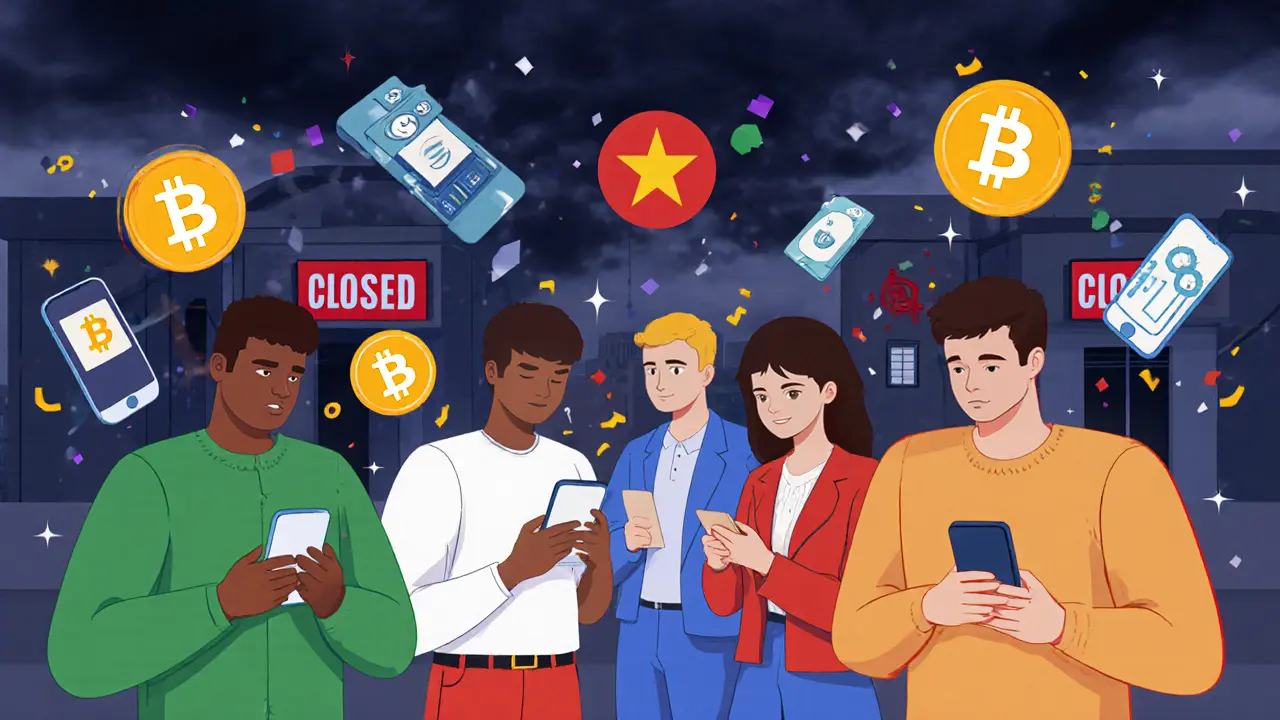

Citizens in countries with banking restrictions use P2P platforms, VPNs, no-KYC exchanges, and gift cards to access crypto. Despite risks like scams and account freezes, crypto offers a lifeline against inflation and financial censorship.