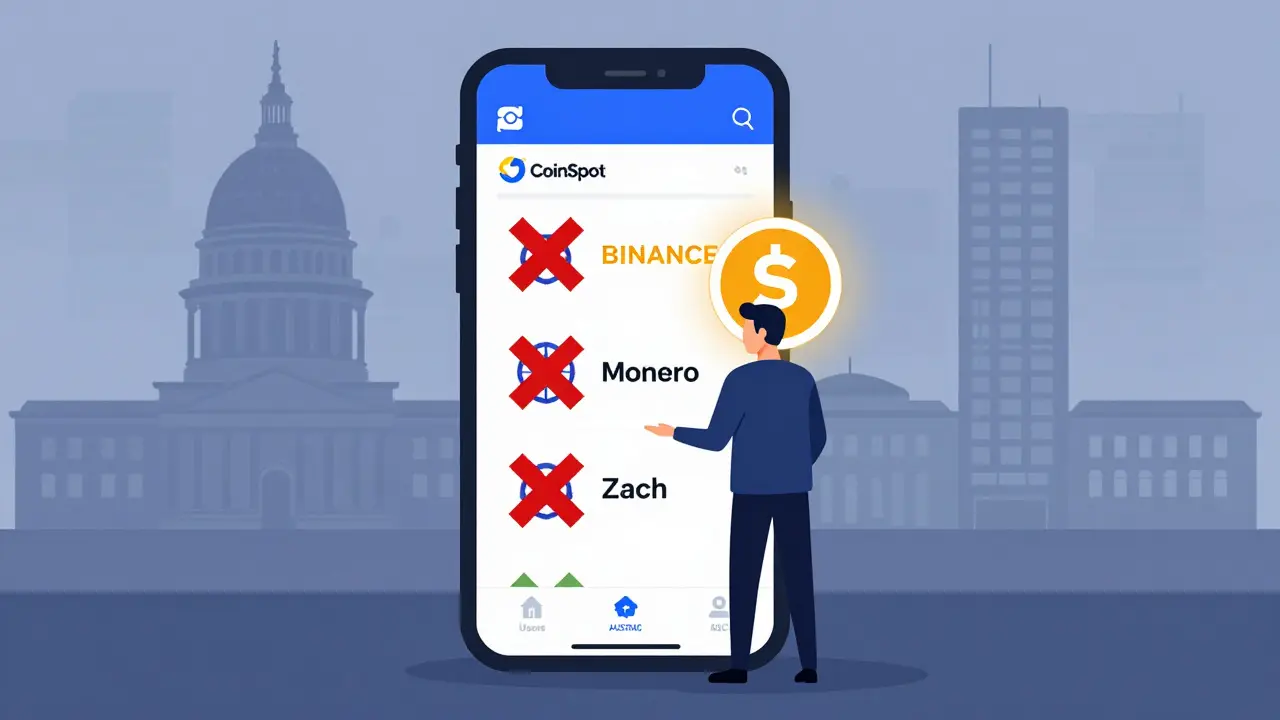

You can still own Monero, but you probably can't buy it on your favorite app anymore. That is the reality for most Australians today. The dream of total financial anonymity has hit a hard wall of regulation. If you are trying to trade privacy-focused cryptocurrencies in Australia right now, you have likely noticed they are missing from major platforms like CoinSpot or Binance Australia. This isn't an accident, and it isn't just one exchange being difficult. It is a coordinated shift across the entire industry driven by strict government rules.
The situation in Australia is unique because there is no official law that says "you cannot own privacy coins." Instead, the government has made it so risky and expensive for exchanges to list them that almost every major player has simply deleted them. This creates a confusing gray area where the asset is legal in your pocket, but illegal to trade through licensed channels. Let's break down exactly how this happened, who is enforcing these rules, and what options are left for users who value their privacy.
Why Exchanges Dropped Privacy Coins
To understand why your exchange removed Zcash or Dash, you have to look at the pressure coming from regulators. In 2025, we saw a massive global wave of delistings. Globally, 73 exchanges removed privacy coins, which was a 43% jump from just two years prior. Australia followed this trend closely. The primary driver here is Anti-Money Laundering (AML) compliance.
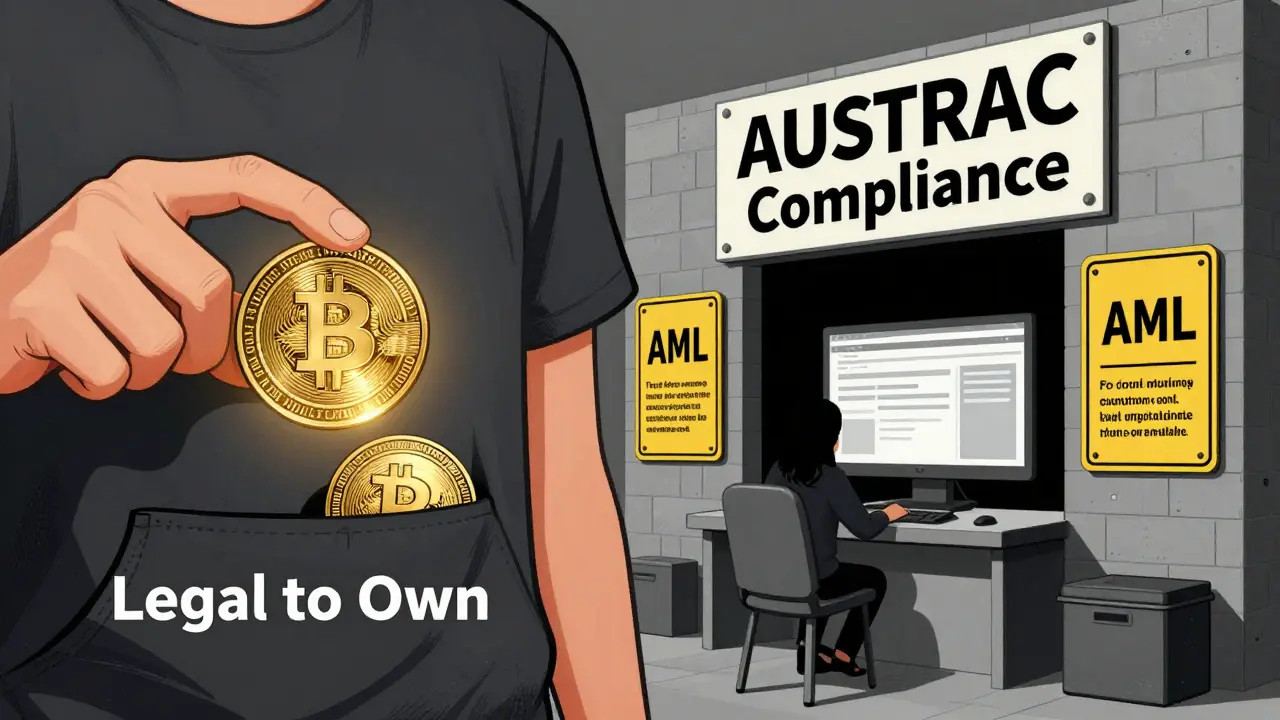
Cryptocurrency exchanges in Australia must register with AUSTRAC. To keep that registration, they must prove they can monitor transactions and identify suspicious activity. Privacy coins use advanced cryptography-like ring signatures and stealth addresses-to hide the sender, receiver, and amount of a transaction. For an exchange, this is a nightmare. They literally cannot see where the money is going. Without visibility, they cannot fulfill their legal duty to report money laundering or terrorist financing.
The math is simple for business owners: if listing a coin risks losing your entire license, you don't list the coin. A report from the Independent Digital Assets Exchange (IDAX) showed that 78% of institutional clients actually supported removing these coins. Why? Because big banks and traditional finance firms want to work with crypto companies, but they refuse to touch platforms that host untraceable assets. By dropping privacy coins, exchanges make themselves safer partners for the broader financial system.
The Regulators Behind the Curtain
In Australia, two main bodies control the crypto space, and both have tightened their grip significantly.
- AUSTRAC (Australian Transaction Reports and Analysis Centre): They oversee digital currency exchanges under the Anti-Money Laundering and Counter-Terrorism Financing Act 2006. They have the power to cancel registrations if an exchange fails to comply. We have already seen them suspend licenses for non-compliance, sending a clear warning shot across the bow of the industry.
- ASIC (Australian Securities and Investments Commission): While ASIC focuses more on whether a crypto token is a financial product under the Corporations Act 2001, their aggressive stance on consumer protection adds another layer of risk. They have taken legal action against multiple crypto service providers for offering unlicensed services. This environment makes exchanges extremely cautious about adding any asset that could attract regulatory scrutiny.
Starting March 31, 2026, AUSTRAC’s scope expands to cover all digital asset service providers. This means the informal pressure to delist privacy coins will become a formalized requirement. If you run a platform handling digital assets, you will be held to the same strict standards as traditional banks regarding transaction transparency.
Is It Illegal to Own Privacy Coins?
This is the most common question I hear. The short answer is no. There is no statute in Australia that criminalizes the possession of Monero, Zcash, or Verge. You can hold them in a self-custody wallet, mine them, or receive them as payment without breaking the law. The restriction applies specifically to trading them through regulated intermediaries.
Think of it like cash. Cash is legal, but banks are required to report large cash transactions to prevent money laundering. Similarly, privacy coins are legal, but licensed exchanges are required to block them because they cannot report the transactions effectively. This distinction matters because it means your existing holdings are safe, but getting new ones is much harder.
How Australia Compares to the Rest of the World
Australia’s approach is part of a global crackdown, but it sits in the middle of the spectrum. Here is how it stacks up against other major jurisdictions:
| Jurisdiction | Status | Key Details |
|---|---|---|
| Australia | De Facto Ban on Exchanges | Legal to own; exchanges delisted due to AUSTRAC compliance pressures. Formal expansion of rules in March 2026. |
| Japan | Total Ban | Banned entirely in 2018. No registered exchange can support privacy coins. Strictest policy globally. |
| European Union | Scheduled Ban | Comprehensive ban on privacy coins and anonymous accounts starts July 2027 under new AML regulations. |
| South Korea | Exchange Delisting | Top exchanges like Upbit and Bithumb removed privacy coins in Q1 2025 following regulatory guidance. |
| Switzerland | Limited Access | Some exchanges offer privacy coins under strict KYC/AML frameworks, providing a potential model for compliance. |
As you can see, Australia is not the harshest place to be, but it is certainly restrictive. Japan went nuclear in 2018, banning everything outright. The EU is preparing for a similar total ban in 2027. Australia chose a path of market-driven compliance, letting exchanges decide to delist rather than passing a specific law against the coins themselves. However, with the March 2026 deadline approaching, the gap between "market choice" and "legal requirement" is closing fast.
What Are Your Options Now?
If you are determined to acquire privacy coins in Australia, your choices are limited and come with higher risks. Since centralized exchanges (CEXs) are off the table, many users turn to Peer-to-Peer (P2P) markets.
Platforms like LocalMonero (before its shutdown) or various P2P sections on larger exchanges have seen increased activity. In fact, some reports indicate a 19% uptick in P2P trading volume after major delistings. However, trading P2P is not without danger. You face counterparty risk-the person you are buying from might scam you. You also deal with price volatility during the transaction window. Furthermore, while owning the coin is legal, using P2P methods to bypass exchange restrictions can sometimes raise eyebrows with tax authorities or banks if large sums are involved.
Another option is using decentralized exchanges (DEXs). These operate without a central authority and therefore do not need to comply with AUSTRAC. You can swap Ethereum for Monero directly on-chain. But this requires technical know-how. You need to manage your own private keys, understand gas fees, and navigate complex interfaces. It is not as easy as clicking "Buy" on an app.
The Future of Privacy in Crypto
Where does this leave us? The tension between privacy and compliance is unlikely to disappear. Financial institutions argue that anonymity features create impossible challenges for customer due diligence. On the other hand, privacy advocates argue that financial surveillance is an overreach and that privacy should be a fundamental right.
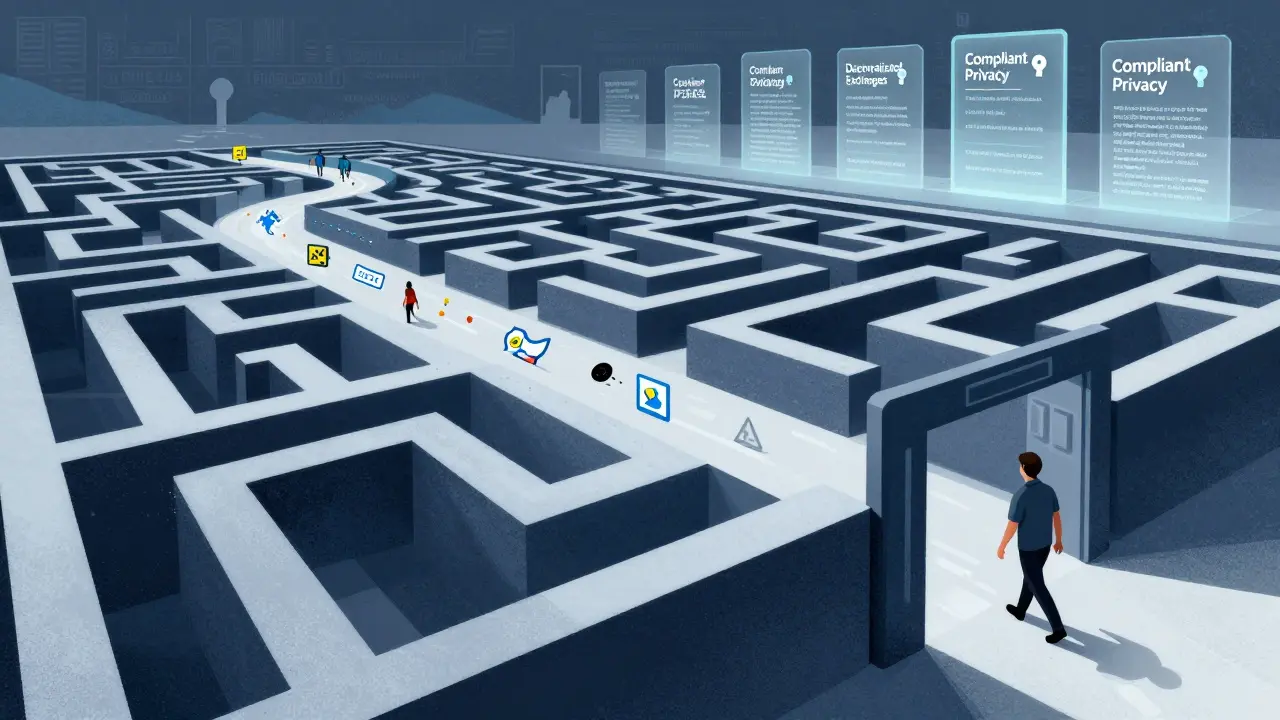
We may see a split in the technology itself. Some projects are exploring "compliant privacy" solutions where transactions are private by default but can be revealed to authorities with a warrant. Critics say this defeats the purpose of privacy coins, turning them into transparent ledgers with a backdoor. Only time will tell if regulators will accept such compromises.
For now, Australian investors should expect continued tightening. As institutional adoption grows, the demand for clean, traceable assets increases. Privacy coins are becoming niche products, accessible only to those willing to take on extra effort and risk. If you hold them, keep them secure. If you want to buy them, be prepared to go off the beaten path.
Can I legally own Monero in Australia?
Yes, it is perfectly legal to own privacy coins like Monero, Zcash, or Dash in Australia. There is no law prohibiting individual possession. However, you cannot easily buy or sell them through regulated cryptocurrency exchanges due to strict Anti-Money Laundering (AML) requirements enforced by AUSTRAC.
Why did Australian exchanges delist privacy coins?
Exchanges delisted privacy coins because they cannot meet their legal obligations to monitor transactions and prevent money laundering. Privacy coins obscure transaction details, making it impossible for exchanges to perform the necessary due diligence required by AUSTRAC and ASIC. Keeping these listings would risk their operating licenses.
When will the new AUSTRAC rules fully apply?
AUSTRAC's expanded regulatory scope, which covers all digital asset service providers, officially comes into effect on March 31, 2026. This will formalize the current informal restrictions and likely eliminate any remaining loopholes for trading privacy coins on regulated platforms.
Is it safe to buy privacy coins via P2P in Australia?
Buying via Peer-to-Peer (P2P) markets carries significant risks. While the act of buying may not be illegal, you lose the consumer protections offered by regulated exchanges. You face risks of fraud, scams, and receiving stolen funds. Additionally, large P2P transactions may trigger scrutiny from your bank or tax authorities.
Will privacy coins ever return to Australian exchanges?
It is highly unlikely in the near future. Global trends show increasing restrictions, with the EU planning a total ban by 2027 and Japan maintaining a strict prohibition. Unless there is a major technological breakthrough that allows for compliant privacy (verifiable by regulators), exchanges will continue to avoid these assets to protect their licenses.
Comments (8)

- Rob Morton
- June 27, 2026 AT 18:11 PM
It is fascinating to observe how the definition of privacy shifts when it collides with state surveillance apparatuses. We are essentially watching a slow-motion erosion of financial autonomy under the guise of security. The argument that anonymity equals criminality is a philosophical trap that ignores the legitimate desire for personal boundaries in economic transactions.

- John Curry
- June 28, 2026 AT 10:58 AM
Dramatic irony at its finest! Here we are, cheering for transparency while handing over every single keystroke to data brokers who sell our souls for pennies. The regulators claim they want to stop money laundering, yet they ignore the opaque nature of traditional banking systems which have been laundering money since the invention of the ledger. It feels like a coordinated effort to strip away any semblance of individual sovereignty, leaving us naked in the digital panopticon. One must wonder if this is truly about safety or simply about control.

- Trent Erman1
- June 28, 2026 AT 11:12 AM
The technical reality here is often overlooked by the general public because the jargon is intimidating. Ring signatures and stealth addresses are not just features; they are mathematical proofs of privacy that cannot be easily reversed without compromising the entire network's integrity. Exchanges delist these assets not because they are evil, but because their compliance departments are terrified of AUSTRAC audits. It is a risk management decision driven by fear rather than principle. Users need to understand that self-custody is no longer optional if you value privacy; it is mandatory. You have to learn to manage your own keys and use decentralized exchanges, which is a steep learning curve but absolutely necessary.

- Maurice Flynn
- June 28, 2026 AT 15:54 PM
I suppose it makes sense from a business perspective, even if it feels dystopian. If you run an exchange, why take the heat? Just drop the coins and keep the license. It is passive-aggressive regulation by proxy, letting the market do the dirty work so the government doesn't have to pass explicit bans. Eventually, everyone will just use DEXs, but the friction will kill off most casual users. I guess we are heading toward a bifurcated system: one for the compliant masses and one for the tech-savvy rebels.

- nancy jarecki
- June 28, 2026 AT 23:53 PM
Let us dispense with the naive notions of 'privacy rights' in financial contexts. The notion that individuals possess an inherent right to obscure their economic activities is fundamentally flawed within modern regulatory frameworks. Institutions such as AUSTRAC operate under strict statutory obligations to mitigate systemic risk, and the inclusion of obfuscated ledgers introduces unacceptable variables into the anti-money laundering equation. It is not merely inconvenient; it is structurally incompatible with the current paradigm of financial oversight. Those who cling to these archaic concepts of anonymity are ignoring the sophisticated interconnectivity of global capital flows. Furthermore, the suggestion that P2P markets offer a viable alternative is laughable given the elevated counterparty risks and the lack of recourse mechanisms. It is time to accept that transparency is the price of admission in the digital economy.

- Robert Hundley
- June 30, 2026 AT 19:27 PM
Man, this is huge! :D I mean, seriously, who knew owning Monero was still legal but trading it was basically impossible? It is wild how fast things change. I tried to buy some on CoinSpot last week and got nothing but errors. Now I get it. They are scared stiff of losing their licenses. I guess I will have to dig into those DEX tutorials I saved months ago. It is kind of exciting in a rebellious way, you know? Like we are going back to the roots of crypto. Let us embrace the challenge! :)

- Melissa L
- July 1, 2026 AT 06:58 AM
i dont really get why they hate monero so much. its just code. i mean sure maybe bad guys use it but also normal people who just want privacy. its kinda annoying cause i used to just click buy and now i have to do all this stuff with wallets and gas fees. hope someone explains it better soon cause im confused.

- Routh Middaugh
- July 2, 2026 AT 08:34 AM
The comparison to cash is quite apt, isn't it? Cash is legal, yet banks report large transactions. Similarly, privacy coins are legal, yet exchanges block them. This distinction is crucial, however, because the ease of access has diminished significantly. The March 2026 deadline for AUSTRAC's expanded scope suggests that the informal pressure will become codified law, effectively closing the remaining loopholes. It is a gradual tightening of the noose, executed through regulatory creep rather than legislative fiat. One must prepare for a future where financial privacy requires significant technical proficiency and willingness to assume risk.