

You’ve probably seen the hype circulating on social media or Telegram groups about a Moonpot (POTS) airdrop. The promise is simple: free tokens for doing nothing. But if you’ve been in the crypto space for more than a year, you know that "free" often comes with a heavy price tag. As of May 2026, there is no verified, official information from major data aggregators like CoinMarketCap, CoinGecko, or LiveCoinWatch regarding any legitimate airdrop program for the POTS token.
This silence is loud. Legitimate projects announce their distribution events clearly. They provide snapshot dates, eligibility criteria, and claim instructions on their official websites and verified social channels. When you look at the current status of Moonpot a privacy-focused digital currency operating on the Binance Smart Chain, the picture looks risky rather than rewarding. With a market cap ranking below #15,000 and daily trading volumes hovering around $80 to $2,000, this token lacks the liquidity and community support typical of serious airdrop campaigns.
The Current State of Moonpot (POTS)
Before you risk your wallet security for a potential payout, you need to understand what you’re dealing with. Moonpot, identified by the ticker symbol POTS, is listed on several minor exchanges but remains largely obscure. Its contract address on the Binance Smart Chain also known as BSC or BNB Chain, a blockchain network known for low transaction fees is 0x3fcca8648651e5b974dd6d3e50f61567779772a8.
Here are the hard numbers as of mid-2026:
- Current Price: Approximately $0.0056 - $0.0058 USD.
- All-Time High: $22.12 (indicating a massive drop from its peak).
- 24-Hour Volume: Between $80 and $2,100 USD.
- Market Rank: #15,878 according to LiveCoinWatch.
These metrics tell a specific story. This is not a high-traffic project. It’s a low-volume token with thin order books. If an airdrop were real and distributed millions of tokens, the sudden sell pressure would likely crash the price instantly due to the lack of buy-side liquidity. That’s why many small-cap tokens avoid large public airdrops-they can’t handle the exit ramp.
| Metric | Value | Implication |
|---|---|---|
| Network | Binance Smart Chain (BSC) | Low fees, but high scam prevalence |
| Liquidity | Very Low ($0 depth at ±2%) | Hard to sell without slippage |
| Airdrop Status | No Official Record | High risk of fraudulent claims |
| Price Trend | Declining from ATH | Weak investor confidence |
Why You Should Be Skeptical
The absence of documentation is the biggest red flag. In the crypto world, information is currency. If a project wants you to hold their token, they make it easy to find out how. They don’t hide behind vague rumors.
Consider the source of the "airdrop" news. Did you see it on CoinMarketCap? No. Did you see it on the official Moonpot website or their verified Twitter/X account? Likely not. Most likely, you saw it on a Telegram channel, a Discord server, or a random blog post optimized for clicks. These are the primary vectors for Honeypot Scams malicious contracts that allow you to buy tokens but prevent you from selling them.
Here is how these scams typically work:
- The Hook: You’re told you’re eligible for a POTS airdrop based on past transactions or simply for connecting your wallet.
- The Interaction: You visit a link to "claim" your tokens. This site asks you to approve a transaction or sign a message.
- The Trap: Once you sign, you may authorize the scammers to drain your existing assets (like USDT or BNB) from your wallet. Alternatively, you receive tokens that you cannot sell because the contract code blocks outgoing transfers.
Given that POTS has such low liquidity, even if you received genuine tokens, you might not be able to sell them for anything meaningful. The spread between buyers and sellers would be so wide that you’d lose most of the value just trying to offload them.

How to Verify Any Crypto Airdrop
Don’t let FOMO (Fear Of Missing Out) drive your decisions. Use a systematic approach to verify any airdrop claim before you click anything. This checklist applies to POTS and any other token promising free money.
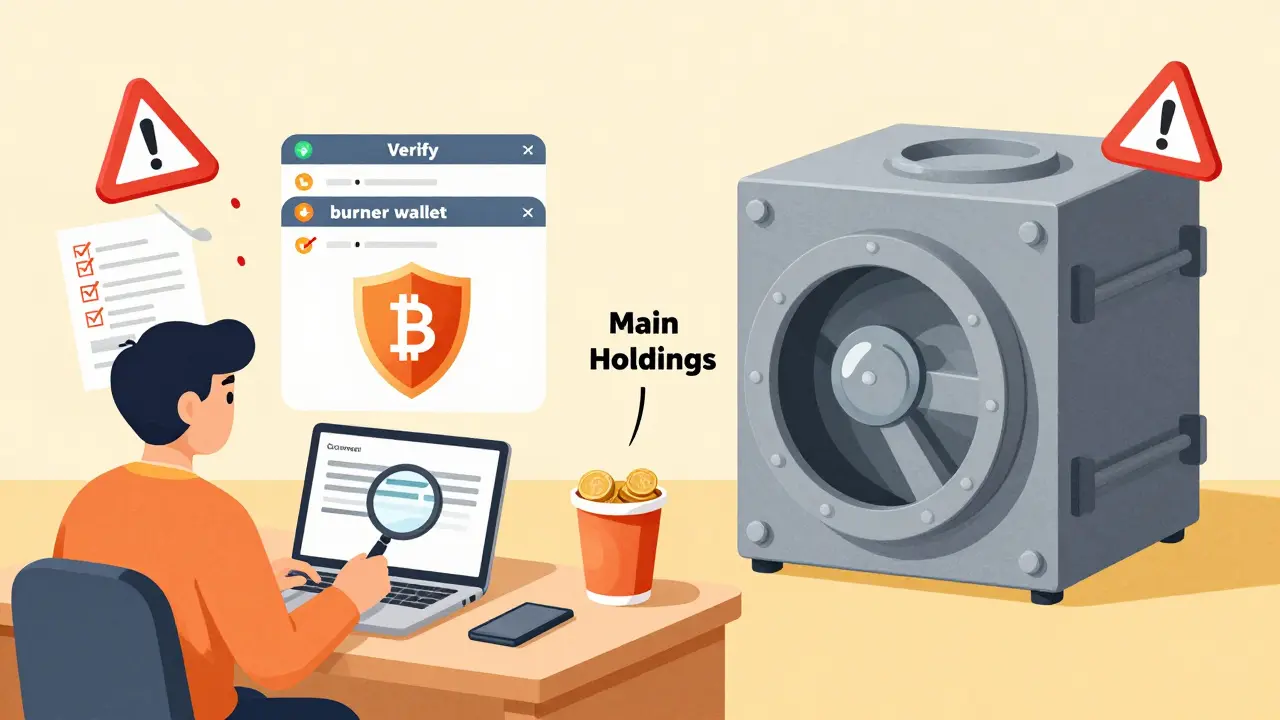
- Check Official Sources: Go directly to the project’s official website. Look for an "Airdrop" or "Events" section. If it’s not there, assume it doesn’t exist. Do not trust links from social media bios unless you have double-checked the domain spelling.
- Use Data Aggregators: Check CoinMarketCap, CoinGecko, or LiveCoinWatch. Legitimate airdrops are usually listed under the "News" or "Community" tabs of the token page. If these platforms show zero activity, be extremely cautious.
- Analyze the Contract: Use tools like BscScan the block explorer for the Binance Smart Chain. Paste the contract address (
0x3fcca8648651e5b974dd6d3e50f61567779772a8) into the search bar. Look at the "Holders" tab. If one wallet holds 90% of the supply, you’re dealing with a centralized risk. Also, check if the contract is verified. Unverified contracts are a major warning sign. - Search for Red Flags: Look up "POTS token scam" or "Moonpot review" on forums like Reddit or Bitcointalk. Real users will often share negative experiences before official announcements catch up.
The Risk of Wallet Draining
The biggest danger isn’t losing a few dollars on a worthless token. It’s compromising your entire wallet. Many fake airdrop sites use malicious smart contracts. When you connect your wallet to "claim" your POTS tokens, you might inadvertently sign a transaction that grants the attacker unlimited spending power over your other assets.
To protect yourself:
- Use a Burner Wallet: Never connect your main wallet (where you keep long-term holdings) to unverified dApps. Use a separate wallet with only a small amount of BNB for gas fees.
- Revoke Permissions: After interacting with any new contract, use tools like Revoke.cash to check and remove any approvals you’ve granted. This prevents future draining attacks.
- Never Share Seed Phrases: No legitimate airdrop will ever ask for your 12 or 24-word seed phrase. If a site asks for it, close the tab immediately.
What If There Is No Airdrop?
If your goal is to profit from Moonpot, remember that the token is currently trading near its lows. Price predictions are mixed and largely speculative due to insufficient historical data. Some models suggest minimal growth, while others predict long-term stagnation. Investing in a token with $80 daily volume is akin to gambling, not investing. The lack of market maker support means your entry and exit prices could be manipulated easily.
Instead of chasing unverified airdrops, consider focusing on established projects with clear roadmaps, active development, and transparent tokenomics. The crypto market is full of opportunities, but they rarely come wrapped in secrecy and low liquidity.
Is there an official Moonpot (POTS) airdrop in 2026?
No. As of May 2026, there is no verified announcement of a POTS airdrop from official sources like CoinMarketCap, CoinGecko, or the Moonpot team. Any claims found on social media should be treated as highly suspicious.
What is the contract address for Moonpot POTS?
The contract address for Moonpot on the Binance Smart Chain is 0x3fcca8648651e5b974dd6d3e50f61567779772a8. Always verify this address on BscScan before interacting with any token.
Why is the POTS token price so low?
POTS has a very low market capitalization and trading volume. With daily volumes often under $1,000, there is little demand to support higher prices. Additionally, it has dropped significantly from its all-time high of $22.12.
Can I get rich quick with the POTS airdrop?
It is highly unlikely. Due to the low liquidity, even if you received tokens, you might not be able to sell them without significant losses. Moreover, most such offers are scams designed to steal your existing crypto assets.
How do I check if a crypto airdrop is a scam?
Check official project channels and major data aggregators like CoinMarketCap. If the airdrop isn't listed there, it's likely fake. Also, never connect your main wallet to unknown sites and always revoke permissions after interacting with new contracts.